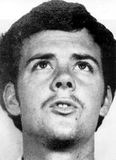
Herbert Mullin
Serial killer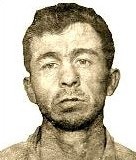 Donald Henry Gaskins
Serial killer · USA · 1969
Donald Henry Gaskins, also known as Donald “Pee Wee” Gaskins, was a serial kill…
200 victims
Donald Henry Gaskins
Serial killer · USA · 1969
Donald Henry Gaskins, also known as Donald “Pee Wee” Gaskins, was a serial kill…
200 victims
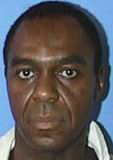 Carl Eugene Watts
Serial killer · USA · 1974
Carl Eugene Watts (born November 7, 1953; died September 21, 2007), also known…
100 victims
Carl Eugene Watts
Serial killer · USA · 1974
Carl Eugene Watts (born November 7, 1953; died September 21, 2007), also known…
100 victims
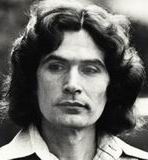 Rodney Alcala
Serial killer · USA · 1977
Rodney James Alcala (born August 23, 1943) was also known as Rodrigo Jacques Al…
100 victims
Rodney Alcala
Serial killer · USA · 1977
Rodney James Alcala (born August 23, 1943) was also known as Rodrigo Jacques Al…
100 victims
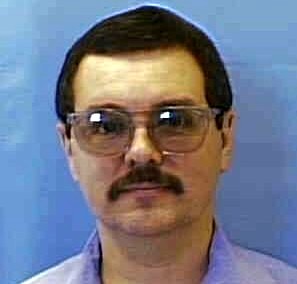 Donald Harvey
Serial killer · USA · 1970
Donald Harvey was known as an American serial killer and a self-professed “Ange…
87 victims
Donald Harvey
Serial killer · USA · 1970
Donald Harvey was known as an American serial killer and a self-professed “Ange…
87 victims
 Donald Leroy Evans
Serial killer · USA · 1975
Donald Leroy Evans (born July 5, 1957) was an American serial killer who murder…
60 victims
Donald Leroy Evans
Serial killer · USA · 1975
Donald Leroy Evans (born July 5, 1957) was an American serial killer who murder…
60 victims
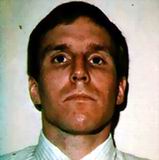 Michael Swango
Serial killer · USA · 1981
Michael Swango (Joseph Michael Swango) was a physician and American serial kill…
60 victims
Michael Swango
Serial killer · USA · 1981
Michael Swango (Joseph Michael Swango) was a physician and American serial kill…
60 victims
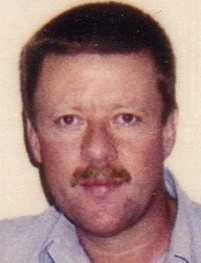 Steve Henley
Murderer · USA · 1985
Steve Henley was convicted in Tennessee of the 1985 murders of Fred Stafford an…
2 victims
Steve Henley
Murderer · USA · 1985
Steve Henley was convicted in Tennessee of the 1985 murders of Fred Stafford an…
2 victims
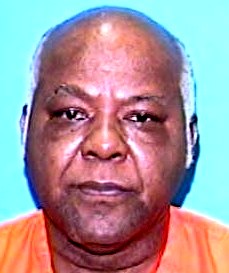 Jack Dempsey Ferrell
Murderer · USA · 1981
Defendant: Jack Dempsey Ferrell Date of birth: 08/05/40 District/County/Case nu…
2 victims
Jack Dempsey Ferrell
Murderer · USA · 1981
Defendant: Jack Dempsey Ferrell Date of birth: 08/05/40 District/County/Case nu…
2 victims
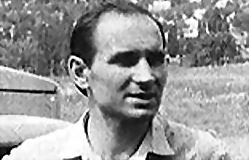 Vladimir Mukhankin
Serial killer · Russia · 1995
Vladimir Mukhankin was 36 when he pleaded guilty in January 1997. He was descri…
8 victims
Vladimir Mukhankin
Serial killer · Russia · 1995
Vladimir Mukhankin was 36 when he pleaded guilty in January 1997. He was descri…
8 victims
 Tony Lee Walker
Murderer · USA · 1978
Tony Lee Walker was convicted of capital murder for the killing of Virginia Sim…
3 victims
Tony Lee Walker
Murderer · USA · 1978
Tony Lee Walker was convicted of capital murder for the killing of Virginia Sim…
3 victims
- Gender
- male
- Country
- USA
- Location
- Santa Cruz, California, USA
- Date of birth
- April 18, 1947
- Age at first offence
- 25
- Characteristics
- serial rapist, history of mental illness, drugs, rape, mutilation
- Victim profile
- Lawrence White, 55 / Mary Guilfoyle, 24 / Rev. Henri Tomei, 64 / James Gianera, 24 / Joan Gianera, 23 / Kathleen Prentiss, also known as Kathy Francis, 30 / David Hughes, 9 / Daemon Francis, 4 / Robert Spector, 18 / David Oliker, 18 / Brian Scott Card, 19 / Mark Dreibelbis, 19 / Fred Perez, 72
- Method of murder
- Beating / St abbing with knife / Shooting
- Date(s) of murder
- 1972 - 1973
- Years active
- 1972–1973
- Date of arrest
- February 13, 1973
- Status
-
Life imprisonment
Sentenced to life in prison in August 1973, with possibility of parole in 2025
Case identification
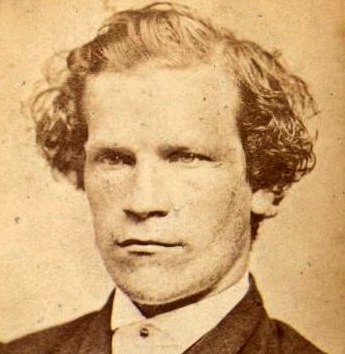
Herbert Mullin was a serial killer in California in the early 1970s. He was born on April 18, 1947, in Salinas, California.
Timeline
- Summer after high school graduation — Dean Richardson was killed in an auto accident, which triggered the start of Mullin's odd behavior.
- October 13, 1972 — Mullin battered a homeless man, Lawrence White, to death with a baseball bat.
- November 2 — Mullin stabbed Father Henri Tomei to death in the confessional booth.
- January 25, 1973 — Mullin shot James Gianera and Joan Gianera dead in their Santa Cruz home; he then shot and stabbed Kathy Francis and her two young sons.
- February 6, 1973 — Mullin met four teenage boys in a wooded state park and killed all four with gunfire.
- February 13 — Fred Perez was shot and killed while loading firewood; Mullin was arrested a short distance away.
- March 1, 1973 — At a hearing, Mullin carried a two-volume legal book and tried to plead guilty to ten counts of first-degree murder; the judge refused.
- July 30, 1973 — Mullin’s trial opened.
- August 19, 1973 — The jury delivered its verdict finding Mullin sane and guilty of ten murders.
- August 1973 — Mullin was sentenced to life in prison, with possibility of parole in 2025.
- March 23, 2006 — The California Board of Prison Terms denied parole at a hearing at Mule Creek State Prison and told Mullin to try again for parole in five years.
Background
Mullin seemed totally normal throughout his childhood. He was the son of a World War 2 veteran. He was extremely bright and sensitive, involved in sports, and voted “most likely to succeed” in high school.
By the age of thirty-six, he was a “raging schizophrenic” and a prolific serial killer.
After his friend Dean Richardson was killed in an auto accident in the summer after high school graduation, Mullin built a shrine to his dead friend in his bedroom and began to obsess about reincarnation, religion, and impending natural disasters. His behavior frightened his family and friends, and he was diagnosed as a paranoid schizophrenic and was institutionalized on and off throughout the remainder of his time as a free man.
Mullin complained of hearing voices and adopted many different personas, re-inventing himself alternately as a yoga disciple, amateur boxer, hippie, and a sombrero-wearing Mexican. His family and friends described him as having violent outbursts and erratic behavior.
Mullin’s drug use included large doses of acid (LSD) and marijuana.
He had also developed echopraxia. In 1969, he began mimicking every movement of his brother-in-law, which terrified his parents. He checked into a mental hospital in February 1969, where he was diagnosed as schizophrenic, and checked out six weeks later. He re-admitted himself to another mental institute by October and was later released after weeks.
In 1970 he went on holiday to Hawaii, where he was committed once again.
By September 1972, he moved back home. He had been diagnosed with schizophrenia and heard voices commanding him to kill.
Mullin’s height was described as 5' 7".
A doctor warned Mullin’s family that he was a danger. One quote attributed to the family included: “The guy is a paranoid schizophrenic and he is dangerous”.
The offence
Killing spree in California
Mullin’s killings began on October 13, 1972, near his hometown of Felton, California.
Lawrence White (homeless man, 55) — Mullin pulled over along a quiet stretch of road, lifted the hood of his car, and feigned car trouble. When White offered assistance, Mullin bludgeoned him to death with a baseball bat. White’s body was found a few days later.
Mary Guilfoyle (hitchhiker, 24) — Mullin picked up a young hitchhiker in Santa Cruz named Mary Guilfoyle and stabbed her to death. He also sliced her body open and pulled out her organs. Her body was not discovered until February the next year. She was later described as having been disemboweled; skeletal remains were found.
Father Henri Tomei (Catholic priest, 64) — On November 2, All Souls Day, Mullin entered a Los Gatos Catholic Church and stabbed Father Henri Tomsi/Tomei dead in the confessional booth. He attempted to force the confessional door open, attacked the priest, and fatally stabbed him. A parishioner walked in, screamed, and ran out; she got a glimpse of the struggle.
Jim Gianera and Joan Gianera (drug acquaintances; ages 24 and 23) — Mullin shot Jim Gianera and his wife dead on January 25, 1973, in their Santa Cruz home. He then left and returned to kill additional victims at Kathy Francis’s house. After the Gianeras were killed, Mullin repeatedly stabbed the corpses.
Kathy Francis / Kathleen Prentiss (30) and her sons Daemon Francis (4) and David Hughes / David Francis (9) — Mullin killed Kathy Francis and her two young sons by shooting them dead and knifing their bodies after death in an overkill case. The sons were described as aged four and nine; elsewhere David was described as nine and Daemon as four. The children were sleeping in the next room.
Teenage campers (four boys, ages 14–19) — On February 10, Mullin stumbled upon four teenage boys in a wooded state park. The youngsters had set up a campsite and invited Mullin into their large tent after he happened upon them while wandering the woods. Mullin slaughtered them with gunfire while they were trapped inside. The bodies were discovered inside their blood-soaked tent a week later. The boys were named Brian Scott Card, David Oliker, Robert Spector, and Mark Dreibelbis, and were described as 14–19.
Fred Perez (72) — On February 13, Fred Perez was working on the driveway of his home when he was shot and killed by Mullin. A neighbor witnessed Perez’s murder. Mullin was arrested a short distance away. He was later arrested after police observed his license plate and captured him within minutes.
Methods and violence details
Mullin used a baseball bat, a knife/hunting knife, and a firearm. He stabbed and shot multiple victims. He also performed actions described as dismemberment and evisceration on victims.
His violence included repeated stabbing after shootings, including “overkill” described for the killings of the Gianeras and Kathy Francis’s family.
The outcome included findings related to ten murders in August 1973 and a conviction for those counts.
Investigation and arrest
Investigators conducted police interrogation immediately after Mullin’s arrest. He responded to investigators’ questions by screaming out “Silence!” and continued chanting the word “Silence!”.
A doctor at the police station examined Mullin and was surprised by tattoos on his belly: “LEGALIZE ACID” and “Eagle Eyes Marijuana.” Additional tattoos were described as reading “birth,” “Mahashamadhi,” and “Kriya Yoga.”
At his apartment, where he had lived for the last three weeks, police found a Bible, the paperback book “Einstein -- The Life and Times,” an address book with Gianera listed, and newspaper articles about the recent murders.
The revolver had been discovered in his station wagon and ballistic tests were soon underway.
Police found a note:
Let it be known to the nations of earth and the people that inhabit it, this document carries more power than any other written before. Such a tragedy as what has happened should not have happened and because of this action which I take of my own free will I am making it possible to occur again. For while I can be here I must guide and protect my dynasty.
After arrest, officials announced that ballistics proved Mullin had also killed the Francis family and the Gianeras. Investigators compared Mary Guilfoyle’s skeleton with the remains of other women found. Los Gatos authorities submitted fingerprints found at the church where Father Tomei was stabbed. Reporters sought information on whether the same killer was responsible, and the District Attorney made public remarks about Santa Cruz’s murder rate.
District Attorney remarks included: “We must be the murder capital of the world right now.” He also said: “First, we've had a homicidal maniac whom we know has killed ten people.” When asked about additional bodies of female hitchhikers, he responded: “We then have another homicidal maniac.”
Trial
Plea and sanity issue
Mullin was charged and tried on murder counts. He attempted to plead guilty; the judge refused.
At a hearing on March 1, he tried to plead guilty to ten counts of first-degree murder. The judge refused to accept the guilty plea. Mullin replied: “I won't accept that.” He also stated: “You gave me a choice and I chose.” When his lawyer tried to intervene, Mullin said: “I refuse counsel.”
When the judge tried to assure him of representation, Mullin said, pointing to James Jackson: “I don't care to be represented by a longhair.”
Psychiatrists examined Mullin and concluded he was a paranoid schizophrenic. Everyone agreed he killed at least ten people. The trial determined whether he was legally insane at the time of the murders.
Defense and prosecution positions
The defense centered on Mullin’s mental illness and theories described during the proceedings. The prosecution argued that he was responsible despite mental illness.
Mullin’s defense attorney, James Jackson, described Mullin’s acts and quoted him in context:
“Make no mistake. Mr. Mullin hears voices, and the voices told him to kill.
These were not acts of murder, but acts of sacrifice.”
The prosecution included remarks about responsibility. The jury heard arguments that motives were not required to prove criminal responsibility, and that mental illness did not automatically equate to legal insanity.
Motive and “Die Song” philosophy
Mullin’s rationale repeatedly included preventing earthquakes by murder and reincarnation theories.
Mullin described his “die song” concept, including this extended testimony presented via psychiatrist Donald Lunde:
You see, the thing is, people get together, say, in the White House. People like to sing the die song, you know, people like to sing the die song. If I am president of my class when I graduate from high school, I can tell two, possibly three young male Homo sapiens to die. I can sing that song to them and they'll have to kill themselves or be killed -- an automobile accident, a knifing, a gunshot wound. You ask me why this is? And I say, well, they have to do that in order to protect the ground from an earthquake, because all of the other people in the community had been dying all year long, and my class, we have to chip in so to speak to the darkness, we have to die also. And people would rather sing the die song than murder. I believe man has believed in reincarnation for maybe, consciously, verbally, for ten thousand years. And so they instituted this law . . . they used to do it back then, ten thousand years ago. . . . Well, they let a guy go kill crazy, you know, he'd go kill crazy maybe twenty or thirty people. Then they'd lynch him, you know, or they'd have another kill crazy person kill him. Because they don't want him to get too powerful in the next life, you know.
A quoted “Jonah” explanation also appeared, including:
I mean . . . you read in the Bible about Jonah -- there was twelve men in the boat -- Jonah was in the boat, you know, it was just like Jesus you know, and Jonah stood up and said, 'God darn! If somebody doesn't die, you know all thirteen of us are going to die. And he jumped overboard, you know, and he was drowned, you know. And the sea . . . about in a half hour or so, it calmed down.
Sentencing
The jury found Mullin sane and guilty.
Mullin was found guilty in August 1973 of ten murders.
He was sentenced to life in prison and was eligible for parole in 2025.
Appeals
No appeal outcome was included in the provided text.
Outcome
The jury delivered its verdict on August 19, 1973.
The verdict included findings that Mullin was sane and guilty. The record described that the jury deliberated for over fourteen hours and that two counts were first-degree murder and the other counts were second-degree murder. The record also stated that Mullin was sentenced to life in prison with possibility of parole in 2025.
Aftermath
Parole hearing in 2006
On March 23, 2006, the California Board of Prison Terms refused to release Herbert Mullin. The board said he should stay behind bars for at least another five years, the maximum time allowed between hearings.
During the hearing at Mule Creek State Prison, Mullin discussed his guilt, his life in prison, and hopes for the future. He told the commissioners: “I just want to get back to living my life free.”
The panel’s denial followed a roughly two-hour hearing at the prison.
One commissioner said: “This is ugly. These are very ugly crimes you've been convicted of.”
Mullin responded: “The people I am accused of killing, I did kill.” He added: “But I'm not guilty by reason of insanity.”
A commissioner described the decision as based on the “cruel and callous” manner of the crimes, the fact that Mullin had not accepted responsibility, and the continuing danger he posed to society.
A quoted statement included: “You are not the victim here.” It continued: “The victims and their families are the victims. You are the individual that made them victims.”
Mullin said: “I'm extremely remorseful and sorrowful for my part in committing this crime. I pray for the souls of the victims every day.”
The prosecutor Ariadne Symons said his “disregard for human suffering was astonishing” and said he had no words for the families of his victims. Symons urged the commissioners to keep him locked up and argued that he had spent 32 years in prison and had not begun to pay his debt to society.
Victims listed in the parole hearing account
The victims were listed as:
- Lawrence White, 55
- Mary Guilfoyle, 24
- Rev. Henri Tomei, 64
- James Gianera, 24
- Joan Gianera, 23
- Kathleen Prentiss, also known as Kathy Francis, 30
- David Hughes, 9
- Daemon Francis, 4
- Robert Spector, 18
- David Oliker, 18
- Brian Scott Card, 19
- Mark Dreibelbis, 19
- Fred Perez, 72
The provided text also included statements that parole was denied.
Other details
Mullin was described as living at Mule Creek State Prison in California.
A quote attributed to Edmund Kemper about Mullin included: “Herbie was just a cold-blooded killer . . . killing everyone he saw for no good reason,” and included another quotation: “I guess that's kind of hilarious, my sitting here so self-righteously talking like that, after what I've done.”
An additional quotation attributed to a doctor warned his family: “The guy is a paranoid schizophrenic and he is dangerous.”
A quoted statement about conversation included in the text: “Every homosapien communicates telepathically, it's just not accepted socially.”
A reported exchange included:
- “H.T. - Herbert, do you read the bible?”
- “H.M. - Yes”
- “H.T. - The commandments, where it says to honour thy father and mother?”
- “H.M. - Yes”
- “H.T. - Then you know how important it is to do as your father says.”
- “H.M. - Yes”
- “H.T. - I think it's so important that I want to volunteer to be your next sacrifice.”
Spotted an error, or have more information about this case?