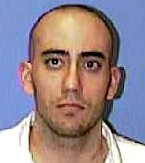
Jedidiah Murphy
Murderer Russell Ellwood
Murderer · USA · 1991
Russell Ellwood was a former taxi driver. Authorities suspected him of killing…
20 victims
Russell Ellwood
Murderer · USA · 1991
Russell Ellwood was a former taxi driver. Authorities suspected him of killing…
20 victims
 Robert Martines Perez
Murderer · USA · 1994
Name: Robert Martines Perez · Other name used in proceedings: Robert Martinez P…
15 victims
Robert Martines Perez
Murderer · USA · 1994
Name: Robert Martines Perez · Other name used in proceedings: Robert Martinez P…
15 victims
 Billy Frank Vickers
Murderer · USA · 1993
Billy Frank Vickers Vickers was executed by lethal injection in Texas on Januar…
14 victims
Billy Frank Vickers
Murderer · USA · 1993
Billy Frank Vickers Vickers was executed by lethal injection in Texas on Januar…
14 victims
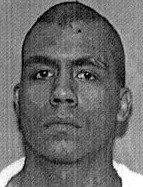 Gabriel Gonzales
Murderer · USA · 1994
Defendant: Gabriel Gonzales (DoB 03/22/1974) Date of crime: 07/20/1994 Gang aff…
1 victim
Gabriel Gonzales
Murderer · USA · 1994
Defendant: Gabriel Gonzales (DoB 03/22/1974) Date of crime: 07/20/1994 Gang aff…
1 victim
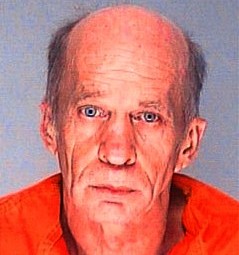 John Couey
Murderer · USA · 2005
Name: John Evander Couey · Lifespan: September 19, 1958 – September 30, 2009 ·…
1 victim
John Couey
Murderer · USA · 2005
Name: John Evander Couey · Lifespan: September 19, 1958 – September 30, 2009 ·…
1 victim
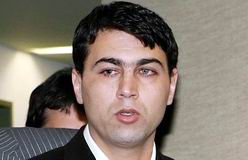 Herisch Ali Abdullah
Murderer · Germany · 2005
Defendant: Herisch Ali Abdullah, 25, Iraqi man and asylum seeker · Victim: Rudo…
1 victim
Herisch Ali Abdullah
Murderer · Germany · 2005
Defendant: Herisch Ali Abdullah, 25, Iraqi man and asylum seeker · Victim: Rudo…
1 victim
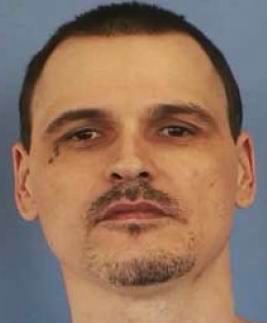 Joseph Daniel Burns
Murderer · USA · 1994
Joseph Daniel “JoJo” Burns was executed by lethal injection in Mississippi on J…
1 victim
Joseph Daniel Burns
Murderer · USA · 1994
Joseph Daniel “JoJo” Burns was executed by lethal injection in Mississippi on J…
1 victim
 Natasha Cornett
Murderer · USA · 1997
Natasha Wallen Cornett was born on January 26, 1979 in rural eastern Kentucky.…
3 victims
Natasha Cornett
Murderer · USA · 1997
Natasha Wallen Cornett was born on January 26, 1979 in rural eastern Kentucky.…
3 victims
- Gender
- male
- Country
- USA
- Location
- Dallas County, Texas, USA
- Date of birth
- September 1, 1975
- Age at first offence
- 25
- Characteristics
- kidnapping, robbery
- Victim profile
- A 79 year old female
- Method of murder
- Shooting
- Date(s) of murder
- October 4, 2000
- Years active
- 2000
- Date of arrest
- —
- Status
-
Sentenced to death
Sentenced to death on July 26, 2001
Case information
Name: Jedidiah Murphy TDCJ Number: 999392 Date of Birth: 09/01/1975 Gender: male Race: white Hair Color: brown Eye Color: brown Height: 5 ft 7 in Weight: 155 Native State: Native County Sutton Texas welder, contractor, laborer Age at the Offense: 25 Age at the Time Received: 25 Education Level: 07/26/2001 (as recorded)
Prior record
Murphy had prior prison record #687358 for burglary of a habitation and burglary of a vehicle. He was released in 1994 on shock probation.
The offence
On 10/04/2000, in Garland, Murphy forced a 79 year old white female to give him a ride at gunpoint. After riding for about 30 minutes, Murphy forced the victim into the trunk of the car. The victim was shot while getting into the trunk. Murphy then drove the victim's car to Van Zandt County, where the victim was removed from the trunk and drowned in a creek.
Murphy later used the victim's credit cards to purchase alcohol and cigarettes.
Co-defendants: None.
Investigation
In his confession, Murphy stated that he was drinking at a bar called Bleachers. There was evidence that Bleachers Sports Grill was a bar located in Dallas County. According to his confession, Murphy left Bleachers and hitched a ride with the victim “on the road beside Bleachers on [his] way to 635.” Detective Myers testified that the area from Bleachers to 635 was located in Dallas County. Murphy’s confession further stated that Murphy and the victim were driving toward 635 when he asked the victim to stop and get into the trunk, and he then shot her; the admission suggested this occurred somewhere in the same area as the abduction—between Bleachers and 635, within Dallas County.
Murphy thereafter drove around in the victim's car to various locations in Collin and Dallas Counties, using the victim's credit cards and attempting to use her ATM card.
The medical examiner testified that although the gunshot wound was fatal, the victim could have lived for several minutes or longer after the shooting.
The victim’s body was discovered in a creek in Van Zandt County.
At the time of the offense, Murphy’s residence was in Dallas County.
Arrest / detention-related events
Written materials, notes and letters, including three pages of handwritten notes to appellant's attorneys, were seized from Murphy's jail cell by jail personnel after Murphy attempted a suicide.
Trial
Murphy’s case was heard in the Court of Criminal Appeals of Texas, No. 74,145. The appeal was from Dallas County.
Judges noted in the opinion: Holcomb, J. delivered the opinion of the Court, joined by Meyers, Price, Keasler, and Cochran, JJ. Keller, P.J., concurred in the result with respect to Point of Error Number Three and otherwise joined the opinion. Johnson, J., filed an opinion joined by Womack and Hervey, JJ., that concurred in the result with respect to Points of Error Numbers Seven and Eight and otherwise joined the opinion.
Murphy was convicted in June 2001 of capital murder, Tex. Penal Code Ann. §19.03(a).
Pursuant to the jury’s answers to the special issues set forth in Texas Code of Criminal Procedure Article 37.071, §§ 2(b) and 2(e), the trial judge sentenced Murphy to death. Art. 37.071 §2(g).
The opinion notes that direct appeal to the Court was automatic. Art. 37.071 §2(h).
Jury selection and voir dire issues
Murphy raised twenty points of error; the Court affirmed.
Point of error one: Murphy claimed the trial court violated his rights under the Sixth Amendment by limiting voir dire questioning pertaining to the State’s burden of proving beyond a reasonable doubt that Murphy posed a future danger. In a pretrial hearing, Murphy sought permission to ask prospective jurors the following two questions:
- “Would victim character testimony cause you to reduce the State's burden of proof on Special Issue Number 1?”
- “Do you promise the Court that you would not do so?”
The State objected that the questions sought commitments from the jurors, and the court sustained the objection. Murphy argued that the questions inquired whether prospective jurors would hold the State to its burden notwithstanding evidence of the victim’s character. The Court held the trial court did not abuse its discretion in disallowing the questions, including because Murphy did not state how “victim character testimony” would be defined nor whether jurors would be informed of this area of law before being asked.
Point of error two: Murphy asserted the same argument under Article I, Section 10 of the Texas Constitution; the Court held the point was inadequately briefed.
Points of error three and four: Murphy argued the trial court abused its discretion by granting the State’s challenge for cause against venireperson Alena Treat. The trial court granted the challenge on the ground that Treat would require proof of another murder or attempted murder before finding Murphy would commit criminal acts of violence posing a continuing threat. The opinion set out Treat’s voir dire statements: she stated her understanding of “criminal acts of violence” meant “the same type of crime” as the capital murder in the guilt phase; she maintained the State would have to prove Murphy would commit or attempt another murder to prove future dangerousness. When questioned by the trial court, Treat stated that intentionally causing a person to become mentally disabled by giving them a drug that would put them into a coma would also rise to the level of a criminal act of violence, but she conceded later that even these circumstances essentially amounted to an attempted murder.
The opinion explained the Court’s prior holdings and concluded that although the trial court erred in granting the challenge for cause against Treat, the exclusion may not necessarily have required reversal under harmless error analysis. The Court held that Point of error three was overruled and Point of error four was overruled.
Points of error five through eight: Murphy challenged four venirepersons for cause; the Court overruled these points.
- During venireperson Phillip Mays’ voir dire, defense counsel asked about times when “the laws of man conflict with the laws of God, specifically the Ten Commandments.” Mays stated he was not sure where the two would conflict, and if they did, he would side with his religious beliefs. The Court held Murphy failed to show Mays was fully informed of the applicable law and failed to demonstrate bias or prejudice against the law.
- Venireperson John Robuck: Murphy claimed Robuck could not consider five years as a punishment for an intentional murder. The Court held Robuck agreed he could consider five years depending on circumstances and Murphy failed to show he could not consider the full range.
- Venirepersons Thomas Brooks and Kimberly Williams: Murphy claimed they equated “probability” of future dangerousness with “possibility.” The Court recounted Brooks’ and Williams’ descriptions and held that, even assuming erroneous understandings, Murphy did not show entitlement to challenges for cause in the particular circumstances described.
Point of error nine: Murphy claimed ineffective assistance of counsel during voir dire when trial counsel used peremptory strikes against two venirepersons whom counsel erroneously believed he had unsuccessfully challenged for cause. The Court explained that counsel mistakenly believed the challenges for cause against venirepersons Mark Colditz and John Wilson had been denied, but the record reflected that Colditz was not submitted for cause and that Wilson had issues that supported peremptory strikes. The Court deferred to possible legitimate strategy and overruled the point.
Point of error ten: Murphy argued the appeal should be abated until written findings of fact and conclusions of law were filed as required by Article 38.22. The trial court dictated findings and conclusions into the record at the close of the hearing. The Court held Article 38.22 was satisfied in that manner and overruled the point.
Attorney-client privilege and seized letters
Point of error eleven: Murphy claimed his rights were violated when prosecutors examined letters and notes Murphy wrote to his trial attorneys protected by attorney-client privilege.
Before trial, written materials, notes and letters, including three pages of handwritten notes to Murphy’s attorneys, were seized from Murphy’s jail cell after Murphy attempted suicide. Prosecutors viewed the documents before trial. The Court described the materials and the relevant testimony.
The opinion reproduced the content of Defense Exhibits in part:
Defense Exhibit 6A had written at the top: “Michael & Jane (Sorry if I've offended you by using your 1 st names).”
It was signed on the back: “Sincerely, Jim Ed.”
Defense Exhibit 6B began: “Questions for my lawyers” followed by six numbered paragraphs, and signed at the bottom by: “Jim.”
Defense Exhibit 6C stated on the back: “To my lawyers! Please help me with the problems I'm having, the staff sees me only as a monster.”
The other side began its narrative writing, including: “Michael . . ..”
The opinion stated the exhibits pertained almost exclusively to Murphy’s desire to contact a psychiatrist to prescribe medication to stop his hallucinations and prevent him from “losing his mind.”
The Court noted that the prosecutor who reviewed the papers testified that he did not use any information contained in them in preparing the prosecution, and that other sources were identified for an issue discussed at trial. The Court concluded proceedings were not adversely tainted and overruled Point of error eleven.
Venue
Point of error twelve: Murphy claimed evidence was insufficient to prove venue in Dallas County. He sought a directed verdict on that ground; it was denied. The jury charge on venue included multiple disjunctive provisions, including venue in the county where the kidnapping offense was committed, and other alternative venue rules if the offense could not readily be determined within which county or counties it took place.
Murphy objected to the charge by arguing venue should be limited to the county where the homicide occurred, but he did not complain in the appeal about the court’s instructions and alleged only insufficiency of venue evidence.
The opinion discussed the trial court’s venue determination, set out evidence supporting Dallas County venue—including that the victim was last seen alive in Collin County, Murphy’s confession referencing Bleachers and the area to 635 within Dallas County, Murphy’s subsequent driving and credit card use in Collin and Dallas Counties, the medical examiner testimony about survivability after the shooting, the body being discovered in Van Zandt County, and Murphy’s Dallas County residence at the time of the offense. The Court overruled Point of error twelve.
Punishment-phase photographic identification
Point of error thirteen: Murphy sought suppression of an out-of-court photographic identification by Sherryl Wilhelm.
Wilhelm testified at a hearing outside the presence of the jury that in August of 1997, while working at Arlington Memorial Hospital, she went out to her car on lunch break. A man pushed her from behind and followed her into the car; she made attempts to open the passenger door until he began to choke her. He ordered her onto the floor board with her face down in the seat while he drove out of the parking lot. When the car slowed down at a traffic light, Wilhelm jumped out and rolled onto the street. She received help from another motorist. Wilhelm described the abductor as white, clean-cut with a short haircut, an earring, a five-o'clock shadow, slender build, medium to tall height, and in his early twenties. She said nothing obscured his face, and she was in the car with him for approximately thirty minutes. She said he had dark hair and was olive-complected.
The opinion stated that Douglas H. Ligon, a police officer trained in producing composite sketches, worked with Wilhelm in composing a drawing. Wilhelm said she recognized the composite drawing from a television news report about the case in October 2000 and contacted Detective John Stanton of the Arlington Police Department. Stanton testified he prepared a lineup of six photos including Murphy’s picture. Stanton told Wilhelm the suspect might or might not be in the lineup and that it wasn’t necessary for her to choose anyone. When Wilhelm viewed photo number five (Murphy’s photo), she stopped and there was a visible change in her demeanor. Stanton stated Wilhelm said: “oh my God, I'm - I'm virtually sure . . .” Stanton asked if she was sure and she said she was as sure as she could be after this amount of time.
In the Court’s discussion, the reliability issue addressed on direct appeal was based on Murphy’s trial objection concerning “different races” in the lineup. The record did not state the race of the suspects, but the Court reviewed the photo lineup and found all suspects appeared similarly-complected, short dark hair, slight facial hair, dark eyes, and about the same age, shown from the neck up. The Court held the trial court did not abuse its discretion and overruled Point of error thirteen.
Other punishment-phase instructions and constitutional challenges
Point of error fourteen: Murphy requested a jury instruction requiring extraneous offenses to be considered only for determining future dangerousness special issue; the Court had addressed and rejected this argument previously and overruled the point.
Point of error fifteen: Murphy challenged failure to submit definitions for “probability,” “criminal acts of violence,” and “continuing threat to society.” The Court held it had repeatedly found these terms were not unconstitutionally vague and overruled the point.
Point of error sixteen: Murphy challenged the Texas death penalty scheme under Eighth and Fourteenth Amendment arguments about required votes for future dangerousness and mitigation special issues; the Court held it had upheld the scheme as constitutional previously and overruled the point.
Point of error seventeen: Murphy argued due process violations based on the impossibility of simultaneously restricting the jury’s discretion to impose death while allowing unlimited discretion to consider mitigation evidence. The Court rejected the argument based on prior decisions and overruled the point.
Point of error eighteen: Murphy raised similar claims under Texas Constitution provisions, but the Court overruled the point for inadequate briefing because he did not argue for different or greater protection.
Points of error nineteen and twenty: Murphy argued cumulative effect denied due process and due course of law. The Court held little or no error so there was no sufficient cumulative harm and overruled both points.
Appeals
Murphy’s direct appeal resulted in affirmance of the judgment.
The opinion was delivered June 25, 2003 and published.
Outcome
The Court affirmed the trial court’s judgment. Murphy was convicted of capital murder and sentenced to death pursuant to the jury’s special-issue answers.
Other details
Individuals and victims
Victim: white female, age 79. Victim last seen alive: in Collin County (as described in the venue discussion). Body discovered: in a creek in Van Zandt County.
Quotes and reproduced language
The opinion reproduced the following questions in connection with voir dire:
The opinion reproduced the following line from the photo identification testimony:
- “oh my God, I'm - I'm virtually sure . . .”
The opinion reproduced the following text from Defense Exhibits 6A, 6B, and 6C:
- “Sincerely, Jim Ed.”
- “Questions for my lawyers”
- “Jim”
- “To my lawyers!
- “Michael . . ..”
Spotted an error, or have more information about this case?