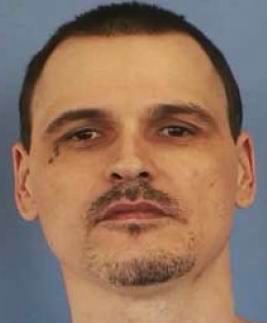
Joseph Daniel Burns
Murderer Brian Kevin Rosenfeld
Murderer · USA · 1985
Brian Kevin Rosenfeld Brian Kevin Rosenfeld was sentenced to three concurrent l…
23 victims
Brian Kevin Rosenfeld
Murderer · USA · 1985
Brian Kevin Rosenfeld Brian Kevin Rosenfeld was sentenced to three concurrent l…
23 victims
 Russell Ellwood
Murderer · USA · 1991
Russell Ellwood was a former taxi driver. Authorities suspected him of killing…
20 victims
Russell Ellwood
Murderer · USA · 1991
Russell Ellwood was a former taxi driver. Authorities suspected him of killing…
20 victims
 Robert Martines Perez
Murderer · USA · 1994
Name: Robert Martines Perez · Other name used in proceedings: Robert Martinez P…
15 victims
Robert Martines Perez
Murderer · USA · 1994
Name: Robert Martines Perez · Other name used in proceedings: Robert Martinez P…
15 victims
 Billy Frank Vickers
Murderer · USA · 1993
Billy Frank Vickers Vickers was executed by lethal injection in Texas on Januar…
14 victims
Billy Frank Vickers
Murderer · USA · 1993
Billy Frank Vickers Vickers was executed by lethal injection in Texas on Januar…
14 victims
 Yvette Taylor
Murderer · USA · 2012
Yvette Taylor was a Martinez, Georgia woman. She was the roommate of Theodore C…
1 victim
Yvette Taylor
Murderer · USA · 2012
Yvette Taylor was a Martinez, Georgia woman. She was the roommate of Theodore C…
1 victim
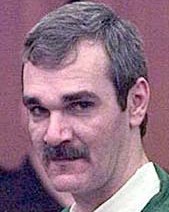 Richard Charles Johnson
Murderer · USA · 1985
Richard Charles Johnson was hitchhiking when he was picked up in September 1985…
2 victims
Richard Charles Johnson
Murderer · USA · 1985
Richard Charles Johnson was hitchhiking when he was picked up in September 1985…
2 victims
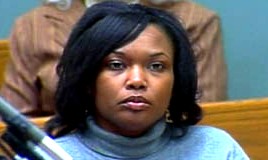 Carla Hughes
Murderer · USA · 2006
Name: Carla Hughes Other names: Carla Ann Hughes Date of birth: June 12, 1981 A…
2 victims
Carla Hughes
Murderer · USA · 2006
Name: Carla Hughes Other names: Carla Ann Hughes Date of birth: June 12, 1981 A…
2 victims
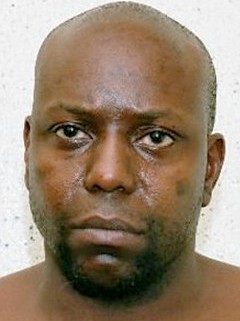 Peter Bryan
Homicide · United Kingdom · 1993
Peter Bryan was a schizophrenic cannibal who was sentenced to closed psychiatri…
3 victims
Peter Bryan
Homicide · United Kingdom · 1993
Peter Bryan was a schizophrenic cannibal who was sentenced to closed psychiatri…
3 victims
 Carmen Montelongo
Murderer · USA · 2011
Carmen Montelongo was a Riverside woman who was convicted of first-degree murde…
1 victim
Carmen Montelongo
Murderer · USA · 2011
Carmen Montelongo was a Riverside woman who was convicted of first-degree murde…
1 victim
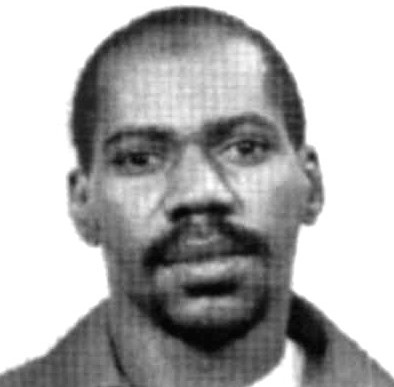 Johnny Townsend
Murderer · USA · 1983
Johnny Townsend was sentenced to death on March 8, 1985. The case involved aggr…
2 victims
Johnny Townsend
Murderer · USA · 1983
Johnny Townsend was sentenced to death on March 8, 1985. The case involved aggr…
2 victims
- Gender
- male
- Country
- USA
- Location
- Lee County, Mississippi, USA
- Date of birth
- February 3, 1968
- Age at first offence
- 26
- Characteristics
- robbery
- Victim profile
- Michael McBride, 57 (manager of a Tupelo motel)
- Method of murder
- St abbing with a knife, a fork and a Phillips head screwdriver
- Date(s) of murder
- November 9, 1994
- Years active
- 1994
- Date of arrest
- —
- Status
-
Executed
Executed by lethal injection in Mississippi on July 21, 2010
Case record: Joseph Daniel Burns
Joseph Daniel “JoJo” Burns was executed by lethal injection in Mississippi on July 21, 2010. His execution was carried out at the state penitentiary at Parchman.
Background
Joseph Daniel Burns (MDOC #42963) was a white male born on 02/03/1968. The record described him as a state death row inmate and stated he was 42 years old at the time of his execution.
During the day of November 9, 1994, Burns and Phillip Hale went to the Town House Motel on Gloster Street in Tupelo, Mississippi, where Floyd Melvin “Mike” McBride was the hotel manager.
Phillip Hale testified that he and McBride were friends, and that he introduced Burns to McBride on November 9, 1994. Hale testified that he went in and asked McBride if they could stay there three or four days. McBride said sure. Hale then went out to the truck, got his bag, and asked Burns to come inside. Hale testified that they then “hung out for a while” with McBride. Burns and Hale went to get something to eat and watched a movie before returning to the motel office.
McBride asked Burns and Hale if they wanted to help him count $30,000. They agreed, and while counting the money, the two decided to rob McBride. Burns and Hale agreed that Hale would hit McBride and Burns would take the money. Hale testified that he hit McBride and knocked him down and left the room to make sure nobody was coming. When he returned to the room, Burns was stabbing McBride in the back of the neck with a knife, a fork, and a phillip's head screwdriver. When Hale asked Burns what he was doing, Burns stabbed Hale in the foot. Hale testified that after the stabbing, Burns and Hale wiped fingerprints, got the money and left. The record reflected that $3,000 was taken from a tin safe in McBride’s office, and that Burns broke the lock off of the safe with a pair of pliers.
After the stabbing, Burns and Hale returned to the trailer in Verona where they were living with Janie Taylor and Brandi Sides. Burns went into Janie Taylor’s room, whom he was dating at the time, woke her up, told her what they had done, counted the money, and divided the money between himself and Hale ($1,500 each).
Phillip Hale then went to his brother, Jeff’s, shop. Jeff’s brother was out of town. Burns showed up later and informed Phillip Hale that he had thrown the “stuff” behind the trailer park where they lived.
The testimony of State’s witness Carrie Cryder revealed that on December 24, 1994 he and Burns were riding around, and Burns retrieved the weapons from behind the trailer and threw them off of the bridge on Brewer Road.
Later that day, on November 10, 1994, Phillip Hale parked the truck the two had driven to the Town House Motel behind Jeff’s house because he was fearful that someone had seen the truck and could identify Burns and Hale by the truck. Jeff Hale had loaned his brother the truck several weeks before McBride was killed. When Jeff Hale returned to town, he was suspicious about why Phillip had parked the truck behind the house. The account stated that Phillip paid his brother Jeff $600 he owed him, and that this also made Jeff suspicious about where Phillip got the money. When Jeff first asked Phillip where the money came from, Phillip lied to him. Phillip testified that he ultimately told his brother that he and Burns killed McBride, although there is some question about when he told him. Burns also told Jeff Hale what happened.
The following weekend, on November 12, 1994, Burns, Phillip Hale and Jeff went to Tunica to the casinos and spent the money they had stolen from the Town House Motel, returning to Tupelo with $100 or $200.
McBride’s body was found in his living quarters at the Town House Motel by another employee around 7:00 a.m. the next morning. McBride died from a combination of blunt force injuries to the head and neck caused by numerous blows to the head and back of the neck and exsanguination from the injuries to his face and neck.
The record further described that guest testimony placed two men arriving at the motel in a tan truck fitting the description of the truck belonging to Jeff Hale, driven by Phillip Hale, arriving about 8:00 p.m. and leaving around 10:00 or 10:30 p.m.
Phillip Hale and Burns were not arrested until August of 1995 concerning this crime. The Tupelo Police Department arrested them pursuant to an investigation ensued after two anonymous phone calls were received by the Crime Stoppers.
Other correspondence and evidence described in the record
While Burns was in jail in Lee County, he began corresponding with a female prisoner, Contina Kohlheim. In the letters Burns sent Kohlheim, he talked about killing a man. The record included the following quotations from the letters:
“Look about the guy I killed, me and Phillip were dealing with a lot of dope and Phillip was giving our dope to this guy. He owed us $58,000. I told Phillip to ask him one more time to pay us but he never did. So that night we went to the town house and I killed his ass.”
In the other letter Burns sent Kohlheim, he wrote:
“I took a man's life now I'm looking at the Death Penalty.”
The letters were signed from “JoJo,” or “Love JoJo.” The record stated Burns gave the letters to a male trustee who in turn gave them to the jailer who then gave them to a female trustee to deliver since the male prisoners were not allowed to go to the female side of the jail. Kohlheim turned the letters over to the police after being asked to do so.
Following a request by the district attorney’s office, Officer Buddy Bell obtained a handwriting sample from Burns under the pretense of having him write down who would be allowed to visit him in jail. A comparison was made between the letters written to Kohlheim and the known writing sample of Burns. The state’s expert determined that there was a strong probability that the signatures on both letters were Burns’. The expert also determined that the content of both letters was probably written by Burns. There was also fingerprint analysis done on the letters, and Burns’ fingerprints were found on both letters obtained from Tina Kohlheim.
At trial, testimony revealed Burns was not charged with any other murder, and there had been no other murders at the Town House Motel.
Timeline
- November 9, 1994 — Burns and Phillip Hale went to the Town House Motel in Tupelo, Mississippi, where Floyd Melvin “Mike” McBride was the hotel manager; they agreed to count money and decided to rob McBride.
- November 10, 1994 — Phillip Hale parked the truck behind Jeff’s house.
- November 12, 1994 — Burns, Phillip Hale, and Jeff went to Tunica and spent money stolen from the Town House Motel.
- December 24, 1994 — Carrie Cryder testified he and Burns retrieved weapons from behind the trailer and threw them off of the bridge on Brewer Road.
- August 1995 — Burns and Phillip Hale were arrested regarding the crime.
- December 13, 1995 — The Lee County Grand Jury returned a true bill against Burns.
- September 3, 1996 — A three-day trial began in Lee County Circuit Court.
- September 5, 1996 — The jury returned a verdict of guilty.
- September 6, 1996 — The sentencing hearing took place.
- September 13, 1996 — Burns’s Motion to Stay Execution pending appeal was granted.
- September 18, 1996 — Burns’s Motion for JNOV or In the Alternative A New Trial was denied.
- October 1, 1996 — Burns filed a Notice of Appeal with the Mississippi Supreme Court.
- 01/29/97 — Accomplice Phillip E. Hale received a life sentence for homicide.
- 12/01/08 — Hale was released on parole.
- July 21, 2010 — Mississippi conducted the mandated execution of Joseph D. Burns by lethal injection; he was pronounced dead at 6:50 p.m.
Trial
The record described that Joseph Daniel “JoJo” Burns was indicted during the November 1995 term of the Lee County Grand Jury for the capital murder of Floyd Melvin McBride on November 10, 1994, while engaged in the commission of armed robbery in violation of § 97-3-19(2)(e).
The three-day trial began September 3, 1996 and ended September 5, 1996 with the jury returning a verdict of guilty. The sentencing hearing was held September 6, 1996.
The record included the verdict form returned by the jury. The jury found beyond a reasonable doubt that:
- the defendant actually killed Floyd Melvin McBride;
- the defendant attempted to kill Floyd Melvin McBride;
- the defendant intended that the killing take place; and
- the defendant contemplated that lethal force would be employed.
The jury then found that the aggravating circumstance that the defendant was engaged in the commission of a robbery was sufficient to impose the death penalty and that there were insufficient mitigating circumstances to outweigh the aggravating circumstance, and that the defendant should suffer death.
After the jury deliberated, the trial judge sentenced Burns to death by lethal injection, with an execution planned for October 11, 1995. The record stated that Burns’s Motion to Stay Execution pending appeal was granted on September 13, 1996, and his Motion for JNOV or In the Alternative A New Trial was denied on September 18, 1996. Following denial of his Motion for Supersedeas Bond Pending Appeal, Burns was held in the maximum security unit at The Mississippi State Penitentiary pending the outcome of his appeal.
Issues raised on appeal (as listed in the record)
The record listed the following issues Burns raised on appeal: I. failure to grant requested preliminary hearing; II. failure to have entire proceedings recorded; III. ineffective assistance of counsel, due process, and right to fair trial by denial of a request for continuance; IV. error in failing to quash the indictment; V. insufficient evidence to convict on the indicted charge; VI. allowing introduction of exemplars where items were taken in violation of Fourth, Fifth, and Sixth Amendment rights; VII. allowing letters into evidence where proper foundation and chain of custody were not satisfied; VIII. error in denying motion for directed verdict and motion for new trial; IX. prejudicial reference to prior crimes in violation of M.R.E. Rule 404; X. evidence insufficient due to reliance on uncorroborated, incredible testimony; XI. admission of unnecessary and gruesome autopsy photographs; XII. denial of independent psychologist expert assistance; XIII. denial of a request for a manslaughter instruction; XIV. failure to instruct jury on underlying robbery; XV. prosecutorial misconduct; XVI. remand for a new sentencing proceeding due to prosecutor mentioning undefined aggravators.
The record concluded that these issues were without merit and that the conviction of capital murder and sentence of death were affirmed.
Sentencing
The trial judge sentenced Burns to death by lethal injection, and the sentencing hearing occurred on September 6, 1996. The jury found beyond a reasonable doubt that the aggravating circumstance of robbery outweighed insufficient mitigating circumstances and returned a verdict that the defendant should suffer death.
Appeals
The record included a direct appeal decision, “Burns v. State, 729 So.2d 203 (Miss. 1998) (Direct Appeal),” stating:
- conviction of capital murder was affirmed;
- death sentence was affirmed;
- “Affirmed.” It also included an “EN BANC” opinion signed by Pittman, Presiding Justice.
The record further included “Burns v. State, 813 So.2d 668 (Miss. 2001) (PCR)” describing post-conviction relief proceedings. That record stated:
- post-conviction review of issues raised on direct appeal was barred;
- defense counsel’s failure to ensure all bench conferences at trial were recorded did not amount to ineffective assistance;
- defense counsel’s conduct of jury selection process did not amount to ineffective assistance;
- denial of pro se motion for psychiatric assistance did not affect trial;
- any error in sentencing court’s failure to inform the jury of sentencing option of life imprisonment with possibility of parole was harmless;
- Burns was entitled to a hearing on his claim that trial counsel’s decision not to put on evidence in mitigation amounted to ineffective assistance;
- testimony was properly admitted over petitioner's motion in limine;
- appellate counsel’s presentation of issues found lacking in merit was not ineffective assistance;
- taking of handwriting samples did not create a constitutional deprivation.
The record also included “Burns v. State, 879 So.2d 1000 (Miss. 2004) (PCR),” which stated:
- the Supreme Court, Easley, J., held that the post-conviction circuit court was without jurisdiction on remand to appoint a state-funded expert psychologist;
- counsel did not perform deficiently in failing to present mitigation witnesses at the penalty phase;
- defendant was not prejudiced by any deficient performance; and it stated the judgment was affirmed.
The record included “Burns v. Epps, 342 Fed. Appx. 937 (5th Cir. 2009) (Habeas),” describing that a certificate of appealability was denied.
Execution
Processing leading to the execution
The record included a news briefing describing execution arrangements and timing on July 21, 2010.
The news briefing stated that on July 21, 2010, the Mississippi Department of Corrections conducted the mandated execution of state inmate Joseph D. Burns. Burns was pronounced dead at 6:50 p.m. at the state penitentiary at Parchman.
At 6:16 p.m., the Mississippi Attorney General’s Office informed MDOC that the U.S. Supreme Court refused to delay the execution and the scheduled execution proceeded.
The news briefing included a quote from MDOC Commissioner Christopher Epps. Epps said:
“It is our agency’s role to see that the order of the court is conducted in a manner which is professional and with decency and dignity. That has been done and the cause of justice was championed today,”
and later said:
“In this final chapter tonight, it is our heartfelt hope that the family of Mike McBride may now begin the process of healing. Our prayers go out to you as you continue life’s journey,”
and concluded by commending Deputy Commissioner of Institutions Emmitt Sparkman and the Mississippi State Penitentiary security staff for their professionalism.
The record stated that Burns apologized to the family of Mike McBride, quoted the 23rd Psalm, and delivered personal messages to his family during his final statement.
Scheduling and last hours described
The record stated Burns was religious in his final hours. It stated he visited with his three daughters, his mother, his sister, and prison chaplain James Whisnant in his final hours. His mother, Imogene Henry, and his sister, Delana Loveless, witnessed his death.
The record described that none of his family members was made available to the media. It stated Burns made no request for a last meal and ate turkey and roast beef sandwiches in the afternoon, and that he did not take a sedative or a shower before the execution.
The record also described that MDOC Commissioner Chris Epps said Burns did not request anything special for a last meal and quoted Epps as saying:
“He didn’t see a big deal in not requesting a last meal,”
and:
“It’s the first time I can recall an imate didn’t request one.”
The record described Burns was offered a standard meal for dinner and specified items: red beans and rice, corn, greens, cornbread, cake and iced tea.
The record also described Burns declined a sedative and that he declined a morning plate of sausage, biscuits and eggs. It stated he ate salami with bread, cheese, pickles, lettuce and juice for lunch and had an afternoon snack of roast beef and turkey sandwiches and a Coca-Cola.
The record included a detailed “Chronological Sequence of Events of Execution,” listing timings and procedures. It stated:
- 48 Hours Prior to Execution — condemned was transferred to a cell adjacent to the execution room.
- 24 Hours Prior to Execution — institution was placed in emergency/lockdown status.
- 1200 Hours Day of Execution — designated media center opened.
- 1500 Hours Day of Execution — inmate’s attorney of record and chaplain were allowed to visit.
- 1600 Hours Day of Execution — inmate was served last meal and allowed to shower.
- 1630 Hours Day of Execution — MDOC clergy allowed to visit upon request of inmate.
- 1730 Hours Day of Execution — witnesses were transported to Unit 17.
- 1800 Hours Day of Execution — inmate was escorted from holding cell to execution room.
- 1800 Hours Day of Execution — witnesses were escorted into observation room.
- 1900 Hours Day of Execution — a post execution briefing was conducted with media witnesses.
- 2030 Hours Day of Execution — designated media center closed. The record also stated Burns’s scheduled execution time was delayed about 30 minutes while the U.S. Supreme Court completed review of a last-minute appeal on Burns’s behalf.
Last words and execution events
The record included verbatim statements attributed to Burns and others.
An execution report included Burns’s final statements. It stated that after reciting the 23rd Psalm he said:
“You can believe that because that's where I'm going.”
The record included the following statement from Burns:
“All right, devil, let's do your work. That's it,”
and added that corrections officials cut off the microphone after that statement.
The record further included another report quoting Burns saying:
“You can believe that,”
shortly after reciting the 23rd Psalm.
The record included Burns’s message to his sister, Delana Loveless:
“Boo, take care of your sister. I love you,”
and it included Burns signaling he was ready:
The record stated the lethal fluids began to flow after he closed his eyes, never to reopen them.
Aftermath
The record stated the Mississippi Department of Corrections Commissioner Chris Epps said the evening marked the close of the Joseph D. Burns case.
It also stated that Burns’s body was turned over to a Tupelo funeral home.
The record included statements by Greg Gordon, McBride’s brother-in-law. Gordon said:
“For nearly 16 years the wheels of justice have had our family on a nightmare of a roller coaster ride,”
and:
“Today, justice was served for that senseless act, and the ride has finally come to an end.”
Gordon also said:
“It is only through God's love, mercy and grace that we were able to forgive and pray for the two individuals responsible for Mike's death,”
and:
“Our faith in God is strong and he has carried us through this tragic loss.”
The record described protests outside the State Penitentiary at Parchman in opposition to Mississippi’s use of the death penalty, and described statements by Sheila O’Flaherty:
“I don't believe Mississippi should execute anybody,”
and:
“I don't think we have a right as a society to say that someone is so bad that their death will make things better.”
People mentioned
- Joseph Daniel Burns — defendant; executed by lethal injection
- Floyd Melvin “Mike” McBride — victim; hotel manager murdered
- Phillip Hale — accomplice; convicted of homicide and sentenced to life; released on parole Dec. 1, 2008
- Jeff Hale — witness described in trial proceedings as a brother involved in events
- Janie Taylor — person Burns woke after the stabbing
- Brandi Sides — person associated with the trailer where Burns and Hale returned
- Carrie Cryder — state witness regarding weapons disposal
- Officer Buddy Bell — obtained handwriting sample from Burns
- Contina Kohlheim (also referenced as Tina Kohlheim in fingerprint analysis) — recipient of letters; turned letters to police
- Willie Agnew — male trustee who received letters for delivery
- Ted Burkes — handwriting expert and document examiner
- Kenneth Gill — fingerprint examiner
- Deputy Commissioner of Institutions Emmitt Sparkman — commended by Epps
- MDOC Commissioner Christopher Epps (also referred to as Chris Epps) — made public statements about process and final hours
- James Whisnant — prison chaplain
- Imogene Henry — Burns’s mother; witnessed execution
- Delana Loveless — Burns’s sister; witnessed execution
- Kay Gordon — McBride’s sister; sat in witness room during execution
- Josh Criddle — McBride’s nephew
- Josh Criddle is described as being in the viewing room with Gordon
- Greg Gordon — McBride’s brother-in-law; read statement after execution
- Sen. Merle Flowers — witness on Governor Haley Barbour’s behalf
- Melinda Box Braxton — director of the Division of Victims Services
- Glenn Swartzfager — identified as an attorney scheduled to witness
- Lee County Sheriff Jim Johnson — identified as an included witness
- Paul Everette Woodward, Gerald James Holland, and other named individuals appear in the record in connection with other executions described in background context
Charges, verdicts, and sentencing outcomes (as stated)
- Burns was indicted for the capital murder of Floyd Melvin McBride while engaged in the commission of armed robbery in violation of § 97-3-19(2)(e).
- The jury returned a verdict of guilty and found that Burns actually killed McBride, that he attempted to kill McBride, that he intended the killing, and that he contemplated lethal force.
- The jury found the aggravating circumstance of being engaged in a robbery sufficient to impose the death penalty and that there were insufficient mitigating circumstances to outweigh the aggravating circumstance.
- The jury sentenced Burns to death, and the trial judge imposed death by lethal injection.
- Burns was executed on July 21, 2010.
Spotted an error, or have more information about this case?