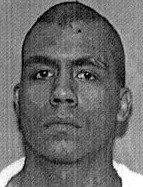
Gabriel Gonzales
Murderer Brian Kevin Rosenfeld
Murderer · USA · 1985
Brian Kevin Rosenfeld Brian Kevin Rosenfeld was sentenced to three concurrent l…
23 victims
Brian Kevin Rosenfeld
Murderer · USA · 1985
Brian Kevin Rosenfeld Brian Kevin Rosenfeld was sentenced to three concurrent l…
23 victims
 Russell Ellwood
Murderer · USA · 1991
Russell Ellwood was a former taxi driver. Authorities suspected him of killing…
20 victims
Russell Ellwood
Murderer · USA · 1991
Russell Ellwood was a former taxi driver. Authorities suspected him of killing…
20 victims
 Robert Martines Perez
Murderer · USA · 1994
Name: Robert Martines Perez · Other name used in proceedings: Robert Martinez P…
15 victims
Robert Martines Perez
Murderer · USA · 1994
Name: Robert Martines Perez · Other name used in proceedings: Robert Martinez P…
15 victims
 Billy Frank Vickers
Murderer · USA · 1993
Billy Frank Vickers Vickers was executed by lethal injection in Texas on Januar…
14 victims
Billy Frank Vickers
Murderer · USA · 1993
Billy Frank Vickers Vickers was executed by lethal injection in Texas on Januar…
14 victims
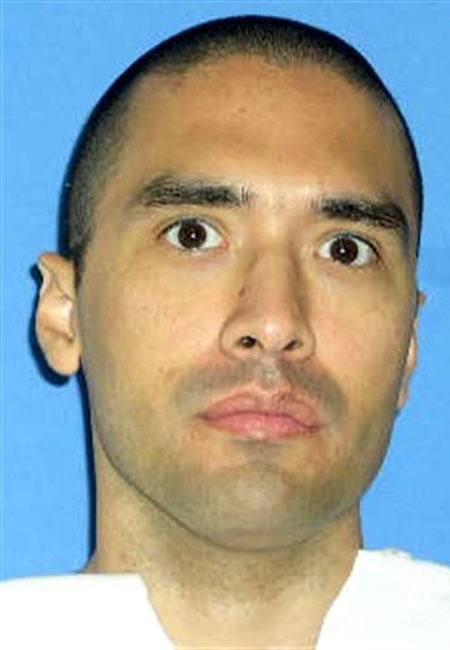 Rolando Ruiz
Murderer · USA · 1992
Rolando Ruiz was convicted of capital murder and was sentenced to death in Bexa…
1 victim
Rolando Ruiz
Murderer · USA · 1992
Rolando Ruiz was convicted of capital murder and was sentenced to death in Bexa…
1 victim
 Raymond Bailey
Murderer · Australia · 1957
Raymond Bailey was convicted of the murder of Sally (Thyra) Bowman (43), her da…
3 victims
Raymond Bailey
Murderer · Australia · 1957
Raymond Bailey was convicted of the murder of Sally (Thyra) Bowman (43), her da…
3 victims
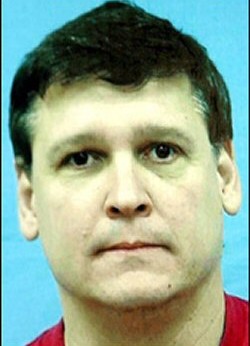 Doug Williams
Mass murderer · USA · 2003
Doug Williams was a 48-year-old assembly line worker at a Lockheed Martin plant…
6 victims
Doug Williams
Mass murderer · USA · 2003
Doug Williams was a 48-year-old assembly line worker at a Lockheed Martin plant…
6 victims
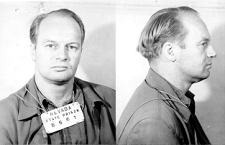 Clayton Fouquette
Murderer · USA · 1948
Defendant: Clayton Octave Fouquette · Occupation (at death): Plumber · Age (at…
1 victim
Clayton Fouquette
Murderer · USA · 1948
Defendant: Clayton Octave Fouquette · Occupation (at death): Plumber · Age (at…
1 victim
 Henry Eugene Hodges
Murderer · USA · 1989
Defendant: Henry Eugene Hodges (appellant) · Victim: Ronald A. Bassett (Nashvil…
3 victims
Henry Eugene Hodges
Murderer · USA · 1989
Defendant: Henry Eugene Hodges (appellant) · Victim: Ronald A. Bassett (Nashvil…
3 victims
- Gender
- male
- Country
- USA
- Location
- Bexar County, Texas, USA
- Date of birth
- March 22, 1974
- Age at first offence
- 20
- Characteristics
- drug addict, police officer
- Victim profile
- Louella Hilton, 57 (pawn and gun shop owner)
- Method of murder
- Shooting
- Date(s) of murder
- July 20, 1994
- Years active
- 1994
- Date of arrest
- —
- Status
-
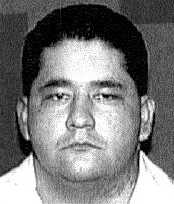
Sentenced to death
Sentenced to death on March 26, 1997
Case information
Defendant: Gabriel Gonzales (DoB 03/22/1974) Date of crime: 07/20/1994 Gang affiliation: Crips gang member
Timeline
- 03/26/1997 — Gabriel Gonzales was on death row since this date.
- 02/19/1997 — Gabriel Gonzales was convicted of capital murder and sentenced to death.
- 10/18/2006 — The Court of Criminal Appeals of Texas delivered its opinion in Ex Parte Gabriel Gonzales, Applicant.
- 03/26/1997 — Sentenced to death on March 26, 1997.
Background
In July 1994, Gabriel Gonzales met up with his girlfriend Susie at an apartment that was a common place to meet for Crips gang members. Four young men that he barely knew—DeAnthony, Shawntee, Markett, and Sherrard—were around, speaking about a robbery that they were planning. Gabriel concedes vaguely overhearing their conversation from a back room.
On the eve of the robbery, all of them were in Lisa McHenry’s apartment, drinking alcohol and smoking cannabis. Gabriel was drinking and smoking marijuana until he was so drunk he could hardly walk.
Late at night the guys went to get something to eat and convinced Gabriel to come along. When they came back to the apartment between 3 and 4 am, Gabriel was not with them. Susie asked about him and was told Gabriel was passed out in the car. Susie went out to him but was not able to wake him up from his alcohol and marijuana inducted sleep.
The offence
On the following morning—20 July 1994—the four young men, DeAnthony, Markett, Sherrard, and Shawntee, drove to a pawnshop.
The State said Gabriel was the driver of the car. Gabriel claimed he was still high and drunk, asleep in the back of the car, and did not notice when the others, their faces covered with bandanas, set off for the pawnshop.
At that time, the owner of the shop, her daughter, an employee, and a customer were inside the pawnshop. The young men told them to get down on the floor.
When Louella Hilton, the owner of the shop, tried to escape to a room in the back of the shop, one of the men followed her and several times shot at the closed door behind which L. Hilton was hiding, deadly injuring her.
Meanwhile, the other men stole 29 weapons in the store and the person who had been shooting emptied the cash register.
All of them drove off in the car to Lisa McHenry’s apartment, where they shared the money and the weapons. Some of the weapons were given to other young men who came by the house, and the car used for the robbery was disposed of.
Investigation
During the next 3 days, all of them were arrested.
Gabriel did not tell his version of what happened, and Susie was never questioned as a witness either. Gabriel said that because he was deeply involved in gang activities, the gang code dictated not to snitch on one another. He feared for the safety of his three children and their mothers if he made a statement and for that reason decided to keep silent.
Arrest
Trial
Witness evidence and contradictions
DeAnthony Walker was the main witness against Gabriel. DeAnthony Walker was 14 at the time of the robbery and was also a Crips-member, having been just previously released from prison from robbery. When questioned by police and prosecution, DeAnthony Walker made contradicting statements that differed strongly from what he testified in court. DeAnthony Walker pled guilty for capital murder and testified against the others. In exchange, DeAnthony Walker got an 18 years sentence; without this deal he would have faced up to 40 years.
Lisa McHenry was another important witness. She strongly contradicted herself in her statements. She was given 5 years probation to lie against Gabriel because she had been arrested with a gun used in the robbery and could face the death penalty; she lied to save herself.
A third witness was described as an eyewitness. He claimed he saw the driver of the getaway car’s profile for a few seconds across a busy 5 lane highway. He was not able to identify Gabriel until the third try, two weeks after the robbery, after Gabriel’s picture had already been all over the media. Gabriel is Latin and he was the only Latin person at the line-ups; all the other ones were Black.
Gabriel’s claim of lack of participation
Gabriel claimed he was still high and drunk asleep in the back of the car and did not notice when the others set off for the pawnshop.
Evidence about identification and forensic links
There was described as absolutely no evidence against Gabriel: no fingerprints of Gabriel were found in the pawnshop or on any of the rediscovered weapons that were stolen during the robbery, nor was any of the stolen money or weapons found in Gabriel’s possession.
Punishment phase mitigation evidence discussion
At his trial punishment stage, Gabriel’s mitigation evidence was described as consisting only of his sister’s testimony.
Dem eris Gonzalez testified at the punishment case-in-chief that, in school, Gabriel was always “a slow learner” and was often placed in special education classes. She said he was often bullied because he was a small child, and that he was always more of a follower than a leader. She said he was diagnosed with epilepsy, attention deficit disorder, and clinical depression. She said their family situation was difficult because the family moved several times and because of their parents’ marital problems. She testified that both she and Gabriel dropped out of high school before graduating, in his case because he had difficulties at school and because he was tired of being bullied.
She testified their parents divorced after their father had started to become physically abusive towards their mother, and that Gabriel attempted to live with his father but that his father rejected him.
She further testified that Gabriel became involved with gangs at age eighteen, after being initiated simultaneously with their younger brother. She said Gabriel often expressed a desire to leave the gang beginning about three months after he first joined when he realized the things the gang was doing, but that he was too scared to do so.
In argument, the State spoke of Gabriel’s prior offenses and stressed the likelihood that he would continue his criminal gang activity while in prison. The State also suggested Gabriel lacked remorse, as shown by the statement he reportedly made immediately after the crime at hand: “I smoked that white bitch.” Finally, the State noted that the mitigation evidence consisted only of his sister’s testimony.
Sentencing
On 02/19/1997, Gabriel Gonzales was convicted of capital murder and sentenced to death. The Court of Criminal Appeals of Texas later stated that the conviction had been affirmed on direct appeal.
Aggravating evidence at punishment
The State’s aggravating evidence at the original punishment hearing was divided into three general categories:
- A recitation of prior offenses, including:
- 1991 conviction for criminal trespass
- 1993 convictions for burglary of a vehicle and unlawful carrying of a weapon
- An arrest in 1993 for possession of cocaine and possession of marijuana
- Apparent involvement in a 1993 pawn shop robbery with similar characteristics to the robbery in the present case The State also proved that Gabriel violated the terms of his probation by absconding from a court-ordered drug treatment facility.
- Disciplinary infractions while residing in Bexar County detention facilities.
- Witnesses called to testify to the existence and nature of gang activity in Texas prisons, including testimony arguing that Gabriel’s affiliation with the Crips would allow him to continue committing criminal and potentially violent acts even while incarcerated. The State showed a letter Gabriel had written from his jail cell to a fellow Crip, in which Gabriel offered to murder rivals on behalf of the letter’s recipient once he got to prison.
In total, the State called nineteen witnesses during its punishment case-in-chief.
Appeals
Application for writ of habeas corpus
The matter came before the Court of Criminal Appeals of Texas in AP-73,775, Ex Parte Gabriel Gonzales, Applicant, on Application for a Writ of Habeas Corpus From Bexar County. The opinion named Womack, J. as delivering the opinion; Meyers, Price, Johnson, Holcomb, and Cochran JJ. joined. Cochran J. filed a concurring opinion. Keller, P.J. filed a dissenting opinion. Keasler, J. dissented. Hervey, J. did not participate.
The court described the proceeding as a post-conviction application for a writ of habeas corpus filed pursuant to Code of Criminal Procedure article 11.071.
Ineffective assistance claim and Strickland analysis
In his writ application, Gabriel presented six claims for relief. After a hearing, the convicting court made findings of fact and conclusions of law and recommended that relief be denied. The appellate court agreed that relief should be denied as to five of the claims, and it set the case for consideration of a claim that trial counsel provided ineffective assistance under the Sixth Amendment by failing to present, at the punishment phase, mitigating evidence of abuse Gabriel suffered at the hands of his father and the effects it had on him.
The appellate court described the two-pronged test from Strickland v. Washington:
- deficient performance required performance falling below an objective standard of reasonableness, judged at the time of counsel’s conduct
- prejudice required showing there was a reasonable probability that absent the errors, the jury would have answered the mitigation issue differently
The court discussed that Texas’ capital sentencing scheme asks the jury to answer a mitigation issue rather than directly balancing aggravating and mitigating circumstances, and it adapted the Supreme Court prejudice test accordingly.
The court quoted:
“A reasonable probability is a probability sufficient to undermine confidence in the outcome.”
Counsel’s performance
The court noted the applicant alleged and the convicting court found as a matter of fact that:
- his father physically and sexually abused him severely and frequently when he was a small child
- as a result, he suffers from a post-traumatic stress disorder
The court said none of these facts were put in evidence at trial.
It also stated that:
- Gabriel’s father abused Gabriel’s older sister, who eventually reported it to her mother.
- Gabriel’s mother had thought her husband was sexually abnormal and used excessive force with the children. When her daughter reported being sexually abused, she immediately notified the police and obtained a divorce.
- Defense counsel talked to the mother once before trial and to the sister once during trial, and did not ask them or the applicant about any specific topics such as abuse in Gabriel’s past.
The court included details about counsel’s interviewing approach:
- “I just start from the beginning, you know, tell me all about you. Where were you born and so forth, leading them up to -- to this time.”
- The applicant did not volunteer any information about abuse.
The court stated that the sister testified at the habeas hearing she did not volunteer information about the abuse because she was ashamed of having been abused and it was not easy to talk about.
It stated counsel tried “quite a few capital cases,” and that he believed evidence of the young defendant’s background would have been helpful in trying to get a life sentence instead of a death sentence. In retrospect he said:
- “I really should have pursued this or at least inquired into it, but I did not.” The court said his failure to pursue further investigation was not a strategic or tactical decision and that he believed it was a mistake.
The court noted that the sister did testify at the punishment stage of the trial that Gabriel was bullied in school, had trouble learning, and had been diagnosed as being “borderline retarded” and suffering from epilepsy (as did his father) and attention-deficit disorder. The court noted Gabriel’s mother was not called to testify.
After trial and before the habeas hearing, a board-certified psychiatrist interviewed and examined Gabriel and reviewed school and jail records. The psychiatrist’s diagnoses were:
- chronic post-traumatic stress disorder
- attention-deficit disorder with hyperactivity
- mixed personality disorder with explosive and antisocial traits
- hereditary epilepsy
- dyslexia and other learning disorders
The court reproduced the psychiatrist’s history version:
“From that point [of his parents' divorce] on, Gabriel had extreme homophobic reactions, especially any insinuation that he was "Gay" or if he was called "Gay," he reacted in a very agitated manner. It was this trigger that caused him to exhibit run-a-way [ sic ] behavior and exhibit "macho" behavior and run the streets. He lived twenty-four hours a day in terror that he would be labeled "gay."
The psychiatrist’s “psychodynamic formulation” included the following opinion:
This is an individual who at an early age had [neurological and learning disorders]. He also had stigmata of Post Traumatic Stress Disorder as a result of extensive sexual abuse and molestation by his genetic father. He apparently was threatened with homicidal intention, by the perpetrator, if he revealed to his mother that this behavior was going on. This individual also has a Borderline Normal Intelligence Quotient which would lead to poor processing of information and probably lower level of control of behaviors which included antisocial behaviors and impulsive behaviors at an early age. There was extensive drug abuse at an early age which extended into adult age with participation in buying and selling drugs. This is an individual who has received many educational services, marginal psychiatric services as a child, and evolved into a very impulsive, angry adult whose trust was destroyed because of sexual molestation as a child. He, therefore, was not able to evolve deep interpersonal relationships that are so important for someone to learn to control and monitor his own behavior so that he was able to function in a job as a normal productive citizen. This individual would require extensive psychiatric treatment for Post Traumatic Stress Disorder and Chemical Dependence in order to be rehabilitated in to [ sic ] a law-abiding, productive member of society.”
The court concluded that because trial counsel was not aware at the time of trial that Gabriel suffered from an abusive childhood, the key question was whether counsel failed to conduct a reasonable investigation to uncover mitigating evidence. The court stated the trial court accepted as true that Gabriel’s mother and sister were aware of the abuse and that trial counsel did not ask specific questions about it.
The appellate court stated: counsel’s performance fell below the objective standard and quoted:
“Counsel has a duty to make reasonable investigations or to make a reasonable decision that makes particular investigations unnecessary.”
Prejudice
The court stated that having established deficient performance, Gabriel also had to demonstrate prejudice to establish a Sixth Amendment violation.
It described that in such cases without a lower court decision on prejudice, it evaluated the aggravating evidence and mitigating evidence available to determine how a jury might reasonably answer the mitigation special issue. It said it considered the totality of the evidence, including trial evidence and habeas evidence.
The court described additional mitigating evidence accepted at the habeas hearing:
- Gabriel’s father forced him to perform oral sex weekly beginning when Gabriel was less than six years old.
- His father had anal intercourse with Gabriel weekly from when Gabriel was seven years old.
- His father physically abused him if he resisted and threatened to kill him as well as his mother if Gabriel ever told anyone about the abuse.
- His father sexually molested Gabriel’s sister numerous times during her childhood.
- It was not clear from the record when the abuse ended.
- Gabriel lived with his father until his parents divorced in 1988, when Gabriel was fourteen years old.
The court accepted the board-certified psychiatrist Dr. Raymond D. Potterf’s conclusions that Gabriel suffered from post-traumatic stress disorder due to repeated physical and sexual abuse, and that he had:
“Borderline Normal Intelligence Quotient which would lead to poor processing of information and probably lower level of control of behaviors which included antisocial behaviors and impulsive behaviors at an early age.”
The court accepted Dr. Potterf’s conclusion that if given extensive psychiatric treatment for post-traumatic stress disorder and chemical dependence, Gabriel could perhaps become a productive, law abiding member of society.
The court concluded that:
- mitigating evidence presented at the habeas hearing was substantially greater and more compelling than that presented at trial
- it could not say with confidence that the aggravating evidence would clearly outweigh the totality of the mitigating evidence if a jury evaluated it again
- available mitigating evidence might have influenced the jury’s appraisal of Gabriel’s moral culpability
- there was at least a reasonable probability that if mitigating evidence had been available at the original punishment hearing, a different result would have occurred, undermining confidence in the outcome
Outcome
The court granted the application for relief from the punishment portion of the judgment. It remanded Gabriel to the trial court for a new punishment hearing or other proceedings consistent with the opinion.
Other details
The opinion referred to:
- Gonzales v. State, No. 72,804 (Tex. Cr. App. September 16, 1998) (not designated for publication).
- Tex. Code Crim. Proc. art. 37.071, § 2(e)(1) regarding mitigation issues, including the quoted statutory text:
“Whether, taking into consideration all of the evidence, including the circumstances of the offense, the defendant's character and background, and the personal moral culpability of the defendant, there is a sufficient mitigating circumstance or circumstances to warrant that a sentence of life imprisonment rather than a death sentence be imposed.”
The opinion included a discussion of constitutional developments involving capital sentencing and mitigating evidence, including references to Penry v. Lynaugh and Strickland v. Washington, and to later cases such as Wiggins v. Smith and Williams v. Taylor. The opinion also stated it was delivered and published on October 18, 2006.
Spotted an error, or have more information about this case?