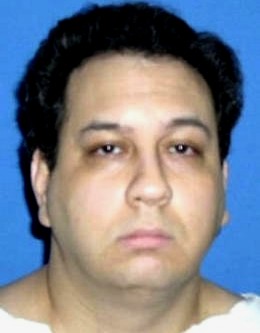
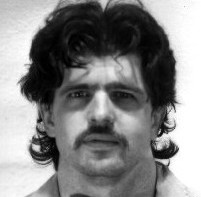
Virgil Martinez
Mass murderer Gameel Al-Batouti
Mass murderer · USA · 1999
Gameel Al-Batouti (also rendered “Gamil ElBatouty” or “El Batouty” in U.S. offi…
216 victims
Gameel Al-Batouti
Mass murderer · USA · 1999
Gameel Al-Batouti (also rendered “Gamil ElBatouty” or “El Batouty” in U.S. offi…
216 victims
 Timothy McVeigh
Mass murderer · USA · 1995
Timothy James McVeigh (April 23, 1968 – June 11, 2001) was a United States Army…
168 victims
Timothy McVeigh
Mass murderer · USA · 1995
Timothy James McVeigh (April 23, 1968 – June 11, 2001) was a United States Army…
168 victims
 Julio Gonzalez
Mass murderer · USA · 1990
Julio Gonzalez was sentenced to 174 twenty-five-year sentences (a total of 4,35…
87 victims
Julio Gonzalez
Mass murderer · USA · 1990
Julio Gonzalez was sentenced to 174 twenty-five-year sentences (a total of 4,35…
87 victims
 David Burke
Mass murderer · USA · 1987
David Augustus Burke (May 18, 1952–December 7, 1987) was an employee of USAir,…
43 victims
David Burke
Mass murderer · USA · 1987
David Augustus Burke (May 18, 1952–December 7, 1987) was an employee of USAir,…
43 victims
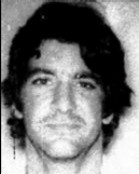 George Jo Hennard
Mass murderer · USA · 1991
George Jo Hennard carried out a mass killing at a Luby’s Cafeteria in Killeen,…
23 victims
George Jo Hennard
Mass murderer · USA · 1991
George Jo Hennard carried out a mass killing at a Luby’s Cafeteria in Killeen,…
23 victims
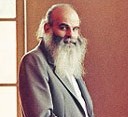 Ronald Gene Simmons
Mass murderer · USA · 1987
Ronald Gene Simmons was a retired United States Air Force sergeant. Over the Ch…
16 victims
Ronald Gene Simmons
Mass murderer · USA · 1987
Ronald Gene Simmons was a retired United States Air Force sergeant. Over the Ch…
16 victims
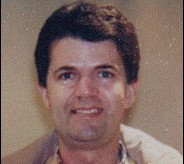 Richard Rogers
Murderer · USA · 1992
Richard Rogers Jr. was convicted in November of murdering two men, Thomas Mulca…
2 victims
Richard Rogers
Murderer · USA · 1992
Richard Rogers Jr. was convicted in November of murdering two men, Thomas Mulca…
2 victims
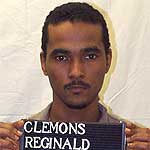 Reginald Clemons
Murderer · USA · 1991
Reginald Clemons was prosecuted in the case State of Missouri v. and was senten…
2 victims
Reginald Clemons
Murderer · USA · 1991
Reginald Clemons was prosecuted in the case State of Missouri v. and was senten…
2 victims
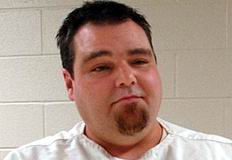 Christopher Newton
Murderer · USA · 2001
May 24, 2007 — Christopher Newton was executed by lethal injection in Ohio. · M…
1 victim
Christopher Newton
Murderer · USA · 2001
May 24, 2007 — Christopher Newton was executed by lethal injection in Ohio. · M…
1 victim
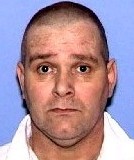 Keith Thurmond
Murderer · USA · 2001
Keith Thurmond was sentenced to death on November 14, 2002. He was executed by…
2 victims
Keith Thurmond
Murderer · USA · 2001
Keith Thurmond was sentenced to death on November 14, 2002. He was executed by…
2 victims
 Jesse Morrison
Murderer · USA · 1989
Jesse Morrison was sentenced to death on October 30, 1991. The California Supre…
1 victim
Jesse Morrison
Murderer · USA · 1989
Jesse Morrison was sentenced to death on October 30, 1991. The California Supre…
1 victim
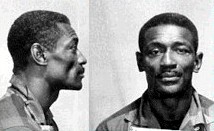 Lonnie Craft
Murderer · USA · 1957
Defendant: Lonnie Craft Victim: Virginia C. Craft (ex-wife) County Attorney: Ch…
1 victim
Lonnie Craft
Murderer · USA · 1957
Defendant: Lonnie Craft Victim: Virginia C. Craft (ex-wife) County Attorney: Ch…
1 victim
- Gender
- male
- Country
- USA
- Location
- Brazoria County, Texas, USA
- Date of birth
- December 12, 1967
- Age at first offence
- 29
- Characteristics
- jealousy, mentally ill, drug addict
- Victim profile
- John Gomez, 18, Veronica Fuentes, 27, and Veronica’s two children, Joshua, 5, and Cassandra, 3
- Method of murder
- Shooting
- Date(s) of murder
- October 1, 1996
- Years active
- 1996
- Date of arrest
- Same day
- Status
-
Executed
Executed by lethal injection in Texas on January 29, 2009
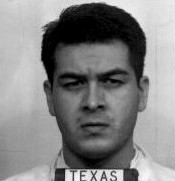
Case record: Virgil Martinez
Status
Virgil Martinez was executed by lethal injection in Texas on January 29, 2009.
People
- Virgil Martinez — defendant; former Houston security guard; executed
- Veronica Fuentes — victim; 27-year-old Hispanic female; Martinez’s ex-girlfriend; found shot to death
- Joshua Fuentes — victim; 5-year-old Hispanic male; found dead from gunshot wounds
- Cassandra Fuentes — victim; 3-year-old Hispanic female; found dead from gunshot wounds
- John Gomez — victim; 18-year-old Hispanic male; shot; mortally wounded; died from gunshot wounds after identifying the shooter as “Ex-boyfriend”
- Sherry Graves — landlord; neighbor of Veronica; witness
- Robin Johnstone — neighbor of Veronica; witness
- Keith Burrow — Robin Johnstone’s son; witness
- Thomas Tolson — sergeant who questioned Gomez at the scene
- Johnstone’s son Keith Burrow — witness who saw the shooting through a gun scope
- Dale Summa — former Brazoria County district attorney
- Greg Abbott — Texas Attorney General (media advisory information)
- Jeri Yenne — defense counsel at trial
- Stan McGee — trial counsel referenced in the habeas proceedings
- J. Froeschner — U.S. Magistrate Judge (evidentiary hearing)
- Prado — Circuit Judge in the federal habeas appeal
- Samuel B. Kent — U.S. District Judge (federal habeas grant)
- Nathaniel Quarterman — petitioner/appellant in the referenced habeas appeal (case styling indicates Martinez as the respondent/appellee in that portion)
Background
Veronica Fuentes lived in a trailer park in Brazoria County with her husband and their two children, Joshua and Cassandra. Sherry Graves was the landlord of the trailer park and lived in a house about forty to fifty feet from the Fuentes’ trailer.
Veronica became estranged from her husband and at some point dated Virgil Martinez, but Veronica and Martinez eventually “broke up.” Several weeks before the murders, Veronica told Graves she was afraid of Martinez and that if Martinez showed up Graves should call the Sheriff’s office. Graves also observed harassing behavior before the offense period, including phone contact and blocked phone calls.
Martinez was the subject of harassment directed at Veronica and later traveled to and from the area. He later fled to Del Rio after the shootings and contacted emergency services while claiming to be hearing voices and needing medical attention.
The offence
On October 1, 1996, Martinez fatally shot four people connected to Veronica Fuentes:
- Veronica Fuentes, shot and found dead in the front yard
- Joshua Fuentes, a child found dead in their bed from gunshot wounds
- Cassandra Fuentes, a child found dead in their bed from gunshot wounds
- John Gomez, shot in the yard area and mortally wounded; he later died from his gunshot wounds
Graves described hearing banging noises and screaming from the direction of the Fuentes’s trailer. Graves went to the Fuentes’ trailer and listened at the window, hearing Veronica say: “No Virgil. No. Please no. Just go. Just go.” An angry male voice referred to “your purse” and also to someone’s dad as “a cop.”
Graves walked back inside and prepared to call for help. After dialling 9-1-1, Graves saw Veronica in the Fuentes’ front yard calling Martinez’s name and saying: “No Virgil. Oh my God.” Graves saw Martinez shoot Veronica, after which Veronica fell to the ground.
John Gomez ran towards Martinez, and Martinez shot him. Graves ducked inside her home as Martinez ran off, passing within five to ten feet of Graves’s window while floodlights were on. Graves saw Martinez fiddling with a “holster-looking belt.”
Robin Johnstone and her son Keith Burrow, who were neighbors of Veronica, heard knocking and went outside to investigate. Johnstone saw people running across the street, heard gunshots, and saw Gomez running toward a garage. Johnstone then saw Martinez run in front of Graves’s house and noticed Martinez was wearing a gun holster around his waist. Burrow saw Martinez shoot Veronica and identified Martinez by looking through a gun scope that made images appear nine times closer.
Police arrived to find Veronica and her two children dead from multiple gunshot wounds. The children were found dead in their bed. Veronica was lying in the front yard with wounds from ten to twelve bullets. Police found Gomez still alive with seven gunshot wounds; Gomez later died from his wounds.
Bullet and weapon findings
Ballistics and forensic examination indicated that all of the bullets found at the crime scene were fired by the same nine millimeter gun. Testimony indicated that magazine clips for this type of gun could hold fifteen bullets apiece.
A gun box designed to house a nine millimeter gun was found in Martinez’s room in his mother’s home. A gun belt appropriate for holstering such a gun was found in Martinez’s car. The gun was never found.
Investigation
During the investigation at the scene, a police officer asked Gomez: “Did the ex-boyfriend do this? Who did that?” Gomez responded: “Ex-boyfriend.” Earlier, Gomez had identified “Ex-boyfriend” as the shooter after questions including “Who did this?” and responses such as “Boyfriend, girlfriend. Boyfriend, girlfriend. Ex-boyfriend.”
After the shootings, Gomez later died from the gunshot wounds.
Martinez fled to Del Rio. On October 2, 1996, he called 9-1-1, claiming he was hearing voices and needed medical attention. Del Rio officers dispatched to Martinez’s location took him to a hospital. Martinez’s car was later found in Del Rio and searched.
Martinez claimed mental symptoms and was taken for mental evaluation; later authorities determined he had provided a false name.
Arrest and custody-related events
Martinez was taken to a hospital and later to Kerrville State Hospital for mental evaluation after he called emergency services and claimed he was hearing voices and needed medical attention.
During the later proceedings referenced in the case materials, evidence was presented that Martinez attempted to fake insanity after being arrested for the present offense and that he made statements to personnel about voices directing him to acquire a gun and shoot people.
Trial
Charges and counts
Martinez was indicted by a Brazoria County grand jury on November 7, 1996. The indictment charged:
- Count one: capital murder of John Gomez and Veronica Fuentes
- Counts two and three: capital murders of the children Joshua and Cassandra Fuentes
Martinez was convicted on April 14, 1998 of all counts.
Verdict and sentencing
Following a separate punishment hearing, Martinez was sentenced to death on April 15, 1998.
The Texas Court of Criminal Appeals affirmed the conviction and sentence on May 17, 2000.
Evidence related to future dangerousness and behavior
At trial, the State presented evidence of Martinez’s future dangerous behavior, including that:
- He was carrying a metal welding rod in his pants while being escorted from the courthouse.
- He indicated he would shoot someone who might attempt to rob the pawn shop where he had worked.
- He had stalked a woman named Elvira Soria.
- He exhibited threatening behavior while in the hospital following the murders, including moving toward a hospital attendant with a plastic knife.
- He claimed he had been using PCP, cocaine, and alcohol prior to being picked up by police.
- He told a security officer that voices were telling him to buy a gun and shoot people.
- He asked a security officer to buy him a marijuana cigarette.
- A nurse at Kerrville State Hospital testified that she believed Martinez was faking his symptoms.
Appeals
Direct appeal (Texas Court of Criminal Appeals)
The Texas Court of Criminal Appeals affirmed the conviction and sentence. The opinion included these points of error being overruled:
- The court rejected claims regarding excluded evidence about John Gomez’s history of violence and mental illness.
- The court rejected claims regarding exclusion of impeachment evidence about Keith Burrow involving prior extraneous offenses without convictions.
- The court rejected challenges to admitted hearsay testimony from Graves about Veronica’s fear and request to call the sheriff’s office.
- The court rejected challenges to Gomez’s out-of-court identification of the shooter, concluding the statement qualified as a dying declaration.
- The court rejected motions for mistrial connected to testimony about phone calls after sustaining objections and giving instructions to disregard.
- The court rejected a mistrial claim tied to a prosecutor’s statement during argument, concluding the instruction to disregard cured any error.
- The court rejected challenges to refusal to inform jurors about parole in the event of a life sentence.
- The court rejected a request for an instruction on voluntary intoxication as a mitigating factor where no evidence showed intoxication at or before the time of the offense.
- The court rejected objections to State’s punishment-argument comments allegedly outside the record, concluding any errors were harmless.
The Texas Court of Criminal Appeals stated that the judgment was affirmed.
Federal habeas corpus proceedings
Martinez filed a state application for writ of habeas corpus on July 10, 2000. The trial court entered findings recommending denial. The Texas Court of Criminal Appeals adopted those findings and denied relief on October 10, 2001.
Martinez filed a federal petition for writ of habeas corpus in the U.S. District Court for the Southern District of Texas, Galveston Division, on October 9, 2002. On June 27, 2003, the court denied federal habeas relief.
Martinez sought appeal permission; on November 19, 2003 the district court granted permission to appeal the claim that trial counsel were ineffective for failing to investigate and present mitigating evidence at the punishment phase. On September 17, 2004, the Fifth U.S. Circuit Court of Appeals vacated the district court’s judgment and remanded for an evidentiary hearing.
An evidentiary hearing was conducted before U.S. Magistrate Judge John Froeschner on June 6 and 7, 2005. On November 9, 2005, the magistrate concluded counsel were ineffective for failing to investigate and present mitigating evidence and recommended that Martinez be granted relief.
The state filed objections on December 8, 2005. On February 7, 2006, the district court overruled objections, adopted the magistrate’s report and recommendation, and granted Martinez federal habeas relief. The state appealed.
On March 8, 2007, the Fifth U.S. Circuit Court of Appeals concluded that trial counsel were not ineffective, reversed the lower court’s decision, and denied Martinez federal habeas relief. On January 14, 2008, the U.S. Supreme Court denied Martinez’s petition for writ of certiorari.
Sentencing
Martinez received the death penalty after being convicted on multiple capital murder counts arising from the October 1, 1996 episode.
A separate punishment hearing resulted in sentence of death on April 15, 1998.
Outcome
Martinez’s execution was scheduled and carried out following the denial of his last appeal.
His final comments were made immediately before lethal injection began. Prison officials warned condemned inmates they would have only a couple of minutes for final comments.
Martinez’s final words included: “I know what you’ve been told and that’s all a lie. John Gomez killed your kids and sister. I wish I would have shot him in the leg, then he would be here. Those investigators were just trying to convict somebody.”
He was pronounced dead nine minutes after lethal drugs began flowing.
Other details
Personal details recorded
- Name: Virgil Martinez (also listed as Virgil Euristi Martinez)
- TDCJ number: 999265
- Date of birth: 12/12/67
- Age at the time: 28 at the time of the offense (October 1, 1996)
- Age at execution: 41
- Education level (as recorded): 11 years (as received)
- Date received: 4/22/98
- Prior occupation (as recorded): Harris Texas Security Services
- Prior prison record (as recorded): None
- Race and gender: Hispanic male
- Height (as recorded): 6-3
- Weight (as recorded): 284
- Eye color (as recorded): Brown
- Hair color (as recorded): Brown
Case-related relationship and context
Veronica became estranged from her husband and eventually “broke up” with Martinez. The murders occurred a short time after Veronica ended the relationship with Martinez.
Final statement content included in multiple accounts
Martinez’s final statement blamed John Gomez for three slayings and included references to investigators trying to convict somebody.
Future-danger and medication-related assertions included at trial/punishment
At trial, the State presented that Martinez claimed he had used PCP, cocaine, and alcohol prior to being picked up by police and that he had threatened or attempted to threaten attendants and security personnel while in hospital settings.
Trial counsel and appellate counsel references
At trial, Martinez was defended by Jeri Yenne. The federal habeas materials also referenced Stan McGee as trial counsel.
Meal and execution-day notes (as recorded)
A final/special meal included: Two fried chicken breast, two pork chops, seven flour tortillas, avocados and french fries.
Indictment structure in procedural history
The procedural history described three counts of capital murder in an episode on October 1, 1996, arising from the deaths of Veronica Fuentes, John Gomez, Joshua Fuentes, and Cassandra Fuentes. The Texas Penal Code discussion in the appellate opinion referenced Tex. Penal Code § 19.03(a)(7) & (8).
Spotted an error, or have more information about this case?