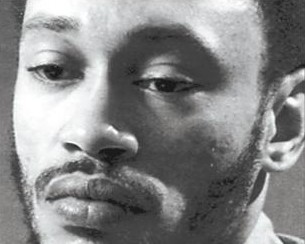
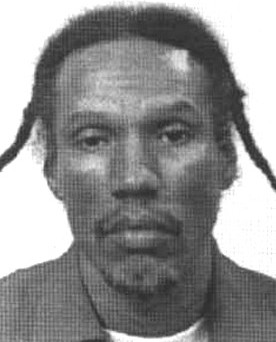
Morris Odell Mason
Murderer Ervil LeBaron
Murderer · USA · 1972
Ervil Morrell LeBaron (1925 to August 16, 1981) was the leader of a polygamous…
35 victims
Ervil LeBaron
Murderer · USA · 1972
Ervil Morrell LeBaron (1925 to August 16, 1981) was the leader of a polygamous…
35 victims
 Brian Kevin Rosenfeld
Murderer · USA · 1985
Brian Kevin Rosenfeld Brian Kevin Rosenfeld was sentenced to three concurrent l…
23 victims
Brian Kevin Rosenfeld
Murderer · USA · 1985
Brian Kevin Rosenfeld Brian Kevin Rosenfeld was sentenced to three concurrent l…
23 victims
 Marvin Gray
Murderer · USA · 1975
Marvin Gray was convicted killer who claimed responsibility for 23 slayings and…
23 victims
Marvin Gray
Murderer · USA · 1975
Marvin Gray was convicted killer who claimed responsibility for 23 slayings and…
23 victims
 Yahweh ben Yahweh
Murderer · USA · 1980
Yahweh ben Yahweh was born and legally named Hulon Mitchell Jr. (October 27, 19…
23 victims
Yahweh ben Yahweh
Murderer · USA · 1980
Yahweh ben Yahweh was born and legally named Hulon Mitchell Jr. (October 27, 19…
23 victims
 Larry McKay
Murderer · USA · 1981
Larry McKay was convicted of two counts of felony murder each for the shooting…
2 victims
Larry McKay
Murderer · USA · 1981
Larry McKay was convicted of two counts of felony murder each for the shooting…
2 victims
 John White Webster
Murderer · USA · 1849
John White Webster (May 20, 1793–August 30, 1850) was born in Boston, Massachus…
1 victim
John White Webster
Murderer · USA · 1849
John White Webster (May 20, 1793–August 30, 1850) was born in Boston, Massachus…
1 victim
 Freda Rumbold
Murderer · United Kingdom · 1956
Freda Phyllis Rumbold was married to timber contractor husband Alfred Frank Rum…
1 victim
Freda Rumbold
Murderer · United Kingdom · 1956
Freda Phyllis Rumbold was married to timber contractor husband Alfred Frank Rum…
1 victim
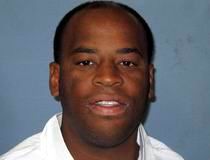
 Gregory Resnover
Murderer · USA · 1980
Gregory Resnover was convicted of conspiracy to commit murder and murder in Ind…
1 victim
Gregory Resnover
Murderer · USA · 1980
Gregory Resnover was convicted of conspiracy to commit murder and murder in Ind…
1 victim
- Gender
- male
- Country
- USA
- Location
- Northampton County, Virginia, USA
- Date of birth
- March 28, 1954
- Age at first offence
- 24
- Characteristics
- rape, arson, alcoholic, mentally ill, history of mental illness
- Victim profile
- Margaret K. Hand (female, 71) / 86-year-old woman
- Method of murder
- Beating with an ax / Setting the victim's house on fire
- Date(s) of murder
- 1978
- Years active
- 1978
- Date of arrest
- —
- Status
-
Executed
Executed by electrocution in Virginia on June 25, 1985
Case details
Morris Odell Mason was a Virginia prisoner who was executed by electrocution in Virginia on June 25, 1985. He called himself "the killer for the Eastern Shore."
Timeline
- June 25, 1985 — Morris Odell Mason was pronounced dead at 11:07 P.M. after being executed in Virginia’s electric chair.
- June 26, 1985 — The New York Times published material stating that Mason was executed on June 25, 1985.
- November 21, 1984 — Mason was sentenced to be executed on November 21, 1984, and appealed from an order denying his petition for a writ of habeas corpus.
- Oct. 31, 1984 — Mason’s case was argued before the United States Court of Appeals for the Fourth Circuit.
- Nov. 2, 1984 — The United States Court of Appeals for the Fourth Circuit decided the appeal.
- 1985 — The United States Court of Appeals materials referred to Mason’s scheduled execution date and affirmed denial of habeas relief.
- 1978 — Mason was convicted of rape, murder and arson in connection with the slaying of Margaret K. Hand.
- 1979 — The facts were set forth in Mason v. Commonwealth, 219 Va. 1091, 254 S.E.2d 116 (1979).
- 1980 — Williams v. Martin, 618 F.2d 1021 (4th Cir. 1980) was referenced in relation to a claim for an independent psychiatric expert.
- Nov. 2, 1984 — The Fourth Circuit affirmed the district court’s judgment and denied the motion for a stay.
- 1984 — The Fourth Circuit addressed errors assigned by Mason and denied a petition for rehearing.
Background
Morris Odell Mason was 32 years old at the time of sentencing to death for the slaying of Margaret K. Hand.
Mason was described as mentally retarded with a low IQ (I.Q. 62–66). He was described as having a history of mental illness and as having been in and out of mental hospitals for much of his life. A state psychiatrist who interviewed him found: "seemingly uncaring as to his fate. He offers no complaints and seems to have no full association [sic] of the gravity of his situation."
In the week before the killing, Mason twice sought help from his parole officer for uncontrollable drinking and drug abuse. The day before the crime, he asked to be placed in a halfway house, but no openings were available. Mason was described as a paranoid schizophrenic with a mental age of eight.
When he was twenty-one, Mason began to hear voices in his head ordering him to "do things, break things, tear things, and destroy things."
Mason was described as having an alcoholic rampage.
The offence
Mason was convicted of rape, murder and arson in the 1978 slaying of 71-year-old Margaret K. Hand in Northampton County, Virginia.
Mason nailed Hand’s wrist into the seat of a chair and bound her with rope into it before burning her home down.
Hand was raped and beaten with an ax; her hand was nailed to a chair and her house was set on fire.
The slaying was part of a two-week crime spree waged by Mason less than a month after he was paroled from prison where he had been sentenced to 10 years for arson and grand larceny.
Mason was also said to have confessed to raping and murdering an 86-year-old woman, raping and sodomizing a 12-year-old girl, and shooting her 13-year-old sister, who was left a paraplegic.
Mason pleaded guilty to assault on two teen-age sisters the day after Hand’s murder.
Investigation
After Mason killed Hand, he took steps to avoid implicating himself in the crime by returning to the burning house to recover a bag with his identity papers in it.
Trial
Mason was sentenced to death for the slaying of Margaret K. Hand. He also received the death penalty and seven life terms plus 100 years for his crimes.
Mason called himself "the killer for the Eastern Shore."
Sentencing
Attorneys for Mason contended that their client was mentally retarded and did not comprehend his crimes, thus warranting the commutation of his death sentence by Governor Chuck Robb.
Mason’s lawyer, J. Lloyd Snook, argued in appeals that Mason’s mental condition was not adequately brought out at his trial and that his mental impairment made the death sentence inappropriate.
Appeals
Mason appealed from an order of the district court denying his petition for a writ of habeas corpus. The United States Court of Appeals for the Fourth Circuit affirmed and denied a motion for a stay.
Mason assigned the following errors:
- The District Court erred in rejecting Mason’s claim that the trial court’s refusal to order an independent psychiatric examination violated Mason’s Sixth and Fourteenth Amendment rights.
- The District Court erred in rejecting Mason’s claim that he was denied the effective assistance of counsel at and in connection with the penalty phase of his capital murder trial, in violation of the Sixth and Fourteenth Amendments to the United States Constitution.
- The District Court erred in rejecting Mason’s Counts I and II concerning the facial and systemic unconstitutionality of the death penalty.
The Fourth Circuit rejected Mason’s first assignment of error as foreclosed by Smith v. Baldi, 344 U.S. 561 and Satterfield v. Zahradnick, 572 F.2d 443 (4th Cir. 1978).
For the second assignment of error, the Fourth Circuit stated it rejected the claim based on findings of fact in the state habeas corpus proceedings and held Mason did not establish that the state proceedings suffered defects enumerated in 28 U.S.C. Sec. 2254(d). It stated that after a plenary hearing, the state court found Mason’s counsel were not ineffective at the penalty phase and that the state habeas court ordered an examination intended to elicit information about mitigating factors under Va. Code Sec. 19.2-264.4 pertaining to a defendant’s mental condition.
The Fourth Circuit stated that on receiving the report, the state habeas court found no mitigating abnormalities and found Mason was not prejudiced by any omission of trial counsel, and that those findings had to be accepted. It also stated that the absence of prejudice was an additional ground for affirmance and cited Strickland v. Washington.
The Fourth Circuit held the claims raised in the third assignment of error were barred by procedural default and cited Wainwright v. Sykes.
The Fourth Circuit noted that statutes had been held constitutional and cited Briley v. Bass, Waye v. Commonwealth, and Smith v. Commonwealth. It granted a certificate of probable cause, affirmed the judgment of the district court, denied a motion for a stay, and directed the clerk to issue the mandate forthwith.
Morris Odell Mason filed a petition for rehearing and for rehearing en banc, presenting two issues: I. In rejecting Mason’s claim that he was denied his right to the appointment of an independent psychiatric expert to assist counsel in the preparation of evidence in mitigation of sentence, the panel failed to address an apparent conflict with the court’s decision in Williams v. Martin. II. In rejecting Mason’s claim that he was denied the effective assistance of counsel, the panel improperly relied upon state court "Findings of Fact," and overlooked an important aspect of the United States Supreme Court's decision in Strickland v. Washington.
The court stated it perceived no conflict with Williams v. Martin, and stated that Virginia law made no provision for appointment of a psychiatrist to assist the defendant. It cited Smith v. Baldi, 344 U.S. 561, 568.
Regarding the second issue, the court stated that for the purpose of addressing the petition for rehearing it concluded the district court did not err in holding Mason had not established prejudice. It stated that the psychiatric examination ordered by the state habeas court established that Mason suffered no mitigating abnormalities, and that the findings and conclusions satisfied the standards for determining prejudice set forth in Strickland v. Washington, 104 S.Ct. at 2068.
The petition for rehearing was denied.
Outcome
Mason’s execution followed the denial of the appeal by the Supreme Court. The Supreme Court turned down his appeal by a 7-to-2 vote hours before his execution.
Mason’s lawyer and the governor:
- The governor did not intend to issue a reprieve after meeting with clergymen asking clemency for Mason.
- Mason’s execution included no final statement and he appeared calm.
Verbatim quotes from the execution account and related remarks included:
- "He appeared calm," said Kathi King, an operations officer at the State Penitentiary in Richmond, Va.
- "He walked on his own and required no assistance," said Kathi King.
- "when I get back, I'm gonna show him I can play basketball as good as he can." (stated as Mason’s remark on the way to the execution chamber)
- "He had so little conception of death that he asked advisors what he should wear to his own funeral, and said cheerfully, on his way to the execution chamber, that a visitor should tell a fellow inmate that "when I get back, I'm gonna show him I can play basketball as good as he can"." (quoted material attributed to a report by Human Rights Watch)
Mason did not give a final statement.
Aftermath
Kathi King stated the pronouncement and described Mason’s demeanor during the execution process.
The New York Times material placed Mason’s execution among the executions in the United States during 1985 and referenced Supreme Court action permitting renewed application of the death penalty in 1976, and stated that Mason’s execution in Virginia was the state’s third in eight months and fourth since 1976.
Other details
Morris Odell Mason’s identity papers were recovered from the burning house after Hand’s murder.
Mason’s nickname or self-description included being called "the killer for the Eastern Shore."
The habeas proceedings addressed whether Mason was under extreme mental or emotional disturbance or whether his capacity to appreciate the criminality of his conduct or to conform his conduct to the requirements of law was significantly impaired.
The state habeas examination scope was intended to elicit information about the mitigating factors in Va. Code Sec.
The Fourth Circuit stated it accepted state court findings under 28 U.S.C. Sec. 2254(d).
The Fourth Circuit stated it granted a certificate of probable cause.
The Fourth Circuit denied a motion for a stay and directed issuance of the mandate forthwith.
Morris Odell Mason’s execution date was June 25, 1985, and he had been born on March 28, 1954.
Spotted an error, or have more information about this case?