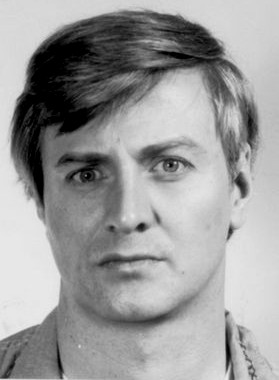
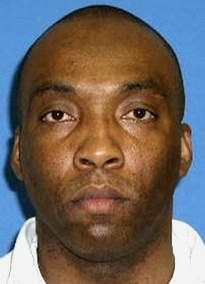
Alan Matheney
Murderer Brian Kevin Rosenfeld
Murderer · USA · 1985
Brian Kevin Rosenfeld Brian Kevin Rosenfeld was sentenced to three concurrent l…
23 victims
Brian Kevin Rosenfeld
Murderer · USA · 1985
Brian Kevin Rosenfeld Brian Kevin Rosenfeld was sentenced to three concurrent l…
23 victims
 Yahweh ben Yahweh
Murderer · USA · 1980
Yahweh ben Yahweh was born and legally named Hulon Mitchell Jr. (October 27, 19…
23 victims
Yahweh ben Yahweh
Murderer · USA · 1980
Yahweh ben Yahweh was born and legally named Hulon Mitchell Jr. (October 27, 19…
23 victims
 Russell Ellwood
Murderer · USA · 1991
Russell Ellwood was a former taxi driver. Authorities suspected him of killing…
20 victims
Russell Ellwood
Murderer · USA · 1991
Russell Ellwood was a former taxi driver. Authorities suspected him of killing…
20 victims
 Robert Martines Perez
Murderer · USA · 1994
Name: Robert Martines Perez · Other name used in proceedings: Robert Martinez P…
15 victims
Robert Martines Perez
Murderer · USA · 1994
Name: Robert Martines Perez · Other name used in proceedings: Robert Martinez P…
15 victims
 Juan Carlos Chavez
Murderer · USA · 1995
Juan Carlos Chavez was sentenced to death for the kidnapping, sexual assault, a…
1 victim
Juan Carlos Chavez
Murderer · USA · 1995
Juan Carlos Chavez was sentenced to death for the kidnapping, sexual assault, a…
1 victim
 John Pudelski
Murderer · USA · 1999
March 16, 1999 — Sarah Pudelski was admitted to Hillcrest Hospital at 37 weeks…
1 victim
John Pudelski
Murderer · USA · 1999
March 16, 1999 — Sarah Pudelski was admitted to Hillcrest Hospital at 37 weeks…
1 victim
 Christie Scott
Murderer · USA · 2008
Defendant: Christie Michelle Scott (also referred to as Christie Michelle Bray…
1 victim
Christie Scott
Murderer · USA · 2008
Defendant: Christie Michelle Scott (also referred to as Christie Michelle Bray…
1 victim
 Robert Gordon
Murderer · USA · 1994
Defendant: Robert Gordon · Sixth Judicial Circuit, Pinellas County · Case numbe…
1 victim
Robert Gordon
Murderer · USA · 1994
Defendant: Robert Gordon · Sixth Judicial Circuit, Pinellas County · Case numbe…
1 victim
 Paul Michael McManus
Murderer · USA · 2001
Paul Michael McManus McManus had a history of mental illness. His estranged wif…
3 victims
Paul Michael McManus
Murderer · USA · 2001
Paul Michael McManus McManus had a history of mental illness. His estranged wif…
3 victims
- Gender
- male
- Country
- USA
- Location
- St. Joseph County, Indiana, USA
- Date of birth
- November 6, 1950
- Age at first offence
- 39
- Characteristics
- parricide
- Victim profile
- Lisa Bianco, 34 (his ex-wife)
- Method of murder
- Beating with the shotgun that broke into pieces
- Date(s) of murder
- March 4, 1989
- Years active
- 1989
- Date of arrest
- —
- Status
-
Executed
Executed by lethal injection in Indiana on September 28, 2005
Background
The case involved Alan Matheney and the murder of Lisa Bianco.
The offence
Matheney murdered Bianco. Dr. Batacan’s report described how Matheney’s anger led to the murder of Bianco, including statements Matheney made during interviews about Bianco, her relationship with the prosecutor, and her treatment of his children.
Matheney maintained a level of mental alertness throughout psychiatric examination and was able to engage in an interview with spontaneity and cooperativeness. He was responsive, attentive and rather vigilant. He was coherent in speech and thought, sustained an ongoing ability of concentration without disruption, and was soft spoken and articulate. He had an intact memory for both remote and recent events and was fully oriented to time, place, person and specific situations. He denied experiencing unrealistic ideas and feelings. He had not experienced any distorted interpretation and perception of reality, such as hallucinations and delusions. His feelings of being aggrieved and beliefs of being unjustly treated were very real to him, and his affect was appropriate. Dr. Batacan concluded that Matheney had no signs or symptoms of mental disease or mental defect now nor during the event in question.
Investigation
The record described that Matheney drove to Granger to his family’s home from where he called his wife [Bianco]. After that call, he grabbed an unloaded gun from a friend’s house, where he left some of his personal belongings.
Trial
Psychiatric evidence on sanity
Dr. Batacan
Dr. Batacan filed a five page undated report with the court indicating that he interviewed Matheney on two separate occasions, April 12, 1989, and June 21, 1989, "to determine the question of [Matheney's sanity] at the time of the commission of crime."
After the interviews which lasted a total of five hours, Dr. Batacan reported findings based on Matheney’s statements and clinical observations, including the following narrative of events described in the report:
When he left [the prison, Matheney] drove to Granger to his family's home from where he called his wife [Bianco].... She told him that they [Bianco and the prosecutor] would file more charges against him [and] that he'll never get out of prison. He grabbed an unloaded gun from a friend's house where he left some of his personal belongings. He was very upset at the time. Several things were going through his mind like "She killed her brother by giving him drugs, he was a good friend of mine.... I have two beautiful children and she left them and they were playing with drugs. She abused those children. She was a hateful person .... I have no remorse for what happened, it was bound to happen because they put me in a position that I'll never get out of prison."
After relating his observations and findings, Dr. Batacan made findings including these clinical descriptions:
The defendant maintained a level of mental alertness throughout the examination and [was] able to engage in a[n] interview with spontaneity and cooperativeness. He is responsive, attentive and rather vigilant. His alertness refers to his ability to give an orienting response to the questions about any emotionally meaningful stimuli. He is coherent [in both] speech and thought. He sustains an ongoing ability of concentration without disruption. He is soft spoken and articulate. He has an intact memory for both remote and recent events. He is fully oriented to time, place, person and specific situations. He denies experiencing unrealistic ideas and feelings. He has not experienced any distorted interpretation and perception of reality, such as hallucinations and delusions. His feelings of being aggrieved and beliefs of being unjustly [treated] are very real to him. His affect is appropriate. He does not show any signs and symptoms of mental disease or mental defect now nor during the event in question.
Dr. Batacan concluded that, despite Matheney’s continuing belief that his imprisonment was the product of a conspiracy directed by a county prosecutor, Matheney "was legally sane at the time of the commission of the crime."
Dr. Batacan concluded that (1) Matheney was not suffering from any form of "mental disease or defect" either at the time of the interviews or at the time of the murder of his ex-wife, and (2) Matheney was capable of recognizing the wrongfulness of his actions at the time the crime was committed.
Dr. Berkson
Dr. Berkson filed a report dated April 19, 1989, opining "that Alan Matheney did not suffer from a mental disease or defect such [that] he was unable to appreciate the wrongfulness of his conduct at the time of the offense."
Dr. Berkson’s observations while interviewing Matheney supported that opinion, including statements and clinical observations described in the report:
He stated he was in good health, he was aware of the nature of the charges against him, he was aware of the functions of the various individuals involved in courtroom proceedings, he was aware of the difference between a lie and a mistake.... His verbalizations were generally logical, sequential, goal directed, and usually self serving. He talked of his relationship with his ex-wife who he felt had a personal relationship with the prosecutor * * * [Matheney] reports he was told [that he could not serve time in an out-of-state jail], then he proceeded to give a rather detailed account of his activities on the day of the alleged offense. He talked of increasing anger at his ex-wife because he felt she was keeping him incarcerated, that he had gone to her home to get tapes that would have shown he had done nothing wrong, that she and Michael Barnes had no intention "of letting me out of jail and would file other charges against me." He then detailed the rest of the events.
Dr. Berkson and Dr. Batacan rendered opinions individually that Matheney was sane at the time he committed the crimes.
Competency to stand trial
Neither Dr. Berkson nor Dr. Batacan rendered an opinion concerning Matheney’s competency to stand trial. The record stated that there was nothing demonstrating that Drs. Batacan and Berkson were informed that competency to stand trial was an issue to be evaluated and what standard competency was to be measured under Indiana law.
The record further stated that neither Matheney’s counsel nor the trial judge raised a question regarding the reports’ omission or inquired of the doctors as to whether they believed Matheney was competent to stand trial.
The record concluded that the joint failure of defense counsel, the prosecution, and the court itself to (1) obtain qualified psychiatric evaluations from mental health professionals and (2) hold the hearing on defendant's competency to stand trial that defense counsel had requested was particularly perplexing in light of the fact that this was a capital offense case.
Sentencing
Aggravating sentencing factors and trial court findings
The record discussed the balancing of aggravating and mitigating sentencing factors under Indiana law.
Lying-in-wait aggravator
The record described the evidence supporting the "lying-in-wait" aggravator, characterizing Matheney as "a cold, calculating killer--one clear-headed enough to scheme and plan the fatal act." The record stated that the facts supporting this included:
- Matheney parked his vehicle in a parking lot near an alley behind Bianco's house, a full city block away, despite available parking closer to the home.
- Matheney approached Bianco’s home not via the front door or the city street, but by approaching from the rear, walking down an alley and through a backyard secluded by dense growth of bushes and trees, a large wooden gate, and a garage.
The record stated that the Indiana Supreme Court summarized the issue as follows:
It would be reasonable for the trier of fact to conclude that appellant had used a circuitous approach toward Bianco's house in order to conceal himself from her and that testimony regarding the amount of time involved tended to prove that appellant waited and watched until he could take Bianco by surprise. The evidence regarding his use of a deadly weapon was indicative of his intent to kill. The evidence was sufficient to support the finding that this aggravating factor was proven beyond a reasonable doubt. Matheney, 583 N.E.2d at 1208-09.
The record described the prosecution’s time-line evidence as:
- Matheney went to Snider's home to obtain a weapon and left Snider's home with the shotgun at approximately 2 p.m.
- He did not break into Bianco's home until at least an hour later.
The record stated that from this time-line, and the roundabout approach and entry into Bianco’s home, it was reasonable to conclude that Matheney was "lying in wait" in Bianco’s backyard to take her by surprise.
The record also noted that throughout the appellate history, only Justice DeBruler was of the opinion that the evidence and time-line did not adequately support a finding that the "lying-in-wait" aggravator was proven beyond a reasonable doubt.
Felony murder aggravator
The record discussed the felony murder aggravator relating to the intentional killing while committing a burglary. It stated that the felony murder aggravator applied to the forcible entry of a residence with the intent to commit murder.
The record described testimony, including Matheney’s young daughter, stating that Matheney burst through the back door of Bianco’s home and confronted his ex-wife in the presence of their daughter while armed with the shotgun that he later used to bludgeon Bianco to death with such force that the weapon was literally smashed to pieces.
Appeals
The record described a district court decision affirming that an ineffective assistance of counsel claim with respect to the sentencing phase of Matheney’s trial was without merit.
The record also stated that Matheney was entitled to an evidentiary hearing in the district court to develop the factual basis of the claim surrounding his competency to stand trial. The case was remanded with instructions to proceed with an evidentiary hearing consistent with the opinion.
Outcome
Matheney was executed by lethal injection in Indiana on September 28, 2005.
Other details
The record included a discussion of the definition of "mental disease or defect" contained in jury instructions, stating that it quoted the definition adopted by the legislature, Ind.Code § 35-41-3-6(b).
The record described that, when Matheney turned himself in approximately two hours after committing the murder, he was calm and relaxed and displayed no nervousness or distress. It stated that he informed the arresting officer that he assumed his ex-wife had died as a result of his assault and that his primary concern between the time of the murder and the time he turned himself in was purchasing cigarettes to take with him to jail.
The record described the extreme violence of the murder and stated that the shotgun was smashed into pieces by the force of Matheney’s blows to Bianco’s body. The record also stated that Matheney’s extensive planning and deliberate execution of the fatal assault were uncontested by Matheney at trial.

Spotted an error, or have more information about this case?