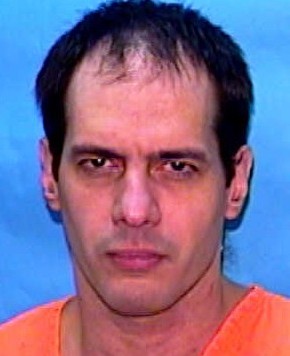
Juan Carlos Chavez
Murderer Brian Kevin Rosenfeld
Murderer · USA · 1985
Brian Kevin Rosenfeld Brian Kevin Rosenfeld was sentenced to three concurrent l…
23 victims
Brian Kevin Rosenfeld
Murderer · USA · 1985
Brian Kevin Rosenfeld Brian Kevin Rosenfeld was sentenced to three concurrent l…
23 victims
 Russell Ellwood
Murderer · USA · 1991
Russell Ellwood was a former taxi driver. Authorities suspected him of killing…
20 victims
Russell Ellwood
Murderer · USA · 1991
Russell Ellwood was a former taxi driver. Authorities suspected him of killing…
20 victims
 Robert Martines Perez
Murderer · USA · 1994
Name: Robert Martines Perez · Other name used in proceedings: Robert Martinez P…
15 victims
Robert Martines Perez
Murderer · USA · 1994
Name: Robert Martines Perez · Other name used in proceedings: Robert Martinez P…
15 victims
 Billy Frank Vickers
Murderer · USA · 1993
Billy Frank Vickers Vickers was executed by lethal injection in Texas on Januar…
14 victims
Billy Frank Vickers
Murderer · USA · 1993
Billy Frank Vickers Vickers was executed by lethal injection in Texas on Januar…
14 victims
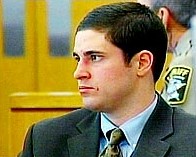 Colton Pitonyak
Murderer · USA · 2005
Colton Pitonyak was convicted of murder and was sentenced to 55 years in prison…
1 victim
Colton Pitonyak
Murderer · USA · 2005
Colton Pitonyak was convicted of murder and was sentenced to 55 years in prison…
1 victim
 James Russell
Murderer · USA · 1974
James Russell was executed in Texas on September 19, 1991. Russell was charged…
1 victim
James Russell
Murderer · USA · 1974
James Russell was executed in Texas on September 19, 1991. Russell was charged…
1 victim
 Willie Darden
Murderer · USA · 1973
Willie Jasper Darden (also identified as Willie Jasper Darden, Jr.) was convict…
1 victim
Willie Darden
Murderer · USA · 1973
Willie Jasper Darden (also identified as Willie Jasper Darden, Jr.) was convict…
1 victim
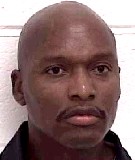 Warren Lee Hill
Homicide · USA · 1985
Warren Lee Hill was 36 when he was sentenced to death in September 1991 in Lee…
2 victims
Warren Lee Hill
Homicide · USA · 1985
Warren Lee Hill was 36 when he was sentenced to death in September 1991 in Lee…
2 victims
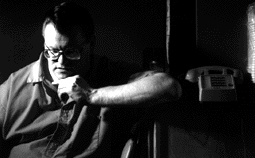 Duncan McKenzie
Murderer · USA · 1974
Duncan Peder McKenzie Jr. was convicted of the murder of Conrad, Montana school…
1 victim
Duncan McKenzie
Murderer · USA · 1974
Duncan Peder McKenzie Jr. was convicted of the murder of Conrad, Montana school…
1 victim
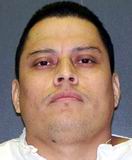 Arturo Eleazar Diaz
Murderer · USA · 1999
Name: Arturo Eleazar Diaz · TDCJ Number: 999345 · Date of birth: 12/27/1975 · D…
2 victims
Arturo Eleazar Diaz
Murderer · USA · 1999
Name: Arturo Eleazar Diaz · TDCJ Number: 999345 · Date of birth: 12/27/1975 · D…
2 victims
- Gender
- male
- Country
- USA
- Location
- Orange County, Florida, USA
- Date of birth
- March 16, 1967
- Age at first offence
- 28
- Characteristics
- kidnapping, rape
- Victim profile
- Samuel James “Jimmy” Ryce (male, 9)
- Method of murder
- Shooting (.38 handgun)
- Date(s) of murder
- September 11, 1995
- Years active
- 1995
- Date of arrest
- December 6, 1995
- Status
-
Executed
Executed by lethal injection on February 12, 2014 in Florida
Case information
Juan Carlos Chavez was sentenced to death for the kidnapping, sexual assault, and murder of nine-year-old Samuel James “Jimmy” Ryce.
Timeline
- September 11, 1995 — Nine-year-old Samuel James “Jimmy” Ryce disappeared after being dropped off from a school bus at a bus stop near his home in the Redlands, a rural area of south Miami-Dade County.
- December 5, 1995 — Susan Scheinhaus, with the help of a locksmith, entered a trailer Chavez occupied; she found a handgun in plain view and discovered a book bag with papers and books bearing Jimmy Ryce’s name.
- December 6, 1995 — Armed FBI agents surrounded Chavez and he was taken to a Metro Dade Police Station for questioning.
- December 7, 1995 — Chavez did not sleep until shortly after midnight.
- December 8, 1995 — A confession statement was obtained and formal steps for evidence processing occurred, including collection of items from the trailer and processing in relation to the case.
- December 9, 1995 — Dr. Roger Mittleman conducted an examination of the contents of the three planters.
- December 20, 1995 — Detective McColman transported a “bush hook” to the medical examiner’s office for examination.
- September 18, 1998 — Chavez was found guilty on all counts.
- October 29, 1998 — The jury, by a 12 to 0 majority, voted for the imposition of the death penalty in the penalty phase.
- November 21, 2002 — The Florida Supreme Court upheld Chavez’s conviction and sentence of death and issued a revised opinion.
- November 23, 1998 — Chavez was sentenced: Count I death for First-Degree Murder, Count II life for Sexual Assault / Victim Under 12, Count III life for Kidnapping with a Weapon.
- May 30, 2002 — The Florida Supreme Court affirmed the convictions and sentence of death.
- June 23, 2003 — A petition for a writ of certiorari in the United States Supreme Court was denied.
- July 9, 2004 — Chavez filed a 3.851 Motion in the Circuit Court, and it was amended on May 5, 2005.
- February 12, 2014 — Chavez was executed by lethal injection in Florida.
The offence
Chavez abducted Jimmy Ryce at gunpoint after the boy got off a school bus on a weekday afternoon in rural Miami-Dade County (Redland/Redlands described in the record). Testimony showed Chavez raped Jimmy Ryce, shot him when he tried to escape, then dismembered his body and hid the parts in concrete-covered planters.
According to Chavez’s account described at trial, he drove off after seeing young boys and returned because he had a “mental picture” from what he saw. He then observed Jimmy Ryce, stopped his truck in front of him, got out with a handgun, told Jimmy at gunpoint “do you want to die?”, and told Jimmy to get inside the truck. Chavez traveled to a horse ranch/trailer location associated with his living arrangements, made Jimmy remove his clothing, put “lubricant” on Jimmy’s rectum, inserted his penis into Jimmy’s rectum, ejaculated, and later transported Jimmy back. When Chavez believed police were searching after hearing a helicopter overhead, Jimmy attempted to escape and Chavez shot him one time, with the shot described as hitting him when he collapsed by the door inside the trailer.
To dispose of Jimmy Ryce’s body, Chavez placed the body inside a metal barrel in the trailer at the horse farm, transported the barrel to the Scheinhaus residence area, removed it, and then hid the remains by dismembering them and placing three parts into three planters. Chavez sealed the tops of the planters with cement bags.
Investigation
After Jimmy Ryce disappeared, a search was conducted and attracted public attention. Three months later, Jimmy’s remains were found near Chavez’s trailer when a landlord discovered Jimmy’s school bag and the murder weapon.
Susan Scheinhaus reported missing items from her residence in late August or early September of 1995, including a handgun and some jewelry, and suspected Chavez but lacked evidence.
On December 5, 1995, Scheinhaus entered the trailer Chavez occupied with a locksmith. She found the handgun in plain view on a counter opposite the trailer door. She discovered a partially open book bag in a closet area and recognized Jimmy Ryce’s name in papers and books, including on one of the books. Scheinhaus notified the FBI.
Chavez was located on December 6, 1995 and taken to the station for questioning. His detention included a questioning process punctuated by regular refreshment, food, bathroom breaks, and a rest period, interspersed with two outings returning to the horse farm and Scheinhaus and Santana properties. Detective Luis Estopinan conducted most questioning, with other officers, an FBI agent, Scheinhaus, and an independent interpreter also having opportunities to observe Chavez.
Chavez received repeated Miranda warnings and indicated he understood them on four occasions. Over the course of interrogation, after waiving his rights, Chavez provided several versions. As officers pursued contemporaneous investigation and physical evidence discredited initial versions, Chavez agreed to tell the truth but demanded officers guarantee he would receive the death penalty before disclosing the location of Jimmy’s remains. Estopinan advised he could not guarantee the death penalty, and Chavez continued to talk, including asserting events would not have happened without him having been sexually battered by a relative in Cuba. Estopinan described a shift to a “truth” narrative, after which Chavez admitted he abducted Jimmy at gunpoint, traveled to the horse ranch, sexually assaulted Jimmy, and then shot him.
Officers also took Chavez to visit locations related to his accounts so they could confirm what had happened, including to visit the horse farm property and Scheinhaus property and showing them the location of the events he had recounted.
Arrest and interrogation
Chavez was arrested and detained following Scheinhaus’s discovery and notification to the FBI. After being patted down, he agreed to go with Metro Dade Police officers to the station for questioning. The record described that Chavez did not sleep until shortly after midnight on December 7.
Chavez later alleged mistreatment and coercion during interrogation. He testified that officers threatened him (“Don't do anything stupid or we'll shoot you. We're going to kill you.”), took his watch and beeper and did not permit him to sleep, and that officers suggested details and goaded him into making up lies. He also alleged the book bag was brought into the interrogation room for him to handle and look through its contents.
Other testimony addressed these allegations. Officers refuted threats, coercion, and suggestion of confession details, denied taking Chavez’s watch away, and denied hitting him. They also testified that Chavez never mentioned Ed as the perpetrator during questioning. Ed Scheinhaus’s parole officer testified that Ed had permission to travel on the relevant afternoon and had shown his speeding ticket himself; the officer testified that there were no file indications of violations in the month of September 1995 indicating Ed had failed to remain home as required.
Trial
Charges and counts
Chavez was indicted as follows:
- Count I: First-Degree Murder
- Count II: Sexual Assault / Victim Under 12
- Count III: Kidnapping with a Weapon
Evidence
A loaded handgun was recovered from Chavez’s trailer. A poster bearing the likeness of Jimmy Ryce was also processed as evidence. A box of bullets containing live ammunition and one spent shell casing were found in the trailer.
Crime scene technician Elvey Melgarejo searched and processed a trailer on a horse/avocado farm on December 8, 1995 and found “a tube of JR water-based lubricant” on a shelf. Melgarejo collected a sofa cushion and part of the wood floor just inside the front door for serology processing. At the Scheinhaus property, Melgarejo noticed three concrete-filled planters and became suspicious they might contain a cadaver.
Fingerprint technician William Miller identified Chavez’s fingerprint on the handgun recovered from his trailer. He testified there were “ten points of identification throughout this fingerprint,” describing it as an “absolute and positive identification” of Chavez’s left thumb print. Miller also examined books and notebooks in Jimmy Ryce’s book bag and testified he found Chavez’s fingerprint on a notebook and on the textbook entitled Journeys in Science, providing points of identification and describing positive identification based on thumb print comparisons.
Forensic serologist Theresa Merritt testified that she tested samples from the trailer, including scraping from the floor area yielding a positive result for blood, and that samples from a cushion in the trailer yielded blood scrapings. DNA comparisons concluded the blood on the floor was extremely likely to have come from a child of Don and Claudine Ryce, and other blood samples from the floor and cushion were consistent with having come from the biological child of the Ryces.
Dr. Roger Mittleman, Chief Medical Examiner, testified that on December 9 he examined the contents of the planters and that the cement encased remains of what appeared to be a young boy. He described the clothing found and corrected his testimony about number of socks found. He also discussed how a body expands as it decomposes and how this could cause a barrel lid to be forced off or open. A forensic dentist testified that dental record comparison was so strong that the “skeletal remains” were “positively identified as that of Jimmy Ryce.”
An X-ray revealed a flattened projectile jacket lodged in the area of the heart and “great vessels,” and the medical testimony described the bullet trajectory through ribs, lung, heart, and exiting the upper left chest, with no evidence demonstrating how far away the gun was when fired.
A “bush hook” transported on December 20, 1995 was examined to determine if its cutting characteristics were consistent with injuries. The medical examiner testified that injuries during dismemberment were consistent with having been made by the bush hook but it was also possible more than one instrument had been used.
Firearms examiner Thomas Quirk testified that a .38 caliber Taurus model 85 revolver was submitted for examination, and he received projectile evidence and .38 caliber casings. Quirk testified that the projectile jacket and the lead core were positively identified as having been fired by the gun recovered from Chavez’s trailer, stating: “My conclusion is that this bullet was fired in this weapon to the exclusion of all other weapons in the world. This is the gun that fired this bullet.”
Motion and defence
After the State rested, Chavez moved for judgment of acquittal, which was denied. Defence counsel argued the State’s failure to establish a corpus delicti for the crime of sexual battery. Chavez testified in his own defense, stating he had belonged to a counter-revolutionary group in Cuba, and provided details of his imprisonment and eventual escape from the island. Chavez testified that he encountered Ed Scheinhaus at the horse farm trailer after Jimmy had already been killed and helped Ed dispose of the boy’s body.
Chavez also testified that after being brought to police headquarters he was mistreated, and provided details about interrogation conditions as described above. After defence rested, the State presented rebuttal testimony that contested Chavez’s allegations and provided testimony regarding Ed Scheinhaus’s compliance with his ankle bracelet and travel permissions.
Chavez renewed motions at the close of rebuttal, including a motion to suppress statements, a motion for judgment of acquittal focusing on alleged failure to prove corpus delicti for the sexual battery charge, and a motion for mistrial based on alleged cumulative errors; all motions were denied.
Verdict and penalty phase
The jury entered verdicts of “guilty” on all counts charged. During the penalty phase, the jury recommended death by a vote of twelve to zero.
Sentencing
On November 23, 1998, Chavez was sentenced:
- Count I: First-Degree Murder — death
- Count II: Sexual Assault / Victim Under 12 — life
- Count III: Kidnapping with a Weapon — life
Appeals and post-conviction
Chavez filed a direct appeal in the Florida Supreme Court on December 28, 1998. He argued police did not have probable cause for his arrest, the trial court erred in denying his motion to suppress his confession, and deprivation of his right to counsel by delaying his initial appearance constituted reversible error. He also argued he did not receive a fair trial because, due to a change of venue, the trial court reversed an earlier order prohibiting photography of jurors in the courtroom. He further contended the State failed to prove corpus delecti on the sexual assault charge and that the trial court erred in its consideration and application of aggravating circumstances.
The Florida Supreme Court affirmed the convictions and death sentence and issued a revised opinion:
- May 30, 2002 — affirmed the convictions and sentence of death and issued affirmation.
- November 21, 2002 — issued a revised opinion.
Chavez filed a petition for a writ of certiorari in the United States Supreme Court on April 23, 2003; it was denied on June 23, 2003.
Chavez filed a 3.851 motion in the circuit court on July 9, 2004 and amended it on May 5, 2005.
Subsequent appeals and denials were recorded, including references to:
- Chavez v. State, 832 So.2d 730 (Fla. 2002) (Direct Appeal)
- Chavez v. State, 12 So.3d 199 (Fla. 2009) (PCR)
- Chavez v. Secretary, 647 F.3d 1057 (11th Cir. 2011) (Habeas)
Outcome
Chavez was executed by lethal injection in Florida on February 12, 2014.
During the execution process, the corrections official asked Chavez if he wanted to make a last statement. Chavez declined, and the first of three drugs was administered. The record described Chavez closing his eyes, moving his feet slightly, and a doctor examining his eyes, nose and mouth. At 8:17 p.m., the corrections official declared Chavez’s death.
Chavez’s last statement was a rambling handwritten note penned hours before the execution. In it, he made no apologies to Jimmy Ryce’s family and did not claim innocence. He proclaimed his religious faith and wrote: “in their pain desire my death” and “No word or man will rob me of my peace today.” In a final written statement released by the state after his death, Chavez expressed no remorse, writing: “None of us can pass judgment on another (man's) sins.” He also wrote: “I doubt that there is anything I can say that would satisfy everybody, even less those who see in me nothing more (than) someone deserving of punishment.”
Aftermath and related legal context
A Florida law passed in the wake of Jimmy Ryce’s killing cleared the way for imprisoned sexual offenders to be held after their release if found likely to repeat their crimes. The law has been replicated across the United States.
The law included civil commitment under the Jimmy Ryce Act (Jimmy Ryce Involuntary Civil Commitment for Sexually Violent Predators' Treatment And Care Act). The act was signed by Governor Lawton Chiles on May 19, 1998, and became effective on January 1, 1999. The act called for reviewed risk determinations by the Florida Department of Corrections, the Department of Children and Family Services, and state attorneys, and provided for civil commitment proceedings upon release if a person was found to be likely to reoffend, with treatment in a secure facility.
After the execution, Don Ryce made statements to reporters including:
- “Don't kill the child. Don't kill the child,”
- “Because if you do, people will not forget, they will not forgive. We will hunt you down and we will put you to death.”
Ted Ryce spoke, including:
- “Many people have asked why I decided to come today. I did not come today to celebrate Juan Carlos’s execution. In fact, I did not want to come. So why did I come? I came here to represent my brother Jimmy Ryce. I came here for my sister Martha and my mother, Claudine. I came here today because I believe in the justice that has been served on this day. I am here to support that belief. ”
- “I’m also here today as a symbol of strength to show you that in spite of all the terrible tragedies we’ve been through, my father and I still stand strong and strength is something that is sorely lacking in our country today.”
- “Today will bring no closure for my family.”
- “As my father has stated, 'Closure does not exist,' but the justice served this day after a painful 19 years will end the chapter on this part of our life and now we look forward to moving on. Thank you.”
The Ryces created the Jimmy Ryce Center for Victims of Predatory Abduction, a nonprofit organization based in Vero Beach that worked to increase public awareness and education about sexual predators, provided counseling for parents of victims, helped train law enforcement agencies in responding to missing children cases, and provided more than 400 bloodhounds to police departments nationwide and abroad.
The record also described that Jimmy Ryce’s parents became advocates for abducted and missing children, opened the center, and encouraged posting of missing-child flyers in federal buildings, including an executive order signed by President Bill Clinton in 1996 instructing federal agencies to post missing-children posters in federal buildings.
Other details
- Chavez had no criminal history and no criminal record described prior to his case.
- Chavez was described as having worked as a farmhand.
- The record provided identifying information including: DC # M18034 and date of birth 03/16/67.
- Case venue changes were described: Eleventh Judicial Circuit, Dade County, Case #95-037867, and change of venue to Orange County, Case #98-11700.
- The sentencing judge was The Honorable Marc Schumacher.
- The attorney for criminal trial was Edward Koch – Assistant Public Defender.
- Direct appeal attorneys were R. Harper, S. Whittington, & J. Savitz – Private Attorney.
- Collateral appeals attorney was Andrea Norgard – Registry.
- Date of offence was 09/11/95 and date of sentence was 11/23/98.
- A bus stop near Jimmy Ryce’s home was described as being in the Redlands, and the horse farm trailer was described as being referred to in the trial as the “avocado grove trailer” or the “horse-farm trailer.”
- During the execution, the record described no final verbal statement in the death chamber and that Chavez’s only visitor earlier in the day was a “spiritual adviser.”
- Chavez’s last meal was described as: steak, French fries, strawberry ice cream, mixed fruit and mango juice.
- Final words were recorded as: None.
- The execution date of November 23, 1998 appeared in a status field stating “Sentenced to death on November 23, 1998.” The execution itself was on February 12, 2014.
- The record described legal citations including: Chavez v. State, 832 So.2d 730 (Fla. 2002); Chavez v. State, 12 So.3d 199 (Fla. 2009); Chavez v. 2011).
- On the day of execution, witnesses included Miami-Dade Assistant State Attorney Penny Brill, former prosecutor Michael Band, former Miami-Dade homicide sergeant Felix Jimenez, and one juror who helped convict Chavez in the 1998 trial. Pat Diaz, a retired Miami-Dade police detective who led the investigation, did not attend the execution. Don Ryce and Ted Ryce attended.
Spotted an error, or have more information about this case?