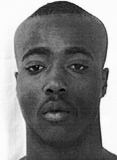
Milton Mathis
Murderer Russell Ellwood
Murderer · USA · 1991
Russell Ellwood was a former taxi driver. Authorities suspected him of killing…
20 victims
Russell Ellwood
Murderer · USA · 1991
Russell Ellwood was a former taxi driver. Authorities suspected him of killing…
20 victims
 Robert Martines Perez
Murderer · USA · 1994
Name: Robert Martines Perez · Other name used in proceedings: Robert Martinez P…
15 victims
Robert Martines Perez
Murderer · USA · 1994
Name: Robert Martines Perez · Other name used in proceedings: Robert Martinez P…
15 victims
 Billy Frank Vickers
Murderer · USA · 1993
Billy Frank Vickers Vickers was executed by lethal injection in Texas on Januar…
14 victims
Billy Frank Vickers
Murderer · USA · 1993
Billy Frank Vickers Vickers was executed by lethal injection in Texas on Januar…
14 victims
 Alain Lamare
Homicide · France · 1978
Alain Lamare (born 1956) was a French gendarme known to the public under the ni…
1 victim
Alain Lamare
Homicide · France · 1978
Alain Lamare (born 1956) was a French gendarme known to the public under the ni…
1 victim
 Lisa Shuler
Murderer · USA · 2013
Lisa Shuler was a New Albany woman who pleaded guilty to murdering Charles Pier…
1 victim
Lisa Shuler
Murderer · USA · 2013
Lisa Shuler was a New Albany woman who pleaded guilty to murdering Charles Pier…
1 victim
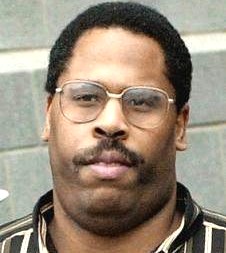 Kendall François
Serial killer · USA · 1996
Kendall François was born July 26, 1971. He lived in Poughkeepsie, New York. He…
8 victims
Kendall François
Serial killer · USA · 1996
Kendall François was born July 26, 1971. He lived in Poughkeepsie, New York. He…
8 victims
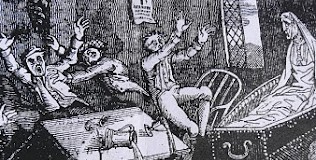 Margaret Dickson
Murderer · United Kingdom · 1724
Margaret Dickson was executed by hanging at Edinburgh on September 2, 1724. She…
1 victim
Margaret Dickson
Murderer · United Kingdom · 1724
Margaret Dickson was executed by hanging at Edinburgh on September 2, 1724. She…
1 victim
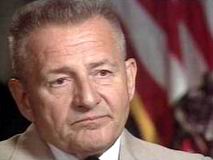 George Marecek
Murderer · USA · 1991
George Marecek was convicted of second-degree murder following a 2001 six-day t…
1 victim
George Marecek
Murderer · USA · 1991
George Marecek was convicted of second-degree murder following a 2001 six-day t…
1 victim
- Gender
- male
- Country
- USA
- Location
- Ft. Bend County, Texas, USA
- Date of birth
- March 11, 1979
- Age at first offence
- 19
- Characteristics
- robbery, drugs
- Victim profile
- Travis Brown III, 24, and Daniel Hibbard, 31
- Method of murder
- Shooting (.45 caliber pistol)
- Date(s) of murder
- December 15, 1998
- Years active
- 1998
- Date of arrest
- —
- Status
-
Executed
Sentenced to death on December 9, 1999. Executed by lethal injection in Texas on June 21, 2011
Case record: Milton Wuzael Mathis
Timeline
- December 15, 1998 — Esmerelda Lester and her 15-year-old daughter Melanie Almaguer went to Chris Lentsch’s home; Travis Brown and Milton Wuzael Mathis were in Brown’s room; shortly thereafter gunshots were heard from Brown’s room and Mathis exited with a gun in his hand.
- September 9, 1999 — A Fort Bend County jury found Mathis guilty of capital murder.
- December 9, 1999 — The trial court sentenced Mathis to death.
- February 2001 — Mathis filed a petition for state writ of habeas corpus.
- February 13, 2002 — The Texas Court of Criminal Appeals affirmed Mathis’s conviction and sentence on direct appeal.
- April 3, 2002 — The Texas Court of Criminal Appeals adopted the trial court’s findings and conclusions and denied relief.
- April 3, 2003 — Mathis filed a federal habeas petition in Houston federal district court.
- October 14, 2003 — Mathis filed a motion for summary judgment in federal district court.
- February 2, 2004 — The federal district court denied Mathis’s federal writ and motion for summary judgment.
- February 17, 2004 — Mathis filed a motion for a new trial and for abatement in federal district court.
- March 9, 2004 — The federal district court denied Mathis’s motion for a new trial and motion for abatement.
- April 8, 2004 — Mathis filed notice of appeal and sought a certificate of appealability (COA) from the district court.
- 2004 — The district court denied his request for a COA.
- August 12, 2004 — Mathis filed an application for COA in the 5th U.S. Circuit Court of Appeals.
- February 2, 2005 — Mathis filed a motion with the 5th Circuit to stay his execution.
- March 11, 2005 — The 5th Circuit denied Mathis’s application for COA and stay of execution.
- March 25, 2005 — Mathis filed a motion for a rehearing in the 5th Circuit.
- April 13, 2005 — The 5th Circuit denied the motion for a rehearing and a stay of execution.
- April 15, 2005 — Mathis filed a subsequent writ of habeas corpus in state district court; he also filed his third application for state habeas relief claiming he was mentally retarded and exempt from the death penalty under Atkins v. Virginia.
- April 18, 2005 — Mathis filed a motion for stay of execution in the Texas Court of Criminal Appeals.
- April 18, 2005 — Mathis filed a petition for certiorari review in the U.S. Supreme Court.
- April 19, 2005 — The Texas Court of Criminal Appeals granted Mathis’s motion to stay.
- June 23, 2005 — The Supreme Court denied Mathis’s petition for certiorari.
- September 12-15, 2005 — An evidentiary hearing on Mathis’s mental retardation claim was held.
- September 20, 2006 — Mathis’s third application for state habeas relief was denied.
- September 29, 2006 — Mathis sought authorization from the Fifth Circuit court to file another federal habeas petition in district court.
- April 2, 2007 — The Fifth Circuit granted the motion.
- April 4, 2007 — Mathis’s second federal habeas petition was filed.
- March 31, 2008 — The court dismissed Mathis’s petition.
- August 20, 2010 — Mathis’s appeal to the Fifth Circuit court was denied.
- February 28, 2011 — Mathis’s petition for certiorari review was denied.
- April 10, 2011 — Mathis filed a motion under Federal Rule of Civil Procedure 60(b), seeking relief from the judgment in Mathis v. Dretke.
- April 29, 2011 — The federal district court denied relief.
- May 17, 2011 — The federal district court denied Mathis’s request for COA.
- May 31, 2011 — The federal district court denied his motion to stay his execution pending appeal.
- May 31, 2011 — Mathis filed a clemency petition with the Board of Pardons and Parole.
- June 20, 2011 — Mathis filed an original habeas corpus petition, a cert petition, a motion for stay of execution, and an application for a certificate of appealability with the U.S. Supreme Court.
- June 20, 2011 — The State filed a brief in opposition to Mathis’s petition for certiorari, application for certificate of appealability, and application for stay of execution.
- June 21, 2011 — The State filed its brief in opposition to the original petition for writ of habeas corpus.
- June 21, 2011 — Mathis filed a subsequent state habeas application; the Texas Court of Criminal Appeals dismissed the subsequent writ.
- June 21, 2011 — The U.S. Supreme Court denied Mathis’s two petitions and three stay requests.
- June 21, 2011 — Mathis was executed by lethal injection in Texas.
Background
Mathis was convicted of capital murder and sentenced to death. He was executed in Texas by lethal injection on June 21, 2011.
Mathis’s criminal history prior to the capital murder included an aggravated robbery, various assaults and thefts, and a charge for resisting arrest. During the punishment phase, the State also presented additional evidence that Mathis had been repetitively belligerent and disruptive at school and that he had gotten into a fight with jailers while incarcerated.
The offence
On December 15, 1998, at approximately 8:00 or 8:30 a.m., Esmerelda Lester and her 15-year-old daughter Melanie Almaguer went to Chris Lentsch’s home. Lentsch rented rooms to Travis Brown and Daniel Hibbard. Brown and Milton Wuzael Mathis were in Brown’s room while Lester, Almaguer, and Hibbard sat in Lentsch’s room and Lentsch went into the kitchen.
Shortly thereafter, Lentsch heard gunshots from Brown’s room and turned to see Mathis exiting the room with a gun in his hand. Mathis claimed that Brown had just shot himself. Lentsch told Mathis to put the gun down, but Mathis ordered Lentsch and the other three back into Lentsch’s room. Mathis calmly walked up to Almaguer and shot her in the head, leaving her alive but paralyzed from the neck down. The bullet passed through Melanie’s forehead and mouth and lodged in her shoulder, where it remains.
Mathis then shot Hibbard in the head, causing his death. Mathis finally pointed the gun at Lester, whereupon he discovered he was out of bullets. Mathis thereafter rummaged through the house and set fire to Brown’s room and left in Brown’s car.
Police identified Mathis as the killer and went to arrest him. Upon being arrested, Mathis became violent. Officers discovered that Mathis had told his father to lie for him and had persuaded his girlfriend to give him an alibi, which she maintained until confronted by the police.
A fellow inmate testified that Mathis showed no remorse for the shootings and stated that he wished he had killed them all.
Witness testimony and trial evidence described the location as a known drug house. Police believed the motive for the shootings was robbery.
Investigation and arrest
After the shootings, police identified Mathis as the killer and went to arrest him. Officers discovered that Mathis had told his father to lie for him and had persuaded his girlfriend to give him an alibi, which she maintained until confronted by police. Upon arrest, Mathis became violent.
Trial
Charges and conviction
Mathis was indicted for capital murder of more than one person during the same criminal transaction under Texas Penal Code § 19.03(a)(7). The Texas jury found Mathis guilty of capital murder as charged in the indictment and answered Texas’s special issues in a manner that required imposition of a death sentence.
The trial judge sentenced Mathis to death following the punishment phase.
Testimony
Mathis testified and initially stated that he had been to the house earlier but was not there on the morning of the shootings. After defense counsel requested a recess, Mathis stated that he had lied in his previous testimony. He then testified that he was at the house at the time of the shootings and admitted that he had shot all three people and taken Brown’s car.
Mathis claimed that he shot Brown in self-defense after Brown had threatened to shoot him, and that he shot the others because he panicked after shooting Brown.
At trial, testimony described the victims as:
- Travis Brown III, 24, who was shot to death in the house where they lived.
- Daniel Hibbard, 31, who was shot to death.
- Melanie Almaguer, 15, who survived but remained paralyzed from the neck down.
All three victims were shot in the head with a .45 caliber pistol.
Voir dire and jury issues
Mathis challenged two venirepersons and later argued issues relating to challenges for cause and Batson claims. The Texas Court of Criminal Appeals overruled those points of error:
- It overruled claims that the trial court erred in denying challenges for cause to two venirepersons (and noted preservation issues).
- It overruled the claim that the trial court erred in granting the State’s challenge for cause to venireperson Villamayor, after concluding her views on the death penalty would substantially impair performance.
- It overruled Mathis’s Batson challenge regarding the State’s use of peremptory strikes on prospective jurors J. Grooms and M. Adams, holding that the State’s explanations were facially race-neutral and that Mathis failed to show purposeful discrimination.
Lesser-included offense and manslaughter instruction
Mathis argued the trial court erred in refusing to instruct the jury on the lesser-included offense of manslaughter with respect to the death of Daniel Hibbard. The Texas Court of Criminal Appeals overruled the point of error, stating that there was no evidence upon which a jury could rationally find that the killing of Hibbard was merely reckless and not at least knowing. The court discussed inconsistencies in Mathis’s testimony and cited evidence including medical examiner testimony and circumstances surrounding the shootings.
Jury argument and counsel effectiveness claims
Mathis raised complaints about the prosecutor’s closing argument and claims of ineffective assistance of counsel for failure to object to certain comments. The Texas Court of Criminal Appeals overruled those points of error, including:
- The claim that the prosecutor referred to Mathis as a “despicable piece of human trash,” which the court held was forfeited for lack of objection.
- The claim that trial counsel was ineffective for neglecting to object to the prosecutor’s comments concerning Mathis’s non-testimonial courtroom demeanor.
- The claim that the trial court erroneously overruled an objection to “victim impact” testimony concerning surviving victim Almaguer; the court held the testimony at issue focused solely on medical procedures required for daily care, and it did not fit the categories it described as victim impact or victim character evidence.
Verbatim quotes from Mathis’s execution statements
Mathis addressed surviving victim Melanie Almaguer and said: “I never meant to hurt you,” “You were just at the wrong place at the wrong time. I am not asking for your forgiveness. All I have to worry about is God forgiving me. I


Spotted an error, or have more information about this case?