
Jeffrey David Matthews
Murderer Brian Kevin Rosenfeld
Murderer · USA · 1985
Brian Kevin Rosenfeld Brian Kevin Rosenfeld was sentenced to three concurrent l…
23 victims
Brian Kevin Rosenfeld
Murderer · USA · 1985
Brian Kevin Rosenfeld Brian Kevin Rosenfeld was sentenced to three concurrent l…
23 victims
 Russell Ellwood
Murderer · USA · 1991
Russell Ellwood was a former taxi driver. Authorities suspected him of killing…
20 victims
Russell Ellwood
Murderer · USA · 1991
Russell Ellwood was a former taxi driver. Authorities suspected him of killing…
20 victims
 Robert Martines Perez
Murderer · USA · 1994
Name: Robert Martines Perez · Other name used in proceedings: Robert Martinez P…
15 victims
Robert Martines Perez
Murderer · USA · 1994
Name: Robert Martines Perez · Other name used in proceedings: Robert Martinez P…
15 victims
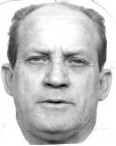 Billy Frank Vickers
Murderer · USA · 1993
Billy Frank Vickers Vickers was executed by lethal injection in Texas on Januar…
14 victims
Billy Frank Vickers
Murderer · USA · 1993
Billy Frank Vickers Vickers was executed by lethal injection in Texas on Januar…
14 victims
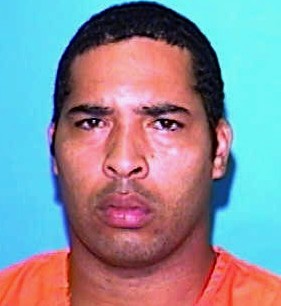 Michael Bernard Bell
Murderer · USA · 1989
Michael Bernard Bell was sentenced to two death sentences for the murders of Ji…
5 victims
Michael Bernard Bell
Murderer · USA · 1989
Michael Bernard Bell was sentenced to two death sentences for the murders of Ji…
5 victims
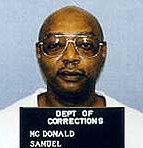 Samuel Lee McDonald
Murderer · USA · 1981
Name: Samuel Lee McDonald · Case citation: State of Missouri v. Samuel Lee McDo…
1 victim
Samuel Lee McDonald
Murderer · USA · 1981
Name: Samuel Lee McDonald · Case citation: State of Missouri v. Samuel Lee McDo…
1 victim
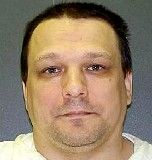 Bobby Lee Hines
Murderer · USA · 1991
Bobby Lee Hines was convicted of capital murder and was sentenced to death by a…
1 victim
Bobby Lee Hines
Murderer · USA · 1991
Bobby Lee Hines was convicted of capital murder and was sentenced to death by a…
1 victim
 Jose Manuel Torres Yake
Murderer · Japan · 2005
Jose Manuel Torres Yake was born in February 1972. He assumed the false name Ju…
1 victim
Jose Manuel Torres Yake
Murderer · Japan · 2005
Jose Manuel Torres Yake was born in February 1972. He assumed the false name Ju…
1 victim
- Gender
- male
- Country
- USA
- Location
- McClain County, Oklahoma, USA
- Date of birth
- September 28, 1972
- Age at first offence
- 22
- Characteristics
- robbery
- Victim profile
- Otis Earl Short, 77 (his great uncle)
- Method of murder
- Shooting (.45-caliber Ruger pistol)
- Date(s) of murder
- January 27, 1994
- Years active
- 1994
- Date of arrest
- Same day
- Status
-
Executed
Executed by lethal injection in Oklahoma on January 11, 2011
Case record: Jeffrey David Matthews
Status / outcome
Jeffrey David Matthews was executed by lethal injection in Oklahoma on January 11, 2011.
Background
Matthews was sentenced to death for the murder of his great-uncle, Otis Earl Short, 77, during a robbery at Short’s McClain County home. The execution was carried out after multiple postponements and legal challenges, including challenges related to trial issues and execution protocol.
Matthews addressed relatives who witnessed his execution and made statements through the death chamber window.
The offence
In the early morning hours of January 27, 1994, Minnie Short was awakened by a noise in the living room of her home located in a rural area east of Rosedale, Oklahoma. She thought it was around 6:00 a.m. and went into the living room. An intruder attacked her from behind with a knife and cut her throat. She remained conscious while she struggled with her attacker.
Minnie Short’s husband, Earl Short, came into the living room a few moments later. Another intruder shot Earl Short in the head. Earl Short died within minutes.
The attackers ordered Minnie Short to lie still and asked her where the money was hidden. The men ransacked the house for almost two hours and left with approximately $500 in cash, a .32 caliber Smith and Wesson revolver, and the Shorts’ brown pickup.
After the intruders left, Minnie Short dressed and went to the road to seek help. A passing ambulance stopped and police were notified. The paramedics bandaged the wound on her neck and determined it was non-life-threatening. Police later determined Earl Short was dead.
When police questioned Minnie Short, she could not describe her attackers. She recalled that the man who stabbed her wore a dark jacket with a large circular design and that the man who shot her husband wore tan loose-fitting clothes. She also remembered that the man who attacked her made a telephone call from her kitchen shortly before they left. Police traced the telephone call and determined it was made at 8:16 a.m. to Bill Guinn in Oklahoma City. Guinn confirmed the call was made by his nephew and employee, Tracy Dyer, who had called to say he would be late to work because of car problems.
Police later found that Matthews and Dyer were connected to the crime through the telephone call and subsequent investigation, and Matthews was convicted of first-degree murder in connection with this robbery.
Investigation and arrest
Tracy Dyer was located and taken to the sheriff’s office for questioning. Dyer initially denied any involvement but became more forthcoming when confronted with the telephone call placing him in the Shorts’ home. Dyer admitted he and Jeffrey Matthews, a great-nephew of Earl and Minnie Short, went to the house to look for money they believed was hidden there. Dyer blamed Matthews for the attacks on the Shorts. Dyer was arrested and police secured an arrest warrant for Matthews.
Matthews was arrested the day after the attacks. After his arrest, OSBI agents interrogated him. A search warrant for Matthews’s home was issued and executed soon after his arrest. Police seized a pair of brown coveralls, three $100 bills found in the freezer, some items of clothing, and a prescription pill bottle for Xanax issued to Minnie Short found on a nightstand. Officers searched the backyard but found nothing.
In June 1994, one of Matthews’s neighbors found a .32 caliber Smith & Wesson revolver buried in a field directly behind Matthews’s house. The gun was identified as the gun taken from the Shorts’ home by the attackers. Police returned to the field with metal detectors and found another buried gun, a .45 caliber Ruger pistol, later determined to have been the gun used to kill Earl Short.
Charges and trial
Matthews was charged with First Degree Murder (Count I), Assault and Battery With a Deadly Weapon (Count II), and Conspiracy to Commit a Felony (Count III) in the District Court of McClain County, Case No. CF-94-18. He was also charged in a separate information with Unauthorized Use of a Motor Vehicle (Count IV) in the District Court of McClain County, Case No. CF-94-19. The State filed a Bill of Particulars alleging four aggravating circumstances for the First Degree Murder charge:
- that Appellant created a great risk of death to more than one person,
- that the murder was committed for the purpose of avoiding lawful arrest,
- that the murder was committed while Appellant was serving a sentence of imprisonment, and
- that Appellant constituted a continuing threat to society.
A motion for a change of venue was granted. The cases were consolidated and tried in the District Court of Cleveland County, Case No. CF-95-183, before the Honorable Tom A. Lucas.
Prosecution evidence described in the record
Testimony indicated that Matthews shot Short once in the head at close range with a .45-caliber pistol and that Dyer cut the throat of Short’s wife, Minnie Short. The men fled in Otis Short’s truck with $500 in cash and a .32-caliber pistol. Minnie Short survived and later died of natural causes.
At the close of evidence, the jury found Matthews guilty of all crimes charged. The jury assessed punishment at death on Count I and forty-five years imprisonment on each of Counts II, III and IV, and the trial court sentenced Matthews in accordance with the jury’s recommendation.
Appellate review and retrial history
Direct appeal (first conviction reversed; new trial ordered)
The Oklahoma Court of Criminal Appeals reversed Matthews’s original judgment and sentence and ordered a new trial.
The appellate court held that Matthews’s arrest warrant for unauthorized use of a motor vehicle was not supported by probable cause, making Matthews’s arrest illegal. It found Matthews’s post-arrest statements were the product of the illegal arrest and were not harmless beyond a reasonable doubt. It also held that the jury should not have heard testimony indicating that a witness had taken a polygraph test, and it held that requested instructions regarding accomplice testimony should have been given.
The appellate court therefore reversed and remanded for a new trial.
Retrial (second conviction affirmed)
After reversal, Matthews was retried in the District Court, Cleveland County, before Candace Blalock, J., in Case No. CF-95-183.
At the second trial, the jury again found Matthews guilty of First Degree Murder (Count I), Assault and Battery With a Deadly Weapon (Count II), Conspiracy to Commit a Felony (Count III), and Unauthorized Use of a Motor Vehicle (Count IV). The jury recommended death for Count I after finding that Matthews created a great risk of death to more than one person and that the murder was committed while Matthews was serving a sentence of imprisonment. The jury also found Matthews guilty of each non-capital felony and recommended one hundred years imprisonment on Count II, fifty years on Count III, and twenty years on Count IV. The trial court ordered the sentences to be served consecutively.
The Oklahoma Court of Criminal Appeals affirmed Matthews’s conviction and death sentence on appeal.
Specific trial and sentencing issues addressed on appeal (retried case)
On appeal after the retrial, juror misconduct claims were addressed, including an allegation that Juror No. 2 made unauthorized communications via telephone with discharged alternate juror James DeHaven between deliberation sessions. The appellate court found that while the trial court found a violation of the admonition, no juror misconduct occurred, and Matthews failed to prove actual prejudice from the conversation.
The appellate court also addressed claims involving Juror No. 8 stating she had already decided to impose the death penalty before presentation of second stage evidence; it found testimony about her mental processes was properly limited under Oklahoma law.
The appellate court addressed challenges to jurors for cause based on death-penalty bias. It found Matthews could not show prejudice from the record because, after peremptory strikes and the removal of prospective jurors, the complained-of jurors did not ultimately result in an unacceptable juror remaining.
The appellate court also addressed evidence and suppression issues, including:
- denial of suppression of evidence seized during execution of a search warrant, including a Xanax pill bottle and clothing,
- arguments that portions of the warrant affidavit were invalid under Franks v. Delaware,
- challenges to probable cause based on the arrest being illegal in earlier proceedings and issues about the affidavit including or excluding material information.
The appellate court addressed ineffective assistance of counsel claims and found no relief warranted. It addressed arguments about sufficiency of evidence despite Dyer’s changed testimony, prosecutorial misconduct claims, and admission of evidence of prior burglary of the Shorts’ storm cellar through Bryan Curry testimony.
On mandatory sentence review, the appellate court found the aggravating circumstances supported and found no error requiring reversal or modification.
Federal habeas proceedings
Matthews filed for federal habeas relief under 28 U.S.C. § 2254. The United States Court of Appeals for the Tenth Circuit affirmed the denial of habeas relief.
The habeas proceedings addressed, among other claims:
- juror misconduct,
- sufficiency of the evidence,
- prosecutorial misconduct,
- ineffective assistance of counsel,
- Fourth Amendment issues relating to the search warrant and seizure of evidence,
- penalty-stage jury instruction issues.
The Tenth Circuit affirmed, finding no basis for relief under the applicable standards.
Death penalty proceedings and execution
Matthews’s execution was postponed multiple times. The U.S. Supreme Court denied Matthews’s application for a fourth stay. The Oklahoma Pardon and Parole Board denied clemency May 26 after members of the victim’s family urged rejection of Matthews’s request that his life be spared.
Matthews’s last meal was deep dish meat lover’s pizza, deep fried jumbo shrimp and two hush puppies with vinegar sauce.
Final words (verbatim)
Matthews told his relatives: “Let my mother know I love her. I just want to thank everyone for their support. I also want to thank all my buddies on death row. I hear you banging. I hate to see you all in this situation,” Matthews told his relatives. “I'm sitting here enjoying my last moments. Enjoy your lives. I think that governor’s phone is broke. He hadn’t called yet.”
People mentioned in the case
- Jeffrey David Matthews — defendant; sentenced to death.
- Otis Earl Short / Otis Short / Otis Earl Short (77) — great-uncle of Matthews; victim.
- Minnie Short — wife of Otis Earl Short; victim; survived the attack and later died of natural causes.
- Tracy Dyer / Tracy Lynn Dyer — accomplice; pled guilty to first-degree murder; sentenced to life in prison without the possibility of parole; testified against Matthews at trial; later recanted.
- Bill Guinn — recipient of the 8:16 a.m. telephone call.
- Dale Sparks — OSBI Agent involved in obtaining the arrest warrant for Matthews’s arrest.
- Noah Ewing — judge involved in issuance of the arrest warrant.
- Lydia Williams — OSBI agent who resumed questioning.
- Harry Wayne Clary — Dyer’s uncle who was visiting from Madill when Dyer was found at his trailer.
- Candace Blalock — judge at retrial sentencing.
- Tom A. Lucas — state District Judge at first trial.
- Jerry Massie — Department of Corrections spokesman who stated execution time and related details.
- Scott Pruitt — Attorney General who issued a statement after execution; his statement was quoted.
- Rep. Mike Ritze — state District Judge Tom Lucas and Department of Corrections Justin Jones also witnessed the execution (in addition to others named).
Other details from the record
- The murder weapon and another gun stolen in the burglary were found buried in a field behind Matthews house.
- A prescription bottle of Xanax issued to Minnie Short was found in Matthews’s home.
- The jury found two aggravating circumstances at the second trial: (1) Matthews’s action caused a great risk of death to more than one person, and (2) Matthews committed the offense while under custodial supervision / while serving a sentence of imprisonment.
- The appellate review included claims related to juror impartiality and evidentiary rulings, including admission of testimony about polygraph examination and instructions about accomplice testimony.
- The Tenth Circuit described the evidence used to uphold sufficiency, including testimony and physical evidence seized shortly after the murder.
Spotted an error, or have more information about this case?