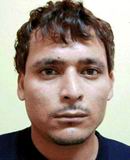
Jose Manuel Torres Yake
Murderer Shoko Asahara
Murderer · Japan · 1995
Shoko Asahara was the founder of Japan's controversial Buddhist religious group…
12 victims
Shoko Asahara
Murderer · Japan · 1995
Shoko Asahara was the founder of Japan's controversial Buddhist religious group…
12 victims
 Masahiro Kanagawa
Murderer · Japan · 2008
Masahiro Kanagawa (金川 真大; Kanagawa Masahiro; born 1983) was a Japanese man. · M…
2 victims
Masahiro Kanagawa
Murderer · Japan · 2008
Masahiro Kanagawa (金川 真大; Kanagawa Masahiro; born 1983) was a Japanese man. · M…
2 victims
 Warren Glowatski
Homicide · Canad a · 1997
Warren Glowatski (born April 26, 1981 in Medicine Hat, Alberta) was a Canadian…
1 victim
Warren Glowatski
Homicide · Canad a · 1997
Warren Glowatski (born April 26, 1981 in Medicine Hat, Alberta) was a Canadian…
1 victim
 Carlton Jerome Pope
Murderer · USA · 1986
Carlton Jerome Pope was convicted of capital murder in the commission of robber…
1 victim
Carlton Jerome Pope
Murderer · USA · 1986
Carlton Jerome Pope was convicted of capital murder in the commission of robber…
1 victim
 Karl Hau
Murderer · Germany · 1906
Karl Hau was accused of the murder of his mother-in-law, Frau Josephine Molitor…
1 victim
Karl Hau
Murderer · Germany · 1906
Karl Hau was accused of the murder of his mother-in-law, Frau Josephine Molitor…
1 victim
 Kia Levoy Johnson
Murderer · USA · 1993
Kia Levoy Johnson was convicted of capital murder of William Matthew Rains in t…
1 victim
Kia Levoy Johnson
Murderer · USA · 1993
Kia Levoy Johnson was convicted of capital murder of William Matthew Rains in t…
1 victim
 The kidnapping of Freddy Heineken
Kidnapping · Netherlands · 1983
The kidnapping of Freddy Heineken, chairman of the board of directors and CEO o…
2 victims
The kidnapping of Freddy Heineken
Kidnapping · Netherlands · 1983
The kidnapping of Freddy Heineken, chairman of the board of directors and CEO o…
2 victims
- Gender
- male
- Country
- Japan
- Location
- Hiroshima, Hiroshima Prefecture, Chūgoku region, Japan
- Date of birth
- February 1972
- Age at first offence
- 33
- Characteristics
- sexual assault, rape, torture, fugitive
- Victim profile
- Airi Kinoshita, 7
- Method of murder
- S uffocation caused by pressure to the neck
- Date(s) of murder
- November 22, 2005
- Years active
- 2005
- Date of arrest
- 8 days after
- Status
-
Life imprisonment
Sentenced to life imprisonment on July 4, 2006
Identification and aliases
Jose Manuel Torres Yake was born in February 1972. He assumed the false name Juan Carlos Pizarro Yagi. When Japanese police arrested him, his name was released to the media as Juan Carlos Pizarro Yagi—the name stated in his passport.
Background
Torres Yake was wanted for a child sexual abuse charge at that time in Peru.
In Peru, Torres Yake hails from Guadalupe, a town of 35,000 near the Pacific Ocean about 600 km north of Lima that has several families of Japanese ancestry. There was no industry to speak of in the town, and after leaving school, young people tended to go to neighboring cities including Trujillo and Chiclayo for work or further education.
According to his birth registration, Torres Yake was born in 1972 and was the youngest of four children, with a brother and two sisters. His family was poor. His father tried to make a living by selling drinks from a stall. His maternal grandfather was thought to have immigrated from Nakagusuku, Okinawa.
A reported former teacher said his older brother was a good student, but Torres Yake did not perform well at elementary school, failing exams and falling two years behind classmates. Around that time, his parents divorced and the children stayed with their mother. After dropping out of junior high school, he sometimes helped his father or found jobs on construction sites.
When Torres Yake was in his early 20s, he left his hometown, reportedly defying an order to appear before a court, and ended up in Lima, where he met his wife. He had an 8-year-old son and a 2-year-old daughter. His wife said he wanted to go to Japan where his siblings were already living to earn money to buy a house, but while a court order against him was effective he faced detention if he tried to leave Peru. His wife said he therefore illegally changed his resident registration in October 2002 to Juan Carlos Pizarro Yagi, allegedly paying $4,000.
Eighteen months later, in April 2004, he entered Japan under that name and went to the city of Suzuka, Mie Prefecture, to live with one of his sisters and her husband, and began engaging in packaging work with his brother-in-law. About a month later he moved to Kure, Hiroshima Prefecture, where his older brother was living, then returned to Suzuka after two months to live with his oldest sister’s family. In summer 2004 he found work at an automobile-related plant as a transporter but was fired about six months later.
A supervisor was quoted as saying: “His attitude at work was very bad. He even threw his work gloves at us.”
At one point, a former coworker wished to remain anonymous said Torres Yake was not popular with his Peruvian colleagues and allegedly only spoke to female employees. Some company workers reported him to the Kaita Police Station, but an officer dismissed their complaint, saying: “He is not causing any incidents.”
In July (year not stated), he found work at an auto-related plant in Kaita east of Hiroshima but again his attitude was poor, and he was absent one or two days a week. Due to repeated absence from work, he was fired again and moved to an apartment in Hiroshima’s Aki Ward where a cousin was living.
The offence
The victim was Airi Kinoshita (木下あいり Kinoshita Airi), born April 10, 1998, and she died on November 22, 2005. She was a seven-year-old first grade student from the Japanese city of Hiroshima. She was sexually assaulted and murdered by Jose Manuel Torres Yake.
Police said they suspected that her killer lured her away as she was walking home and strangled her soon afterwards. An autopsy revealed that she had been murdered within 90 minutes of leaving school around lunchtime on Tuesday, November 22, 2005. She died of suffocation caused by pressure to the neck.
A local resident spotted the tape-bound cardboard box in which her body was found in a vacant lot in Hiroshima’s Aki Ward. The box had been used as packaging for an oven sold in Higashi. Her schoolbag was found alongside a road about 300 meters away. She had been carrying a so-called crime prevention buzzer, but it was missing when her body was found.
Prosecutors officially charged Torres Yake with molesting, murdering and dumping the girl’s body. Investigative sources alleged he had changed his story and told investigators he heard an internal voice saying, “Kill her” and “Make her extinct.”
He denied entering the apartment and claimed he killed her outside the unit. Police said they found the girl’s hair inside the apartment and found bloodstains in his apartment that matched the DNA of the 7-year-old victim. Police have also said they suspected he had dumped the girl's body close to his apartment.
Investigation and evidence
On December 22, 2005, police said bloodstains found in the apartment of murder suspect Jose Manuel Torres Yake matched the DNA of the 7-year-old victim. Police said he had told them Airi Kinoshita did not enter his apartment and that he killed her outside the unit. Police said they also found the girl’s hair inside the apartment. Prosecutors suspected he murdered her on Nov. 22, putting her body into a cardboard box and dumping it in an empty lot.
Investigators described that Airi’s death occurred within 90 minutes of leaving school around lunchtime on November 22, 2005. A local resident located the tape-bound cardboard box in a vacant lot in Aki Ward.
Arrest and pre-trial events
Japanese police arrested Torres on November 30, 2005. Before the arrest, Japanese mass media suspected the criminal was an otaku (nerd), but this proved to be false.
At first Airi’s real name was reported in Japanese mass media. When it was revealed she had been sexually assaulted, Japanese media stopped using her real name. After that shift, Airi’s relatives wanted her real name to be reported.
When Japanese police were trying to establish his identity with Peruvian authorities, they learned that Yake was linked to a molestation case there. In Peru, all Peruvians had to register fingerprints when they turned 18. Peruvian authorities later confirmed Torres Yake’s true identity based on fingerprints supplied by Japanese police.
A journalist indicated him into debates of femicides in Latin America.
Trial
On June 26, 2006, Kenichi Kinoshita, Airi’s father, said: “Airi is not 'a Hiroshima first-grader'. She lived here. It is all right to use her name.” After this speech, Japanese mass media resumed reporting Airi’s real name.
Torres Yake’s trial took place in the Hiroshima District Court. On July 4, 2006, the Hiroshima District Court sentenced Torres to life imprisonment for sexually assaulting and killing the girl, citing his haphazardness.
The presiding judge was Hiromichi Iwakura. Prosecutors appealed against the leniency of the sentence, demanding the death penalty.
In addition to life imprisonment, the court required a parole caution. The judge’s remarks included: “The crime was not premeditated and the number of victims remains at one. We cannot say it is impossible for the defendant to be rehabilitated.” The judge added an unusual caution: “The defendant must pay throughout his life, and the court expects his parole to be decided with caution.”
Observers said the court’s decision not to give the death sentence, but to ask that parole be examined carefully, may add fuel to a debate about whether life imprisonment without parole should replace the death sentence.
Kenichi Kinoshita, 39, was quoted ahead of the ruling as saying: “Sexually assaulting a 7-year-old girl is equivalent to torture.” He also told reporters: “The culprit effectively killed her twice (by sexually assaulting her). I believe he deserves the death penalty,” and said: “I have been working hard for revenge all this time, but the death sentence was not given to him,” and: “It’s like a defeat in the court battle. I feel so frustrated that I couldn’t have any vengeance.”
Torres Yake’s lawyers sought leniency, saying he had not intended to kill the girl and had apologized for her death. The lawyers also asked for a psychiatric examination because he said he “heard voices of the devil,” but the request was turned down.
The court found that Torres Yake left her body in a cardboard box in a nearby vacant lot and that Yake had strangled Kinoshita on Nov. 22 either in or near his apartment in Aki Ward.
The trial began May 15, and the case was sped up by using new pretrial procedures that narrowed down points of argument.
Sentencing and appeals
On July 4, 2006, the Hiroshima District Court sentenced Torres Yake to life imprisonment.
On December 9, 2008, the Hiroshima High Court reversed and remanded the original verdict. The Supreme Court of Japan demanded the High Court continue the trial. The Hiroshima High Court upheld the life sentence, and the end of his trial occurred because they had not submitted an additional appeal by August 12, 2010.
Outcome
Torres Yake was sentenced to life imprisonment on July 4, 2006.
Aftermath
After the sentencing, Kenichi Kinoshita expressed disappointment.
The incident caused parents to panic in Japan, which had been thought to be a “safe society”. The incident also had influence on Latin America because Torres Yake faced a child sexual charge in Peru and because a journalist, Kent Paterson, indicated him into debates of femicides in Latin America.
300 people attended Airi Kinoshita’s funeral in Yatsushiro, Kumamoto Prefecture, her father Kenichi’s hometown. The mourners included Ground Self-Defense Force members who served with her father, a soldier. At the funeral Kenichi Kinoshita said: “I was deeply shocked when I was told by police that she was probably murdered,” and: “I feel animosity toward the person who committed the crime. I hope the culprit is caught soon.”
Kenichi Kinoshita told reporters prior to the sentencing that “the culprit effectively killed her twice” by sexually assaulting her and then strangling her, and that he deserved the death penalty.

Spotted an error, or have more information about this case?