
Mauricio Rodriguez Silva
Serial killer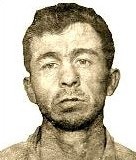 Donald Henry Gaskins
Serial killer · USA · 1969
Donald Henry Gaskins, also known as Donald “Pee Wee” Gaskins, was a serial kill…
200 victims
Donald Henry Gaskins
Serial killer · USA · 1969
Donald Henry Gaskins, also known as Donald “Pee Wee” Gaskins, was a serial kill…
200 victims
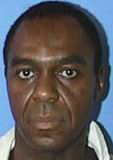 Carl Eugene Watts
Serial killer · USA · 1974
Carl Eugene Watts (born November 7, 1953; died September 21, 2007), also known…
100 victims
Carl Eugene Watts
Serial killer · USA · 1974
Carl Eugene Watts (born November 7, 1953; died September 21, 2007), also known…
100 victims
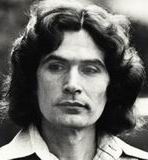 Rodney Alcala
Serial killer · USA · 1977
Rodney James Alcala (born August 23, 1943) was also known as Rodrigo Jacques Al…
100 victims
Rodney Alcala
Serial killer · USA · 1977
Rodney James Alcala (born August 23, 1943) was also known as Rodrigo Jacques Al…
100 victims
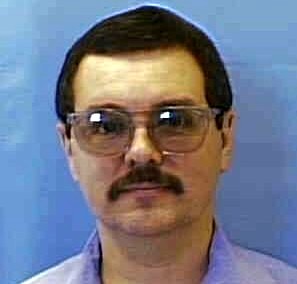 Donald Harvey
Serial killer · USA · 1970
Donald Harvey was known as an American serial killer and a self-professed “Ange…
87 victims
Donald Harvey
Serial killer · USA · 1970
Donald Harvey was known as an American serial killer and a self-professed “Ange…
87 victims
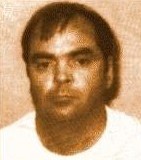 Donald Leroy Evans
Serial killer · USA · 1975
Donald Leroy Evans (born July 5, 1957) was an American serial killer who murder…
60 victims
Donald Leroy Evans
Serial killer · USA · 1975
Donald Leroy Evans (born July 5, 1957) was an American serial killer who murder…
60 victims
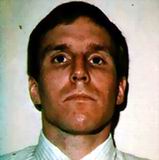 Michael Swango
Serial killer · USA · 1981
Michael Swango (Joseph Michael Swango) was a physician and American serial kill…
60 victims
Michael Swango
Serial killer · USA · 1981
Michael Swango (Joseph Michael Swango) was a physician and American serial kill…
60 victims
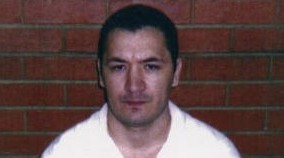 Ruben Montoya Cantu
Homicide · USA · 1984
Ruben Montoya Cantu was executed by lethal injection in Texas on August 24, 199…
1 victim
Ruben Montoya Cantu
Homicide · USA · 1984
Ruben Montoya Cantu was executed by lethal injection in Texas on August 24, 199…
1 victim
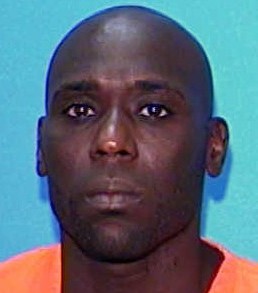 William Earl Sweet
Murderer · USA · 1990
William Earl Sweet was sentenced to death on August 30, 1991. The case was in t…
2 victims
William Earl Sweet
Murderer · USA · 1990
William Earl Sweet was sentenced to death on August 30, 1991. The case was in t…
2 victims
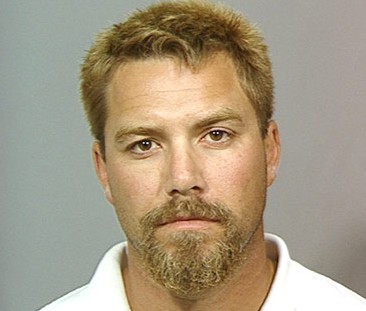 Scott Lee Peterson
Murderer · USA · 2002
Scott Lee Peterson (born 24 October 1972 in San Diego, California) was a former…
1 victim
Scott Lee Peterson
Murderer · USA · 2002
Scott Lee Peterson (born 24 October 1972 in San Diego, California) was a former…
1 victim
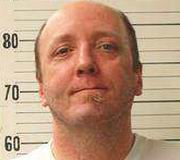 Robert Leach
Murderer · USA · 1999
Robert L. Leach, Jr. was convicted in a capital case of two counts of first deg…
2 victims
Robert Leach
Murderer · USA · 1999
Robert L. Leach, Jr. was convicted in a capital case of two counts of first deg…
2 victims
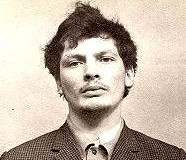 Patrick David Mackay
Serial killer · United Kingdom · 1973
Patrick David Mackay was born on September 25, 1952, in England. He was the son…
11 victims
Patrick David Mackay
Serial killer · United Kingdom · 1973
Patrick David Mackay was born on September 25, 1952, in England. He was the son…
11 victims
- Gender
- male
- Country
- USA
- Location
- Los Angeles, California, USA
- Date of birth
- 1960
- Age at first offence
- 18
- Characteristics
- mentally ill, torture, rape
- Victim profile
- Troy Covella, 18 / Walter P. Sanders, 16 / Monique Michelle Hilton , 16 / Martha Kitzler, 17 (his half-sister)
- Method of murder
- Shooting / Strangulation
- Date(s) of murder
- 1978 / 1984
- Years active
- 1978–1984
- Date of arrest
- May 28, 1984 (surrenders)
- Status
-
Released
Sentenced to life in prison without parole on three counts in 1985; convicted of manslaughter in 1978 and paroled on May 7, 1984
Case overview
Mauricio Rodriguez Silva was born with “gigantism” which enlarges features and spur uncontrollable rages. He was convicted of manslaughter in 1978 and was paroled on May 7, 1984. He was later sentenced to life in prison without parole on three counts in 1985.
Timeline
- 1978 — Silva was convicted of manslaughter.
- May 7, 1984 — Silva was paroled.
- May 22, 1984 — Silva shot to death two 16-year-old runaways, Walter P. Sanders and Monique Michelle Hilton, and strangled and stabbed his 17-year-old half-sister, Martha Kiztler.
- May 28, 1984 — Silva knocked on the door of the Templeton Sheriff’s Department in San Luis Obispo County and confessed to agent Marie Jones that he had killed 3 people.
- April 17, 1985 — A jury convicted Silva: two counts of first-degree murder and one count of second-degree murder.
- 1985 — Silva was sentenced to life in prison without parole on three counts.
- August 11, 1986 — A Supreme Court of California opinion was issued in his case relating to his sentence of death.
- May 2001 — The California Supreme Court found that the prosecutor had improperly used peremptory challenges to dismiss five prospective Latino jurors.
- 1999 — A test placed “His true IQ” within the range of 74-83.
- July 2007 — A judge decided that executing Silva was the appropriate punishment for the cruelty of his crimes.
Background
Silva was born with “gigantism,” which enlarges features and can spur uncontrollable rages. He was also born with a cleft palate and chronic hormonal imbalance. His life history included an environment described as involving foster homes and orphanages in Mexico and the United States. His neighbors on death row included other prisoners named in the narrative.
Family
Silva’s father, David Silva, was described as a native of the Mexican state of Chihuahua. David Silva was described as a tall, handsome man and a womanizer; the narrative says he died in 1968 in Alaska after being killed by a jealous coworker. Silva’s mother, Myrna Rodríguez, was described as from Nicaragua and suffering from gigantism and mental problems. After separating from David, the narrative says she became her boss’s mistress and they had a daughter, Martha Kitzler.
Silva described his sister’s death and discussed shame, regret, and family circumstances.
The offence
Silva shot to death two 16-year-old runaways, Walter P.
May 1984 events involving victims
Silva met Walter Sanders on a bus in Los Angeles and convinced him to join him on a drive through the barren Mojave Desert. Five miles east of Pearlblossom, they left the car and Silva took a shotgun with him, firing five rounds at close range to be certain the young man was dead.
Silva picked up Monique Hilton, described as a 16-year-old hitchhiker, and drove into the desert east of Palmdale, California, using the shotgun again. The narrative described the act as “a ritualistic form of execution.”
Four days later, Silva switched to strangulation and invaded the home of his own half-sister, 17-year-old Martha Kitzler, with whom he had stayed periodically since his parole.
Confession details
Police records indicated that on May 28, 1984, Silva knocked on the door of the Templeton Sheriff’s Department in San Luis Obispo County and confessed to agent Marie Jones that he had killed 3 people. He recounted that in less than 2 weeks he had stabbed and strangled his half sister, Martha Kitzler, shot Walter P. Sanders 5 times, and taken the life of Monique Michelle Hilton, a young woman he had picked up at a bus stop on Santa Monica Boulevard.
Silva made the following statements in the narrative, including quotations:
“Ask me anything, I’ll tell you. I know that outside, people might say, ‘Just do the interview so he doesn’t die,’ but it’s not like that. I regret everything I did, but killing me won’t bring back to life anyone who I killed. I know I have to pay, but I suffer more by living, with shame inside, here and here,”
Silva also said:
“She [Monique] was a good girl who had left home to come to Hollywood because she wanted to meet Michael Jackson.”
Silva said:
“I would have preferred that they yelled at me that I’m the worst criminal, a monster like everyone tells me,”
Silva said:
“I don't want them to kill me. I'm going to fight for life in prison,”
Silva said:
“The Bible says it doesn't matter who you are, each day counts, and the day I stop fighting for my life will be like committing suicide, and there is no relief for suicide, right? Look, here, where am I going in life? To see the wall of my cell every day. In the system, we're like turkeys on Thanksgiving. They fatten us up in order to kill us. But what I'm afraid of isn't death, but what comes after,”
Silva said:
“I've had everything broken. In jail when you're really big, when you go to lie down first, they hit you with anything they can find,”
Silva blamed the disinfectant for his eyes, stating:
“I hope my story helps other people so they don’t end up here,”
Silva also said:
“She [my sister] died because of the problems I had. She didn't know anything about my life, she laughed at me with her friends, but she wasn't guilty of anything, how would she know it hurt me?”
In another quoted statement, Silva described an experience involving sexual abuse, stating:
“It happened to me and I saw it many times. Once on a bus in Mexico City, they raped a girl I knew, she was mute and I kept quiet out of fear,”
He also said:
“I didn't tell the psychologist because I don't like talking about it. I'm telling it because I think maybe some parents will read the story and talk about it. And if a kid this is happening to is walking by and hears them, there's a chance he'll be inspired to talk. I'm 51 now and I see that everything that hurt me as a kid made me into a monster,”
Silva said:
“When you think you've seen the worst of the worst, someone arrives who's even worse. This year 22 new ones got sentenced. It's not my business what they did. Here we know we're all criminals,”
Investigation
The narrative stated that police records indicated Silva confessed on May 28, 1984 to agent Marie Jones after knocking on the Templeton Sheriff’s Department door. It also described that the crime led police to their man.
Arrest
No arrest action was specifically detailed as an event beyond the confession at the Templeton Sheriff’s Department.
Trial
Silva faced three counts of first-degree murder. The narrative indicated that he was tried for his crimes in Los Angeles.
Verdicts and jury deliberation
The jury convicted Silva on April 17, 1985:
- two counts of first-degree murder involving Walter P. Sanders and Monique Michelle Hilton; and
- one count of second-degree murder involving Martha Kitzler.
The narrative stated that after thirteen days of deliberation, the jury split seven to five in favor of execution. Their deadlock left Silva with a mandatory sentence of life without parole.
Sentencing
Silva’s mandatory sentence was life without parole due to the jury deadlock after thirteen days of deliberation. The narrative stated he was sentenced to life in prison without parole on three counts in 1985.
The narrative also described a Supreme Court of California opinion and a death sentence reference: Supreme Court of California opinion S004727 related to a death sentence on August 11, 1986.
The narrative also described later proceedings in July 2007 regarding changing his death sentence to life in prison.
Appeals
In May 2001, the California Supreme Court found that the prosecutor had improperly used peremptory challenges to dismiss five prospective Latino jurors. “His true IQ falls within the range of 74-83,” according to a 1999 test.
The narrative also stated that in July 2007, Silva tried to get his death sentence changed to life in prison, but a judge decided that executing him was the appropriate punishment for the cruelty of his crimes.
Outcome
Silva was convicted of manslaughter in 1978 and was paroled on May 7, 1984. He was later convicted and sentenced to life in prison without parole on three counts in 1985. The narrative also referenced Supreme Court of California opinion S004727 and a death sentence of August 11, 1986, and subsequent proceedings in July 2007.
Other details
Prior sentence and conditions after manslaughter conviction
The narrative stated that Silva initially was charged with murder in the earlier case, struck a plea bargain for manslaughter, served five years in prison, and had time added for his violent assault on a fellow inmate.
Additional offence mentioned in narrative
The narrative stated that Silva had been out of prison for less than a month when he killed Troy Covella, an 18-year-old he shot 9 times. The narrative stated that the crime got him 6 years in prison in Soledad, Calif., and named Crack in the narrative context.
Personal measurements and environment described
The narrative described Silva as “The Monster” on death row, giving details including that he was 7-foot-tall, 335 pounds, and had enormous hands. It stated his long legs and hand size, and that his features were described as still growing due to hormonal imbalance called gigantism.
Prison-life statements and conduct described
The narrative described that Silva rarely went to the visitors’ room and that guards told him the interview was over. It described that he was ordered to disinfect his chair and that his eyes were surprisingly red.
Additional named individuals in narrative
The narrative referenced Cary A. Stayner, who raped and murdered 4 women in Yosemite national park, and Martin James Kipp, who took the lives of 2 women, as examples of other inmates on San Quentin’s death row mentioned in the narrative.
Other biographical details included in narrative
The narrative stated that Silva ran away from his grandmother’s house and joined a gang of street kids, where he huffed glue and ate scraps of garbage. It said a court record showed his grandmother once left the boys locked inside with a big pumpkin that they ate for days even though it was rotten, and that the boys went to the hospital with stomach infections.
The narrative stated that Silva lived in more than 5 foster homes and by age 15 still didn’t know how to write. It also stated that when he went to White Memorial Hospital to have his cleft palate operated on, he was so scared that he wet his pants.
The narrative stated that “For 26 years, San Quentin has been his home,” and that for 26 years his home had been San Quentin. It also described that the “family stuff” was something he had only seen on TV.
Listed motive and method tags in narrative
The narrative included classification fields: “SEX: M,” “RACE: H,” “TYPE: T,” “MOTIVE: PC,” “MO: Shot three teenagers and strangled his own halfsister.” It listed “DISPOSITION: Convicted of manslaughter, 1978 (paroled 1984); life without parole on three counts, 1985.”
Spotted an error, or have more information about this case?