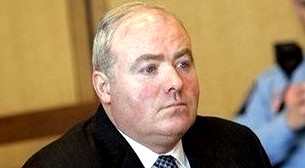
Michael Skakel
Homicide Edward Charles Allaway
Homicide · USA · 1976
Edward Charles Allaway Edward Charles Allaway was found not guilty by reason of…
7 victims
Edward Charles Allaway
Homicide · USA · 1976
Edward Charles Allaway Edward Charles Allaway was found not guilty by reason of…
7 victims
 Joel Schmeiderer
Murderer · USA · 1998
Joel Schmeiderer was convicted of first degree premeditated murder for killing…
2 victims
Joel Schmeiderer
Murderer · USA · 1998
Joel Schmeiderer was convicted of first degree premeditated murder for killing…
2 victims
 George Anderson Hopper
Murderer · USA · 1983
George Anderson Hopper was convicted of capital murder for the October 1983 str…
1 victim
George Anderson Hopper
Murderer · USA · 1983
George Anderson Hopper was convicted of capital murder for the October 1983 str…
1 victim
 Gilberto Chamba
Serial killer · Ecuador / Spain · 1988
Gilberto Antonio Chamba Jaramillo was an Ecuadorian immigrant to Spain. He was…
9 victims
Gilberto Chamba
Serial killer · Ecuador / Spain · 1988
Gilberto Antonio Chamba Jaramillo was an Ecuadorian immigrant to Spain. He was…
9 victims
 Ryan Jenkins
Murderer · USA · 2009
Ryan Jenkins was charged with the murder of his wife, Jasmine Fiore. Jasmine Fi…
1 victim
Ryan Jenkins
Murderer · USA · 2009
Ryan Jenkins was charged with the murder of his wife, Jasmine Fiore. Jasmine Fi…
1 victim
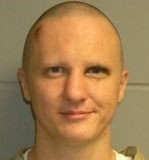 Jared Loughner
Mass murderer · USA · 2011
January 8, 2011 — Jared Lee Loughner opened fire at a constituent meeting held…
6 victims
Jared Loughner
Mass murderer · USA · 2011
January 8, 2011 — Jared Lee Loughner opened fire at a constituent meeting held…
6 victims
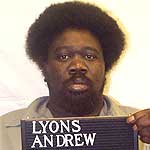 Andrew Lyons
Murderer · USA · 1992
Andrew Lyons (defendant) As of September 1992, Andrew Lyons and Bridgette Harri…
3 victims
Andrew Lyons
Murderer · USA · 1992
Andrew Lyons (defendant) As of September 1992, Andrew Lyons and Bridgette Harri…
3 victims
- Gender
- male
- Country
- USA
- Location
- Greenwich, Connecticutt, USA
- Date of birth
- September 19, 1960
- Age at first offence
- 15
- Characteristics
- juvenile (15), child abuse, mentally ill
- Victim profile
- Martha Elizabeth Moxley, 15 (his neighbor)
- Method of murder
- Bludgeoned with a golf club, a 6-iron
- Date(s) of murder
- October 30, 1975
- Years active
- 1975
- Date of arrest
- January 19, 2000 (25 years later)
- Status
-
Life imprisonment
Sentenced to 20 years to life in prison on July 19, 2002
Case record: Michael Skakel
Background
Michael Skakel was the nephew of Ethel Skakel Kennedy, the widow of Senator Robert F. Kennedy.
Michael Skakel was one of six children born to Rushton and Anne Reynolds Skakel. The family lived in the neighborhood of Belle Haven in Greenwich, Connecticut. After his mother's death from brain cancer in 1973, Skakel became an alcoholic and had difficulties at school. He struggled for years with dyslexia, which went undiagnosed until he was 26.
A cousin, Robert F. Kennedy Jr., wrote about Skakel as a “small sensitive child — the runt of the litter with a harsh and occasionally violent alcoholic father who both ignored and abused him.”
In 1978, Skakel was arrested for drunk driving in New York. To avoid criminal charges, Skakel's family sent him to the Elan School in Poland Spring, Maine, where he received treatment for alcoholism. He left the school after two years and spent much of the 1980s competing on the national speed skiing circuit.
In 1993, Skakel graduated from Curry College in Milton, Massachusetts. He worked as a driver for Ted Kennedy's 1994 reelection campaign. Later in 1994, he took a job working for his cousin Michael Kennedy at the Citizens Energy Corporation as director of international programs.
Skakel's brothers included Stephen Skakel, John Skakel, and David Skakel. Stephen was 9 years old when Martha Moxley was murdered. David Skakel spoke publicly after the verdict.
Ken Littleton was a live-in tutor employed by the Skakels in October 1975.
The offence
Martha Moxley was found dead on October 31, 1975 on her family's property in Greenwich, Connecticut. The cause of death was described as bludgeoning with a golf club. A 6-iron soon determined to belong to the Skakels was involved.
Martha Moxley was last seen “falling together behind the fence” near the pool in the Skakel backyard at around 9:30 p.m. The next day, her body was found underneath a tree in her family's backyard.
Her pants and underwear were pulled down, but it was stated that she had not been sexually assaulted.
Pieces of a broken six-iron golf club were found near the body.
An autopsy indicated Martha Moxley had been both bludgeoned and stabbed with the club, traced back to the Skakel home.
Martha Moxley’s brother John Skakel and other family members disputed that Skakel committed the murder and later said the trial was a “witch hunt.”
Investigation
The murder initially remained unsolved, though suspicion hung over the Skakel home.
Ken Littleton became a prime suspect. Ken Littleton was described as a live-in tutor who started work on the night of the murder.
It was stated that work by Greenwich Police detective Frank Garr and police reporter Leonard Levitt named Michael as the killer during the years before books by Dominick Dunne and Mark Fuhrman.
Mark Fuhrman's 1998 book Murder in Greenwich named Skakel as the murderer and pointed out mistakes police had made in investigating the crime.
In 1993, author Dominick Dunne published A Season in Purgatory, a fictional story loosely based on the murder of Martha Moxley.
In 1998, it was described that a one-judge grand jury was sought and testimony was taken from 53 witnesses.
During earlier efforts, in 1992 investigators convinced Littleton's ex-wife, Mary Baker, to meet Littleton in a Boston hotel room to try to get him to implicate himself on tape. Baker tried for two hours to get Littleton to confess by insisting that the couple had no chance of reconciling unless he told the “big secret” he had alluded to during their marriage. It was stated that Littleton did not confess to Baker and that the investigation returned to neutral for another five years.
Greenwich police consulted forensic expert Dr. Michael Baden for establishing the likely time of death. Baden said:
“It was our opinion that the time of death, based only on stomach contents, was somewhere between 9:30 and 10 o'clock,”
According to reporting in the case narrative, police then established who had been with Martha Moxley that night. Martha Moxley arrived at the Skakel house around 9 p.m. with friends, got into the Skakels' Lincoln parked in the driveway, and sat between Michael and his older brother, Tommy. It was stated that around 9:15 p.m. Michael went with his older brothers and a cousin back to Terrian's house.
Tommy Skakel was said to have told the police that he last saw Martha at 9:30 p.m. when she left to go home.
The narrative described that everyone interviewed had an alibi and that Michael Skakel’s alibi was so strong that he was not considered a suspect at that time.
Later, it was stated that when William Kennedy Smith was tried for rape in 1991, information surfaced that he knew more about the Moxley case, resulting in renewed investigation into the “cold case.”
Arrest / indictment
In June 1998, a rarely invoked one-man grand jury was convened. After 18 months, in June 2000, Skakel was indicted for the murder of Martha Moxley.
In January 2000, after hearing testimony from several Elan students and others, the grand jury indicted Michael for the murder of Martha Moxley.
Trial
A highly publicized trial was described.
Skakel was convicted for the murder of Martha Moxley on June 7, 2002. The conviction was described as the result of a jury foreman announcing the verdict at 10:55 a.m. on the jury’s fourth day of deliberations.
Prosecutors argued that Skakel snapped during a night of drinking and killed Martha because she became more interested in his brother, Thomas.
Skakel’s alibi was that at the time of the murder he was at his cousin’s house. It was described that the cousin James Dowdle testified that Skakel was with him at his home watching the premiere of “Monty Python's Flying Circus” and hanging out until about 10:50. The cousin Jimmy Terrian and other family members were also described in alibi testimony within the narrative.
The jury heard part of a taped book proposal in which Skakel admitted to masturbating in a tree that night, but not to killing Moxley.
During closing arguments, prosecutors took words from this proposal and overlayed them on graphic images of Martha Moxley’s dead body in a computerized presentation shown to jurors during closing arguments. The defense insisted the words were taken out of context.
The defense counsel was Mickey Sherman, who interrupted Skakel when he attempted to speak after the verdict, saying:
“No sir.”
It was stated that Skakel did not testify himself but jurors heard a 1997 tape recording he made in anticipation of writing a book about his life as a cousin of the Kennedys, in which he placed himself at the crime scene masturbating in a tree outside Martha Moxley's bedroom window.
Forensic pathologist Joseph Jachimczyk testified that Martha was probably killed at about 10 p.m., and he conceded he could be off by much as an hour.
The defense called 15 witnesses, including relatives who placed Skakel across town around the time the murder was believed to have occurred.
The prosecution called nearly 40 witnesses for a largely circumstantial case against Skakel.
It was described that testimony included two former students of a drug rehab center, which Michael Skakel attended in 1978. The students testified that they heard Skakel confess to killing Martha with a golf club after she refused to have sexual intercourse with him.
A quoted confession attributed to Skakel in the narrative was:
“I'm going to get away with murder. I'm a Kennedy.”
Evidence described included statements attributed to former Elan student Greg Coleman and former Elan student John Higgins.
Greg Coleman was described as changing his story. The narrative described that Coleman testified at trial and that he had taken “25 bags of heroin” prior to facing the grand jury. Coleman died of a heroin overdose just before the trial. A tape of his previous testimony was played for the jury.
John Higgins testified. A quoted attribution included:
“I think Michael could have gotten better representation,” “However, the worst day of all for the Skakel family and Sherman was the day of closing arguments.”
Prosecutor Jonathan Benedict made closing argument and used a recorded passage from Skakel’s book proposal. Benedict said:
“The truth of the matter is that Michael Skakel couldn't keep his mouth shut for a quarter of a century,”
Benedict continued:
“We presented 13 separate people who had separate conversations in separate venues with Michael Skakel, all of which were either out-and-out confessions or at least incriminating admissions by him. That's how you try a circumstantial case. You put a bunch of facts together.”
Benedict also said:
“We needed to connect the dots and that's what I did,”
Benedict transcribed and played Michael’s own words over gory photographs during closing arguments. A quoted portion attributed to Benedict’s editing included the prosecutor’s played passage:
“And I woke up to Mrs. Moxley saying ‘Michael, have you seen Martha?’ I was like ‘Oh, my God! Did they see me last night?’ I just remember having a feeling of panic'.”
And the narrative included words that Benedict was said to have left out:
“And I remember thinking, 'Oh, my God! I hope nobody saw me jerking off.' And I woke up to Mrs. Moxley saying, 'Michael, have you seen Martha?' I was like, 'Oh, my God! Did they see me last night?'”
After closing arguments and verdict discussion, a quote from prosecutor Benedict was included:
“Justice can take a long time sometimes, but it's certainly worth the effort,”
and:
“It's really worth going for.”
A quote attributed to Skakel’s lawyer Sherman outside the courthouse stated:
“As long as there is a breath in my body this case is not over,”
David Skakel said:
“For us, this trial has felt like a witch hunt. Our family remains more resolute than ever.”
Stephen Skakel described:
“I love my brother and I believe in my brother 100 percent.”
Stephen later was quoted as:
“I will fight with the last breath in me to get him free.”
John Skakel said:
“It's not going to bring Martha back,”
and Robert Kennedy Jr. was quoted in relation to the family’s defense:
“And you know people are going to dismiss that and say, 'Well, of course he's defending his cousin,'” “But the facts speak for themselves ... I'm utterly convinced that he did not do the crime.”
Sentencing
Skakel was sentenced to 20 years to life in prison on July 19, 2002.
The narrative also stated that in August 2002 Michael Skakel was sentenced to 20 years to life for the murder.
Skakel was described as facing up to life in prison, but could get as few as 10 years when sentenced July 19.
Jeanine Pirro said:
“You have to look with some skepticism at a claim of knowing who the murderers are in a case where the people have agonized for almost three decades, and wonder what it is that brings you now to the public arena. Why did you not report this?”
Pirro also said:
“This is all about weighing that delicate balance,”
Appeals / post-conviction proceedings
In November 2003, Skakel appealed to the Connecticut Supreme Court, arguing that the trial court erred because the case should have been heard in Juvenile Court rather than Superior Court, that the statute of limitations had expired, and that there was prosecutorial misconduct.
On January 12, 2006, the Connecticut Supreme Court rejected Skakel’s claims and affirmed his conviction.
Skakel retained attorney and former United States Solicitor General Theodore Olson. On July 12, 2006, Olson filed a petition for a writ of certiorari on behalf of Skakel before the Supreme Court of the United States.
On November 13, 2006, the Supreme Court declined to hear the case.
Skakel began post-conviction proceedings, including a petition for writ of habeas corpus and a motion for new trial in the Connecticut trial court that originally heard his case.
A two-week hearing in April 2007 was described as allowing presentation of evidence related to Tony Bryant’s claims. In September 2007, Skakel’s attorneys filed a petition based in part on Bryant’s claims, asking for a new trial.
In October 25, 2007, a Superior Court judge denied the request for a new trial, saying Bryant's testimony was not credible and there was no evidence of prosecutorial misconduct in the original trial.
Skakel’s lawyer appealed this decision to the Connecticut Supreme Court. On March 26, 2009, a five-judge panel heard arguments. On April 12, 2010, the panel ruled 4-1 against Skakel’s appeal.
A further narrative stated that Michael should not have been tried as an adult for a crime committed when he was 15, and that counsel argued Benedict’s multimedia closing argument deliberately misrepresented facts.
Michael Skakel’s attorney Hope Seeley stated:
“she plans to file her motion for a new trial by the end of September.”
Outcome
Skakel was convicted of the 1975 murder of Martha Moxley and was sentenced to 20 years to life in prison on July 19, 2002.
Other details
Michael Skakel was described as still incarcerated at MacDougall-Walker Correctional Institution in Suffield, CT. He was described as eligible for a parole hearing in April 2013.
Martha Moxley’s mother Dorthy Moxley was quoted as:
“This is Martha's day,” “This is truly Martha's day.”
Dorthy Moxley also was quoted as:
“Again today like I've been doing for 27 years, I was praying that I can find justice for Martha. This whole thing was about Martha,”
Martha Moxley was described as interred at Putnam Cemetery in Greenwich, Connecticut.
Robert F. Kennedy Jr. wrote an article for The Atlantic Monthly entitled “A Miscarriage of Justice,” published in January 2003. In that article, it was stated he insisted Skakel’s indictment “was triggered by an inflamed media, and that an innocent man is now in prison”.
The narrative described a made-for-TV movie Murder in Greenwich and that actress Maggie Grace played Martha Moxley.
A made-for-TV movie and other dramatizations were discussed alongside the case narrative.
The narrative described Tony Bryant and a videotaped interview with Skakel private investigator Vito Colucci in August 2003. Tony Bryant described a plan using the phrase “go caveman,” meaning violently have his way with her. Bryant said he never came forward before because his mother warned him, and he believed her that as a black man in Greenwich he would be tagged for the unsolved murder.
Prosecutors responded that Bryant may have made up the story to sell a play about the case.
Greg Coleman and Ken Littleton were linked through the narrative in relation to alleged confessions.
The narrative included that Skakel’s wife divorced him and had custody of their 4-year-old son, George.
The narrative included mention that Skakel’s first chance of parole was at least 10 years away, and that his murder sentence ran until 2022.
The narrative included that Crawford Mills told Robert Kennedy Jr. that Tony Bryant had information about the murder of Martha Moxley.
The narrative included that attorney Gene Riccio said:
“He's been diagnosed with having bipolar disorder,” “He’s had a number of hospitalizations. He’s a nice man who’s troubled and had a great deal of difficulty in his life ... I think arguments made that Mr. Littleton is responsible for this homicide are ridiculous.”
Spotted an error, or have more information about this case?