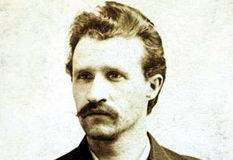
August Spies
Mass murderer? Anthony Graves
Mass murderer? · USA · 1992
Anthony Graves was convicted in 1994 of assisting Robert Carter in multiple mur…
6 victims
Anthony Graves
Mass murderer? · USA · 1992
Anthony Graves was convicted in 1994 of assisting Robert Carter in multiple mur…
6 victims
 David Housler
Mass murderer? · USA · 1994
Court of Criminal Appeals of Tennessee: State of Tennessee v. David G. Housler…
4 victims
David Housler
Mass murderer? · USA · 1994
Court of Criminal Appeals of Tennessee: State of Tennessee v. David G. Housler…
4 victims
 Johann Otto Hoch
Serial killer · USA · 1890
Johann Otto Hoch (1855 - 1906) was the most famous and last-used alias of a Ger…
15 victims
Johann Otto Hoch
Serial killer · USA · 1890
Johann Otto Hoch (1855 - 1906) was the most famous and last-used alias of a Ger…
15 victims
 John Earl Bush
Murderer · USA · 1982
Defendant: John Earl Bush Victim: Frances Julia Slater Status: Executed by elec…
1 victim
John Earl Bush
Murderer · USA · 1982
Defendant: John Earl Bush Victim: Frances Julia Slater Status: Executed by elec…
1 victim
 Raymond Kinnamon
Murderer · USA · 1984
Raymond Kinnamon was executed by lethal injection in Texas on December 11, 1994…
1 victim
Raymond Kinnamon
Murderer · USA · 1984
Raymond Kinnamon was executed by lethal injection in Texas on December 11, 1994…
1 victim
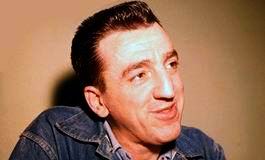 Caryl Chessman
R obber and rapist · USA · 1947
Caryl Whittier Chessman (May 27, 1921 in St. Joseph, Michigan – May 2, 1960 at…
0 victims
Caryl Chessman
R obber and rapist · USA · 1947
Caryl Whittier Chessman (May 27, 1921 in St. Joseph, Michigan – May 2, 1960 at…
0 victims
 Mariette Bosch
Murderer · Botswana · 1996
Mariette Sonjaleen Bosch was executed in Botswana by hanging at Gaborone's Cent…
1 victim
Mariette Bosch
Murderer · Botswana · 1996
Mariette Sonjaleen Bosch was executed in Botswana by hanging at Gaborone's Cent…
1 victim
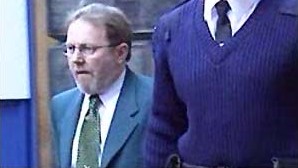 Andrew Walker
Murderer · United Kingdom · 1985
Royal Scots corporal Andrew Walker killed three Army colleagues in a payroll ro…
3 victims
Andrew Walker
Murderer · United Kingdom · 1985
Royal Scots corporal Andrew Walker killed three Army colleagues in a payroll ro…
3 victims
- Gender
- male
- Country
- USA
- Location
- Chicago, Illinois, USA
- Date of birth
- December 10, 1855
- Age at first offence
- 31
- Characteristics
- anarchist
- Victim profile
- Policemen
- Method of murder
- Dynamite bomb
- Date(s) of murder
- May 4, 1886
- Years active
- 1886
- Date of arrest
- Same day
- Status
-
Executed
Executed by hanging on November 11, 1887
Overview
August Vincent Theodore Spies (December 10, 1855 – November 11, 1887) was an anarchist labor activist who was found guilty of conspiracy and was hanged following a bomb attack on police at the Haymarket Riot.
Background
Spies was born in Germany in 1855 and emigrated to America in 1872 with his mother, Christine, and his five siblings, Henry, Kenny, Maggie, Willy, and Adolph. His father had died in 1871. Spies settled in Chicago, where he became an upholsterer.
Spies became involved in trade union activities due to the injustices he witnessed. In 1877, he joined the Socialist Labour Party, where he became deeply involved with labor causes and ultimately became editor of the anarchist daily newspaper the Arbeiter-Zeitung in 1880.
Spies published an aggressive leaflet on May 4, 1886 entitled “Revenge! Workingmen to Arms!” It included the passage:
“They killed the poor wretches because they, like you, had the courage to disobey the supreme will of your bosses. They killed them to show you 'Free American Citizens' that you must be satisfied with whatever your bosses condescend to allow you, or you will get killed. If you are men, if you are the sons of your grand sires, who have shed their blood to free you, then you will rise in your might, Hercules, and destroy the hideous monster that seeks to destroy you. To arms we call you, to arms.”
The offence
On May 4, 1886, Spies spoke during a rally at Haymarket Square. Police intervened, contrary to the mayor’s explicit instructions, and sent units into the crowd in an attempt to disperse it. Violence erupted and a pipe-bomb was thrown, killing seven policemen.
Seven men were arrested, including Spies. Later, Albert Parsons turned himself in. Witnesses testified that none of the eight men charged threw the bomb.
Spies had finished his speech but was still on stage when the bomb went off.
All eight were found guilty, and seven were sentenced to death.
Investigation and arrests
Seven men were arrested after the pipe-bomb attack on police at the Haymarket Riot. Spies was among those arrested. Albert Parsons later turned himself in.
Trial
The trial of Spies and his associates was described as highly controversial. The jury was selected specifically by a special bailiff, and one of the jury members was a relative of one of the slain policemen.
Julius Grinnell, the State’s Attorney, told the jury:
“Convict these men, make examples of them, hang them, and you save our institutions.”
During the trial, the jury was allowed by the judge to read articles in support of political violence written previously by the defendants as evidence.
While in prison, Spies wrote an autobiography.
Appeals
Spies and his co-defendants appealed to the Illinois Supreme Court (122 Ill. 1), then to the Supreme Court of the United States.
At the Supreme Court, they were represented by John Randolph Tucker, Roger Atkinson Pryor, General Benjamin F. Butler and William P. Black.
Their petition for certiorari was denied (123 U.S. 131).
Sentencing
Of the eight defendants, two asked for clemency, and their sentences were commuted to life in prison on November 10, 1887 by Governor Richard James Oglesby.
Of the remaining five, Louis Lingg killed himself in his cell with a cigar bomb on November 10, 1887.
Spies, Albert Parsons, Adolph Fischer, and George Engel were hanged on November 11, 1887.
Outcome
August Spies was executed by hanging on November 11, 1887.
Other details
Marriage
In January 1887, while still in prison, Spies married Nina van Zandt (1862–1936). Nina was a graduate of Vassar college and the only child of a wealthy Chicago chemist.
After Spies’s death, Nina married Stephen A. Malato, an attorney, in 1895. They divorced in 1902, and Nina reverted to the surname Spies.
Nina published an article on the trial for the Chicago Knights of Labor.
Statement on the gallows
As he faced his demise on the gallows, Spies shouted:
“the day will come when our silence will be more powerful than the voices you strangle today.”
Autobiography of August Spies
Spies’s autobiography began with:
“Barbarians, savages, illiterate, ignorant Anarchists from Central Europe, men who cannot comprehend the spirit of our free American institutions,” of these I am one. My name is August Vincent Theodore Spies, (pronounced Spees). I was born within the ruins of the old robbers castle Landeck, upon a high mountain's peak (Landeckerberg), Central Germany, in 1855. My father was a forester (a government administrator of a forest district); the forest house was a government building, and served -- only in a different form -- the same purposes the old castle had served several centuries before.
His autobiography included discussion of his family circumstances and migration, including:
“At the age of seventeen my father died suddenly, leaving a large family in moderate circumstances. As I was the eldest one I did not feel justified in continuing my studies-they were expensive-and concluded to go to America, where I had and have now a number of well-to-do relatives. I arrived in New York in 1872 and upon the advice of my friends I learned the furniture business. The following year I came to Chicago, where I have resided ever since…”
It included statements describing his views on childhood and working conditions, including:
“My years of childhood were pleasant. I played and studied. How different from the childhood of the offsprings of the average workingman in this "glorious, civilized and-according to Grinnell-enlightened country." The children of the proletaire have no youth; the spring of life has no sunshine, no blossoms, no flowers for them!”
It described his involvement in political organizations and activities, including:
“It was in 1877 when I first became a member of the Socialistic Labor Party. … Shortly afterwards I joined the "Lehr und Wehr Verein," an armed organization of the workingmen, numbering about I,500 well-drilled members.”
It also included his description of his connection to the meeting at Haymarket and claims about how “Anarchism” was used as a “scape-goat”:
“My connection with the meeting on the Haymarket, on May 4th, 1886, did not go beyond that of an invited speaker. I had been invited to address the meeting in German, but no English speakers being present I spoke in English.”
In concluding, the autobiography included:
“In the cause of humanity and light, Yours, A. Spies.”

Spotted an error, or have more information about this case?