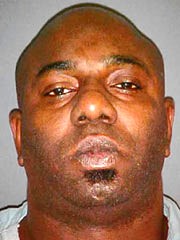
George James Miller
Murderer Brian Kevin Rosenfeld
Murderer · USA · 1985
Brian Kevin Rosenfeld Brian Kevin Rosenfeld was sentenced to three concurrent l…
23 victims
Brian Kevin Rosenfeld
Murderer · USA · 1985
Brian Kevin Rosenfeld Brian Kevin Rosenfeld was sentenced to three concurrent l…
23 victims
 Russell Ellwood
Murderer · USA · 1991
Russell Ellwood was a former taxi driver. Authorities suspected him of killing…
20 victims
Russell Ellwood
Murderer · USA · 1991
Russell Ellwood was a former taxi driver. Authorities suspected him of killing…
20 victims
 Robert Martines Perez
Murderer · USA · 1994
Name: Robert Martines Perez · Other name used in proceedings: Robert Martinez P…
15 victims
Robert Martines Perez
Murderer · USA · 1994
Name: Robert Martines Perez · Other name used in proceedings: Robert Martinez P…
15 victims
 Billy Frank Vickers
Murderer · USA · 1993
Billy Frank Vickers Vickers was executed by lethal injection in Texas on Januar…
14 victims
Billy Frank Vickers
Murderer · USA · 1993
Billy Frank Vickers Vickers was executed by lethal injection in Texas on Januar…
14 victims
 Vladmir Romanov
Serial killer · 1991
Vladimir Romanov was a resident of the Russian exclave in the Baltic Region and…
11 victims
Vladmir Romanov
Serial killer · 1991
Vladimir Romanov was a resident of the Russian exclave in the Baltic Region and…
11 victims
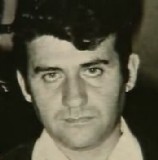 Marcel Barbeault
Serial killer · France · 1969
Marcel Barbeault was convicted for murders described as involving him as “Rando…
8 victims
Marcel Barbeault
Serial killer · France · 1969
Marcel Barbeault was convicted for murders described as involving him as “Rando…
8 victims
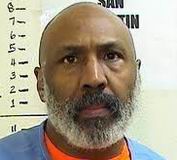 William Choyce
Serial killer · USA · 1988
William Jennings Choyce was raised in Oakland and worked as a trash hauler from…
3 victims
William Choyce
Serial killer · USA · 1988
William Jennings Choyce was raised in Oakland and worked as a trash hauler from…
3 victims
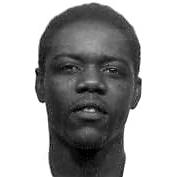 William Kendrick Burns
Murderer · USA · 1980
William Kendrick Burns was executed by lethal injection in Texas on April 11, 2…
2 victims
William Kendrick Burns
Murderer · USA · 1980
William Kendrick Burns was executed by lethal injection in Texas on April 11, 2…
2 victims
 Roy Allen Harich
Murderer · USA · 1981
Roy Allen Harich (appellant/petitioner), v. State of Florida (appellee/responde…
1 victim
Roy Allen Harich
Murderer · USA · 1981
Roy Allen Harich (appellant/petitioner), v. State of Florida (appellee/responde…
1 victim
 Ralph James Phillips
Murderer · USA · 2006
Ralph James Phillips, also known as “Bucky” Phillips, was a convicted murderer.…
1 victim
Ralph James Phillips
Murderer · USA · 2006
Ralph James Phillips, also known as “Bucky” Phillips, was a convicted murderer.…
1 victim
- Gender
- male
- Country
- USA
- Location
- Oklahoma County, Oklahoma, USA
- Date of birth
- September 9, 1967
- Age at first offence
- 27
- Characteristics
- robbery
- Victim profile
- Kent Dodd, 25 (hotel night auditor)
- Method of murder
- Stabbing with knife
- Date(s) of murder
- September 17, 1994
- Years active
- 1994
- Date of arrest
- September 1994
- Status
-
Executed
Executed by lethal injection in Oklahoma on May 12, 2005
Case identification
George James Miller
Status
Miller was executed by lethal injection in Oklahoma on May 12, 2005.
Timeline
- September 17, 1994 — Kent Dodd, the night auditor for the Central Plaza Hotel, was attacked, stabbed repeatedly, beaten with hedge shears and a paint can, and had muriatic acid poured on him and down his throat.
- Late September 1994 — The hotel cash drawer was open and empty when police investigated the crime scene.
- May 12, 2005 — George James Miller was scheduled to be executed.
- 6:24 p.m. — Miller was pronounced dead at the Oklahoma State Penitentiary.
The offence
Kent Dodd, 25, worked as the night auditor for the Central Plaza Hotel located at the intersection of I-40 and Martin Luther King Drive in Oklahoma City. Dodd registered a guest at approximately 3:15 a.m. on September 17, 1994. Shortly thereafter, Dodd was attacked by an assailant who stabbed him repeatedly, beat him with hedge shears and a paint can, and poured muriatic acid on him and down his throat.
Two and a half hours later, a housekeeper arrived for the morning shift, called for Dodd when she saw he was not at the front desk, and heard "animal moans" from the unused restaurant area of the hotel. She ran to a nearby restaurant and had the police summoned. Dodd was still alive when the police found him.
Police questioned Dodd. Dodd was able to respond, but most of his responses were unintelligible, perhaps due to acid burns in his mouth and throat. Police were able to understand him say his attacker was a black man who wore gray pants. Dodd died later that day at the hospital from blunt force trauma to his head.
Investigation
Investigators found evidence that links to Miller involved sandals and a microscopic drop of blood:
- Miller's sandals could have left the bloody footprints found at the scene, but could not be exclusively identified.
- A microscopic drop of blood found on Miller's sandal was consistent with Dodd's blood, but also could not be exclusively identified.
- Photographs of the crime scene revealed what appeared to be finger writing in the blood on the floor and wall which could be the letter "J" and the word, "Jay".
The hotel cash drawer was open and empty when police investigated. Hotel policy required each shift to begin with two hundred and fifty dollars in the drawer. At the end of the shift, the desk clerk placed any amount in excess of this in a deposit envelope and dropped it into the hotel safe. Only desk clerks knew the amount of cash in the drawer.
After the murder, the hotel manager tried to determine whether any money had been taken and discovered a deposit envelope containing one hundred dollars hidden behind registration forms in a separate drawer. One hundred twenty-two dollars was missing from the motel cash drawer.
Arrest and detention
Miller was serving a federal sentence at Leavenworth, Kansas at the time charges were filed in Oklahoma for the murder of Kent Dodd. He was brought to Oklahoma pursuant to the Interstate Agreement on Detainers Act (IADA).
Trial
Miller was tried by jury and convicted of First Degree Murder in Oklahoma County District Court in Case No. CF-94-8859 before the Honorable Charles L. Owens, District Judge.
The jury sentenced Miller to death after finding four aggravating circumstances.
Evidence at trial (as described)
All of the evidence against Miller was characterized as circumstantial. The evidence included:
- Miller's sandals and footprints at the scene, including a microscopic drop of blood consistent with Dodd's blood.
- Miller's asserted alibi that he was home with his wife at the time of the murder.
- Evidence from the hotel cash drawer and missing money.
- The fact that Dodd knew Miller but knew him under an alias, Jay Elkins.
- Evidence relating to blood smears that could be the letter "J" and the word, "Jay".
Defence and alibi
Miller told police he was home with his wife at the time of the murder. The Millers were divorced by the time of trial, and his ex-wife testified he was not home; he had taken her car keys from where she hid them under the mattress and left.
His ex-wife testified that:
- On the day following the murder, Miller returned in her car.
- Miller attempted to give her $120.
- She found sand in the car.
- After the murder, a pair of Miller's khaki shorts and a silk shirt disappeared.
- She identified two buttons found at the crime scene as consistent with buttons on the missing shirt.
- When questioned by police about the $120 he gave her, Miller claimed he had cashed a paycheck.
- When reminded he was not working at the time, Miller denied giving her the money.
Aggravating circumstances found by the jury
The jury found four aggravating circumstances:
- At the time of the crime, Miller was previously convicted of a felony involving the use or threat of violence to the person.
- The murder was especially heinous, atrocious, or cruel.
- The murder was committed for the purpose of avoiding or preventing a lawful arrest or prosecution.
- At the present time, there existed a probability that Miller would commit criminal acts of violence that would constitute a continuing threat to society.
The State supported the first aggravator with testimony and judgments and sentences to prove prior convictions for first degree burglary and robbery involving the use and threat of violence to a person.
The second aggravating circumstance was described as supported by the fact that Miller poured acid on the face of the living victim and down his throat and inflicted a serious physical beating, with the victim living for sometime while enduring serious pain and suffering.
The evidence for the third aggravator was described as supported by proof that Miller took money from Kent Dodd and that Dodd knew and could identify Miller.
The continuing threat aggravator was supported by evidence of a conviction for first degree burglary, robbery, escape, conspiracy to escape, and felon in possession of a firearm. The State also proved three unadjudicated robberies.
The trial court was described as having conducted a mandatory sentence review after the aggravators were found, including analysis to determine whether the sentence was imposed under the influence of passion, prejudice, or any arbitrary factor.
Appeals
Direct appeal (Oklahoma Court of Criminal Appeals)
Miller v. State, 977 P.2d 1099 (Okl. Crim. App. 1998).
The Court of Criminal Appeals affirmed. It held that:
- Defendant was not prejudiced by late filing of bill of particulars.
- Jury selection process was proper.
- Trial court's failure to conduct a Daubert/Taylor hearing was harmless error.
- Results of Polymerase Chain Reaction (PCR) Deoxyribonucleic (DNA) testing were admissible.
- Trial court's failure to recognize prosecutor's discovery violation was harmless error.
- Photographs of victim and crime scene were admissible.
- Trial court committed harmless error by admitting evidence of defendant's prior felony conviction.
- Trial court committed harmless error in jury instruction.
- Evidence supported jury findings as to aggravating circumstances.
- Trial court committed harmless error in permitting testimony of victim's mother.
- Defendant was not denied effective assistance of counsel.
- Harmless errors by trial court did not constitute a cumulative error.
- Death sentence was not influenced by passion, prejudice, or any arbitrary factor.
The Judgment and Sentence of the trial court was affirmed. Lumpkin, J., concurred in the results and filed an opinion. Lane, J., authored the decision.
The Court’s mandatory sentence review found the aggravating factors were supported by the evidence and the sentence of death was not influenced by passion, prejudice, or any arbitrary factor.
Federal habeas corpus appeal
Miller v. Mullin, 354 F.3d 1288 (10th Cir. 2004).
Miller sought writ of habeas corpus after affirmance of the first-degree murder conviction and death sentence. The United States District Court for the Western District of Oklahoma denied relief, and Miller appealed. The Court of Appeals affirmed.
The habeas appeal described the following issues and holdings:
- The determination that allowing prosecutor to use transparencies and argue a new theory in closing about the victim writing petitioner’s alias in blood was not an unreasonable application of federal law.
- Trial counsel was not ineffective regarding cross-examination of the state's chemist or failing to investigate negotiation of check.
- Omission of word from instruction on heinous, atrocious, or cruel aggravating circumstance did not render instruction unconstitutionally vague.
- Determination that harmless errors did not rise to cumulative error was not contrary to, or an unreasonable application of, federal law.
The Court of Appeals reiterated that it affirmed the denial of habeas relief under 28 U.S.C. § 2254.
Prosecutorial misconduct claim and closing argument transparencies
Miller contended he was unduly prejudiced by the prosecutor's previously unannounced use of illustrative devices during final closing. During final closing, the prosecutor showed a transparency and told the jury the victim "went into his own blood ... and wrote his killer's name." The prosecutor produced a transparency overlay with the name "JAy" written on it and placed the overlay atop Exhibit 55 to match the written "JAy" with the blood smear on the wall.
The prosecutor concluded that Dodd did not write the name Jay just once: "He wanted to make sure that you saw it, you people.... Folks, he wrote the letter J in the lower left-hand corner of that picture. J, which, of course, [ ]usually stands for the word Jay."
Miller’s counsel did not object contemporaneously and objected after the jury began deliberations. The Oklahoma Court of Criminal Appeals had reviewed the contention for plain error and stated that State’s Exhibit No. 55 was not evidence, that it was not introduced into evidence and not taken into deliberations by the jury, and that it demonstrated a reasonable inference from evidence properly disclosed to the defense and properly admitted at trial; the transparency was described as akin to counsel writing with chalk on a blackboard.
The federal appeals court discussed that Exhibit 55 had been admitted and disclosed to the defense months before trial, but concluded that the misstatement did not change the analysis that the trial court did not commit plain error in allowing the use.
The federal appeals court also discussed that the prosecutor’s approach during closing was described in prior portions of the record, including the prosecutor’s opening statement and first closing argument:
- The prosecutor told the jury that Dodd "certainly wanted to live as the evidence from the scene would indicate, and he wanted Jay captured as you will see."
- In the first closing argument, the prosecution continued, telling the jury that Miller "left the only witness bleeding out on the ground, the witness who in fact did know who killed him, that Jay had killed him. And I will tell you exactly how the evidence demonstrates that in the second closing."
The federal appeals court further noted that the State had a different version of Dodd’s dying words, with a reference to Tr. trans. vol. X, at 238, suggesting that Dodd stated "Jay" rather than "gray."
In its conclusion, the federal appeals court affirmed the denial of habeas relief.
Sentencing
Miller was sentenced to death by the jury after finding four aggravating circumstances:
- prior violent felony involving the use or threat of violence to the person,
- especially heinous, atrocious, or cruel murder,
- murder committed to avoid or prevent lawful arrest or prosecution,
- continuing threat to society.
The Oklahoma Court of Criminal Appeals affirmed the death sentence. The federal habeas court affirmed the denial of habeas relief.
Execution
He was pronounced dead at 6:24 p.m. at the Oklahoma State Penitentiary.
Strapped to a gurney inside the death chamber, Miller nodded to his mother and other family members who witnessed the execution. His final words were: "I love you."
It was stated that his breathing slowed and then, after several minutes, stopped. His mother said: "He's resting now," and her eyes were described as full of tears.
Miller's attorney, Robert Jackson, attended the execution, and neither he nor Miller's family addressed the media. Miller and Jackson both had maintained his innocence.
Other details
- Miller’s age was given as 39 in the scheduling release and as 37 in news reports.
- The Central Plaza Hotel was described as located in Oklahoma City at I-40 and Martin Luther King Drive.
- It was stated that Dodd had been an exemplary employee whose money count was always correct.
- Miller was described as having worked as a maintenance man at the Central Plaza Hotel for two weeks about a month before the murder.
- It was stated that Miller and his wife split up shortly after the murder, and he went to stay with his mother in Sherman, Texas.
- It was stated that when police questioned Miller about the Dodd murder, he cried, and he made it clear to police he was not grieving the victim.
- At the time charges were filed in Oklahoma, Miller was serving a federal sentence at Leavenworth, Kansas.
- The United States Supreme Court was described as having denied final appeals, and the Oklahoma Court of Criminal Appeals set execution dates for Miller and another man convicted of separate Oklahoma County murders.

Spotted an error, or have more information about this case?