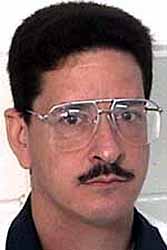
Terry Mincey
Murderer Ervil LeBaron
Murderer · USA · 1972
Ervil Morrell LeBaron (1925 to August 16, 1981) was the leader of a polygamous…
35 victims
Ervil LeBaron
Murderer · USA · 1972
Ervil Morrell LeBaron (1925 to August 16, 1981) was the leader of a polygamous…
35 victims
 Brian Kevin Rosenfeld
Murderer · USA · 1985
Brian Kevin Rosenfeld Brian Kevin Rosenfeld was sentenced to three concurrent l…
23 victims
Brian Kevin Rosenfeld
Murderer · USA · 1985
Brian Kevin Rosenfeld Brian Kevin Rosenfeld was sentenced to three concurrent l…
23 victims
 Marvin Gray
Murderer · USA · 1975
Marvin Gray was convicted killer who claimed responsibility for 23 slayings and…
23 victims
Marvin Gray
Murderer · USA · 1975
Marvin Gray was convicted killer who claimed responsibility for 23 slayings and…
23 victims
 Yahweh ben Yahweh
Murderer · USA · 1980
Yahweh ben Yahweh was born and legally named Hulon Mitchell Jr. (October 27, 19…
23 victims
Yahweh ben Yahweh
Murderer · USA · 1980
Yahweh ben Yahweh was born and legally named Hulon Mitchell Jr. (October 27, 19…
23 victims
 Russell Ellwood
Murderer · USA · 1991
Russell Ellwood was a former taxi driver. Authorities suspected him of killing…
20 victims
Russell Ellwood
Murderer · USA · 1991
Russell Ellwood was a former taxi driver. Authorities suspected him of killing…
20 victims
 Alexander Komin | Russia
Serial killer · Russia · 1995
Alexander Komin was an electrician from Vyatskiye Polyany, Russia. He used his…
4 victims
Alexander Komin | Russia
Serial killer · Russia · 1995
Alexander Komin was an electrician from Vyatskiye Polyany, Russia. He used his…
4 victims
 Reginald Perkins
Serial killer · USA · 1980
Reginald Perkins was convicted in Tarrant County of capital murder and was sent…
6 victims
Reginald Perkins
Serial killer · USA · 1980
Reginald Perkins was convicted in Tarrant County of capital murder and was sent…
6 victims
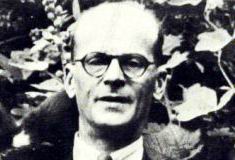 John Reginald Christie
Serial killer · United Kingdom · 1943
John Reginald Halliday Christie (April 8, 1899–July 15, 1953) was an English se…
8 victims
John Reginald Christie
Serial killer · United Kingdom · 1943
John Reginald Halliday Christie (April 8, 1899–July 15, 1953) was an English se…
8 victims
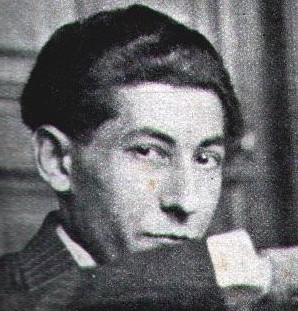 Jacques Mécislas Charrier
Murderer · France · 1922
Jacques Mécislas Charrier was a French anarchist illégaliste. He was executed b…
1 victim
Jacques Mécislas Charrier
Murderer · France · 1922
Jacques Mécislas Charrier was a French anarchist illégaliste. He was executed b…
1 victim
 Andrea Roberts
Murderer · USA · 2007
Andrea Roberts was a 41-year-old stay-at-home mother. Her husband, Michael Lewi…
3 victims
Andrea Roberts
Murderer · USA · 2007
Andrea Roberts was a 41-year-old stay-at-home mother. Her husband, Michael Lewi…
3 victims
- Gender
- male
- Country
- USA
- Location
- Bibb County, Georgia, USA
- Date of birth
- April 1960
- Age at first offence
- 22
- Characteristics
- armed robbery, rape?, robbery, alcohol
- Victim profile
- Paulette Riggs, 38 (store cashier)
- Method of murder
- Shooting (.380 caliber semi-automatic Llama pistol)
- Date(s) of murder
- April 12, 1982
- Years active
- 1982
- Date of arrest
- Next day
- Status
-
Executed
Executed by lethal injection in Georgia on October 25, 2001
Case record: Terry Mincey
Background
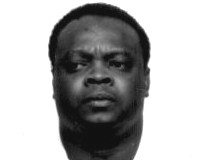
Terry Mincey was a defendant in a capital case in Georgia.
The offence
On the night of April 12, 1982, Terry Michael Mincey, along with two accomplices, robbed a convenience store in Macon, Georgia. Mincey pulled a pistol from under his coat and ordered the store’s cashier, Paulette Riggs, to empty the cash register into a bag.
Mincey then saw two teenagers and ordered them into his car. Outside the store, Russell Peterman, a Bibb County Firefighter, pulled up to the store and began pumping gas. While Mincey escorted Riggs from the store and headed toward Peterman, Mincey ordered Peterman to come with him. When Peterman did not respond immediately, Mincey shot him in the chest. While Peterman lay there, still conscious, Mincey fired point-blank at his head.
As the second shot rang out, the two teenagers fled into a nearby field. Mincey believed that the second shot had killed Peterman and headed for the car. When Riggs attempted to run away, Mincey shot her and she fell near a dumpster behind the store. Mincey then ran to where she was lying and shot her in the head.
As they drove away, one of the accomplices asked if both people were dead. Mincey said: “yes they're dead, I know they're dead, I shot both of them.”
Riggs died as a result of her wounds. Peterman survived with serious injuries.
Mincey, Robert Jones, and Timothy Jenkins met in the evening of April 12, 1982, and discussed committing a robbery. Each was armed: Jones with a .12 gauge shotgun, Jenkins with a .38 caliber pistol, and Mincey with a .380 caliber semi-automatic Llama pistol. After possibilities were discussed and rejected, the trio drove by a Mini Food Store in Bibb County, circled back, and parked.
Mincey entered the store briefly and returned to the car, telling the others that there were only a female clerk and two teenagers inside and that it looked like a good place to rob. Mincey said he did not plan on leaving any witnesses. When Jenkins protested, Mincey told him: “If you're talking about not wasting nobody, you're in the wrong . . . car.”
They waited for the kids to leave. When they did not leave after a few minutes, Mincey reentered the store. Jenkins positioned himself outside, between the ice machine and the dumpster. Jones stayed in the car with the motor running. A fourteen-year-old girl and her 15-year-old brother were inside the store visiting the cashier, Mrs. Riggs. Mincey told Mrs. Riggs to “put the money in the bag” and told the kids to go to the car.
Jenkins saw two teenagers walk out as a pickup truck pulled up to the gas pumps. The driver, Russell Peterman, got out and began to fill his tank. Meanwhile, Mrs. Riggs exited the store, followed by Mincey. When Mincey saw Peterman at the gas pumps, he turned Mrs. Riggs over to Jenkins and walked toward the pumps.
Peterman testified that as he was pumping gas, he was confronted by a young white man with a pistol in his hand who said: “come go with me.” Peterman was surprised and did not respond. The man then said: “You think I'm joking, don't you?” The man shot Peterman in the chest. Peterman fell to the ground, and the man walked over and shot him in the face.
Jenkins proceeded toward the getaway car and the teenagers ran. Jones, sitting in the car, saw Mrs. Riggs run after them, but she ran too late. Mincey came back across the parking lot and fired at her. Jones saw Mrs. Riggs grab her neck and fall behind the dumpster. Mincey walked behind the dumpster, bent down, and a second shot was heard. Mincey ran to the car, got in, and they left.
They counted the money taken from the store, about $40. Jones asked if the victims were dead. Mincey answered: “Yes, they are dead. I know they are dead, I shot both of them.” Mincey then asked where the kids were. When he found out they escaped, he said: “Well, I just got a death sentence . . .a murder rap for $40.”
Jones’ car was a multi-colored Mustang with mag wheels, no hood, one working headlight, and a loud muffler. When police arrived a few minutes after the robbery, witnesses described the car and identified its owner. Jones was soon located and placed under arrest. After he named Mincey as a participant, officers went to Mincey’s residence and placed him under arrest. Mincey thereafter admitted to law enforcement officers that he had shot Peterman and Mrs. Riggs.
Mincey made several incriminating statements.
Investigation and evidence
An autopsy revealed that Riggs had been shot twice. One bullet entered her left ear, went through her head, and lodged in her right cheek; that bullet was recovered. The other bullet entered the right side of her head through the temporal bone, drove bone fragments into her brain, deflected, and exited on the right side of her neck; this bullet, which inflicted the fatal wound, was not recovered.
Peterman lived. One bullet entered his chest and lodged in a muscle close to his spine, where it remained. The other bullet entered the left side of his head and traveled across his face. Two weeks after he was shot, his condition stabilized sufficiently that the wound could be operated on. The bullet was removed from under his right eyebrow. His left optic nerve was damaged by the passage of the bullet, leaving him totally blind in his left eye. His right eye suffered severe retinal damage and had a drooping upper lid that might or might not elevate on its own. With the lid lifted out of the way, his right eye had approximately 40% of its original vision.
A .380 Llama pistol was recovered from Mincey’s trailer. Ballistics examination showed it to be the pistol that had fired the bullets recovered from Peterman and Mrs. Riggs.
Arrest
Officers arrested Jones, who named Mincey as a participant. Officers then went to Mincey’s residence and placed Mincey under arrest. Mincey admitted to law enforcement officers that he had shot Peterman and Mrs. Riggs.
Trial
The Bibb County Grand Jury indicted Mincey, Jones, and Jenkins for the murder of Paulette Riggs, the aggravated battery of Russell Peterman, and the armed robbery of the Mini Food Store. Jones and Jenkins pled guilty. Jones was sentenced to life for murder and ten years for armed robbery, and Jenkins was sentenced to life for armed robbery.
Mincey was found guilty as charged by a jury in the Superior Court of Bibb County, Georgia on August 23, 1982.
On August 26, 1982, Mincey was sentenced to death for the murder and received a life sentence for armed robbery and a consecutive twenty-year sentence for aggravated battery.
Sentencing
Mincey was sentenced to death in August 1982.
Appeals
The Supreme Court of Georgia affirmed Mincey’s convictions and sentences in Mincey v. State, 251 Ga. 255 (1983).
A petition for a writ of certiorari was denied on November 7, 1983. Mincey v. Georgia, 464 U.S. 977 (1983), rehearing denied, 464 U.S. 1064 (1984).
First State Habeas Corpus Petition: Mincey, represented by Michael Hauptman, filed a petition for a writ of habeas corpus in the Superior Court of Butts County, Georgia, which was denied, following an evidentiary hearing, on February 7, 1988. The Supreme Court of Georgia denied an application for a certificate of probable cause to appeal, and then the Supreme Court denied certiorari in Mincey v. Georgia, 488 U.S. 871 (1988), rehearing denied, 488 U.S. 977 (1988).
First Federal Habeas Corpus Petition: Mincey filed a petition for a writ of habeas corpus in the United States District Court for the Middle District of Georgia, which was dismissed without prejudice.
Second State Habeas Corpus Petition: Mincey filed a second state habeas corpus petition which was dismissed on March 3, 1984.
Second Federal Habeas Corpus Petition: Mincey’s second federal habeas corpus petition was filed in the Middle District of Georgia and the District Court denied relief on May 7, 1997. Mincey’s motion to alter or amend judgment was denied on August 26, 1997.
Appeal to the Eleventh Circuit: The Eleventh Circuit affirmed the denial of federal habeas corpus relief to Mincey on March 16, 2000 in Mincey v. Head, 206 F.3d 1106 (11th Cir. 2000), and rehearing en banc was denied on August 10, 2000.
Mincey’s petition for certiorari was denied on March 19, 2001 and rehearing was denied on May 14, 2001.
Third State Habeas Corpus Petition: After the execution order, Mincey filed his third petition for a writ of habeas corpus on October 19, 2001 and amended his third state habeas corpus petition on October 22, 2001. On October 23, 2001, the state habeas corpus court denied Mincey’s petition and motion for a stay of execution and granted the Respondent’s (Warden Fredrick Head, represented by the Attorney General’s Office) motion to dismiss the petition.
On October 24, 2001, Mincey filed a motion for stay of execution in the Supreme Court of Georgia and an application for a certificate of probable cause to appeal from the denial and dismissal of Mincey’s third state habeas corpus petition, which were denied on October 25, 2001.
Outcome
The state set an execution window and carried out the execution.
On October 11, 2001, the Superior Court of Bibb County filed an order setting the seven-day window in which the execution of Terry Michael Mincey could occur, beginning at 12:00pm on October 25, 2001 and ending seven days later at 12:00pm on November 1, 2001. The Commissioner of the Department of Corrections set the specific date and time for the execution as 7:00p.m. on October 25, 2001, pursuant to the Commissioner’s discretion under state law.
Mincey had previously concluded his direct appeal and state and federal habeas corpus proceedings. The scheduled execution was carried out at approximately 8:06pm on Thursday, October 25, 2001.
Aftermath
The body was taken for funeral home arrangements. The GBI would take his body to Tyler Funeral Home in Decatur.
Other details
Mincey was described as 40 or 41 in different parts of the case record.
Riggs was shot in April 1982 during a convenience store robbery and her death was violent, described as resulting from gunshots. Peterman survived and was blinded in one eye.
The record described Mincey’s final meal as fried shrimp, a baked potato, a pint of chocolate ice cream, and two cans of soda.
The record described the execution witnesses and procedure. Mincey refused a prayer but thanked his family and friends before an injection of lethal chemicals in the death chamber at the state prison in Jackson, Georgia. The execution involved three drugs: sodium pentothal, a sedative; pavulon, to paralyze the lungs; and potassium chloride, which causes the heart to stop.
A prosecutor’s notes were described as including: “Brain damage in auto accident. Reflexes more active on 1 side. This indicates motor muscle power differential. It is possible he might now be more susceptible to irrational behavior”.
The record also described claims about alleged drug abuse and influence, including reference to LSD or quaaludes at the time of the crime.
A psychologist’s affidavit was quoted: “Mincey's head injury was a significant factor in the case - a factor which when considered establishes that Mr Mincey's actions on the night of the offense were the irrational impulsive actions of a brain damaged individual and not the actions of a cold, calculated, and premeditated murderer”.
The record included the quoted rule from Brady v Maryland (1963): “the suppression by the prosecution of evidence favorable to an accused... violates due process where the evidence is material either to guilt or to punishment, irrespective of the good faith or bad faith of the prosecution”.
A motion for a new trial included a statement in the petition: “There can be no doubt that confidence in the outcome of Mr. Mincey's trial and capital sentencing proceeding is undermined”.
A witness statement attributed to Jenkins’ ex-wife, Julie Chavies, included: “He was very nervous, pacing around and mumbling to himself. I got up and saw he was in the bathroom scrubbing his hands with Ajax. After scrubbing his hands, he cleaned his gun,” and: “He was very nervous, pacing around and mumbling to himself. After scrubbing his hands, he cleaned his gun,” and included Jenkins’ reported statement: “I did a terrible thing --- we were getting high and riding around and we killed them,”
A court petition included an argument described as challenging lethal injection as a method of execution and contending the Georgia Supreme Court failed to determine whether capital sentences were proportionate to penalties imposed in similar cases.
A reporter quote about Mincey was included: “his actions as well as his words demonstrate his remorse for his crime and for the destruction he has caused... He has spent nearly twenty years reflecting upon his life and his actions, and he appears to me to have matured and changed. Terry is not the reckless, chaotic young man of April 1982...”.
Warden Fredrick Head was quoted describing the execution timing: “We're ready,” Head said.
Mike Light, executive assistant to the state corrections commissioner, was quoted about delay: “The execution was delayed while Mincey's last appeals played out”.
Additionally, the record described attempts to stop the execution and the legal challenges that asserted the procedure was rushed and contested whether Mincey fired the fatal shot that killed Riggs.

Spotted an error, or have more information about this case?