
John Reginald Christie
Serial killer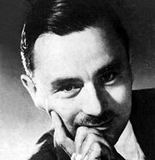 John George Haigh
Serial killer · United Kingdom · 1944
John George Haigh was an English serial killer during the 1940s. He was commonl…
6 victims
John George Haigh
Serial killer · United Kingdom · 1944
John George Haigh was an English serial killer during the 1940s. He was commonl…
6 victims
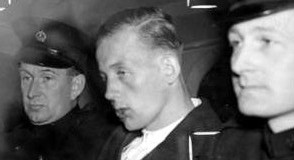 John Thomas Straffen
Serial killer · United Kingdom · 1951
John Thomas Straffen was sentenced to death on July 25, 1952. Home Secretary Si…
3 victims
John Thomas Straffen
Serial killer · United Kingdom · 1951
John Thomas Straffen was sentenced to death on July 25, 1952. Home Secretary Si…
3 victims
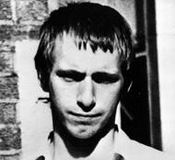 Bruce Lee
Serial killer · United Kingdom · 1973
Bruce Lee was born Peter George Dinsdale in 1960. He later changed his name to…
26 victims
Bruce Lee
Serial killer · United Kingdom · 1973
Bruce Lee was born Peter George Dinsdale in 1960. He later changed his name to…
26 victims
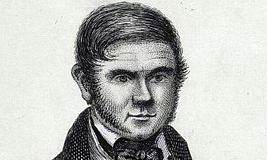 William Burke
Serial killer · United Kingdom · 1827
William Burke (1792 – 28 January 1829) was born in Urney, near Strabane, in the…
17 victims
William Burke
Serial killer · United Kingdom · 1827
William Burke (1792 – 28 January 1829) was born in Urney, near Strabane, in the…
17 victims
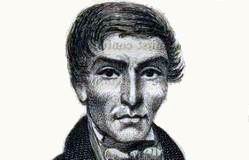 William Hare
Serial killer · United Kingdom · 1827
William Hare and Brendan “Dynes” Burke committed serial murders in Edinburgh, S…
17 victims
William Hare
Serial killer · United Kingdom · 1827
William Hare and Brendan “Dynes” Burke committed serial murders in Edinburgh, S…
17 victims
 Dennis Nilsen
Serial killer · United Kingdom · 1978
Dennis Andrew Nilsen was born on November 23, 1945. He lived in London. He was…
16 victims
Dennis Nilsen
Serial killer · United Kingdom · 1978
Dennis Andrew Nilsen was born on November 23, 1945. He lived in London. He was…
16 victims
 Jozef Slovák
Serial killer · Slovakia / Czech Republic · 1978
Jozef Slovák (born 1951) was a Slovak serial killer who murdered at least 5 wom…
5 victims
Jozef Slovák
Serial killer · Slovakia / Czech Republic · 1978
Jozef Slovák (born 1951) was a Slovak serial killer who murdered at least 5 wom…
5 victims
 Gordon Wardell
Murderer · United Kingdom · 1994
Gordon Wardell was the husband of Carol Wardell. Carol Wardell was the manager…
1 victim
Gordon Wardell
Murderer · United Kingdom · 1994
Gordon Wardell was the husband of Carol Wardell. Carol Wardell was the manager…
1 victim
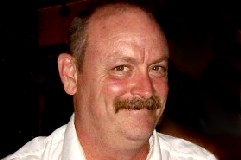 Timothy Hendron
Murderer · USA · 2010
Timothy Hendron, a 51-year-old ABB employee and former supervisor, committed su…
3 victims
Timothy Hendron
Murderer · USA · 2010
Timothy Hendron, a 51-year-old ABB employee and former supervisor, committed su…
3 victims
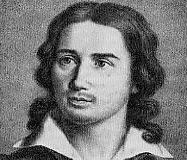 Karl Ludwig Sand
Murderer · Germany · 1819
Karl Ludwig Sand was a German university student and a member of a liberal Burs…
1 victim
Karl Ludwig Sand
Murderer · Germany · 1819
Karl Ludwig Sand was a German university student and a member of a liberal Burs…
1 victim
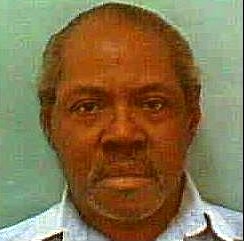 Posteal Laskey
Serial killer · USA · 1965
Posteal Laskey was believed to be the person dubbed the “Cincinnati Strangler,”…
7 victims
Posteal Laskey
Serial killer · USA · 1965
Posteal Laskey was believed to be the person dubbed the “Cincinnati Strangler,”…
7 victims
 Marilyn Lemak
Murderer · USA · 1999
Marilyn Lemak (also referred to in criminal court as Marilyn Lemak; born May 30…
3 victims
Marilyn Lemak
Murderer · USA · 1999
Marilyn Lemak (also referred to in criminal court as Marilyn Lemak; born May 30…
3 victims
- Gender
- male
- Country
- United Kingdom
- Location
- London, England, United Kingdom
- Date of birth
- April 8, 1899
- Age at first offence
- 44
- Characteristics
- necrophilia
- Victim profile
- Ruth Fuerst, 21 / Muriel Amelia Eady, 32 / Beryl Evans, 20, and his daughter Geraldine, 15 months / His wife Ethel Christie, 54 / Kathleen Maloney, 26 / Rita Nelson, 24 / Hectorina MacLennon, 26
- Method of murder
- Strangulation
- Date(s) of murder
- 1943 - 1953
- Years active
- 1943–1953
- Date of arrest
- March 31, 1953
- Status
-
Executed
Executed by hanging at Pentonville Prison on July 15, 1953
Case summary
John Reginald Halliday Christie (April 8, 1899–July 15, 1953) was an English serial killer active in the 1940s and 1950s. He was arrested, tried and hanged for murder in 1953. He was involved in another previous murder trial as a principal witness for the Crown. His fellow tenant Timothy Evans was accused of the murders of his own wife and child, and subsequently convicted of, and executed for, the murder of the baby; many critics speculated that Christie committed the murders and framed Evans for them. Others suggested there could have been two separate murderers living in the same shared house at the same time.
In 1966, Mr Justice Brabin stated that it was "more probable than not" that Evans killed his wife and that he did not kill his daughter Geraldine. While neither Christie's nor Evans' innocence or guilt concerning these particular crimes had ever been conclusively proven, the case sparked massive public outrage and contributed to the suspension of the death penalty in Britain in 1965.
Timeline
- August 1943 — Christie strangled Ruth Fuerst during sex; he later buried her in the building's communal garden.
- August 24, 1943 — Ruth Margarete Fuerst went missing.
- October 10, 1943 — Ethel Waddington's timeline context: not used; (no event with this date in the case timeline beyond other date references).
- October 31 — Workmen ripped out some of the walls and floors and worked on the community washhouse at 10 Rillington Place.
- November 8, 1949 — Christie used his "special gas" to incapacitate Beryl Evans; she was strangled and raped post-mortem.
- November 30, 1949 — Evans went to the police in Merthyr Tydfil and said he had accidentally killed Beryl and disposed of her body in a sewer drain; he also claimed he had gone to Wales and left Geraldine in other care.
- December 2, 1949 — Police found the bodies of Beryl and Geraldine Evans hidden in the wash house in the back garden.
- January 11, 1950 — Timothy Evans was tried at the Old Bailey for the murder of his baby.
- March 9, 1950 — Evans was hanged.
- November 1933 — Christie and his wife reconciled after his release from prison (a pre-1948 event).
- March 20, 1953 — Christie moved out of 10 Rillington Place and booked a room at the King's Cross Rowton Houses under his real name and address.
- March 24, 1953 — Christie left the King's Cross Rowton Houses after staying four nights.
- March 25, 1953 — After the discovery by a new tenant, Christie was sought in a nationwide manhunt.
- March 31, 1953 — Christie was arrested near Putney Bridge after being challenged about his identity by a policeman.
- April 15, 1953 — Christie was charged with murdering the three prostitutes.
- June 22, 1953 — Christie began trial in the same court where Evans had been tried; he was on trial solely for the murder of his wife.
- June 29, 1953 — Christie said he would not appeal against the death sentence.
- July 13, 1953 — David Maxwell Fyfe said he would not grant a reprieve.
- July 15, 1953 — Christie was hanged by Albert Pierrepoint at Pentonville Prison, on the same gallows as Timothy Evans.
Background
Christie was raised in Halifax and later in the West Riding of Yorkshire. He was abused by his father and dominated by his mother and sisters. At the age of eight, he was a witness to the open coffin of his grandfather. He won a scholarship to Halifax Secondary School when he was 11, excelled in mathematics and algebra, and was skilled at detailed work. He sang in the choir and became a scout, but he was unpopular with his fellow pupils.
Upon leaving school in 1913, Christie became an assistant movie projectionist. His first attempts at sex were failures, branding him as "Reggie-No-Dick" and "Can't-Do-It-Christie" throughout adolescence. He was also a hypochondriac and hysteric, and often exaggerated or feigned illness as a ploy to get attention. He enlisted as a signalman in World War I and was hospitalised after a mustard gas attack, claiming to have been blinded. No record of his supposed blindness existed however; in 10 Rillington Place, author Ludovic Kennedy wrote that Christie exaggerated his blindness and also exaggerated the three-year period afterward in which he was mute.
Christie married 22-year-old Ethel Waddington from Sheffield on May 10, 1920. The union was dysfunctional: Christie was impotent with her and frequented prostitutes. Friends and neighbours gossiped that she stayed with him out of fear. They separated after four years when Christie moved to London and Ethel lived with relatives.
The offence
First murders
The first person Christie admitted to killing was Ruth Fuerst, whom he strangled during sex in August 1943. In October 1944, he murdered a work colleague, Muriel Amelia Eady, by promising to cure her bronchitis with a "special mixture" he had concocted using domestic gas that contained carbon monoxide. Once Eady was knocked out, Christie choked her to death and raped her post-mortem. He buried both Fuerst and Eady in the building's communal garden.
The Evans case context (Geraldine Evans)
Timothy Evans and his pregnant wife Beryl moved into the top-floor flat of 10 Rillington Place in April 1948. On October 10, Beryl gave birth to a daughter named Geraldine. In November 1949, Beryl Evans found out she was pregnant again and feared they could not afford another child. Evans told police that Christie promised the couple he could abort the baby.
Kennedy wrote that on November 8 Christie used his "special gas" to incapacitate Beryl, who was strangled and raped post-mortem. When Evans returned from work that night, Christie told him that Beryl had died during the procedure and that they had to hide the body because abortion was illegal in England at the time. Christie convinced Evans to stay with a relative in Wales and leave Geraldine in his care. Evans later said he returned to the apartment several times to ask about Geraldine but Christie refused to let him see her.
On November 30, 1949, Evans went to the police in Merthyr Tydfil and said he had accidentally killed Beryl by giving her something contained in a bottle that a man had given him to help abort her unborn baby, and then disposing of her body in a sewer drain. Police examined the drain outside the front of the building but found nothing; they discovered that the manhole cover required the combined strength of all three officers in order to remove it. When re-questioned, Evans said Christie had offered to provide an abortion for Beryl.
During a search of 10 Rillington Place on December 2, 1949, police found the bodies of Beryl and Geraldine Evans hidden in the wash house in the back garden. Both had been strangled.
Christie’s murders after Evans’s conviction (wives and prostitutes)
After the conviction of Timothy Evans, Christie lost his job at the Post Office Savings Bank due to disclosure of previous criminal offences at Evans's trial. He sank into deep depression and lost 28 pounds. He remained unemployed until August 1950, when he found a clerical position with British Road Transport services, staying there until December 6, 1952, when he suddenly resigned.
Christie claimed to his boss and neighbours that he had found a job with better prospects in Sheffield and would be leaving London to move there with his wife early in the new year. When his wife disappeared, he claimed she had already moved and that he would be following on soon. In fact, Christie murdered his wife in bed on the morning of December 14, 1952. She was last seen alive two days earlier.
The day after Christie murdered his wife, he altered the date of a letter she had written on the 10th to the 15th. On December 16, he took his wife's wedding ring to a jewellery shop and sold it; a week later he sold her watch and wedding band. He kept writing letters to her sister in Sheffield up to early January, claiming that rheumatism had prevented her from writing. On January 8, 1953, Christie sold most of his furniture, keeping three chairs, a kitchen table and a mattress. On February 2, he forged his wife’s signature on her bank account and emptied it. After early February, he stopped answering letters from relatives inquiring after his wife.
Between January 19 and March 6, 1953, Christie murdered three more women he invited back to 10 Rillington Place: Kathleen Maloney from Southampton, Rita Nelson, and Hectorina MacLennan. Christie claimed that MacLennan had wandered off and he kept up the pretence for two weeks, asking her boyfriend, Alex Baker, how she was. Baker presumed she had gone back to her native Scotland.
Investigation, arrest and search
Christie moved out of 10 Rillington Place on March 20, 1953. He defrauded a couple who took up residence by taking £7 from them despite not being authorised by the landlord to do so. They were forced to move out within 24 hours. On the day he left, Christie booked a room at the King's Cross Rowton Houses under his real name and address, asked for seven nights, but stayed for four and left on March 24, 1953.
A new tenant later discovered the bodies hidden in a wallpapered-over coal cellar in the kitchen. Pathological tests later revealed carbon monoxide in their bodies. The police were called, and a nationwide manhunt ensued on March 25. Christie telephoned the News of the World and arranged to meet a reporter to offer an exclusive interview and said he would allow himself to be handed over to the police; the meeting never took place because Christie was frightened by the arrival of two policemen as he waited.
After leaving Rowton House, Christie wandered around London, sleeping on park benches at night. The search ended on the morning of March 31 when he was arrested near the embankment at Putney Bridge. A policeman had challenged him about his identity. Christie gave his name and address as "John Waddington, 35 Westbourne Grove". He was then asked to remove his hat. The policeman recognised him and asked: "You are Christie, aren't you?" Christie confirmed he was Christie. At the time of his arrest, he had his identity card, a ration book, his union card, an ambulance badge, and an old newspaper clipping about the remand of Timothy Evans.
Trial
Trial for the wife’s murder
The next day he was charged with his wife’s murder. On April 15 he was charged with murdering the three prostitutes. While in prison, Christie confessed to murdering all the women found in the cellar, as well as Beryl Evans. He never admitted to killing Geraldine Evans.
Christie’s trial began on June 22, 1953, in the same court where Evans had been tried. He was on trial solely for the murder of his wife. He pleaded insanity and claimed a poor memory of the events. The jury rejected the plea and, after 22 minutes, found him guilty of murdering his wife.
On June 29, 1953, Christie said he would not appeal against the death sentence. David Maxwell Fyfe said on July 13 that he would not grant a reprieve because there were no physical or psychological grounds for doing so.
Some MPs tried to postpone the execution so Christie could talk more about earlier murders, but Maxwell-Fyfe refused. Christie refused to meet MPs in his cell in the final days of his life.
Court personnel and pleadings (as described)
Christie’s trial was in the same court where Evans had been tried. The trial began on June 22, 1953. The presiding judge was Justice Finnemore, and the prosecutor attorney general was Sir Lionel Heald. Derek Curtis-Bennett defended Christie, who pleaded Not Guilty by Reason of Insanity. Dr. Jack Abbott Hobson, a psychiatrist for the defence, testified. Dr. Matheson and Dr. Desmond Curran were presented by the prosecution for rebuttal.
Christie was also described as offering a murder-by-murder description in court while appearing agitated and performing physical gestures. The jury deliberated only an hour and twenty minutes and returned a verdict of guilty. Christie was sentenced to death.
Sentencing and execution
Christie did not appeal. He was hanged by Albert Pierrepoint at Pentonville Prison on July 15, 1953, on the same gallows as Timothy Evans.
Outcome and controversy
Public opinion widely considered Christie guilty and cast doubt onto the fairness of Evans’s trial and execution. To date, there was no definitive evidence that proved or disproved Evans’s innocence or Christie’s guilt in Geraldine’s murder. A Brabin inquiry conducted during 1965–1966 concluded that Evans had probably killed his wife but not his daughter.
Timothy Evans was granted a posthumous pardon in 1966.
Other details
People and victims connected to Christie’s case
- Ruth Fuerst — strangled during sex in August 1943.
- Muriel Amelia Eady — murdered in October 1944; choked to death after carbon monoxide from a “special mixture”; raped post-mortem.
- Beryl Evans — strangled and raped post-mortem in the described scenario tied to the Evans case.
- Geraldine Evans — Christie never admitted to killing her; Evans was executed for the murder of the baby.
- Ethel Waddington — Christie’s wife; murdered in bed on the morning of December 14, 1952.
- Kathleen Maloney — murdered between January 19 and March 6, 1953; from Southampton.
- Rita Nelson — murdered between January 19 and March 6, 1953; 25 years old as later described.
- Hectorina MacLennan — murdered between January 19 and March 6, 1953; 26 years old as later described.
- Alex Baker — MacLennan’s boyfriend.
- Timothy Evans — convicted and executed for the murder of the baby; also the principal witness context involving Christie.
- Albert Pierrepoint — hanged Christie.
- Justice Finnemore — presided at Christie’s trial.
- Sir Lionel Heald — prosecutor attorney general described for Christie’s trial.
- Derek Curtis-Bennett — defence counsel described for Christie’s trial.
- David Maxwell Fyfe — Home Secretary who would not grant a reprieve.
- John Scott Henderson QC — Recorder of Portsmouth placed in charge of an inquiry into the Evans case by David Maxwell Fyfe.
- Mr Justice Brabin — issued statements referenced in 1966.
- Charles — (No additional person with role established beyond those above.)
Quotes reproduced verbatim
- Christie was branded as "Reggie-No-Dick" and "Can't-Do-It-Christie" throughout adolescence.
- Mr Justice Brabin stated in 1966 that it was "more probable than not" that Evans killed his wife and that he did not kill his daughter Geraldine.
- Christie’s identity question response: "You are Christie, aren't you?"
- Christie: "Murderer, murderer!" (spoken by Mrs. Probert outside court)
- Evans statement attributed in the case narrative: "I have disposed of my wife. I put her down the drain."
- Evans later: "I didn't do it, Mam," and "Christie done it."
- Christie’s statement in his confession narrative: "I straightened the garden and raked it over."
- Christie wrote later: "as I gazed down at the still form of my first victim, experiencing a strange, peaceful thrill."
- Christie asked: "John Waddington, 35 Westbourne Grove" (as stated when asked for his name and address).
Discovery and autopsy details at 10 Rillington Place (cellar and cupboard)
The bodies were found hidden in a wallpapered-over coal cellar in the kitchen. During the discovery process at 10 Rillington Place, police found bodies stored in a cupboard and beneath floorboards. Four autopsies were performed with described findings on each victim, including strangulation, carbon monoxide poisoning, sexual assault, and indications of pregnancy for one victim. The older woman under the floorboards was identified as Ethel Christie, and the other three victims in the flat were identified as Hectorina McLennan, Kathleen Maloney and Rita Nelson.
Police also found a man's suit under the floor of the common hall area, a man's tie fashioned into a reef knot in a kitchen cupboard, potassium cyanide in another area, a tobacco tin containing four clumps of pubic hair, and human bones including a human femur supporting a fence in the garden. A newspaper fragment dated July 19th, 1943 was also found in the garden area, along with hair and teeth. Ruth Margarete Fuerst was identified as missing since August 24, 1943, and Muriel Amelia Eady was identified as a likely victim based on hair and dress remains.
Spotted an error, or have more information about this case?