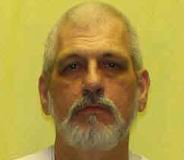
Harry Mitts
Murderer Brian Kevin Rosenfeld
Murderer · USA · 1985
Brian Kevin Rosenfeld Brian Kevin Rosenfeld was sentenced to three concurrent l…
23 victims
Brian Kevin Rosenfeld
Murderer · USA · 1985
Brian Kevin Rosenfeld Brian Kevin Rosenfeld was sentenced to three concurrent l…
23 victims
 Russell Ellwood
Murderer · USA · 1991
Russell Ellwood was a former taxi driver. Authorities suspected him of killing…
20 victims
Russell Ellwood
Murderer · USA · 1991
Russell Ellwood was a former taxi driver. Authorities suspected him of killing…
20 victims
 Robert Martines Perez
Murderer · USA · 1994
Name: Robert Martines Perez · Other name used in proceedings: Robert Martinez P…
15 victims
Robert Martines Perez
Murderer · USA · 1994
Name: Robert Martines Perez · Other name used in proceedings: Robert Martinez P…
15 victims
 Billy Frank Vickers
Murderer · USA · 1993
Billy Frank Vickers Vickers was executed by lethal injection in Texas on Januar…
14 victims
Billy Frank Vickers
Murderer · USA · 1993
Billy Frank Vickers Vickers was executed by lethal injection in Texas on Januar…
14 victims
 Heather Trujillo
Homicide · USA · 2007
Heather Trujillo was a 16-year-old Johnstown girl accused of beating to death h…
1 victim
Heather Trujillo
Homicide · USA · 2007
Heather Trujillo was a 16-year-old Johnstown girl accused of beating to death h…
1 victim
 Beatrice Cenci
Murderer · Italy · 1598
Beatrice Cenci (6 February 1577 – 11 September 1599) was an Italian noblewoman.…
1 victim
Beatrice Cenci
Murderer · Italy · 1598
Beatrice Cenci (6 February 1577 – 11 September 1599) was an Italian noblewoman.…
1 victim
 Andrew Mickel
Murderer · USA · 2002
Andrew “Andy” Mickel was convicted of one count of first-degree murder in April…
1 victim
Andrew Mickel
Murderer · USA · 2002
Andrew “Andy” Mickel was convicted of one count of first-degree murder in April…
1 victim
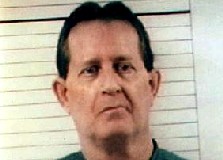 Gary Lee Davis
Murderer · USA · 1986
Defendant: Gary Lee Davis (1944 - 13 October 1997) Victim: Virginia May · 21 Ju…
1 victim
Gary Lee Davis
Murderer · USA · 1986
Defendant: Gary Lee Davis (1944 - 13 October 1997) Victim: Virginia May · 21 Ju…
1 victim
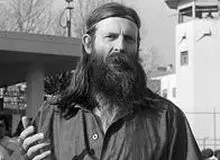 Theodore Streleski
Murderer · USA · 1978
Theodore Streleski was a Stanford mathematician. In 1978 he bludgeoned his advi…
1 victim
Theodore Streleski
Murderer · USA · 1978
Theodore Streleski was a Stanford mathematician. In 1978 he bludgeoned his advi…
1 victim
 Paul Bernardo
Serial killer · Canada · 1990
Paul Kenneth Bernardo (born August 27, 1964 in Toronto, Ontario) was a Canadian…
3 victims
Paul Bernardo
Serial killer · Canada · 1990
Paul Kenneth Bernardo (born August 27, 1964 in Toronto, Ontario) was a Canadian…
3 victims
- Gender
- male
- Country
- USA
- Location
- Garfield Heights, Cuyahoga County, Ohio, USA
- Date of birth
- June 18, 1942
- Age at first offence
- 52
- Characteristics
- shooting rampage, hate crime
- Victim profile
- John Bryant, 28 / Garfield Heights Police Sgt. Dennis Glivar, 44
- Method of murder
- Shooting
- Date(s) of murder
- A ugust 14, 1994
- Years active
- 1994
- Date of arrest
- Same day (wounded by police)
- Status
-
Executed
Sentenced to death on November 21, 1994; executed by lethal injection in Ohio on September 25, 2013
Case overview
Harry Mitts was sentenced to death in November 1994 for murders and attempted murders committed at his apartment complex during an extended gunfight. He was executed by lethal injection in Ohio on September 25, 2013.
People involved
- Harry Mitts Jr. — defendant; later executed by lethal injection
- John Bryant — victim; 28-year-old; described as Mitts’s neighbor’s boyfriend
- Sergeant Dennis Glivar — victim; 44-year-old Garfield Heights police sergeant
- Lieutenant Thomas Kaiser — victim; 38-year-old; wounded during the gunfire
- Officer John Mackey — victim; 38-year-old; wounded while trying to negotiate Mitts’s surrender
- Bryant’s sister, Johnnal — victim witness
- Glivar’s widow, Debbie — victim witness
- Garfield Heights Police Chief Robert Sackett — victim witness
- Retired Garfield Heights Police Lt. Tom Kaiser — joined witnesses watching the execution; Glivar’s partner at the time and shot twice during the gunfire
- Mitts’s friend Gary Hopkins — witness
- Ministers Edward Jenkins and Lucian Piaskowiak — joined witnesses
- Jeff Kelleher — attorney for Harry Mitts Jr.
- Cheryl Janoviak — Glivar’s sister
- Glivar’s widow — referred to as Debbie
- Gov. John Kasich — denied clemency
- Tim McGinty — Cuyahoga County Prosecutor
- Ricky Seyfang — spokeswoman referenced regarding execution drug supply and response
Timeline
- August 14, 1994 — Mitts murdered John Bryant and Sergeant Dennis Glivar and attempted to murder Lieutenant Thomas Kaiser and Officer John Mackey in Mitts’s apartment complex.
- November 21, 1994 — Mitts was sentenced to death.
- August 27, 2013 — The Ohio Parole Board rejected mercy for Harry Mitts Jr.
- September 23, 2013 — A report described Mitts’s background and the Bible gift from Glivar’s family.
- September 25, 2013 — Harry Mitts Jr. was executed by lethal injection in Ohio.
The offence
On August 14, 1994, Harry Mitts murdered 28-year-old John Bryant and 44-year-old Sergeant Dennis Glivar, and attempted to murder 38-year-old Lieutenant Thomas Kaiser and 38-year-old Officer John Mackey in Mitts’s apartment complex.
Mitts shouted racial epithets at John Bryant and fatally shot him in the chest. The account described John Bryant as the boyfriend of Mitts’s neighbor. The incident narrative stated that Mitts approached the couple when they were returning from grocery shopping and fired a fatal gunshot point blank into Bryant’s chest.
Later, when Sergeant Glivar and Lieutenant Kaiser approached Mitts’s apartment, where Mitts had barricaded himself, Mitts came out and opened fire with a gun in each hand. The account stated that Mitts killed Sergeant Glivar and wounded Lieutenant Kaiser. It also stated that Mitts shot and wounded Officer Mackey, who was trying to negotiate with Mitts to surrender to police.
The account described Mitts’s gunfire as a “storm” of gunfire during which Sergeant Glivar was shot seven times and died within minutes. Lieutenant Kaiser was shot in the chest and hand but managed to force Mitts to retreat by firing back. Lieutenant Kaiser then took cover upstairs and kept watch.
The narrative described Officer John Mackey arriving at the complex, helping rescue tenants upstairs by guiding them down a ladder propped against a back window, and later being hit after Mitts fired through a wall. The narrative stated that the gun battle ended hours later when a SWAT team shot tear gas into Mitts’s apartment and subdued him.
The account stated that authorities found thousands of rounds of ammunition in Mitts’s home and a bumper sticker that read: "Gun control means hitting what you aim at."
The account included competing explanations of motive: prosecutors argued Mitts’s attack was racially motivated, while defense attorneys contended Mitts killed Bryant only to lure police. The account also stated that Mitts hoped for a suicide by cop and that he had begun stalking his ex wife and her new husband, admitting he thought about assassinating the man.
Investigation and charges
Mitts was charged with the aggravated murders of John Bryant and Sergeant Dennis Glivar, and the attempted murders of Lieutenant Thomas Kaiser and Officer John Mackey.
Authorities found thousands of rounds of ammunition in Mitts’s home and the bumper sticker stating: "Gun control means hitting what you aim at."
The Ohio Parole Board later described the case as “clearly among the worst of the worst capital cases.”
Arrest and detention
After the gun battle, Mitts was subdued by a SWAT team using tear gas and was then captured.
A separate first-person narrative later described Mitts’s injuries and his early detention experience following the gun battle. It stated that after a short stay in the hospital for wounds he sustained, he was transferred to a jail floor containing steel-door cells and that additional men were sprawled out on the floor.
Trial and sentencing
The narrative stated that Mitts had “no previous criminal record” and that he was sentenced to death three months after the gun battle.
On November 21, 1994, a judge sentenced Mitts to death.
Appeals and clemency proceedings
The case materials referenced clemency and parole considerations. The account stated that Gov. John Kasich denied Mitts clemency, siding with the parole board’s unanimous recommendation to carry out the death sentence.
The Ohio Parole Board’s clemency recommendation was described as unanimous in rejecting mercy. The board ruled unanimously against recommending clemency and was “not convinced” that Mitts had taken full responsibility for the crime.
The parole hearing was described as focusing substantially on whether the killings were racially motivated. The board rejected Mitts’s claim that the shooting of his first victim wasn’t racially motivated, noting that Mitts used racial slurs before killing John Bryant, who was black.
Cuyahoga County Prosecutor Tim McGinty asked the parole board to deny clemency, presenting a motion that called Mitts a “racist cop killer.”
Mitts’s attorney, Jeff Kelleher, told the board that Mitts was remorseful and accepted responsibility, and that Mitts denied he was racist. Kelleher stated that Mitts believed Bryant died not because he was black, but because Bryant met “a man who became unhinged in the summer of ’94.” The board was not convinced by the defence argument that drinking caused the shootings.
Outcome
Execution
Harry Mitts Jr. was executed by lethal injection in Ohio on September 25, 2013.
The account stated that a lethal injection stopped Mitts’s heart at 10:39 a.m. and that officers walked him calm into the death chamber at 10:05 a.m. The lethal injection lasted nearly 35 minutes.
The narrative stated that Mitts was the last person to be put to death in Ohio using pentobarbital, with the state’s supply expected to run out. It also stated that the Department of Rehabilitation and Correction would announce by Oct. 4 how it would respond.
Witnesses including retired Garfield Heights Police Lt. Tom Kaiser and others watched Mitts die at the Southern Ohio Correctional Facility.
Last statement and religious remarks (verbatim)
The account included Mitts’s last words:
"I'm so sorry for taking your loved ones' lives," Mitts said with tears in his eyes. "I had no business doing what I did and I've been carrying that burden with me for 19 years. "Please don't carry that hatred for me with you in your hearts."
Other details
Statements quoted in parole and witness accounts
The Ohio Parole Board said:
“Given the multiple deaths, the racial animus underlying Bryant’s death, and the law enforcement victims Mitts targeted, Mitts’s case is clearly among the worst of the worst capital cases,”
and it also described the confrontation as “clearly among the worst of the worst capital cases.”
Mitts’s claim during the parole process about surrender included a quotation of Mitts shouting during the incident:
"The only way we're going to end this is if you kill me," Mitts shouted, according to clemency documents. "You have to come down. You have to do your job and you have to kill me."
Kaiser was quoted:
"We didn't even know he lived there," Kaiser said Tuesday. "He was just waiting for us. Maybe he was looking through his peephole. He took us by surprise."
The probation-related quotes also included:
“He is a racist cop killer who is deserving of his punishment,” McGinty said in a motion presented to the board asking it to deny clemency.
and Kelleher’s quoted denial:
“Mr. Bryant died not because he was black,” Kelleher said Monday in an interview. “He died because he had the misfortune of meeting a man who became unhinged in the summer of ’94.”
The board’s view about responsibility was described as unanimous against mercy, and the account stated it rejected the drinking-based explanation because it was “unclear what other strategy could have produced a different result.”
Bible gift from Glivar family (verbatim excerpts)
The account described a Bible gift and included quoted text from Cheryl Janoviak’s letter:
“What my mom and I did was only a portion of what God desired to draw Mr. Mitts to the cross and the saving, redeeming, wonderful, cleansing grace that is available to all,” Janoviak, of Newbury in Geauga County, said last week.
“As Jesus forgave and still forgives, my mother and I also forgive you,” Janoviak wrote to Mitts in 1994.
“Had you died on August 14, 1994, your eternal home would have been in hell. In God’s mercy, your life was spared, and He spared your life to allow you this time to choose where you want to spend eternity.”
Janoviak was also quoted about clemency:
“Let every soul be subject to the governing authorities. For there is no authority except from God, and the authorities that exist are appointed by God.”
Victim witness statements after execution (verbatim excerpts)
Bryant’s sister Johnnal was quoted:
"I know its wrong, but I still have hatred for him,"
Glivar’s widow Debbie was quoted as saying:
she would never forgive Mitts.
Names, ages, and relationships stated in the account
The account stated that John Bryant was 28 and that Sergeant Dennis Glivar was 44. It stated Lieutenant Thomas Kaiser and Officer John Mackey were 38 each. The account stated Mitts was 61 at execution.
The account described John Bryant as an acquaintance of Mitts and also described Bryant as boyfriend of a fellow tenant. It described the first victim as black and the second as a police officer. It described Mitts as white and Bryant’s girlfriend as white, while stating Bryant was black.
First-person narrative by Harry Mitts
The account included a first-person narrative attributed to “Harry Mitts,” describing his prior life, buying multiple handguns and attending an indoor range, the events on Sunday August 14, 1994, and his imprisonment experiences. It described:
- buying a 9 mm Ruger, then buying two more handguns
- purchasing a membership at an indoor range
- returning home from the range and taking alcohol before the shooting
- weapons described as including a .44 Magnum, a 9 mm with hollow point ammunition, and a .22 Buckmark with an extra clip
- having a broken left foot and a cast on a leg from a gunshot wound while in detention
- receiving notes including “Jesus loves you, and so do I.” and a second note stating Jesus forgave him
- reading tracts describing sin and hell
- describing a moment of prayer and a cleansing he believed was God’s Holy Spirit
- stating he was sentenced to death on November 21, 1994
- describing receiving a family-sized Bible with his name inscribed and later discovering it was from the mother and sister of the police officer he had killed
Spotted an error, or have more information about this case?