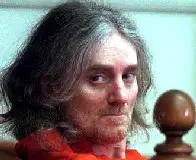
Donald Moeller
Murderer Brian Kevin Rosenfeld
Murderer · USA · 1985
Brian Kevin Rosenfeld Brian Kevin Rosenfeld was sentenced to three concurrent l…
23 victims
Brian Kevin Rosenfeld
Murderer · USA · 1985
Brian Kevin Rosenfeld Brian Kevin Rosenfeld was sentenced to three concurrent l…
23 victims
 Yahweh ben Yahweh
Murderer · USA · 1980
Yahweh ben Yahweh was born and legally named Hulon Mitchell Jr. (October 27, 19…
23 victims
Yahweh ben Yahweh
Murderer · USA · 1980
Yahweh ben Yahweh was born and legally named Hulon Mitchell Jr. (October 27, 19…
23 victims
 Russell Ellwood
Murderer · USA · 1991
Russell Ellwood was a former taxi driver. Authorities suspected him of killing…
20 victims
Russell Ellwood
Murderer · USA · 1991
Russell Ellwood was a former taxi driver. Authorities suspected him of killing…
20 victims
 Robert Martines Perez
Murderer · USA · 1994
Name: Robert Martines Perez · Other name used in proceedings: Robert Martinez P…
15 victims
Robert Martines Perez
Murderer · USA · 1994
Name: Robert Martines Perez · Other name used in proceedings: Robert Martinez P…
15 victims
 Sheila LaBarre
Murderer · USA · 2005
Sheila LaBarre was convicted of first-degree murders of Kenneth Countie and Mic…
2 victims
Sheila LaBarre
Murderer · USA · 2005
Sheila LaBarre was convicted of first-degree murders of Kenneth Countie and Mic…
2 victims
 Hugo Schenk
Serial killer · Austria · 1883
Hugo Schenk was executed by hanging on April 22, 1884. · April 22, 1884 — Hugo…
6 victims
Hugo Schenk
Serial killer · Austria · 1883
Hugo Schenk was executed by hanging on April 22, 1884. · April 22, 1884 — Hugo…
6 victims
 Jana Mallory
Murderer · USA · 2008
Jana Mallory (also referred to as Jana Porter Mallory and Jana Porter Mallory)…
1 victim
Jana Mallory
Murderer · USA · 2008
Jana Mallory (also referred to as Jana Porter Mallory and Jana Porter Mallory)…
1 victim
 James William Hamblen
Murderer · USA · 1984
James William Hamblen was a state prisoner in Florida who was condemned to die.…
2 victims
James William Hamblen
Murderer · USA · 1984
James William Hamblen was a state prisoner in Florida who was condemned to die.…
2 victims
 Robert Dale Yeatts
Murderer · USA · 1989
Name: Robert Dale Yeatts Other people named: Charles Michael Vernon; Ruby Meeks…
1 victim
Robert Dale Yeatts
Murderer · USA · 1989
Name: Robert Dale Yeatts Other people named: Charles Michael Vernon; Ruby Meeks…
1 victim
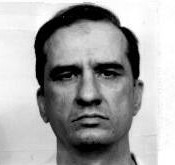 Kenneth Allen McDuff
Serial killer · USA · 1966
Kenneth Allen McDuff was executed by lethal injection in Texas on November 17,…
14 victims
Kenneth Allen McDuff
Serial killer · USA · 1966
Kenneth Allen McDuff was executed by lethal injection in Texas on November 17,…
14 victims
- Gender
- male
- Country
- USA
- Location
- Sioux Falls , Lincoln County, South Dakota, USA
- Date of birth
- August 5, 1952
- Age at first offence
- 38
- Characteristics
- kidnapping, abuse, rape, torture
- Victim profile
- Becky O'Connell, 9
- Method of murder
- Stabbing with knife
- Date(s) of murder
- May 8, 1990
- Years active
- 1990
- Date of arrest
- March 6, 1991
- Status
-
Executed
Executed by lethal injection in South Dakota on October 30, 2012
Case information
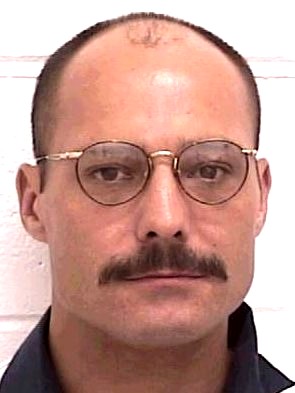
Donald Moeller was convicted of first-degree rape and first-degree murder involving the kidnapping, rape, and stabbing death of nine-year-old Becky O’Connell.
Timeline
- May 8, 1990 — Becky O’Connell left her home in Sioux Falls to buy candy; she was kidnapped near a Sioux Falls convenience store.
- May 9, 1990 — Becky O’Connell’s naked body was found in a wooded area near the Big Sioux River; her throat had been slashed.
- May 13, 1990 — Moeller fled to Tacoma, Washington under a fictitious name.
- January 13, 1997 — A date was set for a Daubert admissibility hearing concerning anticipated DNA evidence.
- April 1997 — Moeller’s second trial commenced.
- September 1, 1992 — The jury returned guilty verdicts of one count of rape in the first degree and one count of premeditated murder in the first degree.
- July 31, 1991 — Moeller was indicted by a Lincoln County Grand Jury on one count of first degree rape, one count of felony murder, and one count of first degree murder.
- September 3, 1996 — The State filed a notice identifying aggravating circumstances it intended to seek for death.
- October 4, 2012 — Moeller told a U.S. District Judge: “If the rape and murder of Rebecca O’Connell does not deserve the death penalty, then I guess nothing does.”
- October 15, 2012 — South Dakota executed Eric Robert for the killing of prison guard Ronald “R.J.” Johnson during a failed escape attempt.
- October 23, 2012 — Moeller sent a letter to his stepsister Donna Nichols that was later shared in part: “I can’t explain why,” “I can only accept the judgment of the court. All of these years that I have denied what I did, and lied to the few people that loved me, was fear and shame. I now claim responsibility for the evil I did. Saying ‘oops, sorry’ just ain’t good enough. How do I beg forgiveness from you, your mom and (his stepbrother) Glen, let alone this little girl’s mother?”
- October 30, 2012 — Moeller was executed by lethal injection in South Dakota; he was pronounced dead at 10:24 p.m. local time.
- October 31, 2012 — News coverage described Moeller’s execution.
Background
Rebecca O’Connell (“Becky”) lived with her mother and stepfather in Sioux Falls, South Dakota, and was a nine-year-old girl and a fourth-grader at Hawthorne Elementary.
The offence
Becky was last seen by her parents on the evening of May 8, 1990, when she left their home to buy candy at a nearby convenience store. She was kidnapped near the intersection of North Drive and Main Avenue after she had gone to the S&A Convenience Store to buy Laffy Taffy, then crossed the street to the north to look at squirt guns in Omar’s Market. A man driving through the area said he saw a man with a black baseball-type cap talking to the young girl as they stood on the pavement near the intersection.
Moeller drove Becky to a secluded area near the Big Sioux River. She was raped and stabbed to death. Her throat had been slashed. Her naked body was found in a wooded area the next day.
An autopsy suggested Becky had been raped vaginally and anally and had sustained knife wounds to her neck, shoulder, chest, back, hip, arms, hands, and defensive wounds to her hands. A forensic pathologist opined that she died as a result of a cut to the jugular vein of her neck.
Moeller had been a customer at the convenience store.
Investigation
After Becky’s disappearance was reported, her body was found the next day by two men who had come to ride their all-terrain vehicles in a wooded area along the Big Sioux River near Lake Alvin in Lincoln County.
Semen found on Becky’s body matched a DNA sample taken from Moeller.
During the murder investigation, a police detective spoke with Moeller three days after Becky’s disappearance. Moeller admitted owning a blue pickup truck, denied any involvement, and provided the detective with blood and hair samples. Under his bed, police discovered a section of the Sioux Falls Argus Leader containing a composite sketch and an article discussing the crime.
Moeller’s clothes were found freshly washed in his otherwise messy, filthy room, and soil analysis linked soil on his vehicle to soil from the crime scene. A soil expert testified that soil sampled from Moeller’s pickup wheel wells was consistent with soil from the crime scene.
Arrest and flight
Moeller fled South Dakota shortly after the initial investigation. While in Washington state, he used at least two aliases and fled to Tacoma, Washington under a fictitious name.
After several months on the loose, Moeller was arrested in Tacoma, Washington. When apprehended, he had two pocket knives or buck knives in his possession.
Trial
First trial and reversal on appeal
Following an investigation, the State charged Moeller with rape in the first degree, felony murder in the first degree, and premeditated murder in the first degree.
Moeller was convicted by a jury on all three counts and sentenced to death by lethal injection for the murder conviction. At his trial, Moeller was given the opportunity to have DNA tests performed on evidence taken from the victim, but declined.
A new trial was granted after the state Supreme Court ruled that prior bad acts evidence was improperly received, reversing his conviction.
Prior bad acts evidence involving attempted sexual assaults was described as incidents in January 1973, February 10, 1979, and a November or December of 1989 encounter followed by a January 20, 1990 incident. Three women testified about attempted sexual assaults they had been subjected to, and the trial court admitted that testimony in the State’s case-in-chief.
The prior bad acts testimony was summarized by the Supreme Court in describing events involving a pocket or buck-style knife and threats to threaten or kill victims in order to obtain sex.
In relation to DNA evidence, polymerase chain reaction (PCR)/DNA typing procedure was litigated and upheld as admissible in one appeal, with the Supreme Court holding that PCR DQ Alpha typing was reliable and that an expert was qualified to testify.
Second trial and affirmance
Moeller’s second trial commenced in April 1997 in Lincoln County, South Dakota. After presentencing, the jury convicted Moeller of rape in the first degree and murder in the first degree and sentenced him to death. The sentence followed a jury finding of at least one statutory aggravating circumstance under SDCL 23A-27A-1(6) described as “outrageously or wantonly vile, horrible or inhuman in that it involved” torture, depravity of mind, or an aggravated battery to the victim.
A jury verdict of death by lethal injection indicated findings beyond a reasonable doubt of torture, depravity of mind, and aggravated battery to the victim.
DNA evidence
The State offered DNA evidence regarding semen taken from Becky’s body and probability statistics based on DQ Alpha type and the APO-B marker. The Supreme Court later described probabilities as 1 in 130 million if the APO-B marker was not included and 1 in 14.8 billion if the APO-B marker was included.
Moeller’s requests related to DNA admissibility involved continuances of a Daubert hearing and disputes over whether and how counsel could review DNA evidence results and testing protocols.
Soil evidence
Soil evidence was provided by a retired professor of geology who specialized in forensic examinations of soils, who testified about soil samples taken from Moeller’s pickup wheel wells and about road soil comparisons. The Supreme Court also addressed issues relating to belated reporting and whether to conduct a Daubert hearing regarding the soil expert’s testimony.
Knife evidence
During Moeller’s arrest in 1990, a folding knife with a three-inch blade was found among his possessions. In the second trial, Dr. Brad Randall examined the knife on April 8, 1997 and issued a report concluding that it was not inconsistent with the wounds on Becky’s body, but could only be attributed to a class of knives rather than a definitive identity. The trial court admitted Randall’s report and permitted him to testify.
Sentencing
Moeller was sentenced to death at his first trial in 1992. After reversal, he was sentenced again to death in 1997.
At sentencing, the jury asked whether a sentence of “life imprisonment without parole” would allow Moeller to appear before a parole board, and the judge responded: “We acknowledge your note asking questions about life imprisonment without parole. All of the information which I can give you is set forth in the jury instructions.”
A challenge based on the failure to define “reasonable doubt” at a sentencing hearing was raised in the earlier appeal of the case.
Appeals
Direct appeal (first conviction)
Moeller’s first conviction was reversed on appeal due to improper admission of prior bad acts evidence. The Supreme Court reversed his convictions and remanded for a new trial.
Direct appeal (second conviction)
Moeller’s second conviction and death sentence were affirmed on direct appeal. The Supreme Court addressed and rejected claims including:
- denial of continuance requests,
- denial of a continuance of the pre-trial DNA admissibility hearing,
- denial of requests to remove prospective jurors for cause,
- admissibility of DNA evidence, including testimony on APO-B typing,
- admission of belated report by a soil expert,
- jury instructions defining aggravating circumstances,
- refusal to instruct on specific mitigating factors,
- and proportionality review.
State habeas and federal habeas
Moeller filed a petition for state habeas corpus after affirmance on direct appeal, and the circuit court denied relief. The state Supreme Court affirmed the denial.
Moeller then filed federal habeas corpus relief. The federal court of appeals affirmed the denial, including rulings about counsel performance at the Daubert hearing and about soil testing, and the response to the jury’s question regarding parole board appearance.
Outcome
Donald Moeller was executed by lethal injection in South Dakota on October 30, 2012. The lethal injection process was described as starting at 10:01 p.m. local time, and he was pronounced dead at 10:24 p.m. local time.
Moeller was 60 years old at the time of execution.
Other details
Last meal
Moeller ate a final meal of scrambled eggs, sausage links, tater tots and drip coffee.
Last words and statements
When asked whether he had any last words, Moeller replied: “No, sir,” then asked, “They’re my fan club?”
A letter Moeller sent to his stepsister Donna Nichols dated October 23 included the following quoted statements: “I can’t explain why,” “I can only accept the judgment of the court.
Additional people named
- Tina Curl — mother of Moeller’s victim; attended the execution and was quoted discussing her wishes.
- Dave Curl — stepfather of the victim; read a statement after the execution.
- Donna Nichols — Moeller’s stepsister; received part of Moeller’s letter.
- Agnes “Tookey” Becker — named as the person who would claim Moeller’s cremains, Bible, books, and other possessions; she was described as married to Moeller’s stepfather.
- Michael Winder — Department of Corrections spokesman; described Moeller’s meal and timing.
- Steve Young — described as an Argus Leader reporter; discussed observations during execution.
- Gov. Dennis Daugaard — issued a written statement quoted about Moeller admitting responsibility and accepting his fate.
Spotted an error, or have more information about this case?