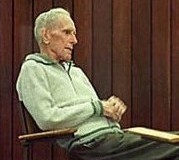
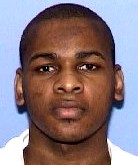
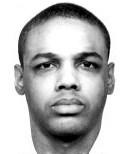
Arthur Stanley Brown
Murderer?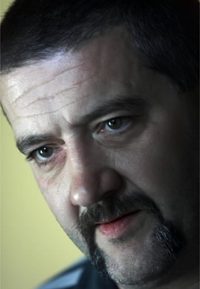 Mark Brandon Read
Murderer? · Australia · 1979
Mark Brandon “Chopper” Read (born 17 November 1954) was an Australian ex-convic…
19 victims
Mark Brandon Read
Murderer? · Australia · 1979
Mark Brandon “Chopper” Read (born 17 November 1954) was an Australian ex-convic…
19 victims
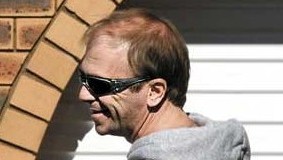 Graham Stafford
Murderer? · Australia · 1991
Graham Stuart Stafford was convicted in 1992 of the murder of twelve-year-old L…
1 victim
Graham Stafford
Murderer? · Australia · 1991
Graham Stuart Stafford was convicted in 1992 of the murder of twelve-year-old L…
1 victim
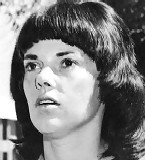 Lindy Chamberlain
Murderer? · Australia · 1980
Alice Lynne “Lindy” Chamberlain-Creighton was born on 4 March 1948. She was kno…
1 victim
Lindy Chamberlain
Murderer? · Australia · 1980
Alice Lynne “Lindy” Chamberlain-Creighton was born on 4 March 1948. She was kno…
1 victim
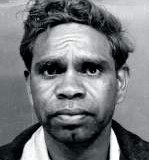 Rupert Maxwell Stuart
Murderer? · Australia · 1958
Rupert Maxwell Stuart, also known as Rupert (“Max”) Stuart (c. 1932 - ), was an…
1 victim
Rupert Maxwell Stuart
Murderer? · Australia · 1958
Rupert Maxwell Stuart, also known as Rupert (“Max”) Stuart (c. 1932 - ), was an…
1 victim
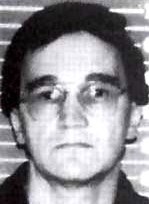 James DeBardeleben
Murderer? · USA · 1965
James DeBardeleben (James Mitchell “Mike” DeBardeleben), born March 20, 1940, w…
8 victims
James DeBardeleben
Murderer? · USA · 1965
James DeBardeleben (James Mitchell “Mike” DeBardeleben), born March 20, 1940, w…
8 victims
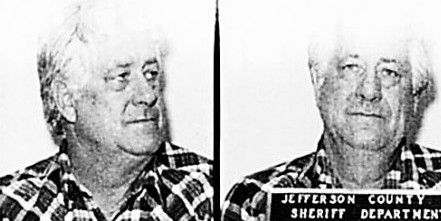 Thomas McCormick
Murderer? · USA · 1975
Thomas McCormick recruited homeless men from a Denver church mission to work on…
8 victims
Thomas McCormick
Murderer? · USA · 1975
Thomas McCormick recruited homeless men from a Denver church mission to work on…
8 victims
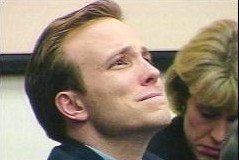 James Robertson
Murderer · USA · 1997
James Robertson was sentenced to death in June 1999 after he was convicted of m…
2 victims
James Robertson
Murderer · USA · 1997
James Robertson was sentenced to death in June 1999 after he was convicted of m…
2 victims
 Mary Courtney York
Murderer · USA · 2013
Mary Courtney York was a Del City woman. She previously entered a guilty plea t…
1 victim
Mary Courtney York
Murderer · USA · 2013
Mary Courtney York was a Del City woman. She previously entered a guilty plea t…
1 victim
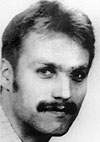 Wolfgang Schmidt
Serial killer · Germany · 1989
Wolfgang "Beate" Schmidt was also known as The Beelitz murderer and The Pink Gi…
6 victims
Wolfgang Schmidt
Serial killer · Germany · 1989
Wolfgang "Beate" Schmidt was also known as The Beelitz murderer and The Pink Gi…
6 victims
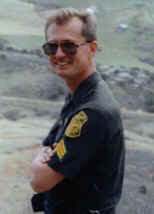 Albert Petrosky
Murderer · USA · 1995
Albert Petrosky was sentenced to life in prison without parole. He was awaiting…
3 victims
Albert Petrosky
Murderer · USA · 1995
Albert Petrosky was sentenced to life in prison without parole. He was awaiting…
3 victims
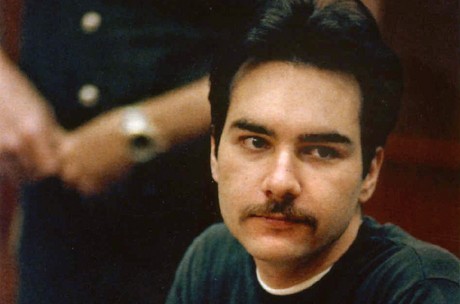 Eric Royce Leonard
Murderer · USA · 1991
Eric Royce Leonard was sentenced to death on June 13, 1996. He was convicted of…
6 victims
Eric Royce Leonard
Murderer · USA · 1991
Eric Royce Leonard was sentenced to death on June 13, 1996. He was convicted of…
6 victims
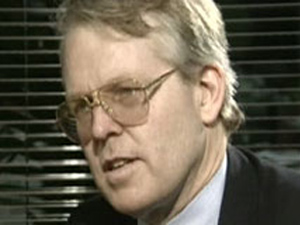 John Barlow
Murderer · New Zealand · 1994
16 February 1994 — Financial dealers Eugene and Gene Thomas, father and son, we…
2 victims
John Barlow
Murderer · New Zealand · 1994
16 February 1994 — Financial dealers Eugene and Gene Thomas, father and son, we…
2 victims
- Gender
- male
- Country
- Australia
- Location
- T ownsville, Queensland, Australia
- Date of birth
- May 20, 1912
- Age at first offence
- 58
- Characteristics
- serial rapist, paedophile, rape, torture, child abuse
- Victim profile
- Judith and Susan Mackay, aged 5 and 7 (sisters)
- Method of murder
- St abbing with knife - A sphyxiation by sand
- Date(s) of murder
- August 26, 1970
- Years active
- 1970
- Date of arrest
- December 1998
- Status
-
Died in custody
Charges against Arthur Stanley Brown were dropped in July 2001 after a psychiatric report found he was unfit to stand trial due to dementia and Alzheimer's disease; he died on July 6, 2002
Case overview
Arthur Stanley Brown (May 20, 1912 - July 6, 2002) was charged in 1998 in connection with the August 26, 1970 rape and murder of Judith and Susan Mackay in Townsville, Queensland. A hung jury failed to reach a verdict on October 28, 1999. In July 2001 a psychiatric report concluded that Brown was unfit to stand trial because he was suffering from dementia and Alzheimer's disease, and all charges against him were dropped. Brown died on July 6, 2002.
Brown was also arrested after wide publicity following the Mackay charges, leading to a witness to the abduction of two children from Adelaide Oval in 1973 identifying Brown as the man she had seen. Brown was considered a suspect for the Beaumont children disappearance based on connections made between him and the Adelaide Oval abduction. There was no proof that he had ever visited Adelaide, but a conversation was recalled in which Brown mentioned having seen Adelaide’s Festival Theatre when it was almost finished.
Timeline
- October 18, 1999 — Trial of Arthur Stanley Brown for the murders of Judith and Susan Mackay began in Townsville Supreme Court.
- October 28, 1999 — A hung jury failed to reach a verdict.
- June 1973 — The first stage of construction of Adelaide’s Festival Theatre was finished, when a concert was performed there.
- August 26, 1970 — Susan and Judith Mackay disappeared from a school bus stop near their home in Aitkenvale; later the same case included the rape and murder of Susan and Judith.
- August 28, 1970 — The bodies of Susan and Judith Mackay were found in the dry bed of Antill Creek.
- December 1998 — Brown was arrested in relation to the Mackay sisters’ murders.
- July 2001 — An independent psychiatric report concluded Brown was unfit to stand trial due to dementia and Alzheimer's disease; all charges were dropped.
- April 2002 — Charlotte Brown died.
- May 15, 1978 — Hester Porter died after hitting her head in a fall.
- 1974 — Some records were believed lost in the 1974 Brisbane flood.
- 1975 — Brown’s apprentice John Hill testified that Brown confessed in the mid-1970s; the timeline also includes that John Hill said Brown’s confession occurred in 1975.
- May 2001 — The appeal court concluded that the Mental Health Tribunal had no jurisdiction and an independent psychiatric report was commissioned.
- February 2001 — The Queensland Court of Appeal heard the Attorney-General’s appeal.
- 14 September 2000 — A Queensland Mental Health Tribunal ruled Brown had progressive dementia and was also suffering from Alzheimer's disease, making him unfit to stand trial.
- May 31, 2000 — A new trial date was set, but the case did not proceed for legal reasons which cannot be published.
- July 6, 2002 — Brown died in a nursing home in Malanda.
The offence
Judith Mackay and Susan Mackay were raped and murdered.
Victims
- Judith Mackay, age 7
- Susan Mackay, age 5
They were the youngest of six children of Bill and Thelma Mackay. The Mackay family lived in Aitkenvale, an outer suburb of Townsville.
Disappearance and discovery
On the morning of Wednesday, August 26, 1970, Susan and Judith disappeared from a school bus stop near their home in Townsville suburb of Aitkenvale. Witnesses later confirmed the girls reached the bus stop, but by the time the bus arrived 10 minutes later they had gone. Their absence was not noticed until they did not arrive home after school.
A search was mounted after they failed to return home after school and continued until the girls’ bodies were found on Friday, August 28, 1970, in the dry bed of Antill Creek, 25 km (16 mi) south-west of Townsville.
Post-mortem findings and evidence found with the bodies
Post-mortem revealed:
- Susan had been raped, strangled, and stabbed three times in the chest, possibly after death.
- Judith had also been raped and stabbed three times in the chest, but the cause of death was determined to be asphyxiation by sand.
- Their school uniforms were folded neatly beside them.
Items found included straw school hats and school ports. In the ports police found shoes, each with a white sock placed neatly inside, two skipping ropes, rulers, pencil cases, and plastic lunch boxes containing sandwiches wrapped in greaseproof paper “the kind they used to use before Glad Wrap”.
Witness accounts of the abduction and movements
One witness saw the girls talking to a man in a car at the bus stop at 8:10am.
Just after 11am on August 26, 1970, a car pulled into a service station at Ayr, 85 km (53 mi) south of Townsville. The driver bought $3 (around 25 litre/ 5 gll) of petrol. Two descriptions of the girls speaking to the driver were reported:
- The younger girl said: “Are we there yet?”
- The older girl asked the driver: “When are you taking us to mummy? You promised to take us to mummy.”
Several other witnesses reported seeing the girls being driven around in a car, and two later reported seeing a man walking towards a car from the direction of the murder scene about 1pm that day.
Car makes were variably described. Some witnesses said the car was an FJ Holden; others said it was a blue Vauxhall Victor with an odd coloured driver’s door. Police were unable to locate either car at the time and the murders remained unsolved.
Identification later used in court
A key witness later identified Brown as the driver with two young passengers that he had argued with over erratic driving that day.
Investigation
Brown was never a suspect in the original police investigation.
In 1998, a cousin of Brown’s wife, living in Perth, Western Australia, had suspicions about Brown’s involvement with the Mackay sisters and phoned Crimestoppers after the case was aired. Sergeant David Hickey of the Queensland homicide squad returned the call three days later and conducted a cold case review.
After interviewing other family members, police had 45 cases against Brown relating to pedophilia and circumstantial evidence linking him to the Mackay murders. Investigations continued and evidence accumulated.
Brown had been obsessed by the case and had falsely claimed he knew the girls’ father. Two weeks after the murders, he had offered to take two of his wife’s cousins to view the murder site. He replaced the odd-coloured door from his blue Vauxhall Victor, buried it, then later dug it up and took it to the rubbish tip, explaining to his family that he did it because he didn’t want anyone interviewing or annoying him.
Police evidence described that many of his victims were taken to Antill Creek to be molested and that one instance was only 20 metres (66 ft) from where the girls’ bodies were found.
Brown twice confessed to the murders:
- once to a stranger in a pub
- once to his apprentice in 1975, who said he never came forward before because it seemed totally out of character and he thought Brown was joking.
Brown was arrested on 28 charges of sexual assault and rape and for the murders of Susan and Judith MacKay.
Arrest and publicity
Brown’s arrest attracted wide publicity.
The publicity led to a witness to the abduction of two children from Adelaide Oval in 1973 identifying Brown as the man she had seen.
In December 1998, Brown was arrested for the long-unsolved Mackay sisters’ case after the Brisbane-based Homicide Squad reopened the investigation.
A heated exchange erupted in court between defence counsel Mark Donnelly and arresting officer David Hickey over comments Brown allegedly made in the Townsville watch house on December 3 of the year he was arrested. Sergeant Hickey said that after he was formally charged, Brown said:
- “Those Mackays have got me stumped you know.” When asked what he meant, Brown said:
- “Well I've lived in this town over 30 years and I've never heard of any Mackay murders.” Mark Donnelly accused Sergeant Hickey of making it up.
A tape recording of an interview conducted by Sergeant Hickey with Brown at his home earlier the same day was played to the court. During a tea break in the interview, Brown and his second wife Charlotte were heard talking about one of the dead girls after seeing her name on a search warrant police had served them:
- “Who's Susan Deborah Mackay?”
- “I don't know,” Mr Brown says.
- “I'm supposed to have murdered her.”
Trial
Charges and pleas
The trial of Arthur Stanley Brown began on October 18, 1999.
At his first day of trial, Brown was in the dock facing charges of murdering Susan Mackay (5) and Judith Mackay (7), indecently dealing with them, and depriving them of their liberty. Brown was on bail and pleaded not guilty.
In later trial coverage, Brown pleaded not guilty to abduction, sexual assault, and murder of Susan and Judith Mackay.
Witness evidence and trial proceedings
The two main witnesses were Richard Tough, 69, and Charles Bopf, 76.
Richard Tough testified he arrived in Townsville on August 27, 1970, the day after the Mackay sisters disappeared while waiting to catch a bus to school. The next day, he joined a four-man team led by taxi driver Ronald Brooker searching near Antill Creek. Tough described seeing “what appeared to be child's footprints” in sand and stated:
“I saw a body which I now know was a wee lassie called Susan Mackay,” he said. “She had little white panties on, nothing else.” He shouted “cooee” twice, alerting Mr Brooker, who drove off to get police. Tough stood guard over the body while waiting for police.
Charles Bopf described that another police officer led him to the naked body of Judith Mackay lying face down in the sand. He also described the items found with the girls, including the school items and lunch boxes.
Post-mortem reports read to the court indicated both girls had been sexually interfered with and stabbed three times in the chest, with Susan strangled to death and Judith dying of asphyxiation by sand.
Confessions and defence challenges
John Hill, 40, testified that he worked as Brown’s apprentice for about 18 months in the mid-1970s and that in 1975, when they drove past the Townsville police station and saw an FJ Holden parked outside, Hill recalled police were searching for an FJ Holden. Hill testified Brown replied:
- “I know all about that. I did it.” Hill testified Brown was not the kind of person to tell jokes, but Hill did not believe the confession because it was “totally out of character,” and Hill did not tell anyone about it until December last year after Brown was arrested and charged with the murders.
Defence counsel Mark Donnelly told the Townsville Supreme Court that there was not a shred of evidence the Mackay sisters knew Brown. Donnelly argued there were no witnesses who could testify the sisters had seen Brown at Aitkenvale State School and that the prosecution had been unable to produce such witnesses. He argued that the sisters would not accept a lift from someone they did not know very well and referred to William Mackay’s evidence that they were educated about dangers of taking lifts from strangers and had refused lifts offered by a couple in the same street.
Donnelly stated that 17 witnesses reported seeing a Holden, while Brown drove a Vauxhall at the time. Donnelly challenged Neil Lunney’s evidence by noting Lunney’s wife Alice had testified she had seen the car in question for only “a matter of seconds.”
Evidence from witnesses and prosecutor’s submissions
Vietnam veteran Neil Lunney, then 29, testified he saw the man driving the girls on the day they disappeared. In court, Lunney gestured towards Brown and snapped:
- “What are we talking about this for? He is sitting right there.” Justice Keiran Cullinane ordered him to sit down. Lunney also stated that bringing evidence to justice would “drive the images out of my mind.”
After hearing Lunney’s evidence, prosecutor Jim Henry told the jury that if it accepted Lunney’s evidence, it would have to find Brown guilty of murdering the Mackay sisters on August 26, 1970. Henry also made reference to Brown’s work being described as neat and fastidious, noting defence cross-examination about “creases like knife blades” in the sleeves of his work shirts, and said Brown’s neatness was a “two-edged sword” for the defence because the girls’ uniforms were folded neatly beside them.
Jury deliberation and hung jury
The jury began considering its verdict on October 28, 1999. Brown was granted bail at 6pm and returned home after the jury ceased the day’s deliberations without a verdict.
On October 29, 1999, a retrial was set after a hung jury failed to reach a verdict. Justice Keiran Cullinane told the court the jury felt it would be impossible to reach a unanimous verdict, noting relations among jurors had deteriorated and their discussions had become heated. Justice Cullinane said:
- “I have no option but to discharge the jury,” and adjourned the trial to the next criminal sittings in Townsville in May.
Retrial blocked and legal reasons
A new trial was set for July 31, 2000, but before it could start, newspapers reported “the case did not proceed for legal reasons which cannot be published.”
The legal reasons were suppressed until July 2001. It was revealed that Brown’s lawyer had applied for a section 613 verdict (unfit to be tried) from the jury. The jury rejected the application.
Sentencing
No sentencing occurred because the charges were dropped after the psychiatric report found Brown unfit to stand trial.
Appeals and fitness to stand trial
The court suppressed release of the legal reasons until July 2001. It was revealed that Brown’s wife Charlotte referred the case to the Queensland Mental Health Tribunal.
The tribunal ruled Brown had progressive dementia and was also suffering from Alzheimer's disease, and was thus unfit to stand trial. The Attorney-General lodged an appeal, and the court concluded that the Mental Health Tribunal did not have jurisdiction to make the ruling. The court commissioned an independent psychiatric report.
In July 2001, the independent psychiatric report concluded Brown was unfit to stand trial because he was suffering from dementia and Alzheimer's disease and all charges against him were dropped.
Outcome
All charges against Arthur Stanley Brown were dropped in July 2001 after the psychiatric report concluded he was unfit to stand trial due to dementia and Alzheimer's disease. Brown died on July 6, 2002.
Evidence about Brown having sexually abused young children had been given at the committal hearing but had been considered prejudicial and therefore not put before the Supreme Court jury. When charges were dropped, the 28 charges of sexual assault and rape were also dropped along with the murder charges.
Other deaths and family background
Hester Porter (née Anderson) died on May 15, 1978 after hitting her head in a fall while bedridden with arthritis. Brown married Hester’s younger sister Charlotte later that year.
Some members of Hester’s family believed Brown had killed her. Investigating police believed that the family doctor wrote out a death certificate without examining the body, which Brown had had cremated.
In 1982, one of Hester’s sisters told her parents that Brown had molested her while a small girl. Many more members of the Anderson extended family came forward to say they also had been molested. Following legal advice that taking the matter to court could be traumatic for the victims, the incidents became a family secret.
Christine Millier’s diary entry dated January 23, 1991, produced at his trial in 1999, read:
“ Kids and I went for walk to Strand. Arthur Brown drove by and the kids called him "rock spider", shouting it out. Eventually they told me what a rock spider was”. The entry associated “Rock Spider” with a slang prison term for a child molester.
In April 2002, Charlotte Brown died. Brown moved into a nursing home in Malanda, north Queensland, and died there on July 6, 2002.
Beaumont children and Adelaide Oval abduction
Connections and investigative efforts
Brown’s arrest for the Mackay sisters attracted Australia-wide publicity, including in South Australia where there were unsolved cases including the Beaumont children and the Oval Abduction.
Superintendent Paul Schramm said investigations were being made to determine whether Brown had ever visited South Australia. South Australian police approached Queensland homicide and ran a joint inquiry involving the Bureau of Criminal Intelligence, based in Canberra. They forwarded information to the Violent Crime Linkage Assessment unit. Schramm said:
- “We are taking it seriously and we are seeing if there is any connection. We have analysts working very closely together to try and piece together the last 30 years.”
The search was unsuccessful because information that might have detailed when or where Brown had been working had been lost. Some information was believed lost in the 1974 Brisbane flood, and it was possible Brown had unrestricted access to government buildings and may have deleted his own employment files. Without records, police were unable to establish where Brown had been at any time or when he had taken holidays. There was no proof Brown had ever visited Adelaide.
A witness recalled a conversation in which Brown mentioned having seen Adelaide’s Festival Theatre nearing completion, placing him in Adelaide after June 1973. The oval abduction occurred on August 25, 1973.
Witness identification of Brown for the Adelaide Oval abduction
Sue Lawrie, then aged 14, walked with her father along the banks of the Torrens River, about one kilometre from Adelaide Oval. Years later she described what she saw. Lawrie said:
We walked out from the zoo and were about midway between Popeye and the University Bridge. I looked across the river and saw a very young girl being carried by a man who I thought was her grandfather. He had a hat and a checked jacket on. She was crying and the older girl, I think she was a few years younger than me, was running after him. She was thumping him and punching into him and crying out at him. I saw all that for about 60 seconds. The thing seemed wrong because I would have thought if he was a relative he would have shooed her… It was after I married, I was about 18 or 20, I kept on and on with my husband about my memories -- and I read another article on the abduction. My husband said "go and do something about it". I went to the chief investigator in about 1979-80 and made a full statement. I was sure of many things, including the time, because the siren went for the beginning or end of the third-quarter. Dad remarked on the game, but I don't think he saw what I was watching on the other side of the river. I believe on the day of the abduction the police were looking in an opposite direction to where we were walking. The only other thing I need to say is the parents of Joanne should take heart that little girl did everything she could to protect her little friend. Lawrie described the man’s hat as “very Queensland country” and described it as “very Queensland country.”
In December 1998, when Brown was arrested for the Mackay sisters, Lawrie caught a glimpse of Brown’s face on television and thought she recognised him. The next morning a friend phoned and asked her what she thought of the news, and before the friend could explain that there was speculation about Brown being linked with the Beaumont children disappearance and the Oval abduction, Lawrie exclaimed:
- “My God! It's him”. She believed Brown was the man she had seen 25 years earlier.
Timing and identification concerns
It was stated that the identification was based on that of a woman who was aged 14 when she saw him, only for one minute, and who then saw a picture of Brown, now aged 86, 25 years later.
Other suspected cases linked to Brown
Disappearance of Marilyn Joy Wallman
Brown was considered a suspect for the disappearance of Marilyn Joy Wallman, at Eimeo, Queensland, on 21 March 1972. Marilyn, age 14, disappeared while on the way to school. Her family’s home was over a hill from the main road where she would catch a bus. Having cycled ahead of her brothers over the hill and out of sight, Marilyn vanished. Her brothers saw her bicycle lying on its side and the younger could hear voices from the other side of a canefield but could not identify whether one was that of Marilyn. She has never been found.
Police confirmed that a chalky blue Vauxhall was seen in the area around the time of the disappearance. Brown could not have committed the crime that day because he would have been returning with his car long after Marilyn Wallman disappeared, but it was possible he had been in the same area on a different day.
Murder of Catherine Graham
Brown was considered a suspect for the murder of Catherine Graham near Townsville, Queensland, on 28 July 1975. Graham had phoned her mother from a phone box that evening and her last words to her mother were:
- “There is someone peering at me mum -- and I don't like the look of him” After leaving the phone box, she bought a hamburger at the nearby Rising Sun fish shop at 8:10pm and visited a friend at Townsville General Hospital. She visited the Townsville Post Office at 9pm and then visited a family friend in The Avenue in the suburb of Hyde Park, which was her last known movement.
Her savagely-battered body was found the next day in long grass off the Flinders Highway, 24 kilometres west of Townsville. It was stated that Graham sold books door-to-door, and the day she was murdered had been seen doing this close to Brown’s house. Her body was found 500 metres from where the bodies of the Mackay sisters had been found, five years previously.
Police believed the murder had been committed by more than one person but admitted similarities with the Mackay sisters’ murders. Detective Sergeant Phil Notaro said of the case in 2001:
- “We believe at least one of the culprits is still in or near Townsville. We are pretty confident of that.” Semen swabs were taken from the scene, but they were of poor quality.
Other details
“Rock spider” reference
The nickname “The Scarlet Pimpernel” was associated with Brown being able to be “anywhere at any time” due to flexible work hours and self supervision. He was known to workmates as polite and immaculately dressed, and he ironed knife-edge creases in work uniforms.
During trial coverage, it was stated that “Rock Spider” was a slang prison term for a child molester and “It is never used in jest.”
Status after death
Police closed the file on the Mackay sisters murders. Reaction to the news of Brown’s death was mostly one of satisfaction.
Charles Bopf, who had led the initial investigation, commented regarding Brown’s death and the case generally. He said:
It's not for me to say that he didn't because I never interviewed him and he never admitted it to me and he's entitled to the presumption of innocence. He also said: However, commenting more generally about the case, and the widespread belief that Brown had committed the murders, he also said that he had wondered if Brown had made a deathbed confession, which he hadn't. And: “Everybody's pointing the finger at him now, but no one bothered to tell us anything about it then.” Bill Mackay said:
- “We don't want revenge, just justice.”
Spotted an error, or have more information about this case?