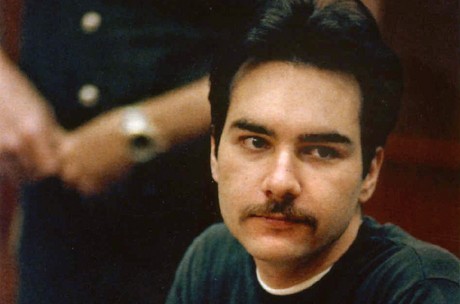
Eric Royce Leonard
Murderer Brian Kevin Rosenfeld
Murderer · USA · 1985
Brian Kevin Rosenfeld Brian Kevin Rosenfeld was sentenced to three concurrent l…
23 victims
Brian Kevin Rosenfeld
Murderer · USA · 1985
Brian Kevin Rosenfeld Brian Kevin Rosenfeld was sentenced to three concurrent l…
23 victims
 Russell Ellwood
Murderer · USA · 1991
Russell Ellwood was a former taxi driver. Authorities suspected him of killing…
20 victims
Russell Ellwood
Murderer · USA · 1991
Russell Ellwood was a former taxi driver. Authorities suspected him of killing…
20 victims
 Robert Martines Perez
Murderer · USA · 1994
Name: Robert Martines Perez · Other name used in proceedings: Robert Martinez P…
15 victims
Robert Martines Perez
Murderer · USA · 1994
Name: Robert Martines Perez · Other name used in proceedings: Robert Martinez P…
15 victims
 Billy Frank Vickers
Murderer · USA · 1993
Billy Frank Vickers Vickers was executed by lethal injection in Texas on Januar…
14 victims
Billy Frank Vickers
Murderer · USA · 1993
Billy Frank Vickers Vickers was executed by lethal injection in Texas on Januar…
14 victims
 Lemoine Carter
Murderer · USA · 1994
Name: Lemoine Carter · Court / proceeding: United States Court of Appeals for t…
2 victims
Lemoine Carter
Murderer · USA · 1994
Name: Lemoine Carter · Court / proceeding: United States Court of Appeals for t…
2 victims
 Rita Gluzman
Murderer · USA · 1996
Rita Gluzman was convicted of murdering her husband, Yakov Gluzman, and dismemb…
1 victim
Rita Gluzman
Murderer · USA · 1996
Rita Gluzman was convicted of murdering her husband, Yakov Gluzman, and dismemb…
1 victim
 Seema Gavit
Murderer · India · 1990
Seema Mohan Gavit and her sister Renuka Shinde received death sentences. The se…
9 victims
Seema Gavit
Murderer · India · 1990
Seema Mohan Gavit and her sister Renuka Shinde received death sentences. The se…
9 victims
 Ronald Gene Simmons
Mass murderer · USA · 1987
Ronald Gene Simmons was a retired United States Air Force sergeant. Over the Ch…
16 victims
Ronald Gene Simmons
Mass murderer · USA · 1987
Ronald Gene Simmons was a retired United States Air Force sergeant. Over the Ch…
16 victims
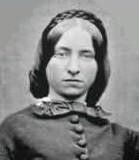 Madeleine Smith
Murderer? · United Kingdom · 1857
Madeleine Smith received a verdict of "not proven" on July 9, 1857. She died on…
1 victim
Madeleine Smith
Murderer? · United Kingdom · 1857
Madeleine Smith received a verdict of "not proven" on July 9, 1857. She died on…
1 victim
- Gender
- male
- Country
- USA
- Location
- Sacramento, California, USA
- Date of birth
- 1969
- Age at first offence
- 22
- Characteristics
- robbery, rape
- Victim profile
- Zaid Obeid and Stephen Anderson (employees of a convenience store), and Thor Johnson (convenience store customer) / Sarah Crook, Kyle Reynolds and Andrea Coldangelo (Pizza joint employees)
- Method of murder
- Shooting (.25-caliber pistol)
- Date(s) of murder
- February 12/19, 1991
- Years active
- 1991
- Date of arrest
- June 6, 1991
- Status
-
Sentenced to death
Sentenced to death on June 13, 1996
Overview
Eric Royce Leonard was sentenced to death on June 13, 1996. He was convicted of execution-style killing of six people in a Sacramento convenience store and at a pizza parlor.
The offence
On February 12, 1991, a lone gunman entered a Quik Stop market on Auburn Boulevard and shot two employees and a customer from close range. Nothing was taken except a tin of beef jerky and a few other items. The shootings appeared to be a robbery.
One week later, three workers in a Watt Avenue pizza parlor were killed in a similar manner. On February 19, 1991, Eric Royce Leonard killed three people in a Round Table Pizza on Watt Avenue. Authorities believed that the slayings were done for kicks. Media dubbed the unknown killer the “thrill killer.”
Investigators believed the killings occurred during two robberies one week apart in February 1991. Media coverage suggested the crimes were committed by a “thrill killer” rather than for money, although evidence at trial suggested that currency had been taken in both robberies and that Leonard had not been making enough money to pay his living expenses and had resorted to bad-check-writing in the period leading up to the crimes.
A .25-caliber handgun was identified as the murder weapon.
Victims
The victims were:
- Zaid Obeid
- Stephen Anderson (employees of a convenience store)
- Thor Johnson (convenience store customer?)
- Sarah Crook
- Kyle Reynolds
- Andrea Coldangelo (Pizza joint employees)
Investigation
A massive manhunt followed the killings. Police later found a troubled young man named Eric Royce Leonard.
Police first became interested in Leonard when they saw him walking near the Quik Stop two days after the Round Table robberies.
A detective testified at trial that Leonard admitted having been near the scenes of both killings on the nights in question but denied any involvement. The detective said he thought Leonard—who had an IQ of less than 100 and had suffered from epilepsy nearly all his life—was too timid and mentally disoriented to be a likely suspect.
Authorities said they took further interest after interviewing several others who saw a man wearing a trench coat near the murder scenes on the nights in question. Four of those witnesses saw a photograph of Leonard wearing a trench coat during the first time police spoke to him and said he appeared to be the man they saw.
After interviewing Leonard again, investigators went to his father’s house and obtained a .25-caliber Baretta pistol. Ballistics tests showed it to be the murder weapon.
Leonard’s father testified that he had confessed to the detective, while the father denied at trial that he had ever made such a statement. Leonard was questioned shortly after the first killings on February 12. Investigators said Leonard did not have an alibi for where he was when the shooting occurred.
Arrest
On June 07, 1991, a man described by authorities as a withdrawn loner was arrested in connection with the killings of six people. Sacramento County Sheriff Glen Craig said Eric Royce Leonard, who lived near both shooting scenes, was arrested at his apartment about 9 p.m. after ballistics experts identified a .25-caliber pistol owned by his father as the weapon used in all six killings.
Investigators interviewed Leonard’s father earlier on that day, and the father turned over the pistol. Sacramento County Sheriff Glen Craig said:
- "The father said he had known for a while that something was not really right."
- "His reaction was very docile, very staid, very stoic," according to Sheriff's Sgt. Lena Derheim and Craig.
Sheriff’s Lt. Ray Biondi said:
- "He was the kind of person who wouldn't stand out in a crowd. He would be on the fringes of the crowd,"
Sheriff’s Sgt. Lena Derheim said authorities had no motive and had described the slayer as a "thrill killer." Derheim said:
- "The cash registers were not cleaned out. It was almost like it was an afterthought,"
Craig noted that Leonard had been questioned shortly after the first killings on February 12 in a convenience store half a block from his apartment north of downtown. Derheim said:
- "He was not a super strong suspect, but he was one of those names that was kept on the back burner,"
- "He had been identified as being seen near the store, and he didn't have an alibi for where he was when the shooting occurred."
Derheim added:
- "Someone matching Leonard's description had been seen dressed in a trench coat at both crimes scenes,"
The slayings occurred on Tuesday evenings:
- Three people shot to death at the suburban Quik Stop convenience store
- A week later, February 19, three more were slain at a nearby Roundtable Pizza parlor
Investigators interviewed Leonard again on February 25, a Monday, the day before authorities feared additional killings might take place. Craig noted that there were no more "thrill killings."
Trial
Leonard’s in-court outburst occurred at a pretrial hearing. At his motion for change of venue, which was denied, Leonard raised his hand at the hearing and blurted out “I am guilty.”
The Supreme Court of California ruled that the trial court properly allowed jurors at Leonard’s trial to hear about that incriminating comment. Justice Joyce L. Kennard, writing for the court, said that the comment was not an “offer to plead guilty,” which would have made it inadmissible under Evidence Code Sec. 1153. The court wrote:
“We agree with the trial court that defendant’s in-court outburst declaring that he was guilty was not a ‘bona fide offer to plead guilty’...but simply an ‘unsolicited admission’...that was not made inadmissible by Evidence Code section 1153,”
Justice Joyce L. Kennard continued:
“Defendant did not say he wanted to enter a plea of guilty; that is, to formally admit that he had committed each of the charged crimes. Rather, he said he was guilty, without explaining what he was guilty of. No plea negotiations were underway, and to exclude statements of this kind would not encourage the settlement of criminal cases.”
The jury convicted Leonard of the six murders with which he was charged. The convictions involved two robberies one week apart in February 1991:
- The first robbery at a Quik Stop convenience market, in which three people were killed
- The second, at a Round Table Pizza restaurant, resulting in three more deaths
Sentencing
Leonard was sentenced to death.
In challenging the death sentence on appeal, Leonard’s court-appointed attorney argued that it would constitute cruel and unusual punishment to execute a young man—he was 21 at the time of the murders—who was epileptic and developmentally disabled. Justice Joyce L. Kennard wrote that there were sufficient aggravating circumstances to support the judge and jury’s decision:
“We acknowledge the seriousness of defendant’s disabilities, but nonetheless defendant committed two robberies during which he murdered six people by shooting them in the head, and to ensure the deaths of two of his victims he fired at close range, holding the gun less than two inches from their heads,”
Justice Joyce L. Kennard concluded:
“On these facts, the death sentence is not grossly disproportionate to defendant’s culpability.”
Appeals
The Supreme Court of California upheld the death sentence.
The court also addressed another death sentence from San Bernardino County involving Joseph Lloyd Cook, sentenced to death for murdering an octogenarian Joshua Tree couple while burglarizing their home in 1992. The opinion rejected challenges to that verdict and sentence, including an identification issue connected to a lineup held prior to the filing of formal charges, and discussed related constitutional analysis and Proposition 8.
The cases were referenced as People v. Leonard, 07 S.O.S. 2437, and People v. Cook, 07 S.O.S. 2458.
Other details
Leonard was described as having an IQ of less than 100 and suffering from epilepsy nearly all his life.
The case narrative included that:
- One week earlier than the Round Table Pizza killings, Leonard killed three people at a Quik Stop on Auburn Boulevard, taking only beef jerky from the crime scene.
- Leonard said that the day after the Round Table Pizza killings, he came into the writing center at American River College and did some work, but the police later confiscated his folder and the Writing Center gave him a no-credit.
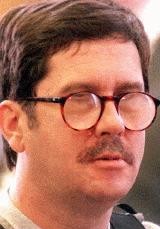
Leonard’s court appearance included that he was seen during a court appearance on Feb. 29, 1992. The verdict was read in Sacramento Superior Court on Nov. 20, 1995, and the record included an image caption stating that Leonard looked over the jury as the verdict was read.
The record also included a caption stating that Paula Thomas, the mother of Eric Royce Leonard, the “Thrill Killer,” was consoled after the verdict of her son was read.
Spotted an error, or have more information about this case?