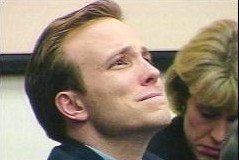
James Robertson
Murderer Russell Ellwood
Murderer · USA · 1991
Russell Ellwood was a former taxi driver. Authorities suspected him of killing…
20 victims
Russell Ellwood
Murderer · USA · 1991
Russell Ellwood was a former taxi driver. Authorities suspected him of killing…
20 victims
 Robert Martines Perez
Murderer · USA · 1994
Name: Robert Martines Perez · Other name used in proceedings: Robert Martinez P…
15 victims
Robert Martines Perez
Murderer · USA · 1994
Name: Robert Martines Perez · Other name used in proceedings: Robert Martinez P…
15 victims
 Billy Frank Vickers
Murderer · USA · 1993
Billy Frank Vickers Vickers was executed by lethal injection in Texas on Januar…
14 victims
Billy Frank Vickers
Murderer · USA · 1993
Billy Frank Vickers Vickers was executed by lethal injection in Texas on Januar…
14 victims
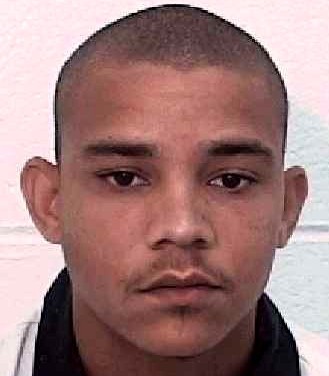 Marion Wilson
Murderer · USA · 1996
Marion Wilson Jr. was convicted of malice murder, felony murder, armed robbery,…
1 victim
Marion Wilson
Murderer · USA · 1996
Marion Wilson Jr. was convicted of malice murder, felony murder, armed robbery,…
1 victim
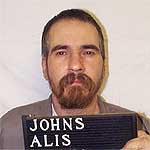 Alis Ben Johns
Murderer · USA · 1997
Alis Ben Johns began spending time with Thomas Stewart in the spring of 1996. B…
3 victims
Alis Ben Johns
Murderer · USA · 1997
Alis Ben Johns began spending time with Thomas Stewart in the spring of 1996. B…
3 victims
 Phillip Stroud
Murderer · USA · 2000
Phillip A. Stroud was approximately age 21 at the time of the murders. He had a…
3 victims
Phillip Stroud
Murderer · USA · 2000
Phillip A. Stroud was approximately age 21 at the time of the murders. He had a…
3 victims
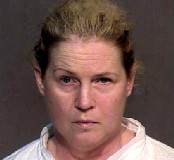 Carol Hatley
Murderer · USA · 2012
Carol Hatley was sentenced to 22 years in prison for the murder of her mother,…
1 victim
Carol Hatley
Murderer · USA · 2012
Carol Hatley was sentenced to 22 years in prison for the murder of her mother,…
1 victim
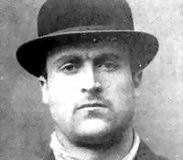 William Henry Kennedy
Murderer · United Kingdom · 1927
William Henry Kennedy was executed by hanging at Wandsworth prison on May 31, 1…
1 victim
William Henry Kennedy
Murderer · United Kingdom · 1927
William Henry Kennedy was executed by hanging at Wandsworth prison on May 31, 1…
1 victim
 Anthony Ray Westley
Murderer · USA · 1984
Anthony Ray Westley was executed by lethal injection in Texas on May 13, 1997.…
1 victim
Anthony Ray Westley
Murderer · USA · 1984
Anthony Ray Westley was executed by lethal injection in Texas on May 13, 1997.…
1 victim
- Gender
- male
- Country
- USA
- Location
- Rock Hill, South Carolina, USA
- Date of birth
- 1973
- Age at first offence
- 24
- Characteristics
- parricide, abuse, drugs, child abuse
- Victim profile
- Earl and Terry Robertson, both 49 (his parents)
- Method of murder
- Hitting with a claw hammer / St abbing with knife
- Date(s) of murder
- November 25, 1997
- Years active
- 1997
- Date of arrest
- —
- Status
-
Sentenced to death
Sentenced to death in June 1999
Overview
James Robertson was sentenced to death in June 1999 after he was convicted of murdering his parents, Earl and Terry Robertson, in their Rock Hill home in 1997.
Timeline
- November 25, 1997 — Earl and Terry Robertson were found brutally slaughtered inside their home in Rock Hill.
- June 1999 — James Robertson was sentenced to death.
- February 24, 2005 — James Robertson, then 31, told a judge he did not want to appeal his death sentence to the South Carolina Supreme Court.
- January 24, 2007 — Coverage described that James Robertson was on death row and that his son’s appeal and lawsuit for ineffective trial lawyers were proceeding.
Background
James Robertson was known as James D. “Jimmy” Robertson. He was the eldest son of Earl and Terry Robertson and later became their convicted killer. He had recently moved back in with his parents.
Robertson graduated high school with honours, attended Georgia Tech in Atlanta, and was once characterized as a math genius. He was expelled from college for missing too many classes. His father cut him off financially after his expulsion.
Robertson took odd jobs at different restaurants in South Carolina. Prosecutors portrayed him as upset about the sudden turn in his life and as having talked casually to friends about killing his parents. He later called his teenage girlfriend, Meredith Moon, in the predawn hours of November 25 and told her to come over, saying that day was the day he was going to kill his parents.
His parents had a $2.2 million inheritance that Robertson and his brother could inherit. Prosecutors said Robertson killed his parents for inheritance and sought the death penalty because of the brutality of the murders and evidence suggesting he plotted against his parents.
A defense theory during trial emphasized mental illness and medication. Defense attorneys argued that Robertson and his mother suffered from bipolar disease, known as manic depression, and that Robertson’s frontal lobes were abnormal. The defense also argued that Robertson’s abuse of Ritalin triggered a psychotic episode at the time of the murder.
Robertson’s grandmother talked to a newspaper reporter about him, saying: “He’d be better off put to sleep.”
Robertson’s younger brother was referred to as “Chip” or Earl Robertson Jr. At the time of James Robertson’s trial, Chip was not indicted in connection with his parents’ murder. Testimony in the guilt phase revealed that James called his brother before he called Meredith on the day of the murders. The article said that just what Chip knew and when he knew it remained a mystery, and described suggestions that Chip also wanted his parents dead and may have actively conspired with James to kill them. At that time, Chip was in jail awaiting prosecution on drug charges. South Carolina investigators continued their investigation and had not ruled out charging him as an accessory after the fact of murder in his parents’ death.
The offence
Earl and Terry Robertson were found on November 25, 1997, two days before Thanksgiving, brutally slaughtered inside their home in Rock Hill.
Detectives found blood spatter on walls, floors, doors, and ceilings. Earl was found lying face down wearing nothing but his underwear. He had been clubbed repeatedly, and his flesh bore impressions left by the baseball bat used to attack him. Investigators determined that injuries to Earl’s head were made by the claw end of a hammer. The head injuries were so traumatic that Earl’s brain had spilled out of his skull and pooled around his head.
Terry was found lying next to her bed. Her skull was fractured by blows inflicted by the sharp end of a claw hammer. Terry was slashed and stabbed repeatedly on her face, arms, neck, and back. One slash wound went from her wrist to her elbow and was so deep it exposed her bone. The attack was so violent that the knife blade broke off during the attack.
Investigation
Police traced a car parked just outside the Robertson house to Douglas Moon, the father of Robertson’s girlfriend. Douglas Moon told police that his daughter Meredith told him she used the car that morning to take her best friend Erin Savage, who had allegedly cut her finger, to the hospital.
Savage later revealed that Meredith Moon was accompanying Robertson to Philadelphia to pick up Robertson’s younger brother Chip, and that Savage had arranged for herself to cover for Meredith.
York County investigators notified Philadelphia police. Philadelphia police set up surveillance at Chip’s apartment and arrested both Robertson and Moon the next day.
Arrest and detention
Robertson and Meredith Moon were arrested the next day during Philadelphia surveillance at Chip’s apartment.
Under police questioning for two days, Moon initially said she was in the car while Robertson murdered his parents. Eventually, she told police what she knew about the murders and led investigators to the murder weapons.
In 2005, Robertson had been on death row for six years.
Robertson arrived earlier this week before hearings referenced in 2007 coverage, and he was due to be in court again next week in that coverage.
Trial
During the guilt phase, defense lawyers said they would try to make prosecutors prove their case beyond reasonable doubt. During the penalty phase, defense attorneys argued Robertson should not receive the death penalty because of bipolar disease and alleged abnormalities in his frontal lobes, and because Robertson’s abuse of Ritalin triggered a psychotic episode at the time of the murder.
At the guilt phase, testimony revealed that James called his brother before calling Meredith on the day of the murders.
In 2005, Robertson told a judge that his guilt had never been in question.
Sentencing
In June 1999, Robertson was sentenced to death.
Appeals
On February 24, 2005, James Robertson spoke during a hearing to determine whether he was competent to withdraw the appeal. He told the judge he did not want to appeal his death sentence to the South Carolina Supreme Court.
Robertson said: “It’s better to live life as best you can in here and then to die,” than to suffer for 60 years. The judge John Hayes did not rule Tuesday and did not say when he would make a decision.
Coverage from January 24, 2007 described that Robertson had dropped his appeal and then filed a lawsuit claiming his trial lawyers were ineffective. The coverage also described that his chance of getting a new trial was “slim.”
Outcome
Robertson remained convicted of killing his parents. He remained under a death sentence.
Aftermath
Kathy Wood, a neighbor, remembered her parents sitting at the kitchen table with neighbors who had apologized for their son. Wood said she and others described Earl and Terry Robertson as having been brutally killed afterward in November 1997.
Wood said she had “no problem with the death penalty for Jimmy Robertson,” and that Earl and Terry Robertson in death had been “dragged through the mud” in an attempt to save Jimmy Robertson’s life during the trial.
Wood said: “I wish you wouldn’t do another story on him,” and also said: “He just wants publicity.” She said that if nobody gave him attention, “he’d just shut up and die.”
A neighbor, Linder Tucker, called Terry Robertson “warm, loving, giving.” Tucker said, “We were like sisters,” and described what she called the “All-American family.” Tucker also said about trial testimony: “Then he did it.”
Tucker said she wanted the story followed closely so people remembered Earl and Terry. Tucker said: “Not just him.”
A pastor, the Rev. William Pender from Oakland Avenue Presbyterian Church, said Terry Robertson would have been first in line pleading for her son’s life. Pender also said: “Pastoral care doesn’t mean making excuses,” and that it had “never been an issue to take him off the rolls.” Pender hoped to see Robertson at the York County jail before Monday’s hearings. Pender equated Robertson facing death to a terminally ill church member facing death.
Spotted an error, or have more information about this case?