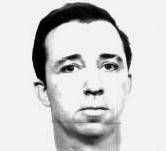
John Glenn Moody
Murderer Brian Kevin Rosenfeld
Murderer · USA · 1985
Brian Kevin Rosenfeld Brian Kevin Rosenfeld was sentenced to three concurrent l…
23 victims
Brian Kevin Rosenfeld
Murderer · USA · 1985
Brian Kevin Rosenfeld Brian Kevin Rosenfeld was sentenced to three concurrent l…
23 victims
 Yahweh ben Yahweh
Murderer · USA · 1980
Yahweh ben Yahweh was born and legally named Hulon Mitchell Jr. (October 27, 19…
23 victims
Yahweh ben Yahweh
Murderer · USA · 1980
Yahweh ben Yahweh was born and legally named Hulon Mitchell Jr. (October 27, 19…
23 victims
 Russell Ellwood
Murderer · USA · 1991
Russell Ellwood was a former taxi driver. Authorities suspected him of killing…
20 victims
Russell Ellwood
Murderer · USA · 1991
Russell Ellwood was a former taxi driver. Authorities suspected him of killing…
20 victims
 Robert Martines Perez
Murderer · USA · 1994
Name: Robert Martines Perez · Other name used in proceedings: Robert Martinez P…
15 victims
Robert Martines Perez
Murderer · USA · 1994
Name: Robert Martines Perez · Other name used in proceedings: Robert Martinez P…
15 victims
 Leon Davis Jr.
Murderer · USA · 2007
Leon Davis Jr. was sentenced to death on April 29, 2011, for the execution-styl…
5 victims
Leon Davis Jr.
Murderer · USA · 2007
Leon Davis Jr. was sentenced to death on April 29, 2011, for the execution-styl…
5 victims
 Zakieya Avery
Murderer · USA · 2014
Zakieya Avery, 28, and Monifa Sanford, 21, were indicted in the stabbings of fo…
2 victims
Zakieya Avery
Murderer · USA · 2014
Zakieya Avery, 28, and Monifa Sanford, 21, were indicted in the stabbings of fo…
2 victims
 Byron Smith
Murderer · USA · 2012
Byron Smith, 65, was involved in the killings of two teenage intruders in his h…
2 victims
Byron Smith
Murderer · USA · 2012
Byron Smith, 65, was involved in the killings of two teenage intruders in his h…
2 victims
 Donald Dufour
Serial killer · USA · 1982
Donald Dufour On the afternoon of July 15, 1982, a postman working Henry Balch…
5 victims
Donald Dufour
Serial killer · USA · 1982
Donald Dufour On the afternoon of July 15, 1982, a postman working Henry Balch…
5 victims
- Gender
- male
- Country
- USA
- Location
- Taylor County, Texas, USA
- Date of birth
- October 17, 1952
- Age at first offence
- 36
- Characteristics
- rape, robbery
- Victim profile
- Maureen Louise Maulden (female, 77)
- Method of murder
- Strangulation with a telephone cord
- Date(s) of murder
- July 3, 1988
- Years active
- 1988
- Date of arrest
- Next day
- Status
-
Executed
Executed by lethal injection in Texas on January 5, 1999
Case information
- Name: John Glenn Moody
- Sentence status: Executed by lethal injection in Texas on January 5, 1999
- Execution details: Moody was executed on January 5, 1999.
Timeline
- July 3, 1988 — Neighbors noticed a pickup truck matching Moody's in Maureen Maulden's driveway and someone resembling the handyman on her front porch.
- July 4, 1988 — Maureen Maulden's body was discovered in her home by her sister.
- July 5, 1988 — Moody was arrested for public intoxication; he was carrying two of Maulden's rings in his wallet.
- February 28, 1989 — A jury convicted Moody of capital murder and sentenced him to death.
- 1991 — Maureen Maulden's son Blair Maulden committed suicide in 1991, three years after Maureen Maulden's body was found.
- March 1994 — Moody was originally scheduled to be executed.
- April 16, 1998 — The federal appellate decision in John Glenn Moody, Petitioner-Appellant, v. Gary L. Johnson, Texas Department of Criminal Justice, Institutional Division, Respondent-Appellee. No. 96-10645 was issued.
- January 5, 1999 — Moody was executed by lethal injection in Texas.
- January 6, 1999 — Associated Press dateline for reporting on the execution process and final remarks.
Background
John Glenn Moody was a parolee when he raped and strangled a 77-year-old woman after she gave him a job doing lawn work. Moody had nearly two dozen convictions over 19 years and had been out on parole for five months, having completed a seven-month term for burglary.
In July of 1988, Moody was hired by Maureen Louise Maulden to do yard work at her Abilene home. The widow apparently was unaware of Moody's criminal past. Moody blamed his criminal past on drinking, drugs and a bad temper.
Maureen Maulden was an employee of Southland Beauty Supply, a member of the Abilene Women's Club, and a worshipper at St. Paul's United Methodist Church. She moved back into the Sayles Boulevard family home in 1971 to care for her elderly mother. She retrieved a mentally ill sister from the Big Spring State School to care for her also. She nursed her bedridden husband, L.B. Maulden, before he died in 1978.
In December 1997, Maureen moved from the family home to a home where she could be closer to her friends. She occasionally hired, at her sister's recommendation, John Glenn Moody to do odd jobs and yard work. Neither woman was aware the man had a long and often violent criminal history.
Moody was from Chester, W.Va.
The offence
Maureen Maulden was raped, beaten with a fireplace brush, and strangled with a telephone cord. Her home had been ransacked and her purse and two rings which she normally wore were missing. Her body was found nude, with a telephone cord wrapped tightly around her neck. Her dentures were loose and later tests detected the presence of spermatozoa in her mouth, indicating that she had been orally sodomized.
Police subsequently found the elderly woman had been violated sexually, beaten bloody with a fireplace tool, and strangled with a telephone cord that was left cinched around her throat. Neighbors had noticed a pickup truck matching Moody's and someone resembling the handyman at the time of the murder.
Moody was convicted of the murder, robbery and sexual assault of 77-year-old Maureen Louise Maulden.
Investigation
A sister found Maureen Maulden's body. Neighbors had noticed a pickup truck matching Moody's in her driveway and someone resembling the handyman on her front porch.
About three hours after Maulden's body was discovered, Abilene police arrested Moody for public intoxication. Detectives linked the murder to Moody and found evidence including the victim's rings. When arrested, Moody was carrying two of Maulden's rings in his wallet.
When Moody's then wife went to the jail to retrieve his personal belongings, booking officers overheard Moody warn the woman to ditch the rings because they were "hot"—slang for stolen.
The most incriminating piece of evidence was a bloody fingerprint on a phone in Maulden's home. The blood was Maulden's; the print was Moody's. The impression offered 20 points of similarity for an expert to confirm—twice as many as the law requires.
A witness provided a license plate number for a pickup truck seen leaving Maulden's home; five of the six numbers matched Moody's vehicle and the jury heard testimony reflecting that the neighbors had seen a vehicle resembling Moody's wife's car driving slowly through the neighborhood and parked in Maulden's driveway on the day of the murder.
Moody acknowledged knowing the victim but denied murdering her.
Arrest
Moody was arrested for public intoxication after Maureen Maulden's body was discovered. He was carrying two of Maulden's rings in his wallet at the time of his arrest.
Trial
Conviction and sentencing
On February 28, 1989, a jury convicted Moody of capital murder and sentenced him to death. After 2-1/2 hours of deliberation, a six-man, six-woman jury found Moody guilty of capital murder.
At sentencing, jurors sentenced him to death after additional testimony that labeled Moody a homicidal sexual deviant certain to commit more crimes.
People involved
Victim
- Maureen Louise Maulden — 77-year-old widow; body was found in her home in Abilene; she was raped, beaten with a fireplace brush, and strangled with a telephone cord; her purse and two rings were missing.
Offender
- John Glenn Moody — accused and convicted; was 46-year-old at the time of execution; had nearly two dozen convictions over 19 years; was on parole for five months after completing seven months of a five-year sentence for burglary; was arrested for public intoxication; carried Maulden's rings; was executed by lethal injection on January 5, 1999.
Family and related individuals
- Mildred Adams — introduced Moody to Maureen; found her sister's battered body the following evening.
- Maureen Maulden's sister — discovered Maureen Maulden's body.
- Maureen Maulden's son, Blair Maulden — committed suicide in 1991.
- Blair Maulden's mother, Maureen Maulden — the victim.
- Blair Maulden — only child of Maureen Maulden; death drove depression.
- Jon McAden — Maulden's nephew; an Abilene High teacher.
- Rachel Hamm — one of the jurors; 74-year-old.
- Clark — daughter of Mildred Adams; said her mother especially was wrestling with feelings of guilt and pain; did not plan to drive to Huntsville for Wednesday's execution.
- Lynn — Moody's wife; testified in a way Thedford characterized as "very shocking" and said Moody molested her daughter.
Law and legal participants
- District Attorney James Eidson — prosecuted the capital murder case; made statements about the case and the prosecution.
- Police Sgt. David Watkins — investigated the death.
- Attorney David Thedford — defended Moody at trial.
- Prison spokesman Larry Fitzgerald — quoted about Moody’s execution coverage and his mother objection to media.
- Texas Board of Pardons and Paroles — voted Monday 17-0 with one member abstaining to deny clemency.
- U.S. Supreme Court — rejected Moody's appeal Tuesday night, after which Moody was taken to the death chamber.
- Sandy Self — then prosecutor at trial; dubbed Moody a "monster" with a "Ph.D. in crime."
- Prosecution experts/witnesses referenced in federal appeal:
- Dr. James Grigson — prosecution expert who testified about Moody's future danger.
- Dr. Clay Griffith — prosecution witness, member of the American Psychiatric Association, who testified at sentencing about Moody’s potential for being dangerous in the future.
- Federal appellate judges: DAVIS, JONES and DUHE, Circuit Judges; opinion by EDITH H. JONES, Circuit Judge.
Appeals
Moody was originally scheduled to be executed in March 1994, but was granted a stay of execution to give a federal judge more time to go over a 160-page appeal.
Moody filed appeals and writs. At one point he claimed he was not mentally stable as a result of a childhood of abuse.
He filed three writs of certiorari, an appeal for a rehearing, and habeas relief, all of which were denied by the courts.
Federal habeas corpus appeal
A federal appellate decision addressed Moody’s appeal from the denial of habeas relief. The case caption included:
- **John Glenn Moody, Petitioner-Appellant, v. Gary L.
- No. 96-10645 Federal Circuits, 5th Cir.
- April 16, 1998
- Appeal from the United States District Court for the Northern District of Texas.
Moody’s federal issues centered on claims that he was incompetent to stand trial and that the state's expert witnesses on future dangerousness, Dr. Grigson and Dr. Griffith, testified falsely. The federal appellate court AFFIRMED the judgment of the district court denying habeas relief.
The court discussed:
- Competency to stand trial and the constitutional standard; it described evidence presented at a five-day evidentiary hearing and said Moody did not prove incompetency at the time of trial.
- Effective assistance of trial counsel and counsel’s investigation regarding mental health.
- Alleged improper contact between bailiff and juror and whether it impacted jury deliberations.
- Dr. Grigson's testimony regarding future dangerousness and claimed misleading testimony and disclosure issues.
- Dr. Clay Griffith regarding American Psychiatric Association positions and claimed false testimony.
Sentencing
Moody was sentenced to death after being found guilty of capital murder. Additional evidence at the sentencing phase included the rape of his ten-year-old stepdaughter, his lengthy criminal history, and evidence of repeated escapes from incarceration.
Outcome
Moody was executed by lethal injection in Texas on January 5, 1999. The execution was delayed for more than two hours while Moody's attorneys filed appeals challenging Texas clemency procedures. The Texas Board of Pardons and Paroles had voted Monday 17-0 with one member abstaining to deny clemency. Moody’s appeal was rejected by the U.S. Supreme Court Tuesday night, and he was taken to the death chamber shortly afterward.
An account of the execution reported that Moody was pronounced dead eight minutes after he was strapped to the death chamber gurney and received the lethal injection.
Last statement and quotations
Moody’s last statement was:
“I’d like to apologize and ask forgiveness for any pain and suffering I have inflicted upon all of you, including my family. All of you, I am very sorry. There is a point where a man wants to die in judgment. Though my judgment is merciful, I hope and pray that all those involved as well as the judgment upon ya’ll, will one day be more merciful than mine. God bless you all. God speed. I love you. Remain strong. Ask God to have mercy. I love you all, too. I’m very sorry. I’ve got to go now. I love you. ”
Moody also said:
“I am very sorry,”
Moody added:
“I’ve got to go now,”
“I love you.”
During the case:
- District Attorney James Eidson said:
- Police Sgt. David Watkins said:
- Attorney David Thedford said:
- Jail evidence context: Moody warned his then wife:
- Juror Rachel Hamm said:
- Prison spokesman Larry Fitzgerald said:
- Jon McAden said:
- Clark said:
- Moody’s federal appellate opinion included quotations and legal phrases, including:
“It is well settled that due process prohibits prosecution of a defendant who is not competent to stand trial.”
“ 'has sufficient present ability to consult with his lawyer with a reasonable degree of rational understanding--and whether he has a rational as well as a factual understanding of the proceedings against him.' ”
“ 'positively, unequivocally and clearly generate a real, substantial and legitimate doubt as to the mental capacity of the petitioner to meaningfully participate and cooperate with counsel during trial.' ”
“Failure to prove either deficient performance or actual prejudice is fatal to an ineffective assistance claim.”
“A certificate of appealability may issue ... only if the applicant has made a substantial showing of the denial of a constitutional right.”
(These phrases appeared as quoted material within the appellate discussion.)
“It's going to bring some closure to the pain,”
“Of course, you never forget about it. I just wish it hadn't taken so long. It just seems like the wound hasn't healed.”
“I wish he would admit it,”
“It might bring some closure, but you never have full closure on a tragedy like this.”
“Maureen was one of the most loving people I ever met. How could this happen to someone like her who was always willing to help somebody? It just floored you.”
“I think it's kind of morbid,”
“If it needs to be done, just let it be done.”
“Everyone's got a momma,”
“We didn't want to do it, but you can't just let him get away, you just can't,”
“It was a hard decision, but he had done it; he obviously had no remorse, and he needed to be punished.”
“ditch the rings because they were "hot"”
“There just was no way around it and no way to explain it.”
“John changed his story many times.”
“Red didn't have anything to do with it.”
“The thing I've always thought about was her last two minutes of life had to be just horrible,”
“That still sticks with me.”
“It was devastating to him,”
“It wore on him wondering how much his mother had suffered. Victims never stop living that.”
“You can't help but put yourself in her place and wonder what must have been going through her mind. To be humiliated, degraded and tortured -- it doesn't get any worse than that.”
“I have no misgivings about executing John Glenn Moody. This was an easy decision to seek the death penalty. But I'm not in a frame of mind to celebrate. It's regretful the system has to go to this end, but it does.”
“The district attorney recently conceded the system failed Maulden. “But that answer becomes obvious only in hindsight,” he said.”
“But that answer becomes obvious only in hindsight,”
“The situation where the system works, you never hear about.”
Other details
- Moody’s conviction and sentence were affirmed by the Texas Court of Criminal Appeals in Moody v. State, 827 S.W.2d 875 (Tex.Crim.App.); certiorari was denied in 1992 with a citation including 506 U.S. 839.
- After Maureen Maulden’s body was found, her only child Blair Maulden committed suicide in 1991. Family members and lawmen investigating the case believed the slaying plunged him into depression from which he never recovered.
- In his execution process, Moody’s attorneys challenged Texas clemency procedures; the Texas Board of Pardons and Paroles voted 17-0 with one abstention to deny clemency.
- Moody filed multiple post-conviction filings including state habeas corpus applications raising claims and later federal habeas corpus.
- In the federal appeal, the court addressed alleged false testimony by Dr. Grigson and Dr. Griffith and also addressed an alleged improper contact between a bailiff and a juror during guilt-innocence deliberations.
- Moody declined a recent interview request before execution.
- It was reported that five of the six numbers matched Moody's vehicle.
- The case record referenced that Mrs. Maulden was 77-year-old and identified as nude with the telephone cord around her neck; spermatozoa were detected in her mouth indicating oral sodomization.

Spotted an error, or have more information about this case?