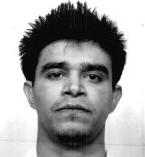
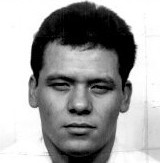
Ramon Montoya Facundo
Murderer Brian Kevin Rosenfeld
Murderer · USA · 1985
Brian Kevin Rosenfeld Brian Kevin Rosenfeld was sentenced to three concurrent l…
23 victims
Brian Kevin Rosenfeld
Murderer · USA · 1985
Brian Kevin Rosenfeld Brian Kevin Rosenfeld was sentenced to three concurrent l…
23 victims
 Marvin Gray
Murderer · USA · 1975
Marvin Gray was convicted killer who claimed responsibility for 23 slayings and…
23 victims
Marvin Gray
Murderer · USA · 1975
Marvin Gray was convicted killer who claimed responsibility for 23 slayings and…
23 victims
 Yahweh ben Yahweh
Murderer · USA · 1980
Yahweh ben Yahweh was born and legally named Hulon Mitchell Jr. (October 27, 19…
23 victims
Yahweh ben Yahweh
Murderer · USA · 1980
Yahweh ben Yahweh was born and legally named Hulon Mitchell Jr. (October 27, 19…
23 victims
 Russell Ellwood
Murderer · USA · 1991
Russell Ellwood was a former taxi driver. Authorities suspected him of killing…
20 victims
Russell Ellwood
Murderer · USA · 1991
Russell Ellwood was a former taxi driver. Authorities suspected him of killing…
20 victims
 William Howard Putman
Murderer · USA · 1980
July 9, 1980 — William Putman purchased a .38 caliber revolver at a Talladega,…
3 victims
William Howard Putman
Murderer · USA · 1980
July 9, 1980 — William Putman purchased a .38 caliber revolver at a Talladega,…
3 victims
 Genaro Ruiz Camacho
Murderer · USA · 1988
Name: Genaro Ruiz Camacho Also known as: Geno Camacho Alias in federal appellat…
6 victims
Genaro Ruiz Camacho
Murderer · USA · 1988
Name: Genaro Ruiz Camacho Also known as: Geno Camacho Alias in federal appellat…
6 victims
 Abdelkrim Belachheb
Mass murderer · USA · 1984
Abdelkrim Belachheb was a Moroccan national. Marcelle Ford, a 32-year-old woman…
6 victims
Abdelkrim Belachheb
Mass murderer · USA · 1984
Abdelkrim Belachheb was a Moroccan national. Marcelle Ford, a 32-year-old woman…
6 victims
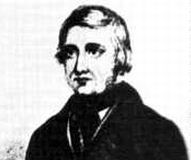 Frederick Manning
Murderer · United Kingdom · 1849
Frederick Manning was executed by hanging at Horsemonger Lane Gaol on November…
1 victim
Frederick Manning
Murderer · United Kingdom · 1849
Frederick Manning was executed by hanging at Horsemonger Lane Gaol on November…
1 victim
 Mahanand Naik
Serial killer · India · 1994
Mahanand Naik was a three-wheel rickshaw driver from Ponda in the Indian state…
18 victims
Mahanand Naik
Serial killer · India · 1994
Mahanand Naik was a three-wheel rickshaw driver from Ponda in the Indian state…
18 victims
- Gender
- male
- Country
- USA
- Location
- Dallas County, Texas, USA
- Date of birth
- 1945
- Age at first offence
- 38
- Characteristics
- to avoid arrest, police officer, shooting rampage
- Victim profile
- John R. Pasco, 27 (Dallas police officer)
- Method of murder
- Shooting
- Date(s) of murder
- January 16, 1983
- Years active
- 1983
- Date of arrest
- Same day
- Status
-
Executed
Executed by lethal injection in Texas on March 25, 1993
Case record: Ramon Montoya Facundo
Timeline
- Jan. 16, 1983 — Ramon Montoya shot and killed a Dallas police officer, Officer John R. Pasco, while Pasco tried to disarm him.
- Jan. 27, 1993 — Montoya was granted a stay by the Supreme Court on January 26, pending disposition of his petition of certiorari; on January 27 he had come within seven hours of being executed.
- Jan. 26, 1993 — Montoya’s execution scheduled for sunrise was stayed by the Supreme Court pending disposition of his petition of certiorari.
- Feb. 22, 1993 — The Supreme Court denied certiorari review.
- Feb. 23, 1993 — The trial court rescheduled Montoya’s execution for March 25, 1993.
- March 23, 1993 — Montoya’s federal district court habeas petition was filed.
- March 24, 1993 — The United States Court of Appeals for the Fifth Circuit denied a certificate of probable cause and denied a stay of execution.
- March 25, 1993 — Montoya was executed by lethal injection in Texas; a prison official confirmed he died at 12:18 a.m.
Background
Ramon Montoya, a 38-year-old Mexican citizen, was convicted of fatally shooting Dallas police officer John Pasco on Jan. 16, 1983. He had prior convictions for weapons possesion and burglary and was unemployed when he committed the crime. He was one of nine Mexicans on death row in Texas.
Montoya was scheduled to be executed after midnight on March 24, 1993, and he applied to the United States Court of Appeals for the Fifth Circuit for a certificate of probable cause to appeal, seeking leave to appeal in forma pauperis and a stay of execution. This was his second appearance in the Fifth Circuit; his earlier habeas appeal had been considered and denied in Montoya v. Collins, 955 F.2d 279 (5th Cir.1992), reh’g denied, 959 F.2d 969, cert. denied, --- U.S. ----, 113 S.Ct. 820, 121 L.Ed.2d 692 (1992).
The offence
Officer John R. Pasco noticed Montoya carrying a weapon down the street. When Pasco attempted to take the gun away, Montoya shot him in the head. Pasco died about six hours later at a hospital.
Montoya said the gun went off when he fell while trying to discard it and avoid arrest. Police records indicated that Montoya was trying to avoid his 12th arrest in eight years and the possibility of deportation to Mexico.
Investigation and arrest
Montoya was arrested about 45 minutes after the shooting just blocks down the street.
Trial
Montoya was convicted of fatally shooting Officer John Pasco, 27, on Jan. 16, 1983. He was described in the proceedings as arguing that the questioning by the Dallas Police Department violated his right to counsel under the Sixth Amendment and the prophylactic rule of Michigan v. Jackson.
Sentencing
After being convicted, Montoya was scheduled to be executed on Jan. 26, 1993. A reprieve was granted just seven hours before his proposed execution. The case later resulted in the execution date being set for March 25, 1993.
Appeals
Montoya applied for a certificate of probable cause to appeal and sought leave to appeal in forma pauperis and a stay of execution.
The Fifth Circuit panel denied CPC and denied a stay. The panel explained:
“Petitioner-Appellant Ramon Montoya, scheduled to be executed after midnight tonight, Wednesday, March 24, 1993, has applied to this court for a certificate of probable cause to appeal. Concurrently, he seeks leave to appeal in forma pauperis and a stay of execution.”
The court stated it lacked jurisdiction unless a certificate of probable cause was granted, and it set out the standard that Montoya must “make a substantial showing of the denial of a federal right.” It cited:
“Barefoot v. Estelle, 463 U.S. 880, 893, 103 S.Ct. 3383, 3394, 77 L.Ed.2d 1090 (1983).”
The Fifth Circuit described Montoya’s sixth amendment challenge in this second federal habeas petition, including the argument that:
“the state knowingly questioned the petitioner after he was represented by counsel in the absence of his counsel.”
The court addressed the procedural posture of the petition and discussed abuse of the writ and successive petition rules. It stated the petition must be viewed as an abuse of the writ or an impermissible successive petition and may not be considered on its merits. It concluded:
“For these reasons, Montoya has raised no issue on which we may grant habeas corpus relief, hence, he has raised no issue capable of debate among reasonable jurists.”
The Fifth Circuit made the following rulings:
“The motion to proceed in forma pauperis is GRANTED; motion for certificate of probable cause is accordingly DENIED; motion for stay of execution is DENIED.”
The Supreme Court had issued a stay on January 26, pending disposition of Montoya’s petition of certiorari; the Supreme Court denied certiorari review on February 22, 1993. The trial court rescheduled the execution for March 25, 1993 on February 23, 1993.
Outcome
Montoya was executed by lethal injection in Texas on March 25, 1993. A prison official confirmed he died at 12:18 a.m.
Montoya told his father, Paz Montoya, “May God help us.” His father replied, “May God help you, too.” Montoya then said, “I’m ready.”
Montoya died seven minutes after a lethal mix of drugs was injected, according to prison officials.
Aftermath
Because Montoya was not an American citizen, controversy surrounded the case. Texas Gov. Ann Richards rejected pleas from Mexican President Carlos Salinas de Gortari and the Vatican.
The Governor’s response occurred in the context of statements attributed to Mexican officials: Carlos Salinas said:
“Mexico considers that the death penalty is an excessive punishment that cannot be justified from the punitive point of view nor the prevention of crime,”
And Andres Rozental stated:
“The day a Mexican is executed, it will impact our society enormously,”
“Given NAFTA, given the closeness of the relationship at this point, it would be very difficult to convince Mexicans why this would be done.”
Montoya was described as the first Mexican executed in more than a half-century. His execution led to riots outside the prison walls and also in Mexico. Several American inmates in Mexico had to be taken to a safe place for fear they would be murdered by Mexican inmates.
Ken Carden, one of the deputy district attorneys who prosecuted Montoya, described Montoya as:
“one of the most dangerous individuals I have ever met. I believe there are some people who are wolves masquerading in human clothing.”
Kay Pasco, the mother of the victim, spoke about Montoya’s execution and said:
“At first, I couldn’t wait for Montoya to receive the death penalty,”
“I probably hated every inch of his body. But then over the years, I have no feeling at all for the man. After a while, he’s just a name.”
Outside the prison, more than two dozen protesters held candles and chanted in Spanish, “Justice!” and “Life, not death!”
Within minutes of Montoya’s death, Mexico’s Foreign Ministry issued a statement that it “profoundly laments” the execution and reiterated opposition to capital punishment as “cruel and inhumane.”
Ramon Montoya’s execution was identified as the 56th person executed in Texas and the 197th nationwide since 1976, when the Supreme Court reinstated capital punishment. His case drew pleas of mercy from Mexico and the Vatican.
Spotted an error, or have more information about this case?