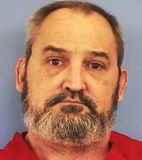
Bennie Joe Stevens
Mass murderer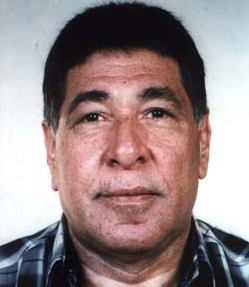 Gameel Al-Batouti
Mass murderer · USA · 1999
Gameel Al-Batouti (also rendered “Gamil ElBatouty” or “El Batouty” in U.S. offi…
216 victims
Gameel Al-Batouti
Mass murderer · USA · 1999
Gameel Al-Batouti (also rendered “Gamil ElBatouty” or “El Batouty” in U.S. offi…
216 victims
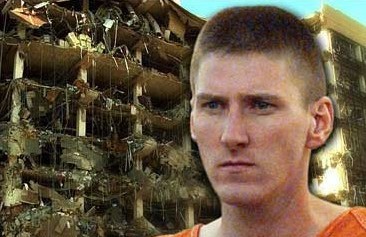 Timothy McVeigh
Mass murderer · USA · 1995
Timothy James McVeigh (April 23, 1968 – June 11, 2001) was a United States Army…
168 victims
Timothy McVeigh
Mass murderer · USA · 1995
Timothy James McVeigh (April 23, 1968 – June 11, 2001) was a United States Army…
168 victims
 Julio Gonzalez
Mass murderer · USA · 1990
Julio Gonzalez was sentenced to 174 twenty-five-year sentences (a total of 4,35…
87 victims
Julio Gonzalez
Mass murderer · USA · 1990
Julio Gonzalez was sentenced to 174 twenty-five-year sentences (a total of 4,35…
87 victims
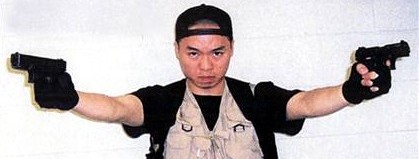 Seung-Hui Cho
Mass murderer · USA · 2007
Seung-Hui Cho was a mass murderer who shot and killed 32 people and wounded man…
32 victims
Seung-Hui Cho
Mass murderer · USA · 2007
Seung-Hui Cho was a mass murderer who shot and killed 32 people and wounded man…
32 victims
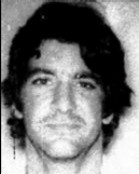 George Jo Hennard
Mass murderer · USA · 1991
George Jo Hennard carried out a mass killing at a Luby’s Cafeteria in Killeen,…
23 victims
George Jo Hennard
Mass murderer · USA · 1991
George Jo Hennard carried out a mass killing at a Luby’s Cafeteria in Killeen,…
23 victims
 Eric Harris
Mass murderer · USA · 1999
Eric Harris committed suicide by gunshot to the roof of the mouth on April 20,…
13 victims
Eric Harris
Mass murderer · USA · 1999
Eric Harris committed suicide by gunshot to the roof of the mouth on April 20,…
13 victims
 Susan Polk
Murderer · USA · 2002
Susan Polk (born Susan Mae Bolling in 1957) was an American woman convicted of…
1 victim
Susan Polk
Murderer · USA · 2002
Susan Polk (born Susan Mae Bolling in 1957) was an American woman convicted of…
1 victim
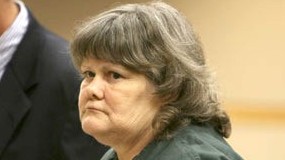 Barbara Burns
Murderer · USA · 2004
Name: Barbara Burns · Status: Plead guilty to manslaughter and receive 15 years…
1 victim
Barbara Burns
Murderer · USA · 2004
Name: Barbara Burns · Status: Plead guilty to manslaughter and receive 15 years…
1 victim
 Geneviève Lhermitte
Mass murderer · Belgium · 2007
Geneviève Lhermitte was a Belgian woman convicted for killing her five children…
5 victims
Geneviève Lhermitte
Mass murderer · Belgium · 2007
Geneviève Lhermitte was a Belgian woman convicted for killing her five children…
5 victims
 William Parente
Murderer · USA · 2009
Parente killed his family and died by suicide from cutting in the Sheraton hote…
3 victims
William Parente
Murderer · USA · 2009
Parente killed his family and died by suicide from cutting in the Sheraton hote…
3 victims
 Rhonda Orr
Murderer · USA · 2003
Name: Rhonda Orr Rhonda and James Orr married in 1999. James Orr required the u…
1 victim
Rhonda Orr
Murderer · USA · 2003
Name: Rhonda Orr Rhonda and James Orr married in 1999. James Orr required the u…
1 victim
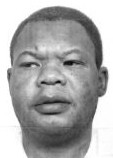 Kelsey Patterson
Homicide · USA · 1992
Kelsey Patterson was executed by lethal injection in Texas on May 18, 2004, aft…
2 victims
Kelsey Patterson
Homicide · USA · 1992
Kelsey Patterson was executed by lethal injection in Texas on May 18, 2004, aft…
2 victims
- Gender
- male
- Country
- USA
- Location
- Marion County, Mississippi, USA
- Date of birth
- May 12, 1958
- Age at first offence
- 40
- Characteristics
- revenge
- Victim profile
- H is former wife, Glenda Lee Reid, 38; her husband, Wesley Lee Reid, 38; the Reids’ 11-year-old son, Dylan; and Dylan’s friend, 10-year-old Heath Pounds
- Method of murder
- Shooting
- Date(s) of murder
- October 18, 1998
- Years active
- 1998
- Date of arrest
- Same day
- Status
-
Executed
Executed by lethal injection in Mississippi on May 10, 2011
Case information
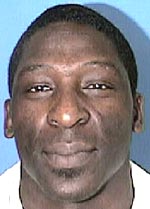
Defendant: Bennie Joe Stevens Name used in proceedings: Benny Joe Stevens (“Stevens”)
Status / sentence
Stevens was sentenced to death for the killings of Wesley Reed, Glenda Reed, Heath Pounds and Dylan Lee. The death sentence was executed in Mississippi by lethal injection.
Timeline
- October 18, 1998 — Four murders and an aggravated assault occurred at a trailer home in Marion County, Mississippi, involving Wesley Reed, Glenda Reed, Dylan Lee, and Dylan’s friend Heath Pounds, with an aggravated assault of Erica Stevens.
- January 12, 1999 — Stevens was indicted in Marion County on four counts of capital murder and one count of aggravated assault.
- March 31, 1999 — The trial court granted Stevens’s motion for a change of venue from Marion County to Madison County.
- November 29, 1999 — Jury selection began.
- December 3, 1999 — The jury returned guilty verdicts on all five counts.
- December 4, 1999 — The jury sentenced Stevens and the trial court imposed the death penalty on counts I-IV and sentenced him to twenty years on the aggravated assault conviction.
- December 14, 1999 — Stevens filed a motion for a new trial or in the alternative J.N.O.V.
- January 4, 2000 — The trial court denied the motion.
- January 14, 2000 — Stevens filed a notice of appeal to the Mississippi Supreme Court.
- April 6, 1999 — Stevens filed a Motion for Severance of the Multiple Count Indictment.
- December 4, 1999 — The trial court sentenced Stevens on the aggravated assault count to twenty years.
- May 10, 2011 — Stevens was executed by lethal injection in Mississippi; officials declared him dead at 6:22 p.m.
- May 11, 2011 — Additional reporting identified the date of the execution and provided execution details.
Background
Glenda and Benny Joe Stevens divorced when their daughter, Erica, was three years old. Glenda later married Wesley Reid, and they lived together with Erica and Glenda’s son, Dylan Lee.
Benny Joe Stevens married Lauren Stevens in 1993.
At trial, Lauren Stevens testified that Stevens was expecting a workers’ compensation settlement from a back injury claim and that he anticipated he would have to pay back child support from the settlement check. At the time of the murders, Stevens was unemployed and so was his wife.
At trial, Erica lived with her mother, Glenda Reid, with her stepfather, Wesley Reid, and her brother, Dylan, in a single-wide trailer home in Marion County located on Shiloh Firetower Road in Foxworth, Mississippi. There were bad feelings between Stevens and Glenda.
Stevens came back into Erica’s life when she was around twelve years old. Stevens received custody of his daughters, Erica and Angela, in September of 1996. In August of 1998, Glenda regained custody of Erica. Erica had wanted the custody arrangement changed and signed paperwork to change custody to her mother, Glenda.
Lauren testified that Stevens and Glenda had disputes over child support, and that the last time they had been in the same room was at court for the child support. Lauren testified that Glenda and Stevens were having domestic problems and that a set of papers regarding child support had been delivered to Stevens about a month before the murders.
Stevens and his brother, Ricky Stevens, had gone in Stevens’s beat up, white Ford pick-up truck to play pool and left Stevens’s home together around lunchtime on October 18, 1998.
Lauren received a telephone call from Ricky on a cell phone around three o’clock in the afternoon, indicating that Stevens had driven into a ditch and wrecked the truck. Stevens appeared drunk to Lauren when she arrived to assist them. The truck was pulled out of the ditch and Stevens went back home.
Lauren later entered Stevens’s bedroom and saw him with his gun belt laid out on the bed and putting shotgun shells in the gun belt, and remembered seeing his .357 handgun. Stevens then took his guns and left the home in his truck.
The offence
Victims and relationships
Stevens murdered Wesley Reed / Wesley Reid (38), Glenda Reed / Glenda Reid (38), Dylan Lee (11), and Dylan’s friend Heath Pounds (10 in some accounts; the trial analysis described Heath as twelve years old at death). Stevens also shot Erica Stevens / Ericka Stevens (her survival and later testimony were described), and the jury convicted him of aggravated assault related to Erica.
Events at the trailer on October 18, 1998
Erica, Heath, Wesley, Glenda and Dylan were at the trailer and had finished eating supper when Erica saw Stevens park his truck beside Wesley’s truck in the backyard. No one was with Stevens.
Erica saw Stevens get out of his truck. Wesley opened the sliding glass back door only wide enough to stick his head out and called, “Benny Joe, can I help you ?” Erica then heard a gunshot and Wesley screamed, “[S]hit, he shot me.” Erica tried to rescue her brother and his friend, but Stevens shot her in the back. Erica hid in the trailer’s master bath and watched helplessly as her mother was shot by Stevens.
Erica testified that she then heard Stevens say, “[B]itch, I told you that I’d kill you one of these days.” Erica climbed through a small window in the bathroom where she had been hiding and heard more gunshots while she was running away from the trailer. Erica went to a neighbor’s house for help, collapsed at the door, and told the neighbors that her father had shot her mother, stepfather, brother and friend.
When Stevens returned to his home, his wife asked, “[W]hat did you do?” Stevens replied, “I just killed a family.”
Injuries and death descriptions
Wesley Reed: Wesley was shot four times with two different types of wounds made by two different weapons. The four gunshot wounds included two from a shotgun and two from a large caliber handgun. The detailed description included a non-lethal shotgun wound to the front, right shoulder with shoulder fractures, a lethal shotgun wound to the left side of the face with massive skull fractures and extensive injuries to the brain, and near contact perforating gunshot wound to the chest, with a copper-jacketed, large caliber bullet recovered in his body at the lower left chest wall. Wesley died at age 38.
Glenda Reed: Glenda suffered a straight, gaping shotgun wound to the back of her head measuring 4 inches in diameter, described as fatal and inflicted from a distance of 4–5 feet. Glenda died at age 38.
Dylan Lee: Dylan also suffered a lethal shotgun wound to the back of the head. Some pellets exited through his left eye, left ear and nose, while most of the shot was in the cranial vault. Dylan died at age 11.
Heath Pounds: Heath had a non-lethal shotgun wound to the face and an autopsy described him in a defensive posture with his hand raised. He then received a fatal shotgun blast to the chest which caused extensive injury to his heart, aorta and right lung and severed his spine. Heath died at age 12 in the trial analysis, while other accounts described Heath as 10 years old.
Erica Stevens’s aggravated assault injuries and recovery
Erica’s injuries were described as permanent scars in her back and five unremovable pellets permanently lodged in her shoulder blade; she remained in the hospital for six days. Photographs were taken of Erica’s injuries, and pellets were embedded in her back.
Investigation
After Stevens was taken into custody, the investigation recovered the weapons Stevens used.
Singley located and retrieved a shotgun hanging approximately thirty feet up in a tree at a fork in the limb. The shotgun was identified as a Winchester 12 gauge double-aught shotgun.
A search warrant was obtained to search Stevens’s truck. Evidence described included:
- three spent shotgun shells
- two .357 magnum weapons
- one bandolier ammunition belt containing ten live shotgun shells
- a .22 magnum derringer
- a .357 magnum found in the truck door panel
The two projectiles removed from Wesley’s body matched the .357 magnum found in Stevens’s truck.
After his arrest, Stevens told authorities that there was a weapon hidden behind Rhoden’s law office. Authorities recovered a .45 caliber pistol and three fully loaded clips from behind the office.
Ballistic testing by Steve Byrd, forensic scientist for the Mississippi Crime Laboratory, showed that the spent shotgun shells found at the crime scene were discharged from the shotgun removed from Stevens’s property.
Forensic examination included:
- Joe Edward Andrews, Jr., an expert in forensic science with the Mississippi Crime Laboratory, examined athletic shoes worn by Stevens on October 18, 1998 and wooden steps removed from the back door of the Reed’s trailer.
- Andrews testified that the two impressions could be positively identified as being produced by Stevens’s right and left soles of the shoes he was wearing at the time of arrest.
When the sheriff’s department arrived at the crime scene, bodies and scene items were described:
- Wesley’s body in the kitchen
- Dylan’s body in the doorway between the hall and the bedroom with the top of his head blown off
- Glenda found in a kneeling position in the bedroom with a rear-entry head wound
- Heath’s body covered in blood behind the bed
- Shotgun shell casings were recovered at the scene
Arrest and custody
On one of Lauren’s jail visits with Stevens, she told Stevens she needed money and wanted to have trees cut off of the 56 or 57 acres they owned. Stevens’s workers compensation checks had been discontinued. Stevens told Lauren, “[N]o, don’t do that.” Stevens finally said, “[Y]ou’re gonna hang me.”
Stevens was taken into custody by police after Lauren testified about the two cars pulled up at Buck’s house, with Rhoden in one of the cars.
Trial
Court and venue
Stevens was convicted in the Circuit Court, Marion County, with Michael R. Eubanks, J., and the trial was moved from Marion County to Madison County.
Charges and verdicts
On January 12, 1999, Stevens was indicted in Marion County on four counts of capital murder and one count of aggravated assault.
The indictment charged that on October 18, 1998, Stevens murdered the four people while in the course of a burglary and felonious child abuse, and also charged aggravated assault of Erica Stevens.
The jury returned guilty verdicts on all five counts, and sentenced Stevens on December 4, 1999:
- death penalty on counts I-IV (relating to Wesley, Glenda, Heath and Dylan)
- twenty years in prison on the aggravated assault conviction (relating to Erica)
Severance motion
Stevens filed a Motion for Severance of the Multiple Count Indictment on April 6, 1999. At an omnibus hearing on April 6, 1999, the trial court overruled the motion.
Batson / jury selection
Stevens alleged that the state improperly used peremptory challenges against black prospective jurors under Batson v. Kentucky.
The record reflected that the state used six peremptory challenges, two of which were for venire panel members Ragsdale and Olive, and that ultimately eleven white jurors and one black juror were empaneled.
Juror Ragsdale:
- the trial court addressed the validity of excusing juror Rag[s]dale, and Stevens argued about the sleeping observation and residence issue.
- the Mississippi Supreme Court addressed Ragsdale’s residence as a race-neutral reason.
Juror Olive:
- Stevens alleged a Batson violation because Olive was the second black prospective juror struck.
- the prosecutor stated Olive was inattentive and did not complete the juror questionnaire.
- the trial court allowed the strike after rejecting one reason and with the understanding that the next black juror (Bouldin) would be accepted.
Spousal privilege / admission of statements
Stevens objected to calling Lauren as a witness, arguing spousal privilege.
The Mississippi Supreme Court addressed Lauren’s testimony describing two statements attributed to Stevens:
- “I just killed a family”
- “I hid the gun in the trees.”
The court held the testimony was admissible under exceptions related to crimes against children and that communications were not privileged when made in the presence of another person, including Stevens’s brother, Ricky.
Defense expert testimony on diminished capacity
Stevens argued error in excluding defense expert Dr. Sarah Deland during the guilt phase. The trial court did not allow Dr. Deland’s testimony during the guilt phase, but indicated it would be allowed during the sentencing phase as mitigation if sentencing occurred.
The proffered testimony included Dr. Deland’s opinion, within a reasonable degree of medical certainty, that Stevens lacked the ability to form specific intent. Dr. Deland cited factors including major depression, head injury (post-cussional syndrome), alcohol abuse, alcohol intoxication, xanax abuse, xanax intoxication, and learning disability, based on reviewed interviews, statements, school and investigative materials, pharmacy and medical records, neuropsychological testing, indictment, police reports, and autopsy materials.
Prosecutor’s sentencing-phase opening statement and objection
Stevens contended improper comment inflamed the jury during the sentencing phase opening statement.
The opening statement by the state (as set out in the record) included the following (verbatim, including bracketed context shown in the record as provided):
Ladies and gentlemen, you've seen me since Monday, and I've seen you. We've been together. I've tried to be honest with you from day one. I did the voir dire, if you remember, and I did not use the word “execution.” I did not used the word “state-sanctioned execution.” I did not use the phrase “put this man to death.” I tried to be as honest as I could. And I tried to be honest throughout this trial the same way. But I told you at one point in this trial, if we got there, I would ask you to kill Benny Joe Stevens. It's not time for levity. You're in a situation where you have a heavy load on your shoulders, and I know it. I've been at this for 30 years, and I've talked to jurors after trials like this. And they have wrenched, they have gut-wrenched, they have worried, they have sweated, and they've had ulcers. But they also had one thing in common. Regardless of their verdict, in their hearts they felt they did the right thing. And we're asking you to do the right thing. And that's your decision. I respected your decision, whatever it is, on the penalty phase. I only ask you to look at a few things. Now, there will be a closing argument in addition to an opening. The closing will be similar to the guilt, meaning Mr. Douglass and I will go first, they go in between, and we'll come back. And that perhaps will be more emotional than this. But I've learned after all these years that holding up a lot of photographs or bloody picture, screaming, yelling works sometimes with certain juries, but I don't think you're that type of jury, or you wouldn't be here. We've studied your background, we've talked to you. We think you're very thorough, very intelligent, and you don't respond to a lot of screaming, yelling and bloody pictures. But on the other hand, as you hear and listen to the evidence in this sentencing phase, I want you to keep one thing in mind. There's one word that has not been used in this courtroom in five days. And that's the word “slaughter.” Unprovoked slaughter of an entire family. There comes a time when certain acts-and I thought I'd seen a lot in my 30 years-there comes a time when an act is committed that is so- MR. SWEATT: Your Honor, we object to his commenting, using his experience to compare the case, severity of the case. MR. BURDICK: Forget all my other cases. There comes a time when an act is committed that is so devoid of humanity, so merciless, so pitiless, that a jury is given an option of death. And ya'll have that option. As you listen to the evidence, the State will first put on Erica Stevens, who you heard before. She will not describe the acts. That phase is over with. She will be put on for what is referred to as the victim impact on her life, on her family. What has this done to her? Then we will resubmit all the evidence that you've seen here back into the sentencing phase. Then the other side will put on whatever they want. I tell you this. When these acts that are committed that are devoid of humanity, I don't care about a person's childhood. We had two little boys in this massacre who will not have a childhood. I'm simply asking that when you hear the evidence that you keep all this in mind. Thank you. THE COURT: Mr. Sweatt. MR. SWEATT: May we approach the bench Your Honor? THE COURT: All right [BENCH CONFERENCE AS FOLLOWS] MR. SWEATT: We objected to what was like a comment on using his experience to say this is the worst case- MR. BURDICK: I didn't say that. MR. SWEATT: And the Court didn't rule. THE COURT: I thought he changed it. MR. BURDICK: I did. I said forget about all the experience. THE COURT: That's what I thought he said. MR. SWEATT: It's overruled. THE COURT: Yeah. [BENCH CONFERENCE CONCLUDED]
Stevens also argued there was no curative instruction. The record includes discussion of the objection being overruled/handled and that Stevens did not ask for a further instruction or mistrial.
Jury instruction on “especially heinous, atrocious or cruel”
The sentencing instruction number 6 given to the jury was:
The Court instructs the jury that in considering whether the capital offense was especially heinous, atrocious or cruel; heinous means extremely wicked or shockingly evil; atrocious means outrageously wicked and vile; and cruel means designed to inflict a high degree of pain with indifference to, or even enjoyment of the suffering of others. An especially heinous, atrocious or cruel capital offense is one accompanied by such additional acts as to set the crime apart from the norm of capital murders-the conscienceless or pitiless crime which is unnecessarily torturous to the victim. If you find from the evidence beyond a reasonable doubt that the defendant utilized a method of killing which caused serious mutilation, that there was dismemberment of the body prior to death, that the defendant inflicted physical or mental pain before death, that there was mental torture and aggravation before death, or that a lingering or torturous death was suffered by the victim, then you may find this aggravating circumstance exists.
Voir dire / limiting questioning
Stevens argued that the trial court erred by limiting his voir dire to rehabilitate jurors opposing the death penalty, addressing jurors Mary A. Williamson, Melville L. Cordua, and Jackie N. Niven.
Sentencing
Stevens received the death penalty on counts I-IV and twenty years in custody of the Mississippi Department of Corrections on the aggravated assault conviction. The death penalty was imposed after the jury found statutory aggravating circumstances and the Mississippi Supreme Court affirmed the death sentence.
Appeals
Direct appeal
Stevens appealed his conviction and death sentences, challenging:
- denial of severance for multiple counts
- proceeding under an indictment allegedly violating double jeopardy and “vagueness doctrine”
- state use of peremptory challenges under Batson
- husband-wife privilege
- exclusion of defense expert testimony during guilt phase
- constitutionality of the capital punishment scheme
- denial of motion to delay sentencing phase
- denial of motion for individual sequestered voir dire
- an improper comment by the prosecutor during sentencing
- sufficiency/weight of evidence
- limiting voir dire
- admission of prejudicial hearsay
- whether death penalty was excessive or disproportionate
The Mississippi Supreme Court affirmed the conviction and death sentence. The record includes that the judgment of the Marion County Circuit Court was affirmed, with:
- “CONVICTION OF FOUR COUNTS OF CAPITAL MURDER AND SENTENCE OF DEATH BY LETHAL INJECTION AFFIRMED.”
- “CONVICTION OF AGGRAVATED ASSAULT AND SENTENCE OF TWENTY (20) YEARS IN THE CUSTODY OF THE MISSISSIPPI DEPARTMENT OF CORRECTIONS AFFIRMED.”
Post-conviction relief (PCR)
Stevens filed an application for post-conviction relief. The Mississippi Supreme Court denied leave to seek post-conviction relief, addressing, among other issues:
- constitutionality of death penalty statutes
- diminished capacity evidence
- jury instructions and proportionality
- marital privilege
- felony child abuse as an aggravating circumstance
- double jeopardy
- cumulative error
- proportionality
- issues regarding aggravating circumstances allegedly not included in the indictment
Federal habeas corpus
Stevens sought federal habeas relief. The United States District Court denied the petition, and the Fifth Circuit affirmed the denial. The Fifth Circuit:
- affirmed denial of habeas relief on Stevens’s Batson claim
- denied Stevens’s request to expand the COA to include a due process claim related to the state post-conviction counsel process
Outcome
Stevens was executed by lethal injection in Mississippi on May 10, 2011. Officials at the state penitentiary at Parchman declared Benny Joe Stevens dead at 6:22 p.m.
Last statement
Stevens’s final words were provided in the case summary and reporting, including the following quoted statements:
Final Words: “I am sorry . . .Lord knows I am sorry. What I’ve taken from God and you, I can’t replace. I’m sorry." (Asking the witnesses to read their Bibles) "Don’t let me be a stumbling block to your salvation. I’m not worth it. That’s it.”
Additional reported statement during the execution included: “Forgive me … what I did was a terrible thing. There’s no forgiveness for what I did,”
Last meal
His last meal was described as:
- Four whole catfish (fried)
- 8 hushpuppies
- French fries
- coleslaw
- hickory smoked barbeque beef ribs (wet with sauce also on the side)
- hot peach cobbler
- ½ gallon of Blue Bell homemade vanilla ice cream
- two 20 oz. Cokes
- ketchup, salt and pepper
- whole red tomato (sliced)
Witness and communications
Among witnesses were Stevens’s father and brother who visited him earlier in the day. Stevens also wrote a letter to his daughter, Erica, who survived the attack and was among the witnesses with seven other members of the victims’ families.
Corrections Commissioner Chris Epps said Stevens expressed remorse but told corrections officials that he doesn’t remember the 1998 killings. Epps also stated: “The cause of justice has been championed.”
Statements by family members
Kathy Pounds, the mother of Heath Pounds, said she hoped the family could now remember the happy times with her son, stating: “For us today is not about Benny Joe. It is a bout Heath. We love you and miss you every day. Now you are finally free, so fly high Heath,”
The family of the Reids issued a statement that while the execution did not bring closure to their pain, it was a step in their healing process.
Other details
Age and execution setting details in reporting
Reporting described Stevens as 52 at the time of execution and mentioned he was dressed in a red prison jumpsuit and white sneakers and was wearing glasses.
Drugs used / lethal injection protocol change
Reporting stated that Stevens’s execution was the first in Mississippi using pentobarbital due to a nationwide shortage of a different drug it had used in the past, and that Mississippi intended to execute two other inmates later in May 2011, including Rodney Gray on May 17 and Robert Simon Jr.’s execution on May 24.
Prison meal and actions prior to execution
Reporting stated Stevens showered and took a sedative (Valium) before being led to the execution room, and that he had no infractions during his time behind bars, and that he had been behind bars for 11 years.
Defendant identification
A separate listing described Stevens as:
- “MDOC #K0655”
- “White Male”
- “DOB – 05/12/1958” (These identifiers were presented as part of the compiled material.)
Spotted an error, or have more information about this case?