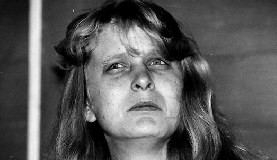
Gunn-Britt Ashfield
Murderer Kathleen Folbigg
Murderer · Australia · 1989
Kathleen Megan Folbigg (née Donovan) was an Australian child killer. She was co…
4 victims
Kathleen Folbigg
Murderer · Australia · 1989
Kathleen Megan Folbigg (née Donovan) was an Australian child killer. She was co…
4 victims
 Anu Singh
Murderer · Australia · 1997
Anu Singh (born 3 September 1972) was an Australian of Indian descent who kille…
1 victim
Anu Singh
Murderer · Australia · 1997
Anu Singh (born 3 September 1972) was an Australian of Indian descent who kille…
1 victim
 Brenda Hodge
Murderer · Australia · 1983
Brenda Hodge was born Dorothy Brenda White in Victoria in 1951 to Beryl Nanette…
1 victim
Brenda Hodge
Murderer · Australia · 1983
Brenda Hodge was born Dorothy Brenda White in Victoria in 1951 to Beryl Nanette…
1 victim
 Katherine Knight
Murderer · Australia · 2000
Katherine Mary Knight (born 24 October 1955) was the first Australian woman to…
1 victim
Katherine Knight
Murderer · Australia · 2000
Katherine Mary Knight (born 24 October 1955) was the first Australian woman to…
1 victim
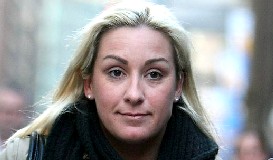 Keli Lane
Murderer · Australia · 1996
Keli Lane (born 21 March 1975) was a former Australian water polo player. She w…
1 victim
Keli Lane
Murderer · Australia · 1996
Keli Lane (born 21 March 1975) was a former Australian water polo player. She w…
1 victim
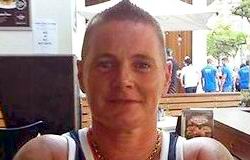 Storm Brooke
Murderer · Australia · 1990
Storm Brooke was an Australian prisoner who stabbed fellow prisoner Debbie Dick…
1 victim
Storm Brooke
Murderer · Australia · 1990
Storm Brooke was an Australian prisoner who stabbed fellow prisoner Debbie Dick…
1 victim
 John Charles Eichinger
Murderer · USA · 1999
John Charles Eichinger was convicted of murdering Jennifer Still, Heather Greav…
4 victims
John Charles Eichinger
Murderer · USA · 1999
John Charles Eichinger was convicted of murdering Jennifer Still, Heather Greav…
4 victims
 Justin Lee May
Spree killer · USA · 1978
Justin Lee May was executed by lethal injection in Texas on May 7, 1992. His la…
5 victims
Justin Lee May
Spree killer · USA · 1978
Justin Lee May was executed by lethal injection in Texas on May 7, 1992. His la…
5 victims
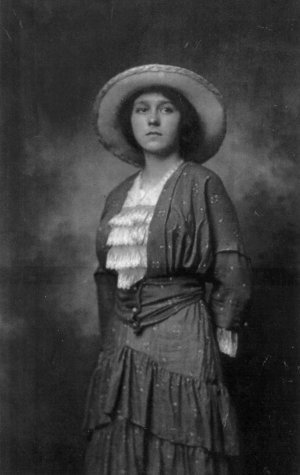 Inez Palmer
Murderer · USA · 1926
Inez Palmer — defendant; lived at the Stout farmhouse and pleaded guilty to a f…
2 victims
Inez Palmer
Murderer · USA · 1926
Inez Palmer — defendant; lived at the Stout farmhouse and pleaded guilty to a f…
2 victims
 Mary Farmer
Murderer · USA · 1908
Mary Farmer was convicted of murdering Sarah Brennan and was executed by electr…
1 victim
Mary Farmer
Murderer · USA · 1908
Mary Farmer was convicted of murdering Sarah Brennan and was executed by electr…
1 victim
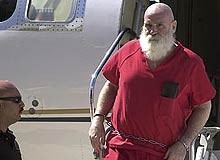 William Floyd Zamastil
Murderer · USA · 1978
William Floyd Zamastil pleaded guilty to two sentences of from 25-to-life. He w…
3 victims
William Floyd Zamastil
Murderer · USA · 1978
William Floyd Zamastil pleaded guilty to two sentences of from 25-to-life. He w…
3 victims
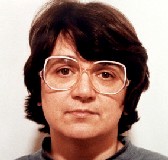 Rosemary West
Serial killer · United Kingdom · 1971
Rosemary Pauline “Rose” West (née Letts) Rosemary Letts was born in Barnstaple,…
10 victims
Rosemary West
Serial killer · United Kingdom · 1971
Rosemary Pauline “Rose” West (née Letts) Rosemary Letts was born in Barnstaple,…
10 victims
- Gender
- female
- Country
- Australia
- Location
- Nowra, New South Wales, Australia
- Date of birth
- 1 968
- Characteristics
- parricide
- Victim profile
- Her son John Ashfield, 6
- Method of murder
- Beating with a hammer and a phone book over 100 times
- Date(s) of murder
- August 5, 1993
- Years active
- 1993
- Date of arrest
- Next day
- Status
-
Released
Released on August 15, 2011
Case record: Gunn-Britt Ashfield (now known as Angelic Karstrom)
Background
Gunn-Britt Ashfield was the mother of six-year-old John Ashfield. In 2011 she was known as Angelic Karstrom. Ashfield changed her name after serving jail.
John Ashfield was in first grade at Nowra East public school when he died from massive head injuries inflicted by Ashfield and her then boyfriend, Austin Hughes. At the time of his death, Ashfield was described as 25, and in other accounts as 26.
John Ashfield’s sister was Melissa Ashfield, and he also had three brothers. The articles also referred to Annette Ashfield as the sister of Melissa’s late father Brian Ashfield, and to John’s uncle Andrew Ashfield.
Brian Ashfield was John’s natural father and was said to be wanted by police in relation to a separate matter. Brian was later dead.
Wendy Campbell was Brian’s fiancée at the time of John’s death. She wanted the case to receive media attention and said she had promised Brian that if authorities applied for parole she would stop it.
The NSW Department of Community Services (DoCS) previously had notifications about Ashfield’s home and family circumstances. Ashfield asked DoCS to take the children away from her, saying she “felt violent” towards them. Melissa was fostered into the care of DoCS after her mother went to prison, ran away at 11, bounced around foster homes, was briefly placed in a nunnery in Grafton, and became pregnant at 16 and lost the baby. Melissa was said to admit to “drinking alcohol, doing crazy stuff” to deal with anger and grief and to be in counselling while living with her boyfriend, Jason (33).
John’s death initially involved a claim that a group of juveniles assaulted him in a park, and later medical evidence was presented as inconsistent with such an account.
The offence
On August 4, 1993, Ashfield and Austin Allan Hughes beat John Ashfield in front of the other children over several hours. At one point, they took turns putting a telephone book on his head and hitting it with a hammer. In other accounts, they beat John with a hammer and a telephone book over 100 times over a period of several hours.
According to evidence presented to court in December 1993, Ashfield became enraged because she thought her son had touched his three-year-old sister inappropriately. Austin Allan Hughes agreed the boy would not be allowed to “get away with it”.
John was taken to Shoalhaven Hospital and died the next day. Other accounts described John as being admitted with critical head injuries to Westmead Hospital in Sydney, where he was brain-dead on arrival and placed on life-support. Medical staff switched that off at 6.45pm on Thursday and pronounced him dead. In a separate account, John was pronounced brain dead in hospital and died the next day.
The court heard that the boy had more than 100 bruises to the head and body, and that medical staff described bruises on his back, bottom, head, and face. A doctor later described the injuries as consistent with repeated, non-accidental beating, and said John had attempted to fend off an assault.
During the beating, John sobbed and apologized and Hughes mocked him. The articles included statements said to have been given by Hughes in a statement to police, and quoted his reported statements to police as part of the narrative.
The articles also stated that Ashfield and Hughes pleaded guilty to the 1993 bashing murder of John, with the other children forced to watch.
Investigation
Police and the court heard that Ashfield and Hughes concocted a story that their son had been assaulted by four juveniles in Nowra’s Lyrebird Park to mislead authorities. The police prosecutor said Hughes participated in a “horrific and systematic beating of the six-year-old boy over a period of more than two hours”.
The investigation included an electronic interview at Nowra Police Station in which Hughes gave a graphic account of Wednesday’s events. Police said they feared for Hughes’ safety if bail was granted, and no bail application was made.
Police revealed that a warrant had been issued for Brian Ashfield’s arrest when they were looking for John Ashfield’s father to inform him officially of his son’s death. Police said Brian was wanted by police in relation to a separate matter.
DoCS said medical examinations took place regarding injuries doctors found on John’s body for the other four children.
Arrest
Ashfield appeared briefly in Parramatta Local Court shaking and sobbing when she was charged with her son’s murder. She was described as dressed in blue jeans, a green parka, barefoot, with her long hair covering her face. Her solicitor did not enter a plea nor apply for bail, and she was remanded in custody to appear at Nowra Local Court on Monday.
In Nowra Local Court, Hughes appeared under tight security and was also charged with murdering John Ashfield. He was remanded in custody to reappear on Monday.
Trial
Ashfield and Hughes pleaded guilty to the 1993 bashing murder of John Ashfield. Their guilty plea was referenced in connection with proceedings that resulted in sentencing.
Sentencing
Both Ashfield and Hughes were sentenced to 21 years in jail. Their sentences were reduced on appeal to 19 years, with a minimum of 14 years.
Appeals
Ashfield had her sentences reduced on appeal to 19 years, with a minimum of 14 years.
Parole determination and release
Ashfield served 18 years of her sentence and applied for parole. The Parole Authority then indicated it would approve her application. The Parole Board announced in June that Ashfield was to be freed one year ahead of her release date.
A parole hearing by the State Parole Authority at Parramatta in western Sydney took place. The chair of the authority was Ian Pike.
The parole hearing included emotional witness impact statements made by Melissa Ashfield and by Annette Ashfield. Melissa made statements at the hearing while her mother was connected via video link from jail.
During the parole hearing, Melissa yelled at her mother:
- “She can rot in hell.”
- “The day I’ll jump for you is the day you drop dead,”
- “And you can go to hell.”
Annette Ashfield said:
- “I want her to stay in jail and die in jail,”
- “I want you to go back to your little cell and hang yourself, or put a bullet in your head.”
Before he could finish reading the decision, Annette stood up and shouted to Ashfield:
- “See you six feet under”,
Seconds later, Melissa stood up, held a photo of John to one of the television monitors, and said:
- “Have a look at what you did you f***ing mutt.”
Counsel for the state of NSW, David Kell, opposed her custodial release and said her crime was “heinous” and her ability to lawfully live in the community had not been tested.
In delivering the authority’s determination, Ian Pike said:
“It remains particularly concerned that this is the last opportunity for parole, and it is clearly not in the interest of the public that she end her sentence without the benefit of a period of parole supervision,” Mr Pike said.
“The authority is of the view parole should be granted.”
Ashfield was granted parole on Friday July 29, 2011, and her release followed thereafter. The articles stated she was granted parole on the condition she didn’t visit his grave.
Ashfield wept during the hearing.
After release, she walked out of the Windsor John Maroney prison complex and was escorted by police to a waiting vehicle. She was dressed in black boots, black pants, and a black jacket over a white shirt, and she ignored the media and refused to comment. Her belongings consisted of a blue garbage bag. Family members did not arrive to greet her after 18 years.
A corrective services spokeswoman said she would be heavily monitored over the next year. An anklet was to be calibrated.
Ashfield was taken to a secret corrective services-approved residential facility, where she would live for the next 12 months. She was escorted by two probation and parole officers.
The articles described Ashfield’s parole conditions as including electronic monitoring, drug and alcohol testing, curfews, and ongoing counselling. She also was banned from living or visiting the Illawarra and Hunter regions where her family lived, and she may not be in the company of anyone under the age of 16. At the family’s request, she was prohibited from visiting John’s grave.
The articles stated she would have her anklet calibrated before she settled into her new place.
Other details
John Ashfield’s funeral occurred on the day mentioned in the reporting, and Brian Ashfield wailed over the white coffin.
Brian Ashfield had warned the NSW Department of Community Services that his wife was violent and intended to hurt the children, and it was stated that DoCS had about 35 notifications that all was not well at Ashfield’s home.
The articles described near-riot scenes outside the Nowra court during the appearance of Hughes, with community outrage and protests. One protester was arrested as police struggled to contain an angry crowd of about 150 people who hurled abuse and tried to get to Hughes as he was taken to and from the court in a paddy-wagon.
Local residents waving placards and shouting crowded the footpath and spilled on to the road outside the court. It was also stated that people had gathered from early morning outside the court to catch sight of Hughes, and less than 24 hours earlier many had telephoned the police station offering support and information after Hughes and Ashfield went to the media to appeal for help to catch the alleged killers.
A local resident, Kevin Talbot, said:
- “We all feel used and cheated,”
- “First we were told one thing, and now another.”
DoCS said John and four other children had come to the attention of social workers before John was brought unconscious to hospital. David Sherlock, general manager of the department’s southern division, said the children had since been medically examined because of the injuries doctors found on John’s body and that details could not be revealed because of confidentiality issues. He also said a care application was submitted to the Children’s Court regarding further care of the other four children.
The head of the children’s intensive care unit at Westmead Hospital, Dr Barry Wilkins, said John’s injuries were consistent with being punched and kicked, and described bruises on his back, bottom, head, and face. Dr Wilkins also said the injuries suggested repeated, non-accidental beating and that John’s swollen and bruised small hands suggested he had attempted to fend off an assault, and that John had suffered a very serious brain injury.
The Mayor of Nowra, Max Atkins, said the town was a favored spot for low-income families because of the relative cheapness of beach-side rental accommodation, and said there was a sense of disbelief.
An account included that Ashfield had 10 conditions imposed on her parole. Another account said she would be banned from living or visiting the Illawarra and Hunter regions and from being in the company of anyone under the age of 16, and also that she was prohibited from visiting John’s grave at the family’s request.
John’s uncle, Andrew Ashfield, said the law banning publication of John’s story had “protected the people who killed him, and the social workers who let it happen”. He said:
- “DoCS knew that she was violent, and knew that she was troubled,”
- “But they didn’t take the kids until after she killed one of them.”
Wendy Campbell said:
- “promised Brian, if they ever apply for parole, I will be there, and I will stop it”.
The reporting also described a legislative change in 2004 that made it an offence for media outlets to publish the name of a dead child who had been the victim of a crime, no matter the circumstances. It stated that the Weekend Australian could not publish the story and that News Limited and groups including the NSW Homicide Victims Support Group and the Victims of Crime Assistance League lobbied against the law.
The report said Melissa did not want her mother released and said:
- “I have not seen my mother since I was 11,”
- “The last time I saw her (in prison) I pulled her hair and slapped her.”
- “I have flashbacks to what happened.”
- “She tried to blame me.”
- “She tried to get us to help her bash John.”
- “She tried to say that John touched me. He never touched me.”
Melissa also said:
- “She tried to blame me.”
- He never touched me.”
Melissa described remembering the day John was beaten:
- “clear as anything”.
The report included narrative quotes attributed to Hughes during the story: one included him mocking John with the statement:
- “You scream like a little girl.” It also included statements said to have been given by Hughes in a statement to police, including:
- “He started crying and carrying on,”
- “He was crying: 'Get it off, get it off, I'm not a girl'.” It also included:
- “Get it off, get it off, I'm not a girl”.
It further included the statement that John said:
- “I'm really sorry, don't do this to me, I'm sore, I'm sorry.”
It also included that John was described as saying:
The report described Hughes as saying:
The report also included that the boy’s father Brian Ashfield had been advised by DoCS notices and that DoCS had about 35 notifications.
The reporting stated Ashfield applied for parole next Thursday and that Hughes also had applied for parole, with his case to be heard next Thursday.
Spotted an error, or have more information about this case?