
Jeong Nan-Kyu
Serial killer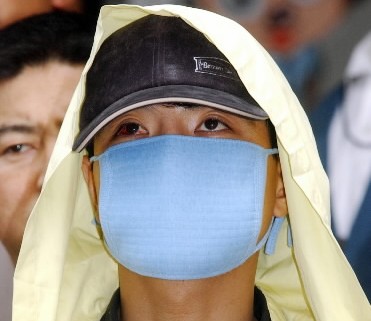 Yoo Young-Chul
Serial killer · South Korea · 2003
Yoo Young-Chul (Korean: 유영철; born 1970) was a South Korean serial killer and se…
20 victims
Yoo Young-Chul
Serial killer · South Korea · 2003
Yoo Young-Chul (Korean: 유영철; born 1970) was a South Korean serial killer and se…
20 victims
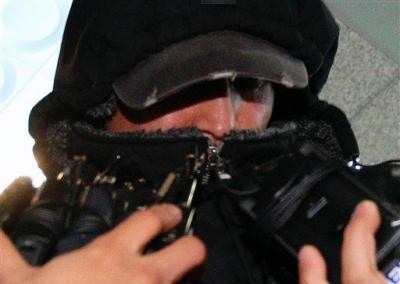 Kang Ho-sun
Serial killer · South Korea · 2006
Kang Ho-sun was a Korean serial killer who was sentenced to death on April 22,…
10 victims
Kang Ho-sun
Serial killer · South Korea · 2006
Kang Ho-sun was a Korean serial killer who was sentenced to death on April 22,…
10 victims
 Edson Isidoro Guimaraes
Serial killer · Brazil · 1999
Edson Isidoro Guimarães was a Brazilian nursing assistant and nurse’s aide at S…
131 victims
Edson Isidoro Guimaraes
Serial killer · Brazil · 1999
Edson Isidoro Guimarães was a Brazilian nursing assistant and nurse’s aide at S…
131 victims
 Javed Iqbal
Serial killer · Pakistan · 1998
Javed Iqbal (born 1956 in Lahore, Punjab, Pakistan; died October 8, 2001, in La…
100 victims
Javed Iqbal
Serial killer · Pakistan · 1998
Javed Iqbal (born 1956 in Lahore, Punjab, Pakistan; died October 8, 2001, in La…
100 victims
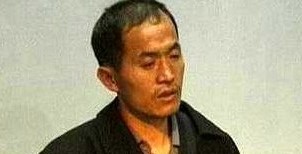 Yang Xinhai
Serial killer · China · 2000
Yang Xinhai (simplified Chinese: 杨新海; pinyin: Yáng Xīnhǎi; 17 July 1968–14 Febr…
67 victims
Yang Xinhai
Serial killer · China · 2000
Yang Xinhai (simplified Chinese: 杨新海; pinyin: Yáng Xīnhǎi; 17 July 1968–14 Febr…
67 victims
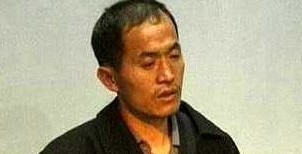 Yang Xinhai
Serial killer · China · 2000
Yang Xinhai (simplified Chinese: 杨新海; pinyin: Yáng Xīnhǎi; 17 July 1968–14 Febr…
67 victims
Yang Xinhai
Serial killer · China · 2000
Yang Xinhai (simplified Chinese: 杨新海; pinyin: Yáng Xīnhǎi; 17 July 1968–14 Febr…
67 victims
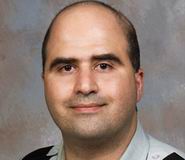 Nidal Hasan
Mass murderer · USA · 2009
Nidal Malik Hasan (born September 8, 1970) was a former United States Army Medi…
13 victims
Nidal Hasan
Mass murderer · USA · 2009
Nidal Malik Hasan (born September 8, 1970) was a former United States Army Medi…
13 victims
 Mohammed Merah
Spree killer · France · 2012
Mohammed Merah was a French-Algerian Islamist terrorist who had previously been…
7 victims
Mohammed Merah
Spree killer · France · 2012
Mohammed Merah was a French-Algerian Islamist terrorist who had previously been…
7 victims
 Edward Rulloff
Murderer · USA · 1845
Edward Rulloff was executed by hanging on May 18, 1871. His execution followed…
3 victims
Edward Rulloff
Murderer · USA · 1845
Edward Rulloff was executed by hanging on May 18, 1871. His execution followed…
3 victims
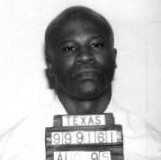 Desmond Jennings
Serial killer · USA · 1993
Desmond Jennings declined to make a last statement. Texas Attorney General John…
20 victims
Desmond Jennings
Serial killer · USA · 1993
Desmond Jennings declined to make a last statement. Texas Attorney General John…
20 victims
 Kenneth Eugene Bruce
Murderer · USA · 1990
Kenneth Eugene Bruce was convicted of capital murder in Texas and was executed…
1 victim
Kenneth Eugene Bruce
Murderer · USA · 1990
Kenneth Eugene Bruce was convicted of capital murder in Texas and was executed…
1 victim
 Alec Kreider
Homicide · USA · 2007
Alec Devon Kreider (born February 4, 1991) was a Lancaster County, Pennsylvania…
3 victims
Alec Kreider
Homicide · USA · 2007
Alec Devon Kreider (born February 4, 1991) was a Lancaster County, Pennsylvania…
3 victims
- Gender
- male
- Country
- South Korea
- Location
- Seoul, South Korea
- Date of birth
- 1968
- Age at first offence
- 36
- Characteristics
- rape, robbery, arson
- Victim profile
- Women
- Method of murder
- Beating with blunt objects
- Date(s) of murder
- 2004 - 2006
- Years active
- 2004–2006
- Date of arrest
- April 24, 2006
- Status
-
Died in custody
Sentenced to death on September 20, 2006; committed suicide by hanging himself with a trash bag in his cell on November 22, 2009
Case record: Jeong Nan-Kyu
Timeline
- January 2004 — Jeong Nam-gyu began a period of killings and assaults that would run until April 2006.
- 1995 — Jeong Nam-gyu served a prison stint for theft.
- February 2004 — Jeong Nam-gyu broke into houses to commit murders, after breaking into their houses since February 2004.
- March 27, 2004 (around 4:30 a.m.) — Jeong Nam-gyu broke into the second-floor house of Kim, 55, in Gwanak-gu, where Kim’s three daughters were sleeping; he hit the girls with a blunt instrument, severely wounding one and killing the other two, set the blanket on fire, and later the injured girl died a few days later.
- April 18 (last year relative to April 25, 2006) — Jeong Nam-gyu broke into a house in Geumcheon-gu by the window and struck Hwang, 47, and her 13-year-old son with a blunt weapon, stealing money and other goods.
- July 2005 to August 2005 (trial period references without exact dates) — In his first trial in July, Jeong Nam-gyu said, “I was just unlucky to get arrested. If I hadn’t been caught, I would have continued killing people.”
- Aug. 31 (year stated as referenced by Sep. 21, 2006) — Prosecutors demanded the death penalty on Aug. 31; Jeong Nam-gyu said, “I’m not sure I feel sorry for the victims. I felt proud of killing such a large number of people.” The report also says he reportedly said he is afraid to die.
- Thursday (relative to Sep. 21, 2006) — The Seoul Southern District Court condemned Jeong Nam-gyu to death.
- September 20, 2006 — Jeong Nam-gyu was sentenced to death.
- April 26, 2006 — Police arrested a serial killer who hit at least five random victims over the head with a blunt object and burned their bodies to erase evidence after robbing them of no more than a few thousand won.
- April 27, 2006 — Police said on Wednesday that they discovered other crimes Jeong Nam-gyu committed besides the ten assaults, five of them deadly, that he confessed to on Tuesday; the report says police said he felt a sense of exhilaration and watched the fires he set.
- April 2006 — The period of killings and assaults concluded in April 2006.
- April 24, 2006 — Jeong Nam-gyu returned to Yeongdeungpo police station for a re-enactment of one of his crimes.
- November 22, 2009 — Jeong Nam-gyu committed suicide by hanging himself with a trash bag in his cell; he was rushed to hospital and died Sunday morning. He did not leave a note, but officials found a memo in his private notebook.
- December 1997 — The last execution before the period described as not conducting an execution in 12 years was carried out in December 1997, when 23 people were put to death.
- 2004 to 2008 — From 2004 to 2008, 836 convicts were found to have brought in prohibited objects such as cash, cellular phones and cigarettes.
- Since 2004 (up to report timeframe) — The Justice Ministry said 82 convicted criminals had committed suicide in prison since 2004.
- 2006 — The Legal Research and Training Institute said that more than 30 prisoners out of 100,000 commit suicide in Korea, according to data from 2006.
Background
Jeong Nam-gyu was 40 at the time of his death and had been a serial killer imprisoned while awaiting execution. He died after hanging himself in his cell at the Seoul Detention House in Uiwang, Gyeonggi Province, south of Seoul.
The case described Jeong as targeting residential areas where closed-circuit televisions were installed in places where the wealthy live, while police investigation described him as motivated by “blind hatred of society,” particularly toward the wealthy, and as having targeted anyone including disabled people.
Police said Jeong suffered from a sense of isolation and victimization since a stint in prison for theft in 1995. He committed a special robbery in 1989, a year after graduating from high school, and was sentenced to two and a half years in jail with a stay of execution for four years.
After release, he could not find a job and had been living in poverty with his mother and siblings. He chose Seoul to commit the crimes rather than Incheon where he lived, and avoided the Gangnam area where there were many surveillance cameras. The police stated it was possible he was also liable for the murder cases in Incheon and other regions, and they were jointly conducting investigations with the Gyeonggi Provincial Police Agency.
He was one of nearly 60 condemned criminals in local correctional facilities. South Korea was described as having executed a total of 920 people since its foundation in 1948, and the last execution was described as December 1997 when 23 people were put to death. Amnesty International was described as listing Korea as one of the “death penalty-free states” in 2007 as it had not executed anyone for 10 years.
The offence
Jeong Nam-gyu was sentenced to death for the murder of 13 people, including two minors, and for inflicting serious injuries upon them while sexually assaulting them, during a period from January 2004 to April 2006.
In the criminal conduct described by police, he committed at least ten assaults, five of them deadly, and was said to have killed 13 people and seriously injured 20 in 24 assaults between January 2004 and April 2006.
The reports described a pattern of breaking into homes to steal money and valuables and using blunt objects to attack victims. Police said he burned bodies to erase evidence and tried to kill every witness and burn clothes or blankets at the scenes of the crime. He was also described as having used knives in seven cases in 2004 and blunt objects in four cases in 2005 and two cases in 2006.
During police questioning, Jeong said that he had targeted the humble residential areas because closed-circuit televisions were installed in places where the wealthy live.
One incident described involved Bongchon-dong, Seoul: in March, Jeong Nam-gyu broke into a house where he hit the owner’s three daughters with blunt objects, killing two of them. The injured girl died a few days later after being severely wounded.
Another incident described involved Geumcheon-gu: on April 18 last year relative to April 25, 2006, he broke into a house by the window and struck Hwang, 47, and her 13-year-old son with a blunt weapon, stealing money and other goods.
The reports also described an incident in Bongcheon-dong community center for the disabled in Bongcheon-dong, where he severely injured two mentally-ill women, and an attack in Yeongdeungpo-gu where he was caught by a house owner, Kim, the 26-year-old.
Police said Jeong used different weapons to make it difficult for police to track him down. Police also investigated whether he raped his victims after he confessed to killing women who resisted his attempts to rape them.
Police said Jeong watched crime thrillers such as “Memories of Murder” and “The Silence of the Lambs”, read several books on psychology, science and the human body, and ran 10 km every day to build up his physical strength. Police said he made thorough preparations for his crimes.
He even scrapped newspaper articles reporting his killings to commit a “perfect crime.” Police stated Jeong told the police that he wanted to kill every rich man because he was angry with his inability to get a job and get married, while the victims were said to have been all women and the disabled of ordinary background.
Investigation and arrest
Yeongdeungpo police said they discovered other crimes Jeong Nam-gyu committed besides the ten assaults, five of them deadly, he confessed to on Tuesday. Police discovered other crimes after he confessed to being responsible for three serial killings in 2004.
On April 25, 2006, a suspect in the recent serial murder cases was caught. The report said the suspect Chung, 37, was thought to have been involved in eight attacks, wounding eight and killing five including three sisters found dead March 27 in Bongcheon-dong, Seoul. It said Chung confessed to being responsible for the three serial killings that happened in the southwestern part of Seoul in 2004, and police investigated the case to confirm the offense.
The Seoul Yeongdeungpo police station, which arrested Chung for murder, likened him to the murderer Yoo Young-chul for brutally killing randomly selected people out of discontent with his own life.
Police said Chung confessed to murdering females mostly living alone in the southwestern part of Seoul, including Geumcheon-gu, Gwanak-gu, Dongjak-gu and Yeongdeungpo-gu, after breaking into their houses since February 2004.
Police said that on March 27 at around 4:30 a.m., Jeong broke into the second-floor house of Kim, 55, in Gwanak-gu where Kim’s three daughters were sleeping. Police said he hit the girls with a blunt instrument, severely wounding one and killing the other two, set the blanket on fire, ran away, and the injured girl died a few days later.
Police said on April 18 last year, he broke into a house in Geumcheon-gu by the window and struck Hwang, 47, and her 13-year-old son with a blunt weapon, stealing money and other goods.
Police said on October 9, he entered a community center for the disabled in Bongcheon-dong and severely injured two mentally-ill women.
Police said he entered another house in Yeongdeungpo-gu last Saturday at around 4:50 a.m. and was caught by the 26-year-old house owner, Kim. Police said they tracked Jeong’s transit card to find out his routes and got a confession that he used subway line No. 2 when moving to commit murders.
Police described Jeong as being careful not to leave traces, trying to kill every witness and burn clothes or blankets at the scenes of the crime. Police said Jeong scrapped newspaper articles reporting his killings to commit a “perfect crime.”
On April 24, 2006, the report described Jeong Nam-gyu returning to Yeongdeungpo police station after a re-enactment of one of his crimes and an on-the-spot inspection of the scene of a murder in Seoul.
Trial and sentencing
The Seoul Southern District Court condemned Jeong Nam-gyu to death.
The bench said capital punishment was inevitable since Jeong showed no remorse and was likely to kill again if he returns to society. When asked for any last comment, Jeong said:
“My life has been twisted in a strange way. This tragedy would not have happened if the government and society had helped me.”
In his first trial in July, Jeong said:
“I was just unlucky to get arrested. If I hadn’t been caught, I would have continued killing people.”
As prosecutors demanded the death penalty on Aug. 31, Jeong said:
“I’m not sure I feel sorry for the victims. I felt proud of killing such a large number of people.”
The report also said he reportedly said he is afraid to die.
The report stated Jeong Nam-gyu was convicted of killing 13 people and seriously injuring 20 in 24 assaults between January 2004 and April 2006.
It also stated that Jeong was sentenced to death for the murder of 13 people, including two minors, and for inflicting serious injuries while sexually assaulting them, during a period from January 2004 to April 2006. It said he was convicted in 2007 and sentenced to death.
Appeals
No appeal information was included beyond the reported discussion about capital punishment being a social issue and uncertainties regarding his execution.
Outcome
Jeong Nam-gyu died on November 22, 2009 after committing suicide in his cell at the Seoul Detention House in Uiwang, Gyeonggi Province, south of Seoul.
According to the Ministry of Justice, Jeong hung himself with a noose made from a plastic bag. When he was discovered by a guard, he was rushed to hospital and died Sunday morning.
The memo stated:
“The government is not considering abolishing capital punishment. Life is like a cloud, coming and going transiently.”
Doctors concluded that he died from brain damage caused by hypoxia, but the ministry still requested an autopsy by the National Institute of Scientific Investigation to confirm the cause of death.
The report described that Jeong might have been aware that the death penalty was becoming a social issue and that uncertainties regarding his execution may have driven him to take his own life. It also said his suicide stirred up criticism over poor management of death-row inmates, with plastic bags distributed in every cell, his cell not equipped with CCTV, and the prison not being able to determine when he hung himself exactly.
It also included information that 82 convicted criminals had committed suicide in prison since 2004 and that most suicides took place in isolated cells. It further stated that one third of the criminals had been convicted of murder and that the Legal Research and Training Institute said that more than 30 prisoners out of 100,000 commit suicide in Korea, based on 2006 data.
Aftermath
The reports described ongoing concern about prison suicide management, including claims that lax security had been blamed for allowing inmates to sneak in banned items. From 2004 to 2008, 836 convicts were found to have brought in prohibited objects such as cash, cellular phones and cigarettes.
Other details
Jeong was described with different ages in separate parts of the material, including 40 and 37. The material also referred to him as serial killer Chung Nam-gyu in some parts.
Police described investigators investigating whether he raped his victims after he confessed to killing women who resisted his attempts to rape them.
The report included the following verbatim quoted items:
- “The government is not considering abolishing capital punishment. Life is like a cloud, coming and going transiently.”
- “My life has been twisted in a strange way. This tragedy would not have happened if the government and society had helped me.”
- “I was just unlucky to get arrested.
- “I’m not sure I feel sorry for the victims. I felt proud of killing such a large number of people.”
- “Memories of Murder”
- “The Silence of the Lambs”
- “blind hatred of society”
- “perfect crime.”
Spotted an error, or have more information about this case?