
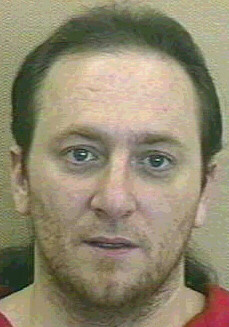
Jerry White
Murderer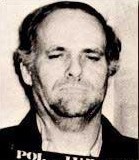 Ervil LeBaron
Murderer · USA · 1972
Ervil Morrell LeBaron (1925 to August 16, 1981) was the leader of a polygamous…
35 victims
Ervil LeBaron
Murderer · USA · 1972
Ervil Morrell LeBaron (1925 to August 16, 1981) was the leader of a polygamous…
35 victims
 Brian Kevin Rosenfeld
Murderer · USA · 1985
Brian Kevin Rosenfeld Brian Kevin Rosenfeld was sentenced to three concurrent l…
23 victims
Brian Kevin Rosenfeld
Murderer · USA · 1985
Brian Kevin Rosenfeld Brian Kevin Rosenfeld was sentenced to three concurrent l…
23 victims
 Marvin Gray
Murderer · USA · 1975
Marvin Gray was convicted killer who claimed responsibility for 23 slayings and…
23 victims
Marvin Gray
Murderer · USA · 1975
Marvin Gray was convicted killer who claimed responsibility for 23 slayings and…
23 victims
 Yahweh ben Yahweh
Murderer · USA · 1980
Yahweh ben Yahweh was born and legally named Hulon Mitchell Jr. (October 27, 19…
23 victims
Yahweh ben Yahweh
Murderer · USA · 1980
Yahweh ben Yahweh was born and legally named Hulon Mitchell Jr. (October 27, 19…
23 victims
 Russell Ellwood
Murderer · USA · 1991
Russell Ellwood was a former taxi driver. Authorities suspected him of killing…
20 victims
Russell Ellwood
Murderer · USA · 1991
Russell Ellwood was a former taxi driver. Authorities suspected him of killing…
20 victims
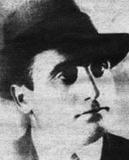 Vlado Chernozemski
Murderer - Assassin · Bulgaria / France · 1924
Vlado Chernozemski — Bulgarian revolutionary and member of the Internal Macedon…
4 victims
Vlado Chernozemski
Murderer - Assassin · Bulgaria / France · 1924
Vlado Chernozemski — Bulgarian revolutionary and member of the Internal Macedon…
4 victims
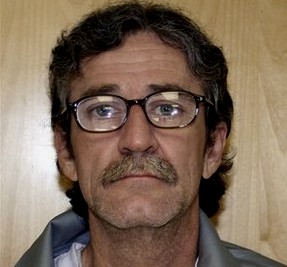 Dennis Skillicorn
Murderer · USA / Mexico · 1979
Dennis Skillicorn was sentenced to death for his role in the murder of Richard…
6 victims
Dennis Skillicorn
Murderer · USA / Mexico · 1979
Dennis Skillicorn was sentenced to death for his role in the murder of Richard…
6 victims
 Michael Alig
Murderer · USA · 1996
Michael Alig was the offender. · “Angel” Melendez was the victim. Michael Alig…
1 victim
Michael Alig
Murderer · USA · 1996
Michael Alig was the offender. · “Angel” Melendez was the victim. Michael Alig…
1 victim
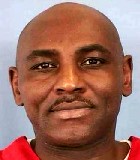 Ricky Chase
Murderer · USA · 1989
Ricky Chase was convicted in February 1990 of capital murder for the robbery an…
1 victim
Ricky Chase
Murderer · USA · 1989
Ricky Chase was convicted in February 1990 of capital murder for the robbery an…
1 victim
 Baruch Goldstein
Mass murderer · Palestine · 1994
Baruch Kappel Goldstein (Hebrew: ברוך גולדשטיין ; December 9, 1956 – February…
29 victims
Baruch Goldstein
Mass murderer · Palestine · 1994
Baruch Kappel Goldstein (Hebrew: ברוך גולדשטיין ; December 9, 1956 – February…
29 victims
- Gender
- male
- Country
- USA
- Location
- Orange County, Florida, USA
- Date of birth
- February 12, 1948
- Age at first offence
- 33
- Characteristics
- robbery, torture
- Victim profile
- James Melson (grocery store customer)
- Method of murder
- Shooting
- Date(s) of murder
- March 8, 1981
- Years active
- 1981
- Date of arrest
- —
- Status
-
Executed
Executed by electrocution in Florida on December 4, 1995
Parties and docket information
Jerry White was the appellant, petitioner, and defendant in multiple proceedings involving the State of Florida and Harry K. Singletary, Jr., Secretary, Department of Corrections.
Florida Supreme Court briefs and opinions
- Florida Supreme Court Docket #71679 listed Jerry White, Appellant, vs. State of Florida, Appellee (559 So. 2d 1097). The March 15, 1990 opinion included initial brief of appellant, answer brief of appellee, and reply brief of appellant.
- Florida Supreme Court Docket #76306 listed Jerry White, Appellant, vs. State of Florida, Appelee (565 So. 2d 322). The July 17, 1990 opinion included answer brief of appellee.
- Florida Supreme Court Docket #86900 listed Jerry White, Appellant, v. State of Florida, Appellee (664 So. 2d 242). The December 1, 1995 opinion was consolidated with #86901. The materials listed for that docket included summary, initial brief, and answer brief of appellee; additional briefs were referenced in the docket text.
- Florida Supreme Court Docket #86907 listed Jerry White, Petitioner, v. Harry K. Singletary, Respondent (663 So. 2d 1324). The December 1, 1995 opinion included consolidated petition for extraordinary relief and corresponding response and reply.
United States Court of Appeals
An appeal was filed in the United States Court of Appeals for the Eleventh Circuit:
- Jerry WHITE, Petitioner-Appellant, v. Harry K. SINGLETARY, Jr., Secretary, Department of Corrections, Respondent-Appellee, 70 F.3d 1198.
- The decision referenced December 3, 1995 and indicated Appeal from the United States District Court for the Middle District of Florida.
Timeline
- March 8, 1981 — The state alleged that Jerry White committed the offense.
- May 4, 1981 — Jerry White was sentenced.
- May 4, 1982 — Jerry White entered prison.
- 1990 — A Florida Rule of Criminal Procedure 3.850 postconviction motion was denied following an evidentiary hearing; the denial was affirmed.
- May 22, 1995 — The United States Supreme Court denied the petition for writ of certiorari.
- June 26, 1995 — The United States Supreme Court denied Petitioner's request for a rehearing.
- November 27, 1995 — Jerry White filed an Emergency Motion to Vacate Judgment of Conviction and Sentence and Request for Evidentiary Hearing and a Stay of Execution with the state trial court.
- November 29, 1995 — The Supreme Court of Florida temporarily stayed the execution until Monday, December 4, 1995, at 12:00 p.m.
- December 1, 1995 — The Supreme Court of Florida denied Petitioner's request for a stay of execution and petition for a writ of habeas corpus.
- December 2, 1995 — The district court denied the second petition for a writ of habeas corpus in the Middle District of Florida without an evidentiary hearing and denied a certificate of probable cause for an appeal.
- December 3, 1995 — The Eleventh Circuit issued its per curiam decision denying a certificate of probable cause and a stay of execution.
- December 4, 1995 — Jerry White was scheduled to be executed at 12:00 p.m. and was executed by electrocution in Florida.
Background
Jerry White (February 12, 1948 – December 4, 1995) was executed by electric chair in the state of Florida in 1995 for the murder of James Melson.
The state of Florida alleged that White committed the offense on March 8, 1981. He was sentenced on May 4, 1981, and he entered prison on May 4, 1982, where he spent thirteen years before his death.
In 1999, the state of Florida heard a petition from Thomas Harrison Provenzano, another death row inmate, that argued that the electric chair was a cruel and unusual punishment. During the proceedings, Michael Minerva, who had witnessed White's execution, stated: "White's body stiffened and was thrust upward and backward to the back of the electric chair" after the current had been switched on to the chair. Minerva also stated he heard air moving through White's lips and throat, though he could not tell whether the air was going in or out.
The offence
The Eleventh Circuit described White as having been convicted of robbing a grocery store and shooting to death a customer.
White was convicted of robbing a grocery store and shooting to death a customer. His murder conviction and sentence of death were affirmed.
Investigation and prosecution
The Eleventh Circuit decision described claims that were raised regarding failure to provide exculpatory evidence. It referenced alleged nondisclosure of exculpatory evidence including blood stains at the crime scene, statements of two police officers, and statements of two customers who were in the store when the crime took place.
It also referenced the presence of a PSI (presentence investigation) showing Petitioner's I.Q. to be 72 and asserted that the state's failure to supply collateral counsel with a PSI showing Petitioner's I.Q. to be 72 violated Brady v. Maryland, 373 U.S. 83 (1963).
Arrest
The Eleventh Circuit stated that Petitioner's next court action arose after a warrant was signed, authorizing and scheduling his execution.
Trial
White v. State, 446 So.2d 1031 (Fla.1984) was referenced as the decision affirming the murder conviction and sentence of death.
Sentencing evidence and related claims
In the Eleventh Circuit proceedings, White asserted that ineffective assistance of counsel at trial occurred because trial counsel failed to present evidence of Petitioner's low intelligence and poor background at sentencing. White produced:
- an affidavit of his trial prosecutor, Francis Blankner, and
- a letter from trial defense counsel, Emmet Moran.
Those statements were said to attest to Moran's poor health and stamina during Petitioner's trial.
White also submitted a letter from Dr. Barry M. Crown, a neuropsychologist, who reported that he found Jerry White to suffer from two statutory and five nonstatutory mitigating factors. White asserted that this kind of evidence should have been introduced at his trial.
White also asserted that the state's failure to supply collateral counsel with a PSI showing Petitioner's I.Q. to be 72 violated Brady v. Maryland.
Postconviction proceedings in Florida
White's first motion for postconviction relief under Florida Rule of Criminal Procedure 3.850 was denied following an evidentiary hearing. That denial was affirmed:
- White v. State, 559 So.2d 1097 (Fla.1990).
White's petition for a writ of habeas corpus was denied by the Florida Supreme Court:
- White v. Dugger, 565 So.2d 700 (Fla.1990).
Florida Supreme Court docket references included Docket #71679 (March 15, 1990 opinion) and Docket #76306 (July 17, 1990 opinion). Florida Supreme Court Docket #86900 and #86907 included December 1, 1995 opinions and were consolidated as described in the docket text.
Federal habeas corpus and appellate proceedings (Eleventh Circuit)
A Petition for Writ of Habeas Corpus was filed by Jerry White in the Eleventh Circuit:
- He was described as a state prisoner in the custody of the State of Florida and scheduled to be executed at 12:00 p.m., Monday, December 4, 1995.
- He sought from the court a Certificate of Probable Cause and a stay of execution.
Decision and procedural posture
The Eleventh Circuit denied:
- the certificate and
- the stay.
The court stated that it would not repeat everything said in the district court's twenty-three page opinion.
Prior affirmances and denials referenced
The Eleventh Circuit decision described:
- The affirmation of murder conviction and death sentence in White v. State, 446 So.2d 1031 (Fla.1984).
- The denial and affirmance of postconviction relief: White v. State, 559 So.2d 1097 (Fla.1990).
- The denial of habeas corpus by Florida Supreme Court: White v. Dugger, 565 So.2d 700 (Fla.1990).
- Denial of federal habeas petition by the district court in 1990, affirmed by this court in White v. Singletary, 972 F.2d 1218 (11th Cir.1992).
- Denial of a petition for rehearing and suggestion of rehearing en banc: White v. Singletary, 43 F.3d 681 (11th Cir.1994).
- United States Supreme Court denial of certiorari on May 22, 1995 and denial of rehearing on June 26, 1995.
Supreme Court of Florida and district court actions in late 1995
Petitioner's Emergency Motion to Vacate Judgment of Conviction and Sentence and Request for Evidentiary Hearing and a Stay of Execution was filed on November 27, 1995 with the state trial court and was denied.
On November 29, 1995, the Supreme Court of Florida temporarily stayed execution until Monday, December 4, 1995 at 12:00 p.m.
On December 1, 1995, the Supreme Court of Florida denied Petitioner's request for a stay of execution and petition for a writ of habeas corpus.
White then filed, for the second time, a petition for a writ of habeas corpus in the Middle District of Florida. By order of December 2, 1995, the district court denied the petition without an evidentiary hearing, and also denied a certificate of probable cause for an appeal.
Claims asserted in the Eleventh Circuit proceeding
The Eleventh Circuit stated that White asserted five claims for relief:
- ineffective assistance of counsel at trial and prosecution failure to disclose exculpatory evidence;
- failure to provide a clemency investigation file that might contain exculpatory information;
- trial court error in denying request for transcripts of grand jury hearing, in camera review of the transcript, or the names of grand jurors;
- state trial court error in failing to review certain materials withheld by the state containing exculpatory evidence;
- state failure to provide a lawyer to present a clemency application to the governor of Florida.
The Eleventh Circuit concluded that the first claim involved ineffective assistance at sentencing due to failure to present evidence of low intelligence and poor background, and found related matters to be successive because they had been alleged in White's first federal habeas petition.
The Eleventh Circuit concluded that failure to provide collateral counsel with the PSI showing Petitioner's I.Q. to be 72 did not constitute a violation of Brady because the state provided trial counsel with a copy of the report before sentencing.
Brady and evidentiary claims
The Eleventh Circuit described White's argument that alleged exculpatory evidence included blood-stain evidence, statements of two police officers, and statements of two customers in the store at the time of the crime. The Eleventh Circuit stated that none of Florida's 3.850 court, Florida's Supreme Court, or the district court concluded that relief was justified by the information underlying the Brady claim. It concluded that White had not shown the outcome of the trial proceedings would likely have been different had he presented the new information at trial, and that no additional factual development or evidentiary hearing was called for on the Brady claims.
Clemency file and procedural bar
The Eleventh Circuit stated that the Supreme Court of Florida found the clemency investigation file claim procedurally barred, and that White did not show cause and prejudice for failure to avoid the procedural bar in state court.
The Eleventh Circuit also stated that White failed to allege fully that the information would show him to be actually innocent of an offense that would justify the death penalty, and therefore the claim would not be considered.
Grand jury transcripts and withheld materials
The Eleventh Circuit stated that claims three and four were subject to dismissal due to abuse of the writ because White failed to raise them in his first federal habeas petition. It also stated that the issues truly raised issues of state law and did not present a question for habeas review.
Clemency counsel claim
The Eleventh Circuit stated that no constitutional right exists to counsel in clemency hearings and concluded that claim five was not cognizable in the postconviction proceeding.
Final disposition from the Eleventh Circuit
The Eleventh Circuit concluded that White made no substantial showing of the denial of a federal right upon which relief could be granted. It denied:
- the certificate of probable cause and
- the stay of execution.
It also included:
- MOTION FOR CERTIFICATE DENIED.
- MOTION FOR FURTHER STAY DENIED.
- PETITIONER'S REQUEST FOR ORAL ARGUMENT IS DENIED.
Appeals, including special concurrence
The Eleventh Circuit included a concurrence in the judgment by KRAVITCH, Circuit Judge.
The concurrence stated, in substance, that had evidence of White's organic brain damage and low I.Q. been properly presented to the jury as a mitigating circumstance at sentencing, there is a reasonable probability that the death penalty would not have been imposed, and therefore that failure of the trial attorney to present such evidence constituted ineffective assistance of counsel.
It also stated that the claim had been raised in the prior habeas petition though not as thoroughly documented or persuasively argued, and that the concurrence viewed procedural hurdles as binding due to Supreme Court rulings on successive petitions and cause.
Outcome
Jerry White's murder conviction and death sentence were affirmed. Subsequent postconviction and habeas relief efforts were denied as described in:
- White v. State, 559 So.2d 1097 (Fla.1990),
- White v. Dugger, 565 So.2d 700 (Fla.1990),
- White v.
- White v. and the United States Supreme Court denied certiorari on May 22, 1995 and denied a rehearing request on June 26, 1995.
The Eleventh Circuit denied a certificate of probable cause and a stay of execution, and White was executed by electrocution in Florida on December 4, 1995.
Aftermath
During later proceedings in 1999 related to Thomas Harrison Provenzano’s petition challenging the electric chair as cruel and unusual punishment, Michael Minerva described what he observed during Jerry White's execution:
- "White's body stiffened and was thrust upward and backward to the back of the electric chair"
Other details
The Eleventh Circuit decision referenced:
- Rule 9(b) of the Rules Governing Section 2254 Cases,
- Wainwright v. Sykes, 433 U.S. 72 (1977),
- Beverly v. Jones, 854 F.2d 412 (11th Cir.1988),
- Coleman v. Thompson, 501 U.S. 722 (1991),
- United States v. Meros, 866 F.2d 1304 (11th Cir.1989).
The Eleventh Circuit described Petitioner’s trial counsel-related mitigation arguments as including evidence of low intelligence, poor background, and organic brain damage, and referenced an asserted I.Q. of 72.

Spotted an error, or have more information about this case?