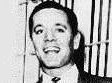
Louis Kenneth Neu
Murderer Paul Jaworski
Murderer · USA · 1926
Paul Jaworski was born in Poland as Paul Poluszynski in 1900. He later immigrat…
20 victims
Paul Jaworski
Murderer · USA · 1926
Paul Jaworski was born in Poland as Paul Poluszynski in 1900. He later immigrat…
20 victims
 Harry Maione
Murderer · USA · 1937
Harry “Happy” Maione (1908 – February 19, 1942) was a New York mobster who serv…
12 victims
Harry Maione
Murderer · USA · 1937
Harry “Happy” Maione (1908 – February 19, 1942) was a New York mobster who serv…
12 victims
 William Kenneth Wagner
Murderer · USA · 1924
William Kenneth (Kinnie) Wagner (born February 18, 1903 in Scott County, VA) wa…
6 victims
William Kenneth Wagner
Murderer · USA · 1924
William Kenneth (Kinnie) Wagner (born February 18, 1903 in Scott County, VA) wa…
6 victims
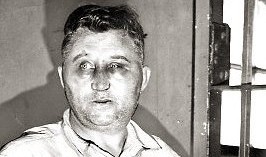 Harry Powers
Murderer · USA · 1931
Harry Powers was executed by hanging on March 18, 1932, at the West Virginia Pe…
5 victims
Harry Powers
Murderer · USA · 1931
Harry Powers was executed by hanging on March 18, 1932, at the West Virginia Pe…
5 victims
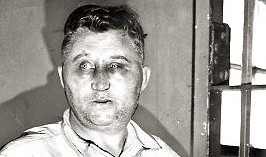 Herman Drenth
Murderer · USA · 1931
Herman Drenth was also known by the aliases Harry F. Powers and Cornelius O. Pi…
5 victims
Herman Drenth
Murderer · USA · 1931
Herman Drenth was also known by the aliases Harry F. Powers and Cornelius O. Pi…
5 victims
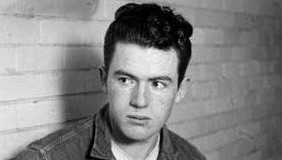 William Edward Hickman
Murderer · USA · 1926
William Edward Hickman was a man who tried to solve his financial problems by k…
5 victims
William Edward Hickman
Murderer · USA · 1926
William Edward Hickman was a man who tried to solve his financial problems by k…
5 victims
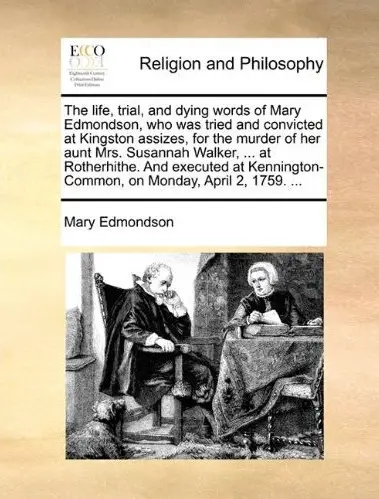 Mary Edmondson
Murderer · United Kingdom · 1759
Mary Edmondson Mary Edmondson was the daughter of a farmer who lived near Leeds…
1 victim
Mary Edmondson
Murderer · United Kingdom · 1759
Mary Edmondson Mary Edmondson was the daughter of a farmer who lived near Leeds…
1 victim
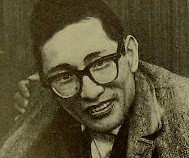 Akira Nishiguchi
Spree killer · Japan · 1963
Akira Nishiguchi (西口 彰, Nishiguchi Akira) was a Japanese serial killer and frau…
5 victims
Akira Nishiguchi
Spree killer · Japan · 1963
Akira Nishiguchi (西口 彰, Nishiguchi Akira) was a Japanese serial killer and frau…
5 victims
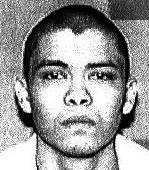 Efrain Perez
Homicide · USA · 1993
June 24, 1993 — Jennifer Ertman, 14, and Elizabeth Pena, 16, left a pool party…
2 victims
Efrain Perez
Homicide · USA · 1993
June 24, 1993 — Jennifer Ertman, 14, and Elizabeth Pena, 16, left a pool party…
2 victims
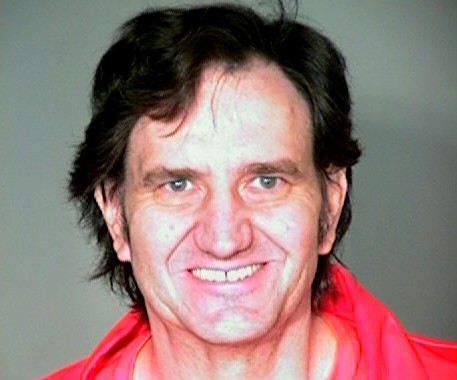 James Styers
Murderer · USA · 1989
James Styers filed a missing child report on December 2, 1989, advising police…
1 victim
James Styers
Murderer · USA · 1989
James Styers filed a missing child report on December 2, 1989, advising police…
1 victim
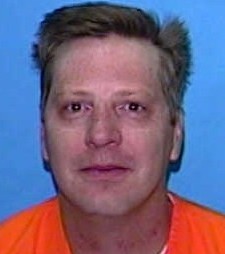 John Richard Marek
Murderer · USA · 1983
Name: John Richard Marek · DC Number: #094417 · Race: WHITE · Sex: MALE · Hair…
1 victim
John Richard Marek
Murderer · USA · 1983
Name: John Richard Marek · DC Number: #094417 · Race: WHITE · Sex: MALE · Hair…
1 victim
- Gender
- male
- Country
- USA
- Location
- New York/Louisiana, USA
- Date of birth
- 1910
- Age at first offence
- 23
- Characteristics
- drunken rage, robbery, history of mental illness, homosexual, torture
- Victim profile
- Lawrence Shead, 25 / Sheffield Clark Sr., 63 (gay men)
- Method of murder
- Beating with an electric iron / Strangulation
- Date(s) of murder
- September 2/17, 1933
- Years active
- 1933
- Date of arrest
- —
- Status
-
Executed
Executed by hanging in New York on February 1, 1935
Overview
Louis Kenneth Neu was executed by hanging in New York on February 1, 1935.
Neu was portrayed as a gay man and a drifter who attacked and robbed wealthy men he encountered. He claimed to have killed Lawrence Shead and Sheffield Clark and was convicted of murder. He performed songs around the time of his execution.
Timeline
- September 2, 1933 — Neu met Lawrence Shead in Times Square and later killed Lawrence Shead.
- September 10, 1933 — Police found Lawrence Shead’s naked corpse in his bed.
- September 12, 1933 — Detectives learned the whereabouts of the suit and how Lawrence Shead had died when they stopped a car on the Pulaski Skyway.
- September 17, 1933 — Neu told Eunice Hotte, “Be packed and ready” and “We'll have a big time in the big town.”
- December 12, 1933 — Deliberations began in Neu’s trial.
- December 1933 — Neu was convicted of first-degree murder and sentenced to die on the gallows.
- February 1, 1935 — Neu was hanged.
The offences
Neu killed Lawrence Shead after meeting him in Times Square. Neu followed Shead to his hotel room and, once inside, beat Shead to death with an electric iron, then stripped him of money and his suit.
Neu later attached himself to Sheffield Clark, a hardware store proprietor, threatening Clark with “exposure” as a homosexual if cash was not forthcoming. Clark reached for his telephone to call police, and Neu strangled Clark to death before looting Clark’s home. Neu departed in Clark’s stolen car.
In the later trial account, Neu tried to rob Sheffield Clark Sr., a Nashville businessman, after following him to his room at the Jung Hotel. The account stated that Neu used a blackjack and hit Clark when Clark resisted, and that Neu took Clark’s car and fled.
Investigation and apprehension
After the murder of Lawrence Shead, Neu’s actions led to police interest in a vehicle stopped on the Pulaski Skyway. In place of license plates, there was a hand-lettered cardboard sign that read: “New Car in Transit.”
At the time of the stop, Neu and Eunice Hotte were inside the vehicle. During questioning, police observed red stains on Neu’s trousers and became curious about another detail. Neu confessed to the Shead murder and said:
“I killed him”
“This is his suit I'm wearing now.”
Neu also admitted killing Sheffield Clark. He was apprehended in New Jersey and was extradited to Louisiana to stand trial.
Arrest
Neu was caught in New Jersey in the act of changing the number plates on his car. He was still wearing Lawrence Shead’s suit when he was arrested.
Trial
Neu faced trial for the murder of Sheffield Clark. Doubts were expressed about his sanity, but he was judged fit to stand trial.
Deliberations began on December 12, 1933. He was eventually convicted of first-degree murder and sentenced to die on the gallows.
During the trial, his attorneys presented evidence about his mental condition and past, including an incident of discharge from the Army for “lunacy” and a stay in a mental hospital in Georgia. Doctors testified that he had syphilis and was showing signs of dementia. The account also recorded his lawyer telling the court:
“ My client has had sex with hundreds of women, and is now insane as a result of suffering from syphilis.”
While being led out of the courtroom, Neu sang “Sweet Rosie O'Grady.”
Sentencing and execution
Neu was sentenced to death and mounted the scaffold on February 1, 1935. Appeals delayed the execution of his sentence, but the verdict was affirmed. Neu was hanged on February 1, 1935.
Before the trap was sprung, Neu treated witnesses to a spirited rendition of an original song composed especially for the occasion. Its title was “I'm Fit as a Fiddle and Ready to Hang.” Another account described him tap-dancing to the scaffold on Feb. 1, 1935 while “warbling 'Love in Bloom.'”
As he was led toward sentencing, Neu tossed a coin in the air and wished the judge “Good luck.”
His last words were “Don't muss my hair.”
Aftermath
A “mystery girl” was described as a person Neu loved while awaiting execution; she returned his affection and persuaded him to convert to Catholicism for the good of his soul. Their special melody was described as “Love in Bloom.”
The account identified her name as Aline Hull. It stated that she met Neu through church charity work and intended to forever look after his final resting place. In June 1950, Hull swallowed an overdose of sleeping pills. Robert Tallant, in “Ready to Hang,” was described as noting that among her belongings a prayer book was found with a flower pressed between the pages—the crumbling remains of a white gardenia. Aline Hull spoke to the Times-Picayune in 1947.
Other details
Neu’s first victim was described as Lawrence Shead, a wealthy New Yorker, identified as 35 in one account. Neu was described as 25. In another part of the record, Shead was described as a Paterson, N.J. theater manager.
In the Clark-related account, Sheffield Clark Sr. was described as 63 and a Nashville businessman. Eunice Hotte was described as 25 and as a waitress from New Orleans, described as a married woman with a 5-year-old daughter.
The record also stated that Neu had been confined to the Georgia State Mental Home for a time.
Quoted lines included: “New Car in Transit.”; “We'll have a big time in the big town”; “Sure I killed him” ; “This is his suit I'm wearing now.”; “Love in Bloom”; “Sweet Rosie O'Grady”; “I'm Fit as a Fiddle and Ready to Hang”; “Good luck.”; “Don’t muss my hair.”; “My client has had sex with hundreds of women, and is now insane as a result of suffering from syphilis.”; and the case narrative included the quoted threat of “exposure” as a homosexual.

Spotted an error, or have more information about this case?