
Suzane von Richthofen
Murderer Anna Carolina Jatobá
Murderer · Brazil · 2008
Anna Carolina Jatobá was the stepmother of Isabella de Oliveira Nardoni. Alexan…
1 victim
Anna Carolina Jatobá
Murderer · Brazil · 2008
Anna Carolina Jatobá was the stepmother of Isabella de Oliveira Nardoni. Alexan…
1 victim
 Anisio Ferreira de Sousa
Murderer · Brazil · 1989
September 4, 2003 — Anísio Ferreira de Sousa was sentenced to 77 years in priso…
19 victims
Anisio Ferreira de Sousa
Murderer · Brazil · 1989
September 4, 2003 — Anísio Ferreira de Sousa was sentenced to 77 years in priso…
19 victims
 Megan Huntsman
Murderer · USA · 1996
Megan Huntsman was 40 at sentencing. She was a mother of three children who wer…
6 victims
Megan Huntsman
Murderer · USA · 1996
Megan Huntsman was 40 at sentencing. She was a mother of three children who wer…
6 victims
 Angela Johnson
Murderer · USA · 1993
Angela Jane Johnson was convicted in federal court of aiding and abetting the m…
5 victims
Angela Johnson
Murderer · USA · 1993
Angela Jane Johnson was convicted in federal court of aiding and abetting the m…
5 victims
 Michele Kalina
Murderer · USA · 1996
Michele Kalina pleaded guilty to murder for one of five infants she initially w…
5 victims
Michele Kalina
Murderer · USA · 1996
Michele Kalina pleaded guilty to murder for one of five infants she initially w…
5 victims
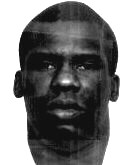 Jermarr Arnold
Murderer · USA · 1983
Jermarr Arnold was convicted of the capital offense of murdering Christine Sanc…
2 victims
Jermarr Arnold
Murderer · USA · 1983
Jermarr Arnold was convicted of the capital offense of murdering Christine Sanc…
2 victims
 Krishna Maharaj
Murderer · USA · 1986
Krishna Maharaj (born January 26, 1939) was a Trinidad and Tobago-born British…
2 victims
Krishna Maharaj
Murderer · USA · 1986
Krishna Maharaj (born January 26, 1939) was a Trinidad and Tobago-born British…
2 victims
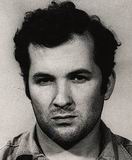 Metod Trobec
Serial killer · former Yugoslavia · 1978
Metod Trobec (born July 6, 1948; died May 30, 2006) was a serial killer in Slov…
6 victims
Metod Trobec
Serial killer · former Yugoslavia · 1978
Metod Trobec (born July 6, 1948; died May 30, 2006) was a serial killer in Slov…
6 victims
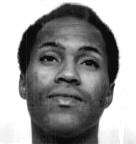 James Edward Smith
Murderer · USA · 1983
James Edward Smith (age 37) was executed in Texas by lethal injection on June 2…
1 victim
James Edward Smith
Murderer · USA · 1983
James Edward Smith (age 37) was executed in Texas by lethal injection on June 2…
1 victim
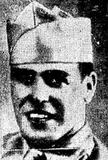 Clarence Bertucci
Mass murderer · USA · 1945
Clarence V. Bertucci was an American soldier, Private Clarence V. Bertucci, who…
9 victims
Clarence Bertucci
Mass murderer · USA · 1945
Clarence V. Bertucci was an American soldier, Private Clarence V. Bertucci, who…
9 victims
 George Marecek
Murderer · USA · 1991
George Marecek was convicted of second-degree murder following a 2001 six-day t…
1 victim
George Marecek
Murderer · USA · 1991
George Marecek was convicted of second-degree murder following a 2001 six-day t…
1 victim
- Gender
- female
- Country
- Brazil
- Location
- São Paulo, Brazil
- Date of birth
- November 3, 1983
- Age at first offence
- 19
- Characteristics
- parricide, to inherit
- Victim profile
- Manfred von Richthofen, and his wife, Marisia von Richthofen (her parents)
- Method of murder
- H it them with iron sticks before strangling them with towels
- Date(s) of murder
- October 31, 2002
- Years active
- 2002
- Date of arrest
- November 9, 2002
- Status
-
Imprisoned
Sentenced to 40 years in prison on July 22, 2006
Case record: Suzane Louise Freiin von Richthofen
Background
Suzane Louise Freiin von Richthofen was born on November 3, 1983. She was described as a Brazilian. She was the daughter of Manfred Albert Freiherr von Richthofen, a German engineer, and Marisia von Richthofen (née Marísia Abdalla), a Brazilian of Lebanese descent. Her father worked as a director of the State Company for Highway Development in São Paulo, and her mother worked as a psychiatrist.
Suzane had a younger brother, Andreas Freiherr von Richthofen, born in 1987.
Her father claimed that he was a grandnephew of Manfred von Richthofen, the German war pilot of World War I, but this link was disputed. The German von Richthofen family denied any link to them.
After graduating from a German High School, Suzane studied law at Pontifícia Universidade Católica.
She was described as happy, but a little shy. She was known to have a good relationship with her parents and her brother.
In the summer of 1999, she started practising Brazilian Jiu-Jitsu. It was there that she met Daniel Cravinhos de Paula e Silva, who became her boyfriend and accomplice of the murder.
The offence
On October 31, 2002, Suzane von Richthofen murdered her own parents with help from her boyfriend and his brother.
In the late hours of October 31, 2002, Suzane checked if her parents were already asleep. She then disconnected the alarm system of the estate and opened the door to her 21-year-old boyfriend, Daniel Cravinhos, and his brother, 26-year-old Christian Cravinhos, who had waited outside. The Cravinhos brothers went upstairs to the parents’ bedroom and hit Manfred and Marisia with iron sticks before strangling them with towels. Suzane was waiting in the living room downstairs.
After the killings, the three simulated a break-in by pocketing money they found, spreading papers in the library, and creating a mess in the house. They then left.
Suzane and Daniel went for a motel, while Christian went to a fast-food restaurant.
Early in the morning, Suzane and Daniel picked up her little brother, Andreas, who was aged 15, at an internet café and went home. They then “discovered” the crime, called the police at once, and told their story.
At the time of the murders, Suzane was just short of her nineteenth birthday.
In the background to the killings, Suzane had planned the murder of her parents for months.
Investigation
Investigating officers doubted a burglary crime and thought of someone familiar to the victims. They questioned the children and the employees of the Richthofen family.
The investigators were suspicious because the crime scene showed the alarm system switched off and the papers spread very regularly “as if by design,” and because of Suzane’s conduct. Suzane was seen in the house’s swimming pool with Daniel the day after the murder. She also celebrated her 19th birthday with friends just hours after the parents’ burial.
The clue for the arrest came with Christian Cravinhos, who had bought a motorcycle a few days later and paid cash in 100-dollar bills. On November 9, 2002, Christian Cravinhos was arrested, as well as his brother and Suzane. Suzane soon confessed to the murder.
In one account, it was described that, only ten hours after the crime, Cristian had bought a motorcycle, paying with thirty-six bills of one-hundred-dollars each. It said he could not prove where he got the money, that they grilled him, and that he broke down, after which the others broke down as well.
Arrest and pre-trial status
Suzane was released from prison in May 2005, when the Supreme Court of Justice granted her habeas corpus. She then awaited her trial in house arrest.
Motives and disputed issues at trial
Suzane’s relationship to Daniel Cravinhos had initially been allowed by her parents, but their view changed when they discovered that he used marijuana almost daily. Their disagreement also involved his lower-class background and his unwillingness to work or to attend school.
In July 2002, her parents were on vacation, and Daniel moved in with the children for a month. Her account described this as much to her delight.
When the parents returned home, Suzane suggested they buy her a flat in which she could live with Daniel. Her father refused, saying that she could do whatever she liked only if she earned money herself. Suzane continued meeting Daniel secretly.
Suzane claimed she did all for love and for fear that Daniel would leave her if the parents were not killed.
Her lawyer, Denivaldo Barni, said that Suzane had no motive at all and was forced into the crime by Daniel, whom she adored “like a god.”
Another motive described involved the parents’ wealth, estimated to about seventeen million dollars, which Suzane would inherit in case of the parents’ death.
As Prosecutor Roberto Tardelli put it, Suzane wanted to “ get her hands on the money and assets her parents had worked so hard to obtain ” and she “ wanted her freedom and independence without having to work for it ”.
On trial, Daniel Cravinhos claimed that Suzane was physically violated by her father, which Suzane and her brother Andreas von Richthofen denied.
It was also claimed that the Richthofen parents were alcoholics, but in the autopsy no alcohol was detected in their bodies.
In one additional account, it was described that Suzane’s parents pressured her to break off her relationship, that Suzane decided to murder them, and that the killers used bludgeons and towels and attempted to drown them, including by running Daniel to the bathroom and returning with two wet towels and then returning with a pitcher of water.
Trial
Suzane was put on trial in São Paulo in July 2006.
On June 5, 2006, Suzane Freiin von Richthofen, along with the Cravinhos, was put on trial for homicídio qualificado, described as the equivalent of first degree murder in Brazilian law. The trial was delayed and finally started on July 17.
On trial, Suzane blamed Daniel Cravinhos for everything, while the Cravinhos brothers claimed they acted upon her desire.
Prosecutor Roberto Tardelli called Suzane the “ mastermind ” of the crime. Roberto Tardelli called for 50 years of imprisonment for each of the three defendants.
She was described as “ personification of the evil blonde ”.
On July 22, 2006, Suzane was sentenced to 40 years in prison for the crime. Daniel Cravinhos got the same sentence, and his brother Christian was sentenced to 38 years for conspiracy.
In one report-style fragment, it was described that Chief Prosecutor Roberto Tardelli described Suzane as the “mastermind” of the crime, that he said she was motivated by a desire to “get her hands on the money and assets her parents had worked so hard to obtain,” and that he said she “wanted her freedom and independence without having to work for it.”
It was also stated that Daniel Cravinhos and his brother, Christian, had confessed to beating their parents to death in their São Paulo home, and that a lawyer for the brothers said Suzane urged the brothers to commit the crime by claiming her parents had mistreated her.
A lawyer for Richthofen was quoted: “This crime was committed only because Daniel wanted to,” and also: “He was the only one with a motive - money.”
Sentencing and custody
Suzane was sentenced to 40 years in prison on July 22, 2006.
As of April 2007, she was in custody in a women’s prison outside São Paulo.
In one narrative fragment, it was described that, in 2006, the trio were sentenced to thirty-nine years and six months each, and that Cristian got a year less.
Appeals
The material described that lawyers were expected to appeal the verdict.
In one account, it described that Suzane tried to get her sentence changed to house arrest in 2009, that her appeal was denied, and that she tried again two years later with the same result.
Outcome
Suzane’s conviction resulted in a prison sentence of 40 years in prison after sentencing on July 22, 2006.
She was in custody in a women’s prison outside São Paulo as of April 2007.
Aftermath and related litigation
A relative of Suzane’s family background included her father’s connection to the German World War I flying ace known as the Red Baron, described as Manfred von Richthofen, who was shot dead during a dogfight over the River Somme in 1918, ending his career as one of Germany’s most skilful and most feared fighter pilots.
In 2011, Andreas sued his sister for her half of the inheritance, including money paid out on her parents’ life insurance, and he won.
Background context and public attention
The case generated media attention in Brazil because of a contrast between the brutal crime and Suzane’s personality.
It was described that the Cravinhos brothers fit a profile of uneducated, unemployed, drug-addicted killers, while Suzane did not fit that profile. She was described as a pretty, blond girl from an upper-middle-class family of German and Lebanese descent, well-behaved, doing well at school, speaking three foreign languages, and doing ballet.
A discussion in Brazil included the worth of family values and the effects of education, along with debate over whether Suzane was the “evil mind” behind the crime or only Daniel’s tool.
It was also described that many people who initially felt emotional sympathy for Suzane changed their opinion when a TV interview with her was shown. It described that, before the interview and when the cameras were already on, she was instructed by her lawyer to cry out loud during the broadcast to create public sympathy. It then said the interview became a major issue for her credibility, and described that in court she remained cool while the Cravinhos brothers cried most of the time, including an occasion when she laughed.
A correspondent attempted to explain Suzane using Hannah Arendt’s theory of the “ Banality of evil ”.
Other details
Suzane and Daniel were described as checked into a motel after the killings to establish an alibi, and they checked out just before three in the morning. Suzane dropped her boyfriend off, picked up her brother, and they went home to “discover” their parents dead.
It was also described that Suzane launched a lawsuit to take over complete control of her parents’ estate for the tune of more than five million US Dollars, and that investigators feared for her brother’s life and found a revolver hidden in a teddy bear in her room.
The investigation was described as being over within a week in one account.


Spotted an error, or have more information about this case?