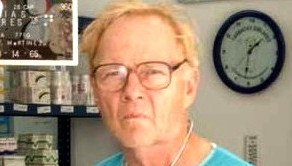
John Ronald Brown
Homicide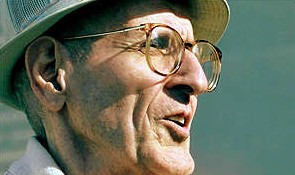 Jack Kevorkian
Homicide · USA · 1990
Jack Kevorkian (born May 26, 1928) was a controversial American pathologist. He…
130 victims
Jack Kevorkian
Homicide · USA · 1990
Jack Kevorkian (born May 26, 1928) was a controversial American pathologist. He…
130 victims
 David Koresh
Homicide · USA · 1993
David Koresh (born Vernon Wayne Howell; August 17, 1959 – April 19, 1993) led t…
79 victims
David Koresh
Homicide · USA · 1993
David Koresh (born Vernon Wayne Howell; August 17, 1959 – April 19, 1993) led t…
79 victims
 Todd Hall
Homicide · USA · 1996
Todd Hall was described by neighbors as "mentally slow" and was said to have su…
9 victims
Todd Hall
Homicide · USA · 1996
Todd Hall was described by neighbors as "mentally slow" and was said to have su…
9 victims
 Joshua Jenkins
Homicide · USA · 1996
Joshua Jenkins was a 15-year-old American killer who killed five members of his…
5 victims
Joshua Jenkins
Homicide · USA · 1996
Joshua Jenkins was a 15-year-old American killer who killed five members of his…
5 victims
 Veronica Paz
Murderer · USA · 2003
Veronica Paz was involved in a love-triangle that led to the killing of her for…
1 victim
Veronica Paz
Murderer · USA · 2003
Veronica Paz was involved in a love-triangle that led to the killing of her for…
1 victim
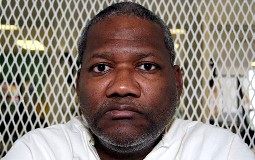 Preston Hughes
Murderer · USA · 1988
Preston Hughes III was convicted of capital murder for the killing of fifteen-y…
2 victims
Preston Hughes
Murderer · USA · 1988
Preston Hughes III was convicted of capital murder for the killing of fifteen-y…
2 victims
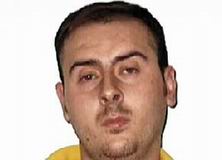 Alfredo Galán
Serial killer · Spain · 2003
Alfredo Galán Sotillo (born April 5, 1978) was a Spanish serial killer. · Janua…
6 victims
Alfredo Galán
Serial killer · Spain · 2003
Alfredo Galán Sotillo (born April 5, 1978) was a Spanish serial killer. · Janua…
6 victims
 Rick Forsyth
Mass murderer · USA · 1993
Defendant: Rick Forsyth (Rick Wayne Forsyth) Victims: Jolene Forsyth (age 39) a…
6 victims
Rick Forsyth
Mass murderer · USA · 1993
Defendant: Rick Forsyth (Rick Wayne Forsyth) Victims: Jolene Forsyth (age 39) a…
6 victims
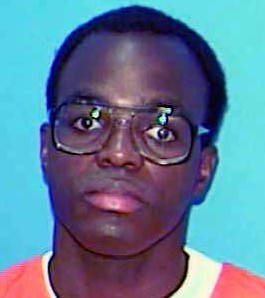 Arthur Barnhill
Murderer · USA · 1995
Arthur Barnhill was convicted and sentenced to death for the 08/06/95 murder of…
1 victim
Arthur Barnhill
Murderer · USA · 1995
Arthur Barnhill was convicted and sentenced to death for the 08/06/95 murder of…
1 victim
- Gender
- male
- Country
- USA
- Location
- National City, San Diego County, California, USA
- Date of birth
- July 14, 1922
- Age at first offence
- 76
- Characteristics
- history of mental illness, kidnapping, rape, rapist, torture, abuse
- Victim profile
- Philip Bondy, 79 (Bondy was one of the rare individuals suffering from apotemnophilia, or Body integrity identity disorder - a desire to have a healthy limb amputated)
- Method of murder
- Medical malpractice (gas gangrene)
- Date(s) of murder
- May 9, 1998
- Years active
- 1998
- Date of arrest
- —
- Status
-
Died in custody
Sentenced to 15 years to life in prison in 1999; died in prison on May 16, 2010
Case record: John Ronald Brown
Background
John Ronald Brown (July 14, 1922 – May 16, 2010) was a former United States surgeon who was convicted of second-degree murder after a patient died while Brown was practicing medicine without a license.
Brown was the son of a Mormon physician and was born in 1922. He did well in school, graduating from high school by the age of 16.
After being drafted by the US Army during WWII, Brown scored exceptionally highly on the General Classification Test. The Army sent him to medical school. Brown graduated from Utah School of Medicine in 1947.
Brown worked as a general practitioner for almost two decades. After almost losing a patient during a thyroidectomy, Brown decided to undertake formal surgical training. Brown excelled in the written aspects of certification for the American Board of Plastic Surgery but failed the oral assessment, blaming his “domineering” father.
Brown decided to continue regardless of the assessment outcome.
Medical career
By 1973, Brown carried out sex reassignment surgery on transsexual patients.
In 1977, the California Board of Medical Quality Assurance revoked Brown’s medical license for “gross negligence, incompetence and practicing unprofessional medicine in a manner which involved moral turpitude”.
The charge of gross negligence was based on his practice of carrying out sex reassignment surgery in his office on an out-patient basis rather than in a fully-equipped surgical theatre.
Brown was also charged with allowing patients to work as unqualified medical assistants, allegedly as barter for their own subsequent surgery. He was charged with failing to hospitalize a patient who had developed a life-threatening infection and with making false claims on medical insurance forms.
Brown continued to practice medicine outside of California but was successively barred from practicing in Hawaii, Alaska, and the island of St. Lucia.
During the 1980s, Brown solicited and advertised surgical services in the USA while performing surgical procedures in Mexico. Most of his patients were transsexual people too poor to afford fees of reputable surgeons.
In 1986, an article in the magazine Forum reported on Brown’s procedure for surgically increasing penis length. A subsequent television documentary (“The Worst Doctor in America”) portrayed Brown as an incompetent and inept surgeon. Brown’s poor reputation led to the nickname “Butcher Brown” amongst the transsexual community.
In 1990, Brown spent 19 months in prison for practicing medicine without a license. The charge followed Brown operating on a 30-year-old male-to-female transsexual from Orange County, California.
After leaving prison, Brown worked as a taxi driver for a year before re-establishing himself in medical practice.
The offence
On May 9, 1998, Brown performed a leg amputation on Philip Bondy, a 79-year-old retired satellite engineer from New York, in Tijuana, Mexico.
A short time afterward, Bondy was found dead in a National City, California hotel room by a friend—a fellow apotemnophiliac—who had backed out of having surgery with Brown at the last moment.
An autopsy showed Bondy had died of gas gangrene.
At trial, a surgeon who was a witness for the prosecution testified that Brown had not left a large enough skin flap to properly cover the bone and stump. The flap was stretched too tightly to allow adequate blood flow and the tissue in the flap died, allowing an infection of Clostridium perfringens and producing gangrene.
A police search of Brown’s premises—a ground floor unit unit in a San Ysidro apartment building—revealed blood soaked towels, sheets, and mattresses, as well as anesthetizing drugs.
Police also discovered video tapes of Brown’s operations.
Brown was prosecuted in California for second-degree murder.
Investigation and arrest
A police search of Brown’s San Ysidro apartment building included the discovery of blood soaked towels, sheets, and mattresses, anesthetizing drugs, and video tapes of Brown’s operations.
In May 1998, a man’s body was found in room 609 of the Holiday Inn in San Diego. His left leg had been amputated above the knee and there were two receipts from Brown in the room. The dead man turned out to have an amputee fetish, apotemnophilia, and he had wanted the leg cut off.
Police obtained additional evidence of Brown’s malpractice.
Detective Gary Stovall was assigned to investigate the death of an elderly New York City resident found in Room 609 of the local Holiday Inn with his left leg missing and blood oozing from the stump.
Bondy’s friend had initially told police that Bondy had been in a “taxi accident” in Mexico and required immediate surgery in a clinic there. Stovall found the story did not make sense and investigated further, including why the body had no other injuries and why Tijuana police had no knowledge.
Stovall was also concerned that Bondy had two $5,000 receipts in his room, one for “surgery” and the other for “hospitalization,” both signed by a local man named John Brown.
Stovall drove to Brown’s San Ysidro apartment after Brown had not returned Stovall’s three phone messages by Wednesday morning, May 20.
Stovall asked Brown to come down to the station, and Brown put on a wrinkled shirt and a stained jacket before agreeing.
Stovall later described Brown’s apartment as smelling like “garbage,” with a couch bloodstained and the stuffing falling out, a filthy stove, and a sink stacked with dirty dishes. Stovall said there were books, professional journals, travel bags, and medical supplies scattered about the floor.
Brown declined to say whether or not he had amputated Bondy’s leg but talked about driving Bondy to the clinic and visiting Bondy at the Holiday Inn the following day to inspect the wound.
Brown made a 29-page statement after initially not wanting to make a statement.
After 90 minutes, Stovall left the interview room to tell superiors he was going to arrest Brown. Stovall returned after waiting 45 minutes and Brown then walked out of the station.
Brown encountered two police cars and what seemed like 12 officers. Brown reported that “one pulled out a gun and pointed it at my head.”
Trial
The prosecution had to establish a history of incompetence and recklessness. A number of transsexual women gave testimony of their experiences of Brown’s treatment and subsequent medical history.
Brown was convicted by unanimous decision of second-degree murder. He was sentenced to fifteen years to life in prison.
During sentencing context, it was described that one defense attorney planned to appeal the verdict.
Sentencing and death
Brown was sentenced to fifteen years to life in prison.
By Spring 2010, Brown’s health had deteriorated greatly and he developed numerous health problems, including severe pneumonia. Treatment for pneumonia proved useless as his body eventually rejected antibiotic medication.
Brown died on the evening of 16 May 2010 at 10:40 PM local time, two months shy of his 88th birthday.

Spotted an error, or have more information about this case?