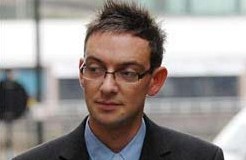
Colin Norris
Serial killer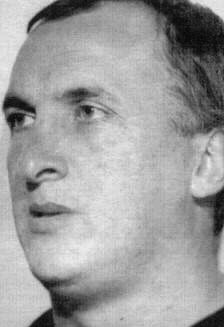 Colin Ireland
Serial killer · United Kingdom · 1993
Name: Colin Ireland · Also known as / tabloid name: London's "Gay Slayer" · Cri…
5 victims
Colin Ireland
Serial killer · United Kingdom · 1993
Name: Colin Ireland · Also known as / tabloid name: London's "Gay Slayer" · Cri…
5 victims
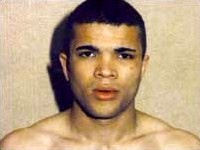 Stephen Akinmurele
Serial killer · United Kingdom · 1995
Stephen Akinmurele was accused in connection with the deaths of multiple pensio…
5 victims
Stephen Akinmurele
Serial killer · United Kingdom · 1995
Stephen Akinmurele was accused in connection with the deaths of multiple pensio…
5 victims
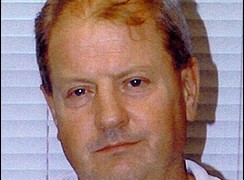 Steven Wright
Serial killer · United Kingdom · 2006
Steven Gerald James Wright was a British serial murderer, also known as the Suf…
5 victims
Steven Wright
Serial killer · United Kingdom · 2006
Steven Gerald James Wright was a British serial murderer, also known as the Suf…
5 victims
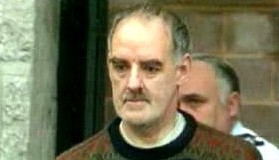 Peter Moore
Serial killer · United Kingdom · 1995
Peter Moore (born 1940) was a Welsh serial killer who murdered four men in 1995…
4 victims
Peter Moore
Serial killer · United Kingdom · 1995
Peter Moore (born 1940) was a Welsh serial killer who murdered four men in 1995…
4 victims
 Steven John Grieveson
Serial killer · United Kingdom · 1993
Steven John Grieveson (born 1970) was an English serial killer. Grieveson murde…
4 victims
Steven John Grieveson
Serial killer · United Kingdom · 1993
Steven John Grieveson (born 1970) was an English serial killer. Grieveson murde…
4 victims
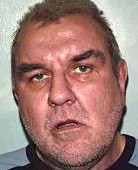 Anthony Hardy
Serial killer · United Kingdom · 2002
Anthony John Hardy (born May 31, 1951) was an English serial killer who was con…
3 victims
Anthony Hardy
Serial killer · United Kingdom · 2002
Anthony John Hardy (born May 31, 1951) was an English serial killer who was con…
3 victims
 Charles Guiteau
Murderer · USA · 1881
Charles Julius Guiteau (September 8, 1841 – June 30, 1882) was an American lawy…
1 victim
Charles Guiteau
Murderer · USA · 1881
Charles Julius Guiteau (September 8, 1841 – June 30, 1882) was an American lawy…
1 victim
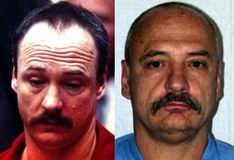 James Marlow
Serial killer · USA · 1986
James Gregory Marlow was convicted in San Bernardino County, California, of mur…
5 victims
James Marlow
Serial killer · USA · 1986
James Gregory Marlow was convicted in San Bernardino County, California, of mur…
5 victims
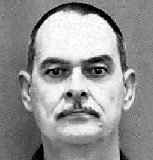 Larry Romine
Murderer · USA · 1981
Larry Romine, 45, was convicted for the shotgun slayings of his parents, Roy Le…
2 victims
Larry Romine
Murderer · USA · 1981
Larry Romine, 45, was convicted for the shotgun slayings of his parents, Roy Le…
2 victims
- Gender
- male
- Country
- United Kingdom
- Location
- Leeds, West Yorkshire, England, United Kingdom
- Date of birth
- February 12, 1976
- Age at first offence
- 26
- Characteristics
- angel of death, nurse
- Victim profile
- Doris Ludlam, 80, Bridget Bourke, 88, Irene Crookes, 79, and Ethel Hall, 86 (patients)
- Method of murder
- Poisoning ( massive doses of insulin )
- Date(s) of murder
- 2002
- Years active
- 2002
- Date of arrest
- October 12, 2005
- Status
-
Imprisoned
Sentenced to life imprisonment; ordered to serve a minimum term of 30 years in prison on March 4, 2008
Case details
Colin Campbell Norris (born 1976) was a Scottish nurse described in the British press as the "Angel of Death". He was convicted of the murder of four women and the attempted murder of a fifth woman.
Timeline
- February 12 1976 — Colin Norris was born in Glasgow and raised in Partick by a supportive family.
- August 1992 — Norris achieved six GCSEs and studied travel, working in travel agencies before switching careers to work as a nurse.
- September 1998 — Norris began studying for a Higher Nursing Diploma at Dundee University in the School of Nursing and Midwifery.
- January and September 1999 — Norris attended lectures on diabetes and the treatment of diabetic patients with insulin.
- May 24 to July 4 1999 — While training to be a nurse, Norris worked on ward 11 at Ninewells Hospital in Dundee where he learned about the management of patients with diabetes.
- 1999 — Norris cared for elderly patients on ward 7 at the Royal Victoria Hospital in Dundee as part of his training.
- January 11 2001 — Norris’s personal tutor gave a specific talk to her students on the subject of abuse of elderly patients, including particular reference to a Glasgow nurse in the 1970s who was convicted and later freed on appeal for killing elderly patients by injecting them with insulin.
- May 21 2001 — Norris worked at the Riverside Nursing Home in Dundee caring for elderly people and missed 11 days of the placement.
- June 2001 — Norris graduated from Dundee University with a Higher Nursing Diploma.
- October 2001 — Norris started work as a staff nurse at Leeds General Infirmary where he worked on ward 36; during the next 14 months he also worked on the orthopaedic ward at St James’s Hospital.
- May 2 2002 — Vera Wilby, 90, was admitted to ward 36 at Leeds General Infirmary with a broken left hip after a fall in Rawdon, Leeds.
- May 17 2002 — Norris administered a dose of the powerful painkiller morphine to Vera Wilby to make her drowsy; additional drugs were then administered and she was found semi-conscious with a sudden hypoglycaemic attack but survived.
- June 12 2002 — Doris Ludlam, 80, from Pudsey, West Yorkshire, suffered a fall and broke her hip at Chapel Allerton Hospital in Leeds; she was transferred to ward 36 at Leeds General Infirmary for surgery.
- June 16 2002 — Bridget Bourke, 88, of Holbeck, Leeds, was admitted to ward 36 at Leeds General Infirmary with a broken right hip.
- June 17 2002 — Surgeons operated to repair Bridget Bourke’s hip.
- June 25 2002 — Norris gave Doris Ludlam an "unnecessary" dose of diamorphine, double the recommended level; he then gave drugs which reduced her blood sugar level before he went off shift at 7.45am, and she was discovered in a coma about 40 minutes later.
- June 27 2002 — Doris Ludlam died.
- July 20 2002 — Bridget Bourke fell out of bed.
- July 21 2002 — Norris, who was working the night shift, claimed to have discovered Bridget Bourke slumped in bed at 3.10am; doctors were called and she was found deeply unconscious after a hypoglycaemic attack despite not being diabetic.
- July 22 2002 — Bridget Bourke died shortly after midnight.
- October 2002 — Vera Wilby was discharged from hospital and went to live at a nursing home; she died the following year from unrelated causes.
- October 10 2002 — Irene Crookes, 79, from Hunslet, Leeds, fell and fractured her hip and was treated on ward 23 at St James’s Hospital; Norris treated her for several days.
- October 19 2002 — Norris reported finding Irene Crookes "totally unresponsive" shortly before 6am.
- October 20 2002 — Irene Crookes died.
- November 2002 — Ethel Hall, 86, of Calverley, Leeds, was admitted to ward 36 at Leeds General Infirmary with a fracture to her hip and underwent surgery; she appeared to be recovering.
- November 19 2002 — Ethel Hall had a fainting spell.
- November 20 2002 — Ethel Hall took a "very serious turn for the worse" in the early hours of the morning; staff found her choking, with very low blood sugar levels and abnormally high levels of insulin.
- December 6 2002 — West Yorkshire Police were called in to investigate.
- December 11 2002 — Ethel Hall died of irreversible brain damage without ever regaining consciousness.
- December 2002 — During questioning by police, Norris told officers "he seemed to have been unlucky over the last 12 months" but denied murdering his patients.
- September 2003 — 14 months after her death, Bridget Bourke’s body was exhumed by detectives investigating Norris; a pathologist found she died from an insulin-induced coma.
- October 12 2005 — Norris was charged with four counts of murder and one of attempted murder.
- October 16 2007 — Norris went on trial at Newcastle Crown Court charged with four counts of murder and one of attempted murder.
- March 3 2008 — Norris was found guilty of murdering Ethel Hall, Doris Ludlam, Irene Crookes and Bridget Bourke; he was also convicted of the attempted murder of Vera Wilby.
- March 4 2008 — Norris was sentenced to life imprisonment and ordered to serve a minimum term of 30 years in prison.
People
Defendant
- Colin Campbell Norris — Scottish nurse; convicted serial killer; described in the British press as the "Angel of Death"; convicted of murdering four women and attempting to murder a fifth woman.
Victims
- Vera Wilby — 90; admitted to ward 36 at Leeds General Infirmary with a broken left hip after a fall in Rawdon, Leeds; survived an attack and later died the following year from unrelated causes.
- Doris Ludlam — 80; from Pudsey, West Yorkshire; transferred to ward 36 at Leeds General Infirmary for surgery; died.
- Bridget Bourke — 88; of Holbeck, Leeds; admitted to ward 36 at Leeds General Infirmary; died.
- Irene Crookes — 79; from Hunslet, Leeds; treated on ward 23 at St James’s Hospital; died.
- Ethel Hall — 86; of Calverley, Leeds; admitted to ward 36 at Leeds General Infirmary; died after becoming unresponsive and having very low blood sugar levels with abnormally high levels of insulin.
Other named individuals
- Dr Emma Ward — noticed in November 2002 that Ethel Hall had slipped into a hypoglycaemic coma despite not being a diabetic.
- Det Ch Supt Chris Gregg — worked on the Shipman case and led the Norris investigation.
- Robert Smith QC — prosecutor at Newcastle Crown Court.
- Mr Justice Griffith Williams / Mr Justice Griffith — judge who sentenced Norris at Newcastle Crown Court.
- Stuart Hall — son of victim Ethel Hall.
- John Hall — Ethel Hall’s widower.
- Dr Hugo Mascie-Taylor — medical director of Leeds Teaching Hospitals NHS Trust.
- Jessie McTavish — nurse convicted and then cleared in 1974 for the murder of an 80-year-old patient with insulin; identified as a possible inspiration for Norris.
- Isabella McLafferty — Norris’s personal tutor who gave a specific talk to her students on January 11 2001.
- Raymond Morrison — Norris’s mother’s new husband.
- Elizabeth Ogilvie — Norris’s grandmother.
- June — Norris’s mother; worked as a typist.
- Colin Norris’s father (painter and decorator) — Norris’s namesake father; painter and decorator.
The offence
Norris murdered four elderly hospital patients and was convicted of the attempted murder of a fifth elderly patient.
He injected the victims with insulin, according to the conviction.
- Vera Wilby survived after a hypoglycaemic attack linked to an injection.
- Doris Ludlam died after being rendered drowsy by diamorphine and then receiving drugs that reduced her blood sugar level, after which she was discovered in a coma.
- Bridget Bourke died after being found deeply unconscious after a hypoglycaemic attack despite not being diabetic.
- Irene Crookes died after being found "totally unresponsive" shortly before 6am following a hypoglycaemic attack while not diabetic.
- Ethel Hall died after staff found her choking and with very low blood sugar levels and abnormally high levels of insulin.
Investigation and police actions
Police investigated 72 cases in total. West Yorkshire Police were called in on December 6 2002. Dr Emma Ward’s concern in November 2002 about Ethel Hall’s hypoglycaemic coma triggered investigation into deaths on the wards from comas when Norris was working and after Dr Ward raised the concerns.
The investigation identified 18 suspicious deaths, with eight classified as high priority. Norris was arrested on suspicion of murdering five women and trying to murder another; clinical explanations were accepted for two deaths.
In questioning after the deaths:
- Norris told officers "he seemed to have been unlucky over the last 12 months" but denied murdering his patients.
- Norris made predictions about when a patient would lapse into a coma, including a prediction to colleagues about Ethel Hall.
Police exhumed Bridget Bourke’s body in September 2003; a pathologist found that she died from an insulin-induced coma.
Arrest
Norris was suspended by the Royal College of Nursing the day after his arrest on Dec 11 2002. While on bail, he moved back to Glasgow, worked for an events company, and travelled abroad eight times while under investigation.
Trial
The trial took 19 weeks and the jury deliberated for 4 days.
Norris was charged with four counts of murder and one of attempted murder. At Newcastle Crown Court, he was convicted on 3 March 2008 of murdering Ethel Hall, Doris Ludlam, Irene Crookes and Bridget Bourke, and convicted of the attempted murder of Vera Wilby.
Judge’s sentencing remarks
During sentencing, the judge said:
"You are, I have absolutely no doubt, a thoroughly evil and dangerous man. You are an arrogant and manipulative man with a real dislike of elderly patients. The most telling evidence was that observation of one of your patients, Bridget Tarpey, who said 'he did not like us old women'."
The judge also rejected any possibility that Norris was practising euthanasia because none of the victims was terminally ill.
Prosecutor statements
Robert Smith QC, the prosecutor, told the court there were "remarkably common facts" between Norris’s five victims, noting that they all had undergone surgery for hip fractures, were in poor health, and could be regarded as a "burden to nursing staff", and that each suffered from hypoglycaemia between four and 12 days after surgery.
Sentencing
Norris was sentenced to life imprisonment. The court ordered him to serve a minimum term of 30 years in prison.
At sentencing, Mr Justice Griffith rejected any possibility that Norris was practising euthanasia and told Norris:
"You are, I have absolutely no doubt, a thoroughly evil and dangerous man... arrogant and manipulative, with a real dislike of elderly patients."
He added:
"There cannot be any suggestion you were motivated to hasten their ends to spare them suffering; indeed, there was no evidence that any of them was suffering apart from the pains that the elderly sometimes have. "
"I suspect you enjoyed the power that ending a life gave you, choosing the elderly because they were defenceless. "
"Then, emboldened by the fact that nobody suspected what was happening, it is clear you embarked on what in truth was a campaign of killing - a campaign which would, no doubt, have continued had not experienced medical staff been alerted to what was happening."
The judge said he had considered imposing a full life sentence without any early release.
Outcome
Norris remained convicted for the murders of four women and conviction for the attempted murder of Vera Wilby. He received life imprisonment with an order to serve a minimum term of 30 years in prison starting at March 4 2008.
Other details
Nursing career and work places
Norris worked in hospitals in Leeds. He worked at Leeds General Infirmary and St James’s Hospital, including ward 36 at Leeds General Infirmary and an orthopaedic ward at St James’s Hospital.
He started work as a staff nurse at Leeds General Infirmary in October 2001 on ward 36. During the next 14 months he also worked on the orthopaedic ward at St James’s Hospital in the city.
Prior education and lecturing
Norris studied travel after achieving six GCSEs. He switched careers to train as a nurse. He studied for a Higher Nursing Diploma at Dundee University in the School of Nursing and Midwifery. He attended lectures on diabetes and insulin treatment in January and September 1999. In early 1999 training at Ninewells Hospital, he learned about the management of patients with diabetes. He cared for elderly patients on ward 7 at the Royal Victoria Hospital in Dundee as part of training.
On January 11 2001, Norris received a specific talk to students on abuse of elderly patients that included reference to Jessie McTavish, who had been convicted in the 1970s for killing an 80-year-old patient by injecting insulin and later freed on appeal. Norris later attended a lecture on the case of Jessie McTavish while studying at nursing college.
Remarks and interactions
Norris predicted a patient’s decline:
- Earlier on the day of the change in condition for Ethel Hall, Norris predicted the shift without any medical indications, saying:
"Whenever I did nights someone always died."
He continued:
"It was always in the morning when things go wrong - about 5.15am."
After being questioned by police about patients who died while he was on duty, he made the statement:
"he seemed to have been unlucky over the last 12 months"
He also had said:
"it is always in the morning when things go wrong"
Regarding one of the other deaths, he said:
One account also stated that Norris told a staff nurse by pointing to his watch:
"I told you so"
Norris made a statement about night shifts:
"someone always died"
A colleague reported that Norris reacted in a manner described as "detached amusement" when the women died.
Treatment details referenced in the record
Norris’s first attempt to kill a patient was described as failing because the insulin overdose was counteracted by Vera Wilby’s naturally high blood-sugar level.
For Doris Ludlam:
- Norris gave "unnecessary" diamorphine described as double the recommended level.
- Norris then gave drugs to reduce her blood sugar level before he went off shift.
Suspension and post-arrest activities
He showed no emotion as he was led away from the dock.
Victim details and locations
- Vera Wilby was admitted with a broken left hip after a fall in Rawdon, Leeds.
- Doris Ludlam was from Pudsey, West Yorkshire, and was transferred from Chapel Allerton Hospital in Leeds to ward 36 at Leeds General Infirmary.
- Bridget Bourke was from Holbeck, Leeds, and was admitted to ward 36 at Leeds General Infirmary; she later died shortly after midnight.
- Irene Crookes was from Hunslet, Leeds, and was treated on ward 23 at St James’s Hospital.
- Ethel Hall was from Calverley, Leeds, and was admitted to ward 36 at Leeds General Infirmary.
Spotted an error, or have more information about this case?