
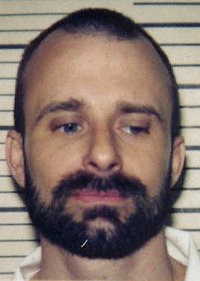
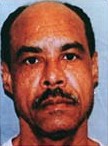
Leopoldo Narvaiz
Mass murderer Timothy McVeigh
Mass murderer · USA · 1995
Timothy James McVeigh (April 23, 1968 – June 11, 2001) was a United States Army…
168 victims
Timothy McVeigh
Mass murderer · USA · 1995
Timothy James McVeigh (April 23, 1968 – June 11, 2001) was a United States Army…
168 victims
 Julio Gonzalez
Mass murderer · USA · 1990
Julio Gonzalez was sentenced to 174 twenty-five-year sentences (a total of 4,35…
87 victims
Julio Gonzalez
Mass murderer · USA · 1990
Julio Gonzalez was sentenced to 174 twenty-five-year sentences (a total of 4,35…
87 victims
 David Burke
Mass murderer · USA · 1987
David Augustus Burke (May 18, 1952–December 7, 1987) was an employee of USAir,…
43 victims
David Burke
Mass murderer · USA · 1987
David Augustus Burke (May 18, 1952–December 7, 1987) was an employee of USAir,…
43 victims
 George Jo Hennard
Mass murderer · USA · 1991
George Jo Hennard carried out a mass killing at a Luby’s Cafeteria in Killeen,…
23 victims
George Jo Hennard
Mass murderer · USA · 1991
George Jo Hennard carried out a mass killing at a Luby’s Cafeteria in Killeen,…
23 victims
 James Huberty
Mass murderer · USA · 1984
James Oliver Huberty was a 41-year-old unemployed security guard. He was born i…
21 victims
James Huberty
Mass murderer · USA · 1984
James Oliver Huberty was a 41-year-old unemployed security guard. He was born i…
21 victims
 Sharon Flanagan
Murderer · USA · 2012
Name: Sharon Flanagan · Role: Mother of the victim · Legal outcome: Found guilt…
1 victim
Sharon Flanagan
Murderer · USA · 2012
Name: Sharon Flanagan · Role: Mother of the victim · Legal outcome: Found guilt…
1 victim
 Enrique Estrada
Murderer · USA · 1976
Enrique Estrada Enrique Estrada was a well-known drug abuser who was born in 19…
2 victims
Enrique Estrada
Murderer · USA · 1976
Enrique Estrada Enrique Estrada was a well-known drug abuser who was born in 19…
2 victims
 David Tamihere
Murderer · New Zealand · 1972
David Tamihere was sentenced to life imprisonment with a 10-year non-parole per…
3 victims
David Tamihere
Murderer · New Zealand · 1972
David Tamihere was sentenced to life imprisonment with a 10-year non-parole per…
3 victims
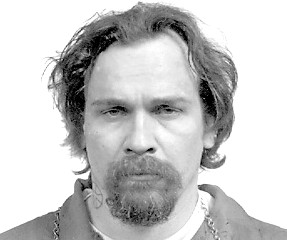 Jerry Thompson
Murderer · USA · 1991
Jerry Thompson was convicted of two counts of murder, two counts of felony-murd…
3 victims
Jerry Thompson
Murderer · USA · 1991
Jerry Thompson was convicted of two counts of murder, two counts of felony-murd…
3 victims
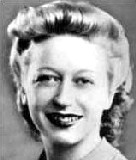 Elizabeth Jones
Murderer · United Kingdom · 1944
Elizabeth Jones was born in Neath, Wales, in 1926. At the age of thirteen, she…
1 victim
Elizabeth Jones
Murderer · United Kingdom · 1944
Elizabeth Jones was born in Neath, Wales, in 1926. At the age of thirteen, she…
1 victim
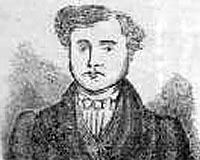 John Mapp
Murderer · United Kingdom · 1867
Name: John Mapp Catherine Lewis was the eldest of the five children of farm lab…
1 victim
John Mapp
Murderer · United Kingdom · 1867
Name: John Mapp Catherine Lewis was the eldest of the five children of farm lab…
1 victim
- Gender
- male
- Country
- USA
- Location
- Bexar County, Texas, USA
- Date of birth
- March 13, 1968
- Age at first offence
- 20
- Characteristics
- jealousy
- Victim profile
- His ex- girlfriend, Shannon Mann, 17; her sisters, Jennifer, 19, and Martha, 15; and brother, Ernest Jr., 11
- Method of murder
- Stabbing with knife
- Date(s) of murder
- April 15, 1988
- Years active
- 1988
- Date of arrest
- Same day
- Status
-
Executed
Executed by lethal injection in Texas on June 26, 1998
Name
Leopoldo Narvaiz
Status and last statement
Leopoldo Narvaiz declined to make a last statement. Narvaiz was put to death by lethal injection in Texas on June 26, 1998.
Background
Leopoldo Narvaiz Jr. was 30 years old at the time of execution. He was convicted in Texas state court of capital murder in 1988 and sentenced to death by lethal injection. His execution was carried out after federal habeas proceedings were resolved.
Narvaiz had dated Shannon Mann for several years until she broke off their relationship in February 1988. The relationship ended about two months earlier, when she broke off the relationship about two months earlier. Narvaiz was a 9th grade dropout.
The offence
Narvaiz murdered his ex-girlfriend and her siblings in their home in Bexar County, Texas. He used butcher knives to hack to death the four victims. The victims were stabbed more than 100 times, causing some of the knife blades to snap inside their bodies. Narvaiz used a total of five knives.
The victims were:
- Ernest Mann, Jr., age 11
- Martha Mann, age 15
- Shannon Mann, age 17
- Jennifer Mann, age 19
Narvaiz had approached Shannon Mann and her boyfriend, Ricky Moore, with a knife and a pipe and smashed the windows of Moore’s truck. Narvaiz stated to Shannon’s mother: "if he wasn't going to be able to have [Shannon], nobody else was going to". Shannon’s mother was referenced as the person he stated this to.
Investigation
In the early morning hours of April 15, 1988, the police received and recorded a “911” telephone call. The caller was later identified as Shannon Mann. Shannon Mann told the emergency operator: "My boyfriend just beat us up. He's killed my little sister". She also told: "Please hurry. Please hurry." The call was captured on tape and played at Narvaiz’s trial.
When the police arrived at the Mann residence, they found all four Mann siblings stabbed to death.
A knife containing Narvaiz’s thumbprint was found in the yard of the residence. Two days after the arrest, Narvaiz signed a written confession.
The written confession included: "[Jennifer Mann] got a knife and stabbed me in the leg. She tried to stab me again and I tried to stop her when she stabbed my hand. Then I just lost it.... I just went crazy."
Narvaiz asserted in the confession that he was under the control of cocaine at the time and that Jennifer Mann first stabbed him in the leg, after which he "just went crazy". Narvaiz also claimed that he “just went crazy”.
Arrest
Police arrested Narvaiz at a friend’s house after finding the knife with Narvaiz’s thumbprint in the yard of the residence. Another account also described Narvaiz being returning from a San Antonio court where his death date was set on May 6, 1997 along with three other death row inmates, and overpowered a guard when the prison van had stopped at a Houston area gas station to let the prisoners use the restroom; the prisoners were subdued and returned to prison.
Trial
Narvaiz was convicted by a jury in 1988 of the offense of capital murder for stabbing and bludgeoning to death Ernest Mann, Jr., while also murdering Martha, Shannon, and Jennifer Mann in their home in Bexar County, Texas.
During sentencing, the jury affirmatively answered two Texas capital sentencing special issues:
- Whether the conduct was committed deliberately and with the reasonable expectations that the death of the deceased or another would result.
- Whether there was a probability that Narvaiz would commit criminal acts of violence that would constitute a continuing threat to society.
The jury deliberated for 2 and 1/2 hours before convicting him of capital murder, and deliberated for just over an hour before deciding he should be executed under a new state law allowing the death penalty for multiple murders.
Sentencing
The trial court sentenced Narvaiz to death by lethal injection.
Voluntary intoxication instruction and related quoted charge text
During the sentencing phase, the trial court instructed the jury pursuant to TEX. PENAL CODE § 8.04(b). The instruction included: "Evidence of temporary insanity caused by intoxication should be considered in mitigation of the penalty attached to the offense."
The trial court also instructed, in pertinent part: "You are instructed that under our law neither intoxication nor temporary insanity of mind caused by intoxication shall constitute any defense to the commission of crime. By the term "intoxication" as used herein, is meant disturbance of mental or physical capacity resulting from the introduction of any substance into the body. By the term "insanity" as used herein, is meant that as a result of intoxication the defendant did not know that his conduct was wrong. Now if you find from the evidence that the defendant, Leopoldo Narvaiz, Jr., at the time of the commission of the offense for which he is on trial, if you find from the evidence beyond a reasonable doubt that he did commit such offense, was laboring under temporary insanity as defined in this charge, produced by voluntary intoxication, then you may take such temporary insanity into consideration in mitigation of the penalty which you attach to the offense. (Emphasis added.)"
The charge further stated: "You are further instructed that in determining each of these [two] special issues [as to deliberateness and continuing threat to society] you may take into consideration all of the evidence submitted to you in the full trial of the case, that is, all of the evidence submitted to you in the trial of the first part of this case wherein you were called upon to determine the guilt or innocence of the defendant, and all of the evidence, if any, admitted before you in the second part of the trial wherein you are called upon to determine the special issues hereby submitted to the jury. Evidence to be considered shall include but not be limited to aspects of the defendant's character and background and the facts and circumstances of the offense. (Emphasis added.)"
Written confession and violence details presented
Narvaiz signed a written confession admitting the killings and asserting that cocaine affected him. He also asserted that Jennifer Mann first stabbed him in the leg.
Medical details described in the record included:
- Shannon’s body was found nude and she had been stabbed 5 times and both of her arms were broken.
- Jennifer was found partially nude and had been stabbed 23 times.
- Martha also was partially nude and received 9 stab wounds.
- Ernest Jr. received between 63 and 67 stab wounds.
Provocation instruction dispute
Narvaiz requested that the trial court submit the third special issue concerning whether the defendant’s conduct was in response to provocation by the victim. The court refused.
The court refused following the State’s contention that the provocation special issue applied only with respect to the victim first named in the indictment and that no evidence had been produced that he had provoked Narvaiz.
Appellate and habeas proceedings
Fifth Circuit federal habeas appeal
Leopoldo Narvaiz, Jr. appealed the denial of federal habeas relief. The case is listed as: 134 F.3d 688; Leopoldo Narvaiz, Jr., Petitioner-Appellant, v. Gary L. Johnson, Director, Texas Department of Criminal Justice, Institutional Division, Respondent-Appellee. The federal circuits were the 5th Circuit, and the listed date was January 30, 1998. The opinion included: "We AFFIRM and VACATE the stay of execution. AFFIRMED; STAY VACATED."
In the federal appeal, Narvaiz claimed two errors in sentencing:
- The voluntary intoxication jury instruction, pursuant to TEX. PENAL CODE § 8.04(b), was unconstitutional.
- TEX.CODE CRIM.PROC. ART. 37.071(f) was unconstitutional as applied because it prevented the jury from weighing mitigating evidence of provocation by a victim other than the first person named in the indictment.
The court described the relevant voluntary intoxication instruction language and held the claim was foreclosed by circuit precedent, relying on Drinkard and Lauti.
For the provocation issue, the court described TEX.CODE CRIM.PROC. ART. 37.071(f) providing that the court shall submit the three issues only with regard to the conduct of the defendant in murdering the deceased individual first named in the indictment.
Other procedural dates and procedural events described
- The trial court scheduled execution for 23 April 1993.
- Narvaiz filed motions for appointment of counsel, stay of execution, and an abbreviated habeas petition.
- A district court stayed execution and appointed counsel.
- Narvaiz filed an amended federal habeas petition in late 1993.
- In early 1994, the district court granted the State’s motion to dismiss the petition, without prejudice, for failure to exhaust state remedies (Narvaiz v. Collins, No. SA-93-CA-0311 (W.D.Tex. Feb. 8, 1994)).
- The trial court scheduled execution for 6 June 1994.
- On 1 June 1994, Narvaiz filed a pro se state habeas application incorporating by reference the grounds for relief raised in federal court.
- After appointment of counsel and a new execution date of 12 October 1994, counsel filed an amended application and refused to present supporting evidence while seeking appointment of a private investigator.
- On 3 October 1994, the Texas Court of Criminal Appeals denied Narvaiz’s state habeas claim (Ex parte Narvaiz, No. 27,215-01, at 161 et seq. (Tex.Crim.App. Oct. 3, 1994)).
- Three days later, the district court appointed the same counsel, granted a stay of execution, and set a deadline for filing a federal habeas petition.
- In January 1995, Narvaiz filed a “corrected” petition listing 22 grounds for relief.
- Two months later, the district court denied the State’s motion to dismiss for failure to exhaust state remedies.
- In mid-March 1997, the district court filed an 190-page opinion denying habeas relief and lifting the stay of execution (Narvaiz v. Johnson, Civil No. SA-94-CA-839, at 12-13 (W.D.Tex. Mar. 17, 1997)).
- The state court set execution for 15 October 1997.
- On 21 August 1997, the Fifth Circuit issued an administrative directive for the district court to determine whether Narvaiz was entitled to a certificate of probable cause to appeal (CPC).
- The district court determined only one of Narvaiz’s claims satisfied the standard, and it denied Narvaiz’s motion for stay of execution in part because there was “no reasonable likelihood that the Fifth Circuit will rule favorably to petitioner on [the claim which was granted CPC]”.
- The court granted a stay of execution, denied counsel’s motion to withdraw, and set an expedited briefing schedule.
Outcome
The federal court affirmed the denial of habeas relief and vacated the stay of execution (“We AFFIRM and VACATE the stay of execution.”). The judgment was “AFFIRMED; STAY VACATED.”
Aftermath: execution and final moments
Narvaiz was put to death just hours after Gov. George W. Bush spared Henry Lee Lucas’s life, commuting Lucas’s sentence to life in prison after doubts about Lucas’s guilt were raised. This was stated as the first time the Republican governor had commuted a death sentence.
As the drugs took effect during Narvaiz’s execution, he briefly grunted, then uttered a long gasp. His eyes opened briefly and then closed again, and there was no further movement.
Narvaiz declined to make a final statement.
Other details
A week after Narvaiz’s conviction, Ernest Mann Sr., described as the distraugt father of the four murder victims, got himself arrested on a theft charge so he could get inside the Bexar County Jail in hopes of killing Narvaiz; it was stated that Narvaiz had been transferred to death row 24 hours earlier.
Narvaiz blamed the slayings on two mysterious men he met at a pool hall who asked him to take them to the Mann home.
At the time of the killings, it was described that Narvaiz was high on cocaine and had downed 3 6-packs of beer in the early hours of April 15, 1988.
Narvaiz’s execution day was described as just hours after Henry Lee Lucas’s sentence commutation, and Henry Lee Lucas’s life was spared by Gov. George W. Bush on that occasion.
Spotted an error, or have more information about this case?