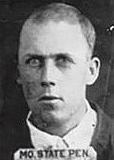
Harry & Jennings Young
Mass murderers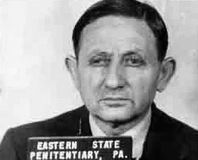 Morris Bolber
Serial killer · USA · 1932
Morris Bolber was prosecuted as part of a Philadelphia poison-murder ring invol…
50 victims
Morris Bolber
Serial killer · USA · 1932
Morris Bolber was prosecuted as part of a Philadelphia poison-murder ring invol…
50 victims
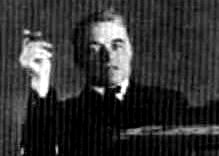 Andrew Kehoe
Mass murderer · USA · 1927
Andrew P. Kehoe committed suicide the same day by killing himself in the explos…
44 victims
Andrew Kehoe
Mass murderer · USA · 1927
Andrew P. Kehoe committed suicide the same day by killing himself in the explos…
44 victims
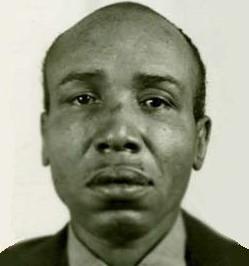 Jake Bird
Serial killer · USA · 1930
October 30, 1947 — Jake Bird broke into the home of Bertha Kludt and her daught…
44 victims
Jake Bird
Serial killer · USA · 1930
October 30, 1947 — Jake Bird broke into the home of Bertha Kludt and her daught…
44 victims
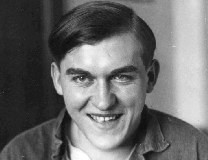 Gordon Northcott
Serial killer · USA · 1928
Gordon Stewart Northcott was a Canadian-born ranch owner who later murdered boy…
20 victims
Gordon Northcott
Serial killer · USA · 1928
Gordon Stewart Northcott was a Canadian-born ranch owner who later murdered boy…
20 victims
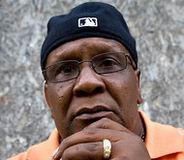 Donnie Andrews
Murderer · USA · 1986
Larry Donnell Andrews (April 29, 1954 – December 13, 2012) was an American crim…
2 victims
Donnie Andrews
Murderer · USA · 1986
Larry Donnell Andrews (April 29, 1954 – December 13, 2012) was an American crim…
2 victims
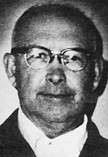 Gordon Kahl
Murderer · USA · 1983
Name: Gordon Kahl Alternative name(s): Gordon Wendell Kahl Lifespan: 1920 – Jun…
3 victims
Gordon Kahl
Murderer · USA · 1983
Name: Gordon Kahl Alternative name(s): Gordon Wendell Kahl Lifespan: 1920 – Jun…
3 victims
 Roy Allen Stewart
Murderer · USA · 1978
Roy Allen Stewart was convicted and sentenced to death for beating, raping and…
1 victim
Roy Allen Stewart
Murderer · USA · 1978
Roy Allen Stewart was convicted and sentenced to death for beating, raping and…
1 victim
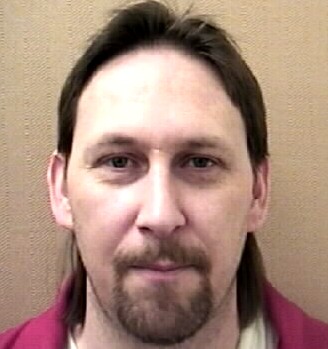 Carl Moseley
Murderer · USA · 1991
Carl Moseley was tried for first-degree murder. The State’s evidence included t…
2 victims
Carl Moseley
Murderer · USA · 1991
Carl Moseley was tried for first-degree murder. The State’s evidence included t…
2 victims
- Gender
- male
- Country
- USA
- Location
- Brookline, Missouri, USA
- Date of birth
- ????
- Characteristics
- fugitive, murder-suicide, murder for hire, juvenile
- Victim profile
- Sheriff Marcell Hendrix / Deputy sheriff Wiley Mashburn / Deputy sheriff Ollie Crosswhite / Chief of Detectives Tony Oliver / Patrolman Sidney Meadows / Officer Charles Houser
- Method of murder
- Shooting
- Date(s) of murder
- January 2, 1932
- Years active
- 1932
- Date of arrest
- —
- Status
-
Died in custody
Died on January 5, 1932; the coroner’s office in Houston concluded that the brothers had shot each other in a suicide pact to avoid capture
Case overview
Harry Young and Jennings Young took part in the “Young Brothers Massacre,” also referred to as the “Brookline Shootout.” The gun battle occurred outside Brookline, Missouri, now part of Republic, Missouri, on the afternoon of January 2, 1932.
It resulted in the deaths of six law enforcement officers and became the worst single killing of U.S. police officers in the 20th century.
Background
The Young brothers were Paul, Harry, and Jennings. In the 1920s they were known to law enforcement officers in southwest Missouri as small-time thieves. Each served terms in the Missouri State Penitentiary at “Old Jeff” for burglary and theft. Jennings and Paul also served terms at Leavenworth.
By the late 1920s, the three became well known to local law officers and earned the nickname of the “Young Triumvirate.”
Local authorities considered the brothers non-violent until June 2, 1929, when Harry Young and an accomplice murdered Mark Noe, City Marshal of Republic, Missouri, after Noe stopped Young for drunk driving. Harry Young then disappeared with his two brothers and allegedly lived under a false name in Texas for two and a half years.
The brothers established a grand-scale auto theft ring, later described by the FBI as one of the largest of its kind.
By the end of 1931, Harry and “Jinx” decided to visit their family farm in Missouri.
The event involved a large group of law enforcement officers and a single civilian who went to arrest the Young brothers.
The offence
On arrival at the farmhouse, the police officers assembled in the front yard and yelled for the brothers to come out. They received no response. Officer Ollie Crosswhite said he heard a person walking around inside.
Sheriff Marcell Hendrix ordered tear gas to be fired into the house. Hendrix and deputy sheriff Wiley Mashburn then decided to kick down the back door and enter the home. Two persons opened fire from inside the house, one armed with a 12-gauge shotgun and the other with a .25-20 rifle.
At the gun battle, Hendrix and Mashburn were mortally wounded. The officers outside began shooting into the windows of the house, while those inside continued firing on the exposed policemen.
Another three officers—Tony Oliver, Sid Meadows, and Charles Houser—were quickly gunned down.
The surviving policemen, out of ammunition and pinned down, abandoned their dead and dying comrades and fled.
Officer Crosswhite was still alive and uninjured and crouched behind a storm cellar at the rear of the house. When the suspects inside became aware of Crosswhite’s presence, one pinned him down with rifle fire while the other crept up behind him and killed him with a shotgun blast to the back of the head.
While a relief party was being formed in Springfield, the killers took both money and weapons from the fallen policemen and fled.
Investigation and manhunt
After the Brookline incident, a national manhunt commenced.
The Young brothers were tracked to a rented room in Houston, Texas. Houston police officers entered the home on January 5 and discovered the brothers had retreated to a bathroom. Officers called on the men inside to surrender and were met with gunfire. After the officers returned fire, there was a period of silence, and then several shots were heard. A voice called out, “We’re dead-come on in”.
Officers found Jennings Young dead and Harry Young mortally wounded from multiple gunshot wounds. The guns taken from the murdered lawmen in Brookline were found on the bodies.
The coroner’s office in Houston concluded that the brothers had shot each other in a suicide pact to avoid capture. Some persons later questioned this version of events, suspecting that the officers involved had in fact fired the fatal shots.
The incident persuaded law enforcement in the U.S. to take a more professional and cautious approach to armed standoff situations, particularly those involving persons suspected of previous violence towards police officers.
Timeline
- June 2, 1929 — Harry Young and an accomplice murdered Mark Noe, City Marshal of Republic, Missouri, after Noe stopped Young for drunk driving.
- January 2, 1932 — The Young brothers’ gun battle at the family farm near Brookline, Missouri resulted in the deaths of six law enforcement officers.
- January 5, 1932 — Houston police officers entered a room where the brothers had retreated to a bathroom; Jennings Young was found dead and Harry Young mortally wounded.
Arrest and final encounter in Houston
J. F. Tomlinson, a carpenter by trade, telephoned Houston Chief of Police Percy F. Heard on January 5 and told him that in the morning paper he had seen pictures of Harry and Jennings Young who greatly resembled the two men he had rented a room to the previous afternoon. Tomlinson said the men were at his home still sleeping that morning.
Chief Heard contacted Lieutenant Claude Beverly of the Magnolia Park substation. They arranged for multiple Houston Police Department officers to assemble at McKinney Avenue near the Tomlinson cottage. Specific duties were assigned to each of the detectives and patrolmen who were there to capture the Young brothers, “dead or alive.”
Shortly after 9:00 a.m., the carpenter’s bungalow was surrounded by lawmen armed with revolvers, shotguns, sub-machine guns, rifles, gas-guns, gas grenades, and smoke bombs.
Tear gas canisters were hurled through a rear window into the bedroom where the outlaws were believed to be, and then into the front room. Officers then searched the bedroom and found no one in the bed or hiding behind the open door.
Officers moved toward the bathroom and opened it slightly. Instantly three shots were fired, barely missing the two lawmen. A brief pause occurred, then the bathroom door opened slightly and one of the Youngs peeked out. Lieutenant Beverly fired point-blank with his sawed-off shotgun. The door slammed shut and several shots rang out from within the bathroom. Someone behind the door yelled, “We’re dead — come and get us.”
Chief Heard and Lieutenant Beverly kept their men back until gas had time to be effective. They then unlatched the bathroom door and pushed. They continued opening the door wider and found Jennings Young lying dead in a pool of blood. Harry Young was found bleeding profusely but still alive.
Harry Young was placed in an ambulance and rushed to St. Joseph’s Infirmary, where he died shortly after arriving. He did not regain consciousness on the way to the hospital, and no deathbed statement was obtained.
Deaths and officers killed
During the January 2, 1932 incident, six law enforcement officers were killed:
- Sheriff Marcell Hendrix
- Deputy Sheriff Ollie Crosswhite
- Deputy Sheriff Wiley Mashburn
- Chief of Detectives Tony Oliver
- Patrolman Sidney Meadows
- Officer Charley Houser
In Houston, Jennings Young was found dead, and Harry Young died shortly after arrival at St. Joseph’s Infirmary.
Deputy Mashburn was described as still alive after the initial gun battle but died later that evening.
Additional people and roles mentioned
- Mark Noe — City Marshal of Republic, Missouri; murdered by Harry Young and an accomplice on June 2, 1929.
- Wiley Mashburn — deputy sheriff who was mortally wounded during the Brookline farm confrontation.
- Ollie Crosswhite — officer who was mortally wounded during the rear-of-house killing.
- Tony Oliver — Chief of Detectives who was gunned down during the confrontation.
- Sid Meadows — Patrolman who was gunned down during the confrontation.
- Charles Houser — Officer who was gunned down during the confrontation.
- Detective Virgil Johnson — fired a gas canister through an upstairs window.
- Chief of Police Ed Waddle — handed the matter off to the county sheriff.
- Detective Frank Pike — one of the surviving detectives who fled.
- Owen Brown — one of the surviving detectives.
- Ben Bilyeu — one of the detectives who remained at the scene.
- Virgil Johnson — a detective who participated during the Brookline farm confrontation.
- Detective Owen Brown — referenced among the survivors.
- Detective Sid Meadows — killed during the confrontation.
- Detective Ben Bilyeu — referenced in the actions around the car during the shootout.
- Civilian R. G. Wegman — ordered to the rear of the officer’s cars to keep watch of the barn and shed.
- H. D. Carroll — farmer involved in discovering guns and Missouri license plates in a wrecked car.
- H. D. Carroll’s daughter — involved in noticing removal of items from the car.
- Dan M. Nee — Greene County Prosecuting Attorney who received a break leading to investigation in Texas.
- HornBostel — assistant to Dan M. Nee.
- Federal Agents Burger and DeMoss — federal agents questioned alongside Nee.
- Wilson, Nolan and Arndt — Frisco Railway detective staff.
- Oscar Young — identified as owning the guns after investigators traced ownership.
- Pretty Boy Floyd — confirmed to be in Texas at the time of the massacre.
- Isaac Levy — Corsicana traveler who picked up the brothers near Fairfield.
- E. C. Hogan — Fort Worth drug salesman who gave a ride near the wreck site.
- J. F. Tomlinson — carpenter in Houston who informed the police about the brothers’ presence.
- Percy F. Heard — Houston Chief of Police.
- Claude Beverly — Lieutenant of the Magnolia Park substation.
Other details
A monument bearing the names of the six slain officers stands today in front of the police headquarters building in Springfield.
The names of the six officers killed are inscribed on panel 16, line 17 of the National Law Enforcement Officers Memorial’s East wall.
Mayor Thomas Gideon of Springfield recommended “high-powered rifles for the protection of the city police force.”
Several books are mentioned as further reading: The Young Brothers Massacre ((Written & Illustrated Especially for Law Enforcement Officers), by John R. Woodside), The Young Brothers Massacre, by Paul W. Barrett and Mary H. Barrett, and other titles including We're Dead, Come On In.
Spotted an error, or have more information about this case?