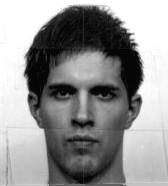
Stephen Nethery
Murderer Ervil LeBaron
Murderer · USA · 1972
Ervil Morrell LeBaron (1925 to August 16, 1981) was the leader of a polygamous…
35 victims
Ervil LeBaron
Murderer · USA · 1972
Ervil Morrell LeBaron (1925 to August 16, 1981) was the leader of a polygamous…
35 victims
 Brian Kevin Rosenfeld
Murderer · USA · 1985
Brian Kevin Rosenfeld Brian Kevin Rosenfeld was sentenced to three concurrent l…
23 victims
Brian Kevin Rosenfeld
Murderer · USA · 1985
Brian Kevin Rosenfeld Brian Kevin Rosenfeld was sentenced to three concurrent l…
23 victims
 Marvin Gray
Murderer · USA · 1975
Marvin Gray was convicted killer who claimed responsibility for 23 slayings and…
23 victims
Marvin Gray
Murderer · USA · 1975
Marvin Gray was convicted killer who claimed responsibility for 23 slayings and…
23 victims
 Yahweh ben Yahweh
Murderer · USA · 1980
Yahweh ben Yahweh was born and legally named Hulon Mitchell Jr. (October 27, 19…
23 victims
Yahweh ben Yahweh
Murderer · USA · 1980
Yahweh ben Yahweh was born and legally named Hulon Mitchell Jr. (October 27, 19…
23 victims
 Russell Ellwood
Murderer · USA · 1991
Russell Ellwood was a former taxi driver. Authorities suspected him of killing…
20 victims
Russell Ellwood
Murderer · USA · 1991
Russell Ellwood was a former taxi driver. Authorities suspected him of killing…
20 victims
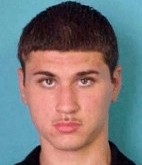 Adam Ezerski
Murderer · USA · 2001
August 11, 2001 — Kevin Begoon met Ezerski at a Polk Street cafe and let Ezersk…
1 victim
Adam Ezerski
Murderer · USA · 2001
August 11, 2001 — Kevin Begoon met Ezerski at a Polk Street cafe and let Ezersk…
1 victim
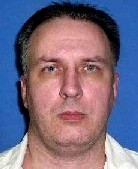 Patrick Henry Murphy
Murderer · USA · 2000
Patrick Henry Murphy, Jr. TDCJ Number: 999461 Date of birth: 10/03/1961 Educati…
1 victim
Patrick Henry Murphy
Murderer · USA · 2000
Patrick Henry Murphy, Jr. TDCJ Number: 999461 Date of birth: 10/03/1961 Educati…
1 victim
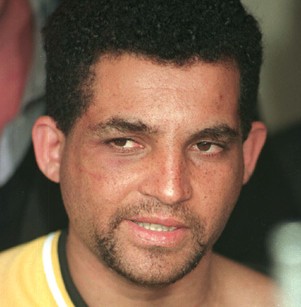 Francisco de Assis Pereira
Serial killer · Brazil · 1997
Francisco de Assis Pereira was a motorcycle courier who became known as the “pa…
11 victims
Francisco de Assis Pereira
Serial killer · Brazil · 1997
Francisco de Assis Pereira was a motorcycle courier who became known as the “pa…
11 victims
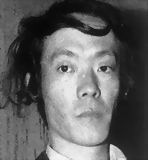 Issei Sagawa
Murderer · France · 1981
Name: Issei Sagawa (佐川 一政, Sagawa Issei) Born: June 11, 1949 Age at offence: 32…
1 victim
Issei Sagawa
Murderer · France · 1981
Name: Issei Sagawa (佐川 一政, Sagawa Issei) Born: June 11, 1949 Age at offence: 32…
1 victim
 Virginia Larzelere
Murderer · USA · 1991
Virginia Gail Larzelere (white) was born on 12-27-1952 and was 38 years old at…
1 victim
Virginia Larzelere
Murderer · USA · 1991
Virginia Gail Larzelere (white) was born on 12-27-1952 and was 38 years old at…
1 victim
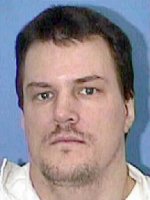 Troy Albert Kunkle
Murderer · USA · 1984
Troy Albert Kunkle was convicted of capital murder and sentenced to death for t…
1 victim
Troy Albert Kunkle
Murderer · USA · 1984
Troy Albert Kunkle was convicted of capital murder and sentenced to death for t…
1 victim
- Gender
- male
- Country
- USA
- Location
- Dallas County, Texas, USA
- Date of birth
- J une 2, 1960
- Age at first offence
- 21
- Characteristics
- rape
- Victim profile
- John McCarthy, 24 (Dallas police officer)
- Method of murder
- Shooting
- Date(s) of murder
- February 23, 1981
- Years active
- 1981
- Date of arrest
- Same day
- Status
-
Executed
Executed by lethal injection in Texas on May 27, 1994
Case details
Stephen Ray Nethery was convicted of capital murder and sentenced to death by the Texas state court. He was executed by lethal injection in Texas on May 27, 1994.
Timeline
- June 1981 — Stephen Nethery was convicted for the murder of police officer John McCarthy.
- February 22, 1981 — Nethery met a woman in a Dallas bar, consumed strong drinks, and persuaded her to leave the bar with him to go to a secluded spot to smoke marihuana.
- Early 1986 — The Supreme Court denied his petition for certiorari, rendering his conviction final.
- June 11, 1993 — The case was before the United States Court of Appeals, Fifth Circuit.
- July 21, 1993 — Rehearing and rehearing en banc were denied.
- May 27, 1994 — Nethery was executed by lethal injection.
Background
Nethery met a woman in a Dallas bar on the evening of February 22, 1981. They consumed several strong drinks and he persuaded her to leave the bar with him to go to a secluded spot to smoke marihuana.
They drove to an area near a lake in a high crime area and parked. It was well after midnight. Nethery made sexual advances which his companion initially resisted. A pistol fell out of his pocket. He caused her to disrobe. He did likewise and they engaged in sexual relations over an extended period.
The offence
A police car on patrol spotted them and pulled up alongside. Two officers exited their vehicle. Officer Phillip Brown approached the Nethery auto and shined his flashlight inside. Officer John McCarthy stood by the police auto.
As Officer Brown illuminated the interior of Nethery’s car, the woman was attempting to put on her clothes; Nethery was naked. Officer Brown told them that they could be arrested and instructed them to leave the area.
At this point Brown turned to return to the police cruiser. As he did, Nethery exited his car, rested his arm on the top of his vehicle, said "I'm sorry," and fired three quick shots. He hit Officer McCarthy. Officer Brown returned fire and Nethery ran toward the lake. Brown pursued and chased Nethery into the lake where Nethery finally surrendered.
After returning to the parked vehicles, Brown found his patrol partner on the ground, calling for help on his mobile radio. Officer McCarthy was rushed to the hospital but subsequently died of the gunshot wound to the back of his head.
Nethery was indicted and tried for capital murder in Dallas County. Pursuant to Texas procedure, the jury first determined his guilt and then considered three statutorily mandated special issues.
In response to these questions, the jury found:
- that Nethery’s conduct was deliberate and undertaken with the reasonable expectation of McCarthy’s death;
- that there was a probability that Nethery would commit further criminal acts that would constitute a threat to society; and
- that Nethery’s conduct was unreasonable in response to any provocation by Officer McCarthy.
Based on these answers, Nethery was sentenced to death by lethal injection.
Investigation and arrest
The narrative provided described officers spotting the parked vehicle, Brown shining a flashlight into the car, Brown instructing Nethery and the woman to leave the area, and then Nethery firing at Officer McCarthy. Brown returned fire and pursued Nethery into the lake, where Nethery finally surrendered.
Trial
The trial proceeded in Dallas County. The jury first determined guilt and then considered three special issues.
Nethery later challenged aspects of the trial proceedings on appeal, including issues relating to prosecutorial closing arguments, jury selection, jury instructions, and alleged judicial bias at resentencing proceedings.
Prosecutorial closing arguments and failure-to-testify issue
Nethery argued that certain statements made by the prosecution during closing arguments improperly pointed to his failure to testify. The Texas Court of Criminal Appeals found an exchange and addressed related objections.
A statement made in the closing argument by Nethery’s lawyer was:
The prosecutor, when they were questioning you, told you it's not up to the state to prove motive. That's right. Nothing in the court's charge says they have to prove it. But I'll say this: If you have lack of motive, you're certainly entitled to consider that. According to Brown, he'd finished. He was--both of them [had] finished. Turning to go back to their car. And you've got a man who knows that he's facing two police officers with guns and [he] gets out of the car and deliberately shoots and kills a policeman. Where's the logic? What reason is there?
The state responded in closing argument:
Motive? Mr. Goodwin wants a motive. Mr. Goodwin wants a reason. You told us, each and every one of you told us on voir dire that we could not, in many cases, bring you a motive or a reason and you agreed from that witness stand that you would not force the State to show you a motive. And I'm sure it was explained to you that we can't show you a motive or a reason because many times it is known only to the defendant. It's in that head (pointing to defendant). We can't cut that head open.
The trial court sustained a defense objection to the statement and instructed the jury to disregard it, but refused to declare a mistrial.
Sentencing
The jury was tasked with answering three special issues. The answers were as follows: deliberateness with reasonable expectation of death; probability of further violent criminal acts constituting a continuing threat to society; and whether the killing was unreasonable in response to any provocation by the deceased.
The sentencing included jury instructions about intoxication and special issues under Article 37.071. The sentencing instructions discussed included:
- the jury was instructed that it could return a negative answer to any special issue if ten or more of them so voted;
- an affirmative response to any question required unanimity;
- the jury was not told of the consequence of failing to muster fewer than ten “no” votes or 12 “yes” votes;
- under a Texas statute applied to all criminal cases, the trial judge instructed the jury that:
Evidence of temporary insanity caused by intoxication may be introduced by the actor in mitigation of penalty attached to the offense for which he is being tried. and that: "Intoxication" means disturbance of mental and physical capacity resulting from the introduction of any substance into the body.
Appeals
Direct appeal and state collateral review
Nethery’s appeal to the Texas Court of Criminal Appeals was direct and automatic. The court found no reversible error in any of his 55 points of error.
His petition for certiorari was denied by the Supreme Court in early 1986, rendering his conviction final.
Nethery then pursued writ of habeas corpus. The same judge who had presided over his trial denied his first state application and resentenced him to death. Nethery maintained that at this point the judge disclosed his close personal relationship with Officer McCarthy. Nethery appealed the denial to the Texas Court of Criminal Appeals, adding a claim of judicial bias; that court again denied relief.
Nethery filed his first application for a federal writ, which was dismissed for failure to exhaust a claim. He did nothing until his execution was rescheduled, at which point he returned to state district court seeking habeas relief. A different judge was assigned. The court found no factual or legal basis for relief, and the Texas Court of Criminal Appeals affirmed.
Federal habeas proceedings and certificate of probable cause
The matter proceeded as federal habeas relief. The district court denied his application and refused to grant a certificate of probable cause for appeal. The Court of Appeals granted CPC.
The United States Court of Appeals, Fifth Circuit affirmed the judgment:
- The judgment of the district court was AFFIRMED.
The case identifiers and procedural posture included:
- 993 F.2d 1154
- Stephen Ray Nethery, Petitioner-Appellant, v. James A. Collins, Director, Texas Department of Criminal Justice, Institutional Division, Respondent-Appellee.
- United States Court of Appeals, Fifth Circuit.
- June 11, 1993 (before POLITZ, Chief Judge, KING and BARKSDALE, Circuit Judges)
- Rehearing and Rehearing En Banc Denied July 21, 1993
Judicial bias claim
Nethery claimed his trial was tainted by the presiding judge’s failure to disclose a close personal friendship with the deceased officer. He contended that the relationship did not become apparent until the judge went into "an emotional tirade" during a resentencing hearing.
He contended that:
- the record indicated the judge sentenced Nethery to die on what would have been Officer McCarthy’s birthday and then immediately called a short recess;
- after returning, the judge directed the clerk to send a copy of the death warrant to Nethery so he could "study it" before he died;
- Nethery claimed the judge also professed a close friendship to the victim, although the record was described as silent in this respect;
- the state received conflicting affidavits from the trial judge and from Nancy Berry, Nethery’s friend and spiritual advisor, regarding the judge’s statements at the resentencing hearing.
The state habeas court found as a matter of fact that the judge was not a personal friend of the victim.
Grand jury composition claim
Nethery claimed that he learned from a fellow inmate that the grand jury was not lawfully formed and presented transcript evidence from the fellow inmate’s case. The argument involved that only nine grand jurors deliberated throughout the grand jury’s tour of duty.
The Court of Appeals noted that Texas law provided for indictment by a quorum of nine grand jurors. Hugh Lucas, an Assistant District Attorney, testified that he supervised grand jury operations on the day Nethery was indicted, that twelve grand jurors were impaneled, and that he personally witnessed at least nine of them assemble to hear Nethery’s case. The Court of Appeals found this testimony uncontradicted and corroborated by court documents listing the names of the 12 impaneled grand jurors, concluding the assignment of error was without merit.
Jury selection claims
Nethery complained about excusing prospective jurors for cause and the refusal to excuse others. The court discussed dismissal of prospective jurors William Keller and Debra Pippi for cause and declined defense invitations to excuse several other venire members who indicated a preference for imposing death as a penalty.
The Court of Appeals concluded that dismissal of Keller and Pippi did not violate the standard announced in Witt, and that Nethery did not exhaust his peremptory challenges, so he was not forced to accept jurors he found objectionable.
Mitigating evidence and special issues
Nethery asserted three distinct points of error regarding whether the jury could give effect to mitigating evidence of his intoxication in responding to statutorily mandated special issues. The Court of Appeals addressed these arguments collectively.
The Court of Appeals held that the Texas special issues were sufficiently broad to allow meaningful consideration of voluntary intoxication, emphasizing the transitory condition and referencing the controlling precedent that the jury could give mitigating effect in response to the relevant issues.
Definitions used in special issues
Nethery claimed the meaning of terms “deliberately,” “probability,” and “society” could not be ascertained. The Court of Appeals stated it had determined those words have a common meaning and adequately permit the jury to effectuate its collective judgment, and thus consideration of the point was foreclosed.
Not answering special issues
Nethery claimed he was harmed because the jury was not told of the consequence of failing to muster fewer than ten “no” votes or 12 “yes” votes, relating this to verdict reliability. The Court of Appeals treated this claim as proposing a new rule and stated it did not reach the merits because his conviction became final in 1986, two years before Mills was decided.
Dissent
Judge KING dissented from the panel majority’s affirmance, stating the disagreement was limited to the disposition of Nethery’s Eighth Amendment claim regarding mitigating evidence of voluntary intoxication.
Judge KING described an Eighth Amendment concern about the effect of a jury instruction under Texas Penal Code § 8.04 that addressed intoxication and temporary insanity, arguing that the jury might read the instruction as preventing consideration of intoxication mitigation unless it rose to temporary insanity.
Judge KING wrote:
- that the trial judge instructed the jury that: and:
- and that he believed this precluded the jury from considering non-insane state intoxication as mitigating evidence.
Judge KING also stated views about whether the claim was properly before the court and about the need to review the entire charge when assessing the effect of alleged defects in jury instructions.
Outcome
The United States Court of Appeals, Fifth Circuit affirmed the district court’s denial of habeas relief and the refusal to grant a certificate of probable cause for appeal, as reflected in the panel disposition and the subsequent denial of rehearing and rehearing en banc.
Nethery was executed on May 27, 1994.
Aftermath
Before execution, Nethery gave a last statement asking people to pray for two families and then said:
"Well, I just wanted to ask people to pray for two families: my family and the family of Officer McCarthy. I appreciate the prayers. Lord Jesus, receive my spirit."
Nethery’s mother still read the letter her son wrote to her an hour before he was executed everyday. She defended her son and said:
"Stephen was not crazy. I hope that others will learn from this."
Spotted an error, or have more information about this case?