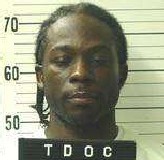
Kevin B. Burns
Murderer Brian Kevin Rosenfeld
Murderer · USA · 1985
Brian Kevin Rosenfeld Brian Kevin Rosenfeld was sentenced to three concurrent l…
23 victims
Brian Kevin Rosenfeld
Murderer · USA · 1985
Brian Kevin Rosenfeld Brian Kevin Rosenfeld was sentenced to three concurrent l…
23 victims
 Russell Ellwood
Murderer · USA · 1991
Russell Ellwood was a former taxi driver. Authorities suspected him of killing…
20 victims
Russell Ellwood
Murderer · USA · 1991
Russell Ellwood was a former taxi driver. Authorities suspected him of killing…
20 victims
 Robert Martines Perez
Murderer · USA · 1994
Name: Robert Martines Perez · Other name used in proceedings: Robert Martinez P…
15 victims
Robert Martines Perez
Murderer · USA · 1994
Name: Robert Martines Perez · Other name used in proceedings: Robert Martinez P…
15 victims
 Billy Frank Vickers
Murderer · USA · 1993
Billy Frank Vickers Vickers was executed by lethal injection in Texas on Januar…
14 victims
Billy Frank Vickers
Murderer · USA · 1993
Billy Frank Vickers Vickers was executed by lethal injection in Texas on Januar…
14 victims
 Anthony Sowell
Serial killer · USA · 2007
Anthony Edward Sowell (born August 19, 1959) was an American serial killer iden…
11 victims
Anthony Sowell
Serial killer · USA · 2007
Anthony Edward Sowell (born August 19, 1959) was an American serial killer iden…
11 victims
 Dorsie Leslie Jones
Murderer · USA · 1979
Dorsie Leslie Jones was an inmate on Oklahoma’s death row for the longest perio…
1 victim
Dorsie Leslie Jones
Murderer · USA · 1979
Dorsie Leslie Jones was an inmate on Oklahoma’s death row for the longest perio…
1 victim
 Robert Drew
Murderer · USA · 1983
Robert Nelson Drew was executed by lethal injection in Texas on August 2, 1994.…
1 victim
Robert Drew
Murderer · USA · 1983
Robert Nelson Drew was executed by lethal injection in Texas on August 2, 1994.…
1 victim
 Haji Mammadov
Murderer · Azerbaijan · 1995
Haji Mammadov was a former officer of the Crime Investigation Department of the…
11 victims
Haji Mammadov
Murderer · Azerbaijan · 1995
Haji Mammadov was a former officer of the Crime Investigation Department of the…
11 victims
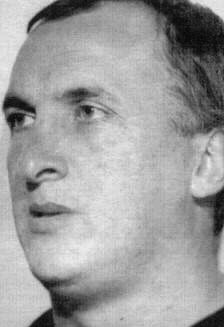 Colin Ireland
Serial killer · United Kingdom · 1993
Name: Colin Ireland · Also known as / tabloid name: London's "Gay Slayer" · Cri…
5 victims
Colin Ireland
Serial killer · United Kingdom · 1993
Name: Colin Ireland · Also known as / tabloid name: London's "Gay Slayer" · Cri…
5 victims
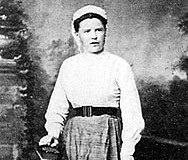 Marguerite Dixblanc
Murderer · United Kingdom · 1872
Marguerite Dixblanc was a Belgian cook. She entered the Park Lane household of…
1 victim
Marguerite Dixblanc
Murderer · United Kingdom · 1872
Marguerite Dixblanc was a Belgian cook. She entered the Park Lane household of…
1 victim
- Gender
- male
- Country
- USA
- Location
- Shelby County, Tennessee, USA
- Date of birth
- April 20, 1969
- Age at first offence
- 23
- Characteristics
- robbery
- Victim profile
- Damond Dawson, 17, and Tracey Johnson, 23
- Method of murder
- Shooting
- Date(s) of murder
- April 20, 1992
- Years active
- 1992
- Date of arrest
- June 23, 1992
- Status
-
Sentenced to death
Sentenced to death on November 27, 1995
Case overview
Kevin B. Burns was sentenced to death on November 27, 1995. He was convicted of two counts of felony murder and two counts of attempted felony murder for killings that occurred on April 20, 1992.
The Supreme Court of Tennessee affirmed the death sentence and the convictions for felony murder. The Court of Criminal Appeals affirmed the convictions and sentences for the felony murder convictions, but reversed the attempted felony murder convictions.
Timeline
- April 20, 1992 — Damond Dawson, 17; Tracey Johnson, 23; Eric Thomas; and Tommie Blackman were sitting in a car in Dawson's driveway in Memphis when Burns and Carlito Adams approached; Blackman was ordered out, a firearm attack occurred, Damond Dawson was shot multiple times and died after being transported to the hospital, Tracey Johnson died at the scene, and Eric Thomas survived.
- June 23, 1992 — Burns was found in Chicago and arrested after being advised of his rights and signing a waiver; he gave a statement admitting his role in the killings.
- November 27, 1995 — Burns was sentenced to death.
- November 09, 1998 — Glenn I. Wright, Wilson & Wright, Memphis, appeared for the appellant.
- July 25, 1997 — The Court of Criminal Appeals opinion (C.C.A. NO. 02C01-9605-CR-00170, Shelby County) was filed.
- 2001 — Kevin Burns v. State of Tennessee (Court proceedings reflected as “2001” in the case summary).
- 2005 — Kevin B. Burns v. State of Tennessee (Court proceedings reflected as “2005” in the case summary).
The offence
On April 20, 1992, four young men—Damond Dawson, 17; Tracey Johnson, 23; Eric Thomas; and Tommie Blackman—were sitting in a car in Dawson's driveway in Memphis. Dawson was in the driver's seat, Johnson was in the front passenger seat, Thomas was in the back seat behind Dawson, and Blackman was in the back seat behind Johnson.
Burns and Carlito Adams, who knew Blackman, walked up to the passenger side of the car. Adams pulled out a handgun and told Blackman to get out of the car. When Blackman refused, Burns pulled out a handgun and went around to the driver's side of the car. Blackman got out of the car and fled. Adams said “get him,” and three or four more men appeared from behind hedges and fired at Blackman.
Eric Jones, age fourteen, was playing basketball at Dawson's house with three friends. Jones saw the men in the car removing jewelry and pulling money from their pockets. Seconds later, Jones saw Blackman running toward him. Amidst gunshots, Jones and Blackman escaped to the back of the house; Jones' three friends ran to an adjacent yard. Once inside the house, Jones heard seven or eight more gunshots.
Mary Jones, Eric Jones' mother, lived across the street from the Dawsons. She saw Adams shoot Johnson once in the chest. She saw Kevin Burns shoot Dawson several times, walk to the front of the car, and then shoot Dawson again. Ms. Jones unequivocally identified Burns and stated that she got “a real good look in his face” as he ran toward her after the shootings.
Tracey Johnson died at the scene. Damond Dawson suffered five gunshots to his arm, buttocks, chest, and hip. He was alive when police arrived but died after being transported to the hospital. Eric Thomas sustained gunshots to his chest and stomach, but survived and made a photo identification of Kevin Burns two days after the incident. Thomas testified that Burns and the others had “opened fire” after robbing him and his friends of their jewelry and money.
Thomas said that he initially told police he had been shot by Adams, but explained that he believed he was going to die and gave police the only name he knew, which was Adams.
Investigation and admission
On June 23, 1992, Burns was found in Chicago and arrested. After being advised of his rights and signing a waiver, the defendant gave a statement in which he admitted his role in the killings.
He said that he had received a telephone call from Kevin Shaw, who told him that four men had “jumped” Shaw's cousin. Burns, Shaw, and four others intended to fight the four men, and Shaw gave Burns a .32 caliber handgun. As the others approached a car with four men sitting in it, Burns stayed behind. He heard a shot, saw a man running across the yard, and fired three shots. He then left the scene with the other men.
Trial
Guilt phase
After the guilt phase of the trial, the jury deliberated and returned verdicts of guilty for two counts of felony murder and two counts of attempted felony murder.
Penalty phase
In the penalty phase, the jury imposed the death penalty for one of the felony murder convictions after finding that evidence of an aggravating factor outweighed the evidence of mitigating factors beyond a reasonable doubt. The jury imposed a life sentence for the other felony murder conviction.
The trial court entered judgment in accordance with the jury's verdict.
Victim impact evidence during penalty phase
Jonnie Dawson, mother of Damond Dawson, testified that Damond was the youngest of her three children and seventeen years of age when he was killed. She said he was a good son who was very good at athletics. She testified that the neighborhood had changed after the killings; people locked their doors and were afraid. Ms. Dawson testified that she no longer knew what it was like to be happy.
Brenda Hudson, mother of Tracey Johnson, testified that Tracey was the oldest of her three children and twenty years of age when he was killed. She said he had been working at Wal-Mart and saving money for his four-month-old daughter. She testified that Tracey's death greatly affected Ms. Hudson' other two children, Tracey's grandfather, and Tracey's young daughter:
When you go over to her house to see her, she has a picture in a frame and she will show you. She'll say, ‘this is my father-this is my daddy, Tracey. He lives in God's house up in heaven.’ And it's hard for me to go see her a lot because it breaks my heart to hear her say that.
Mitigation evidence during penalty phase
In mitigation, Leslie Burns, the defendant's mother, testified that the defendant was twenty-six years of age and had twelve brothers and sisters. She said he had graduated from high school and had presented no disciplinary problems while in school.
The defendant's father, Reverend Obra Carter, testified that his son had always been obedient and well-mannered.
Phillip Carter, the defendant's brother, testified that the defendant had been active in the church and had always tried to avoid trouble.
Norman McDonald, the defendant's Sunday School teacher, testified that he had known Kevin Burns for several years. According to McDonald, Burns was a “faithful” young man who had always attended church regularly.
Mary Wilson, a Captain with the Shelby County Sheriff's Department, and Bennet Dean, a volunteer chaplain, testified that Burns had actively participated in religious services while in custody for these offenses.
Aggravating circumstances relied on by the prosecution
The prosecution relied on two aggravating circumstances to seek the death penalty for the felony murder convictions—(i)(3) and (i)(6) under Tenn. Code Ann. § 39-13-204(i)(3) and (6) (1997 & Supp. 1998):
- that the defendant knowingly created a great risk of death to two or more persons other than the victim murdered during the act of murder; and
- that the murder had been committed for the purpose of avoiding, interfering with, or preventing a lawful arrest or prosecution of the defendant or another.
With regard to the felony murder of Damond Dawson, the jury imposed the death penalty after finding that the evidence supported the “great risk of death” aggravating circumstance and that this factor outweighed the evidence of mitigating factors beyond a reasonable doubt. With regard to the felony murder of Tracey Johnson, the jury imposed a sentence of life imprisonment.
Issues raised on appeal (Court of Criminal Appeals)
The Court of Criminal Appeals affirmed the convictions and the sentences for the offenses of felony murder, but reversed the convictions for attempted felony murder based on State v. Kimbrough, 924 S.W.2d 888 (Tenn.1996).
Appeals
Supreme Court of Tennessee: affirmation
The Supreme Court of Tennessee considered whether the reversal of the attempted felony murder convictions required a finding that evidence failed to support the single aggravating circumstance found by the jury: that the defendant knowingly created a great risk of death to two or more persons, other than the victim murdered (Tenn. Code Ann. § 39-13-204(i)(3)).
The Supreme Court determined that none of the alleged errors claimed by the defendant affected the convictions for felony murder or the sentences imposed by the jury. It further concluded that the evidence supported the jury's findings as to aggravating and mitigating circumstances, and that the death sentence was not arbitrary or disproportionate to sentences imposed in similar cases. Accordingly, the judgment of the Court of Criminal Appeals was affirmed.
Attempted felony murder and attempted premeditated murder retrial issue (Court of Criminal Appeals appendix)
The Court of Criminal Appeals stated that attempted felony murder did not constitute a crime in Tennessee and reversed and dismissed the attempted felony murder convictions. It then held that Burns could be retried on two counts of attempted premeditated murder and remanded for further proceedings.
The Court of Criminal Appeals described Tennessee double jeopardy principles including implied acquittal analysis and held that the doctrine did not bar retrial because the jury was not given a full opportunity to return a verdict either on attempted felony murder or alternatively on attempted premeditated murder and its lesser offenses.
Outcome
The Court of Criminal Appeals affirmed the felony murder convictions and sentences, reversed the attempted felony murder convictions, and remanded for further proceedings.
The Supreme Court of Tennessee affirmed the death sentence and upheld the felony murder convictions, including the jury’s finding supporting the “great risk of death” aggravating circumstance.
The Supreme Court affirmed that the defendant’s sentence of death by electrocution was carried out unless otherwise ordered by the court or proper authority, and stated:
“the sentence of death by electrocution is affirmed and shall be carried out on the 9th day of February, 1999, unless otherwise ordered by this Court or proper authority.”
Other trial quotations and evidentiary issues (from the Court of Criminal Appeals appendix)
Prosecutor’s closing arguments and quoted rebuttal excerpts (aggravating circumstance issue)
The Supreme Court analyzed the context of statements made in the prosecutor's closing argument and reproduced excerpts, including:
“We haven't proven a risk of death to two or more people? My God, you've returned a verdict that he attempted to murder two other people. It is established, beyond a reasonable doubt, and already been found as a verdict that there was a risk of death to two or more people. ․ So, how anybody can say those [the aggravators] weren't proven when the verdict proves one of them and going back and shooting him again proves the other. ․ If you look at the evidence, you know the aggravating circumstances are there, and one of them has already been found.”
It also reproduced excerpts from the prosecutor’s initial argument:
“Now, what we're talking about is when Mr. Blackman was running from the car, Eric Jones was in the way of the shooting. Eric Jones confronted Tommie Blackman as he ran from the car and was caught in this gunfire․ But also there were three other young men playing basketball on the side of the yard. All three of those young men were also caught in the gunfire of the individual shooting at Tommie Blackman. That is risk of death or great bodily injury to persons other than the intended victims in this case․ In addition to Tommie Blackman, there were four persons that were in the line of fire. That is one of the aggravating factors․”
It reproduced excerpts from the prosecutor's rebuttal argument:
“There wasn't a risk of death to two or more people. How about ․ Eric Thomas who caught three rounds in his body fired not by one of [the] codefendants but by that man [defendant] right there. He shot him and shot him and shot him. That's a pretty good risk of death. How about Tommie Blackman who's running? There's a risk of death to two people right there, not even counting the children playing basketball. ․ He went with other armed men. He robbed. He shot and wounded an unarmed teenager. He helped others shoot at and kill other unarmed teenagers. With others, he shot in the direction of children playing basketball; and he personally shot two people repeatedly.”
Prosecutor’s closing argument emphasizing community impact
The Supreme Court reproduced the prosecutor’s closing argument portion:
“Do you remember the testimony of Miss Dawson? Stay home. Get back over here on David Street. Stay in your own driveway. Stay in your own yard. You'll be safe there. I never thought anybody would come up in the yard. It reminds me of the old anonymous African proverb: It takes a whole village to raise a child. And that's what this village was. That's what David street was. This wasn't a street. You've heard it described here. This is the neighborhood we all wish America really had. And that was part of the impact evidence in this case. They didn't just kill a couple of more Memphis teenagers and try to kill a couple more. They killed an entire village. They killed an entire neighborhood. They destroyed the very backbone of this community when they do things like that․ ․ You've heard what it did to this part of Orange Mound-not just to families and not just to individuals, but what it did to Orange Mound.”
Statement findings and motions in the Court of Criminal Appeals appendix
The appendix included a suppression motion discussion of Burns’s pre-trial statement after arrest by FBI agents in Chicago. It also included the trial court’s remarks denying the motion to suppress:
“The defendant says the person that handcuffed him gave him his rights on the scene-he didn't read them from a card, but he said them to him. He said he understood his rights. He doesn't remember all of them, but he knows that he was advised, ‘You have a right to remain silent and anything you say can and will be used against you.’ He doesn't recall the one about right to counsel, as is complained of in the motion; but he, too, does not deny that he was not [sic] told this. He admits, freely, that he was advised of his rights when he was initially handcuffed. Through his own statement, he was advised of his rights; he understood them; he's a high-school graduate; he was not coerced; he was not pressured; he was not threatened; nobody promised him anything. ․ But from what the court has ․ seen here, it would appear that, on all fours, the defendant freely and voluntarily, understandingly, knowingly, advisedly, and intelligently waived his rights free from any coercion, threats, pressures of any kind that would have induced him or caused him to have abandoned his rights. He claims he understood them, and from his testimony, the court would have to find that even if his recall is more accurate than that of Agent Landman, through his own evidence, the statement that is purportedly given by the defendant to Agent Landman would be admissible into evidence. The motion to suppress, respectfully, will be denied.”
The appendix also quoted the trial court’s instruction on flight:
“The law makes no nice or refined distinction as to the manner or method of a flight; it may be open, or it may be a hurried or concealed departure, or it may be a concealment within the jurisdiction; however, it takes both the leaving the scene of the difficulty and a subsequent hiding out, evasion, or concealment in the community, or a leaving of the community for parts unknown, to constitute flight. (emphasis added).”
Evidence admissions and jury questions in penalty phase (Court of Criminal Appeals appendix)
The appendix described the admission of a photograph of the driver’s seat where Dawson had been sitting, including the trial court’s remarks:
“There is some smearing of blood. I don't believe-well, in the court's opinion, looking at that, it's not unduly prejudicial. It doesn't elicit any particular revulsion in light of what's commonly on television for adult viewing these days․ It's not particularly bloody. Now, I don't think any adults or any ordinary jury is going to get particularly revolted or so distressed by looking at some moderate to small amount of dried blood on a front seat.”
The appendix reproduced jury questions during deliberations in the penalty phase:
- How many years for life?
- What does ‘life sentence’ mean?
- Can we ask for life without parole? Can we stipulate life plus so many years?
- Can we ask for consecutive life sentences?
- What does it mean if you're sentenced to death and life?
The trial court’s response was:
“All right. You're directed to refer to the charges and instructions that are contained in the jacket. Thank you. You may retire to continue your deliberations.”
Victims’ family courtroom outburst discussion (Court of Criminal Appeals appendix)
The appendix included the trial court’s description of an incident involving the victims' mothers:
“What you have here is two individuals involved-the mothers of the deceased two individuals. It was not a great outburst. It was something the court would characterize more as a sob, and that was closely contiguous with testimony that the deceased, [Johnson], somehow got out of the car; he stopped to see if traffic was coming-car was coming; he got across the street; he was holding his hands out. The witness demonstrated saying “Help me, help me,” then he stumbled and fell. At that point, I believe one of the ladies, who was a parent of that deceased, and one other who was the parent of the other deceased, got up and left the courtroom. They didn't slam the door or anything like that. I wouldn't say there was a great hubbub or anything like that. One of them sobbed. I would not say it was a particularly loud one. It was noticeable, but that's about it. ․ I don't think it's unexpected by any of the jurors that someone would not have some emotional reaction to a description of their child. ․ Under the circumstances, as they exist right now, the court does not think it's something that's going on, on an on-going basis. It does not appear to be any calculated display of histrionics or anything like that for the purpose of influencing the jury or soliciting or eliciting their passions. ․ It was not anything that was done overtly. It was a sob, and the parties immediately removed themselves without undue display when their emotions got out of control. Now, I don't believe there are going to be any other witnesses that would testify to being eyewitnesses to these events. So, I don't think the problem is going to rise again. ․ I don't think that the behavior exhibited by the two ladies in question is outrageous or anything like that or particularly offensive. I don't think it's likely to happen again, so I don't think we will have any further problem. But in any event, looking at the jury's reaction-I always do that-it did not appear that they were unduly disturbed by the thing.”
Named individuals
- Kevin B. Burns — defendant; convicted of felony murder; sentenced to death.
- Damond Dawson — victim; seventeen years of age.
- Tracey Johnson — victim; twenty years of age.
- Eric Thomas — victim; survived; made a photo identification of Burns two days after the incident.
- Tommie Blackman — participant in the car incident; fled and was shot at.
- Carlito Adams — co-actor; pulled out a handgun; told Blackman to get out; said “get him.”
- Eric Jones — age fourteen; saw the men removing jewelry and pulling money from pockets.
- Mary Jones — mother of Eric Jones; saw Adams shoot Johnson once in the chest and saw Burns shoot Dawson multiple times; identified Burns and stated: “a real good look in his face”.
- Kevin Shaw — called Burns; said four men had “jumped” Shaw's cousin; gave Burns a .32 caliber handgun.
- Leslie Burns — mother of Kevin Burns; testified in mitigation.
- Reverend Obra Carter — father of Kevin Burns; testified in mitigation.
- Phillip Carter — brother of Kevin Burns; testified in mitigation.
- Norman McDonald — Sunday School teacher; testified that Burns was “faithful.”
- Mary Wilson — Captain with the Shelby County Sheriff's Department; testified about Burns’s participation in religious services while in custody.
- Bennet Dean — volunteer chaplain; testified about Burns’s participation in religious services while in custody.
- John Knox Walkup — Attorney General & Reporter (appeared for the State).
- Michael E. Moore — Solicitor General (appeared for the State).
- Kenneth W. Rucker — Assistant Attorney General (appeared for the State).
- John W. Pierotti — District Attorney General (appeared for the State at trial).
- Thomas D. Henderson — Assistant District Attorney General (appeared for the State at trial).
- John Wheeler Campbell — Assistant District Attorney General (appeared for the State at trial).
- Glenn I. Wright — appeared for the appellant.
- Darian B. Taylor — Asst. Attorney General (appeared for the State).
- William L. Johnson — appeared for the appellant.
- John H. Peay — judge who authored the Court of Criminal Appeals opinion (as referenced in the appendix header).
- Joe B. Jones and Joe Riley — judges joined in the Court of Criminal Appeals opinion (as referenced in the Supreme Court conclusion).
- Anderson, Chief Justice — included in the Court of Criminal Appeals appendix at the end (as reflected by concurrence lines).
- Drowota, Birch and Holder, JJ. — concur (as reflected by the concurrence lines).
Places referenced
- Memphis — where Dawson's driveway and the car incident occurred.
- Chicago — where Burns was found and arrested and where he remained until apprehended by the FBI.
- Shelby County — listed in the Court of Criminal Appeals case header.
- West Memphis — referenced in relation to leaving home and going to Chicago.
- East Memphis — referenced in relation to what Harbaugh thought it might be.
- Orange Mound and David Street — referenced in the prosecutor’s closing argument about neighborhood impact.
Charges and verdicts
- The jury returned verdicts of guilty for two counts of felony murder and two counts of attempted felony murder.
- The Court of Criminal Appeals reversed the attempted felony murder convictions.
- The Supreme Court affirmed the felony murder convictions and the death sentence for one felony murder count and the life sentence for the other felony murder count.
Spotted an error, or have more information about this case?