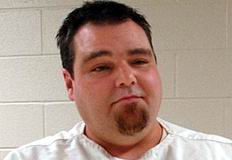
Christopher Newton
Murderer Russell Ellwood
Murderer · USA · 1991
Russell Ellwood was a former taxi driver. Authorities suspected him of killing…
20 victims
Russell Ellwood
Murderer · USA · 1991
Russell Ellwood was a former taxi driver. Authorities suspected him of killing…
20 victims
 Robert Martines Perez
Murderer · USA · 1994
Name: Robert Martines Perez · Other name used in proceedings: Robert Martinez P…
15 victims
Robert Martines Perez
Murderer · USA · 1994
Name: Robert Martines Perez · Other name used in proceedings: Robert Martinez P…
15 victims
 Billy Frank Vickers
Murderer · USA · 1993
Billy Frank Vickers Vickers was executed by lethal injection in Texas on Januar…
14 victims
Billy Frank Vickers
Murderer · USA · 1993
Billy Frank Vickers Vickers was executed by lethal injection in Texas on Januar…
14 victims
 Rosalind Brown
Murderer · USA · 1985
Rosalind Brown was a defendant in the 1985 slaying of Christopher Alan Brown, h…
1 victim
Rosalind Brown
Murderer · USA · 1985
Rosalind Brown was a defendant in the 1985 slaying of Christopher Alan Brown, h…
1 victim
 Alan Winterborne
Mass murderer · USA · 1993
Alan Winterborne (33) wanted a job and became involved in a long dispute with u…
4 victims
Alan Winterborne
Mass murderer · USA · 1993
Alan Winterborne (33) wanted a job and became involved in a long dispute with u…
4 victims
 Richard Evonitz
Serial killer · USA · 1996
Richard Marc Evonitz (July 29, 1963 - June 27, 2002) was a serial killer, kidna…
3 victims
Richard Evonitz
Serial killer · USA · 1996
Richard Marc Evonitz (July 29, 1963 - June 27, 2002) was a serial killer, kidna…
3 victims
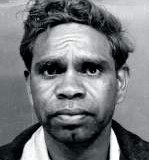 Rupert Maxwell Stuart
Murderer? · Australia · 1958
Rupert Maxwell Stuart, also known as Rupert (“Max”) Stuart (c. 1932 - ), was an…
1 victim
Rupert Maxwell Stuart
Murderer? · Australia · 1958
Rupert Maxwell Stuart, also known as Rupert (“Max”) Stuart (c. 1932 - ), was an…
1 victim
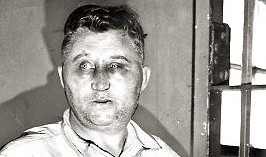 Herman Drenth
Murderer · USA · 1931
Herman Drenth was also known by the aliases Harry F. Powers and Cornelius O. Pi…
5 victims
Herman Drenth
Murderer · USA · 1931
Herman Drenth was also known by the aliases Harry F. Powers and Cornelius O. Pi…
5 victims
- Gender
- male
- Country
- USA
- Location
- Richland County, Ohio, USA
- Date of birth
- November 13, 1969
- Age at first offence
- 32
- Characteristics
- argument
- Victim profile
- Jason Brewer, 27 ( his cellmate )
- Method of murder
- Strangulation with a piece of cloth
- Date(s) of murder
- November 15, 2001
- Years active
- 2001
- Date of arrest
- Same day
- Status
-
Executed
Executed by lethal injection in Ohio on May 24, 2007
Case record: Christopher Newton
Timeline
- May 24, 2007 — Christopher Newton was executed by lethal injection in Ohio.
- May 25, 2007 — The Akron Beacon Journal and Associated Press described the execution procedure delays and timeline.
- May 26, 2007 — The Cleveland Plain Dealer reported movement and questions raised after lethal injection chemicals began flowing.
- May 27, 2007 — The Sandusky Register wrote about the execution delay and Brewer’s background.
- June 1992 — Newton was sentenced to five to 15 years in prison for attempted aggravated burglary.
- 1999 — Newton was released on parole, then parole was revoked, and he was sentenced to an additional concurrent eight-to-15-year prison sentence.
- August 1999 — Newton told a mental-health professional that he was going to kill someone in prison so that he could spend the rest of his life in prison.
- October 16, 2001 — Newton requested protective custody after claiming that another inmate had threatened to stab him.
- November 15, 2001 — Newton beat and strangled his cellmate, Jason Brewer, causing his death.
- November 14, 2001 — Newton wrote four letters addressed to various prison officials in which he stated that he had lied to obtain protective custody.
- November 18, 2001 — Newton wrote an 11-page letter relating details of the murder.
- November 19, 2001 — In a Highway Patrol interview, Newton admitted he had lied in claiming that an inmate had hired him to assault Brewer.
- September 1999 — A physical and mental examination report at the Massillon Psychiatric Center was accepted into evidence.
- 04/24/2000 — Attempted escape was listed with an admission date.
- 02/11/2003 — Admission date listed for Agg Murder.
- 02/11/2003 — Newton was placed in the relevant convicted county timeline.
- 10/18/1999 — Admissions listed for Burglary, Weapon Under Disability, RSP.
- 10/18/1999 — Admission date listed for Burglary - Committing County: ASHLAND.
- 10/18/1999 — Admission date listed for WEAPON UNDER DISABILITY - Committing County: ASHLAND.
- 10/18/1999 — Admission date listed for RSP - Committing County: ASHLAND.
- 11/13/69 — Newton’s date of birth.
- 02/11/03 — Date of Admission listed.
- 10/18/99 — Admission date listed for multiple convictions.
- 11/15/01 — Date of Offense listed.
- 2006 — State v. Newton citation appears as (Ohio 2006) in direct appeal references.
- 11:53 a.m. (May 24, 2007) — Newton was declared dead.
Background
Christopher J. Newton was an inmate at Mansfield Correctional Institution (“MANCI”).
Newton had been sentenced to five to 15 years in prison for attempted aggravated burglary in June 1992. Within a few weeks of his release on parole in 1999, he broke into his father’s house. As a result, his parole was revoked, and he was sentenced to an additional concurrent eight-to-15-year prison sentence.
In August 1999, Newton told a mental-health professional that he was going to kill someone in prison so that he could spend the rest of his life in prison.
Records showed Newton sought psychiatric and mental-health evaluation and also had a history of suicide attempts and self-mutilation. The defense presented evidence and expert testimony about Newton’s mental-health history and background, including diagnoses and treatment records in various institutions.
The offence
Between 4:00 and 5:00 a.m. on November 15, 2001, Newton beat and strangled his cellmate, Jason Brewer, causing Brewer’s death.
Newton was an inmate at MANCI. He was placed in cell 115 with Brewer in a section of MANCI reserved for inmates who request special protection. Newton had requested protective custody on October 16, 2001, claiming that another inmate had threatened to stab him.
Brewer was 27 years old, five feet, 11 inches tall, and weighed 130 pounds.
Newton was 32 years old, five feet, 11 inches tall, and weighed between 195 and 225 pounds.
On November 15, 2001, around 5:10 a.m., correctional officers responded to a disturbance in cell 115. Brewer was found lying still on the floor in a puddle of blood with a piece of orange cloth wrapped around his neck. Newton was laughing and had blood smeared all over his face.
A MANCI nurse testified that when she examined Newton, he told her that he had “painted himself with the victim's blood and had also ingested the victim's blood as part of the ritual when you kill someone.”
A different MANCI nurse testified that when she responded to cell 115, Brewer was not breathing and had no pulse. The nurse and responding paramedics worked to save Brewer’s life, and eventually Brewer’s heart began to beat.
A correctional officer testified that while medical personnel were trying to save Brewer’s life, Newton was laughing and yelling, “ ‘Let him die. I killed him.’ ”
Another correctional officer testified that Newton said, “ ‘[F]uck that bitch [Brewer]. You might as well not even work on him. He is already dead.’ ”
A nurse recalled Newton periodically shouting to the paramedics, “ ‘Stop, let the fucker die.’ ”
A State Highway Patrol Trooper described Newton as singing, “ ‘[T]here is nothing like the taste of fresh blood in the morning.’ ”
Newton told officers that he had killed his cellmate and had drunk his blood. Other officers testified Newton described how he killed Brewer by choking him and beating his head on the floor. Testimony also stated Newton said he had hit Brewer earlier that night, saw fear in Brewer’s eyes, and knew he was going to kill Brewer before the night was over.
After paramedics established a heartbeat, Brewer was taken to MedCentral Hospital and then flown to the Ohio State University Medical Center, where he was declared brain dead around 2:30 p.m. After an autopsy, Dr. Dorothy Dean, a forensic pathologist, concluded that Brewer had died from a ligature strangulation. The autopsy also concluded Brewer suffered other injuries to his head and body consistent with being kicked or stomped on.
After the assault, Newton told Lieutenant Hilbert Mealey that he had allowed Brewer to lie dead for an hour in the cell because Newton knew that paramedics would try to save his life. Newton told Mealey that he had more fun in prison than on the outside.
MANCI Lieutenant Joe Albert testified Newton seemed very happy and repeatedly asked, “ ‘Did I kill him? Is he dead?’ ” Newton also said, “[I]f he is not dead, I hope he is going to be a vegetable.”
Although Albert did not want to interview him, Newton was adamant about making a statement. Albert advised Newton of his Miranda rights, and Newton waived them.
In Newton’s description, he said he had choked and assaulted Brewer starting around 3:45 a.m. Newton used a razor blade to cut a strip off an orange jumpsuit and used that strip to strangle Brewer. Correctional officers found four letters in Newton’s cell addressed to various prison officials and dated November 14. In the letters, Newton stated that he had lied to obtain protective custody. He stated his real reason for requesting protective custody was to “take care of a little problem,” and the job was now done. Newton authenticated the letters by his bloody fingerprints and referred to himself as “Satan's Messenger, 666.”
On the morning of the murder, Trooper Smith advised Newton of his Miranda rights, and Newton signed a written waiver.
Newton told Trooper Smith that another inmate had hired him to beat up Brewer and that he and Brewer argued while playing chess. Newton said he struck Brewer, then stayed awake and made a rope so that he could strangle Brewer. He said that around 3:30 a.m., as Brewer was going to sleep, Newton pulled Brewer out of bed and hit his head against the floor and stomped on his head twice. Newton said he strangled Brewer with the rope he had made until it broke. Newton also said he punched Brewer in the face a few times and then cut a strip off a prison jumpsuit and strangled Brewer with it. He said he then stomped on Brewer’s head again. Newton estimated that he stomped Brewer’s head between five and ten times even though Brewer begged, “Please don't kill me.” Newton also said he stomped on Brewer’s throat and chest a few times.
After Newton finished assaulting Brewer, he smeared Brewer’s blood on his face and licked the blood off his hands.
After 30 minutes, he called to a correctional officer and said, “[W]elcome to the house of death!” Newton also stated he knew he would die in prison and hoped for the death penalty.
Newton wrote an 11-page letter relating details of the murder on November 18.
In a Highway Patrol interview on November 19, 2001, Newton admitted he had lied in claiming that an inmate had hired him to assault Brewer. He stated he had never met or heard of Brewer before they were placed in the cell together.
Newton also said that he and Brewer had been sexually intimate, and that when he woke up Brewer that night, he said, “Jason, come here. I'm horny.” He said Brewer ignored him, which made Newton angry. Newton said that although he had already decided to kill Brewer, he “needed that kicker [the refusal] * * * to start, start the rage.”
At the guilt phase of trial, Newton pleaded guilty as charged and presented no evidence.
Investigation
A disturbance in cell 115 led correctional officers to respond on November 15, 2001. Brewer was found with a piece of orange cloth around his neck and Newton had blood smeared on his face.
Newton received Miranda advice and waived his rights, and he provided statements describing the assault and the use of a rope and an orange jumpsuit strip.
In Newton’s cell, letters dated November 14 addressed to prison officials were found, describing that he lied to obtain protective custody.
After Newton’s Highway Patrol interview on November 19, 2001, he admitted that his earlier statement about another inmate hiring him was false.
Arrest
Newton’s case included grand jury indictment for aggravated murder with prior calculation and design, and the court proceedings followed the indictment. Newton waived a jury trial and was tried by a three-judge panel.
Trial
Newton was indicted for the aggravated murder of Brewer with prior calculation and design, R.C. 2903.01(A). A single R.C. 2929.04(A)(4) death-penalty specification alleged that Newton had committed the murder while he was under detention.
Newton waived a jury trial and elected to be tried by a three-judge panel.
Newton pleaded guilty as charged, and the state presented evidence establishing guilt as required by R.C. 2945.06 and Crim.R. 11(C)(3). The panel found Newton guilty as charged.
Following a penalty-phase hearing, the panel imposed the death penalty.
Sentencing
At the penalty-phase hearing, the defense asserted that Newton’s background and mental illness were mitigating factors.
The defense presented testimony from Newton’s brother David Newton and his sister Lisa Newton. They described Newton as the youngest of five sons and one daughter born to Jean and Lynn Newton. They testified about the family dynamic, including disciplinary practices and arguments between parents, and they described Newton’s disruptive childhood, drug and alcohol use among children, and ongoing counseling for Lisa.
David testified that he “was in fights continuously all through junior high” and took drugs and drank heavily for years. David also admitted that none of his other siblings were in prison and that they all worked for a living.
Lisa testified about a household described as constantly in turmoil, including verbal, physical, and mental abuse and arguing. She testified that her father abused her sexually when she was a teenager. She also testified that Newton was left with their grandmother during a vacation and that other children called Newton “Pyro” because he set their home on fire when he was five or six years old, causing the family to live elsewhere for six months.
Mary Churchwell, then a teacher’s aide at the Barker Alternative School in Sandusky, Ohio, testified that Newton had been very impulsive and “thrived on being different and * * * being the class clown, so he didn't form any lasting relationships.” Churchwell testified Newton engaged in bizarre behavior and laughed at inappropriate times. She also testified about Newton patterning himself after another student claiming to believe in Satan worship.
Toni Deluca, a counselor at the school, described Newton as “the class clown.”
Newton’s early school records from the Berea Children’s Home described Newton as 15 1/2 years old, admitted in May 1985 at the direction of the juvenile court, and noted concern about his “past behavior in society” being “not only unacceptable but bizarre, threatening, and aggressive. * * * His history of sexual acting out was of great concern.” The records also stated he showed “marked improvement,” and an aftercare plan was developed.
Dr. Janice Ort, a clinical psychologist, testified after evaluating Newton through interviews, testing, and review of records. She testified Newton was “socially, emotionally, and physically immature” and noted Newton’s descriptions about parenting and abuse. She discussed allegations of sexual abuse by a brother and by a neighbor, and she described severe behavioral problems including sexual acting out, theft, and drug and alcohol abuse.
Dr. Ort concluded that Newton was a malingerer, supported by psychological test data and observations from mental-health professionals. She stated Newton falsely reported hearing voices or other psychotic symptoms. She testified that a Rorschach test indicated Newton has a “significant affective disturbance [which is] basically a mood disorder typically characterized by depression symptoms or symptoms of mania.” Dr. Ort also diagnosed Newton as suffering from polysubstance abuse in complete remission due to Newton’s controlled environment, symptoms of PTSD, and a personality disorder with borderline, antisocial, and narcissistic features. She also testified about a history of suicide attempts and self-mutilation. Dr. Ort agreed Newton did not have a thought disorder and displayed no psychotic symptoms or delusions.
Voluminous institutional records were accepted into evidence, including a report of a physical and mental examination in September 1999 at the Massillon Psychiatric Center; psychiatric treatment notes for 1992 and 1995 through 2002; medical records from Newton’s July 2002 hospital stay for a drug overdose and attempted suicide; hospitalization records from November 28, 2002, to December 2, 2002, for a drug overdose; and psychiatric treatment records for December 6, 2002, to January 3, 2003, from the Oakwood Correctional Facility.
A prison psychiatrist, Dr. Arthur Keith, concluded in February 2001 that Newton was not seriously mentally ill but was malingering. Dr. Keith diagnosed antisocial-personality disorder and a substance-abuse disorder in remission and concluded no mental illness reduced responsibility for misconduct and no mental-health services or medication was required.
The discharge diagnosis from Oakwood in January 2003 included major depression, recurrent, in remission; PTSD; polysubstance dependence; and a personality disorder with antisocial traits. The Oakwood records reflected Newton’s admission that “he never really had hallucinations and he certainly did not have them at this time.”
At the penalty-phase rebuttal, Carol Mull, a licensed independent social worker at MANCI, testified about Newton repeatedly claiming to be mentally ill and later recanting and changing statements, including saying he wanted to fake mental illness to achieve something else. Mull testified that Newton liked the psychiatric-treatment unit better than regular prison, frequently claimed to hear voices, and was attention-seeking and manipulative. Mull testified Newton refused medication since December 1999 and that Newton derived pleasure from notoriety over the murder and continually asked for a cellmate. Mull described Newton as “always smiling and laughing.”
Dr. Miles Oden, a board-certified psychiatrist employed at MANCI, evaluated Newton in December 2001, three weeks after the murder. Dr. Oden testified that Newton admitted fabricating symptoms to obtain psychotropic medications, which made him feel high. Dr. Oden testified Newton had a habit of telling lies and then starts to believe his lies after a period of time. Dr. Oden testified Newton was in good health, had orderly thoughts and good mood, showed no evidence of psychosis or bipolar condition, and no mood disorder. Dr. Oden testified Newton had no significant mental illness present at the time of the murder and diagnosed polysubstance dependence in remission and a mixed personality disorder with antisocial and borderline traits. Dr. Oden testified Newton took “a certain amount of gruesome pleasure at his notoriety.” Dr. Oden testified that Newton made a party hat and a blowout toy to celebrate the anniversary of the murder on November 15, 2002.
Dr. Renee Sorrentino examined Newton’s mental-health and prison records and summarized findings. Dr. Sorrentino requested to interview Newton but was refused access by Newton’s attorneys. Dr. Sorrentino testified that an earlier diagnosis of schizoaffective disorder was “not correct * * * because * * * Newton did not have auditory hallucinations. He made them up.” She stated that a schizoaffective disorder is not curable and does not go away. Dr. Sorrentino concluded Newton did not have sufficient symptoms to support PTSD and that the records did not reflect criteria for major depressive disorder. She testified she was unclear on the meaning of Dr. Ort’s diagnosis of a “mood disorder overlaying * * * a personality disorder.” Dr. Sorrentino testified Newton was never psychotic, never lost touch with reality, and had no symptoms of psychosis. She concluded the psychological testing indicated “no psychotic process, no impaired reality testing.” She concluded an earlier bipolar disorder diagnosis was incorrect because Newton made up symptoms. Newton admitted to Dr. Ort that he read psychology texts and case studies to discover how to fake symptoms of mental illness. Dr. Sorrentino testified that the way Newton described hearing voices was “not characteristic of what psychotic patients experience.”
Dr. Sorrentino agreed Newton had a polysubstance-abuse disorder in full remission because of controlled environment, a documented history of malingering auditory hallucinations and suicidal intent, and antisocial-personality disorder and borderline-personality traits.
In the independent sentence evaluation, the Supreme Court found the evidence proved the aggravating circumstance that Newton was under detention when he killed Brewer. Newton was an inmate in MANCI, a “public * * * facility for custody of persons * * * convicted of crime in this state” under R.C. 2921.01(E).
The Supreme Court found the nature and circumstances of the offense offered no mitigating features. It found Newton brutally murdered Brewer by beating and strangling him after planning the murder, and it found he urged paramedics not to attempt to revive his cellmate.
The Supreme Court found some modest mitigating features in Newton’s history and background, including testimony that Newton’s parents did not provide nurture and guidance, and that Newton had a “disruptive, chaotic, abusive, and identity damaging childhood.” It also found Newton’s adult life did not merit favorable consideration because, except for a few weeks in 1999, Newton was in prison for nine years before the offense. The Supreme Court found Newton earned a GED certificate and participated in an honors program preparing dogs for adoption while in prison.
The Supreme Court found Newton did not establish a mental disease or defect that would have lacked substantial capacity to appreciate criminality or conform conduct to the law. It also found a documented history of malingering and falsified psychiatric symptoms. The Supreme Court concluded that past diagnoses were of negligible value due to malingering. It found none of the experts described Newton as exhibiting psychotic symptoms and credited conclusions that Newton did not have psychosis, thought disorder, PTSD, mood disorder, or bipolar condition as supported by trial evidence.
The Supreme Court stated Newton’s cooperation with the Highway Patrol and his plea of guilty represented substantial mitigating factors. It also considered Newton’s history of depression, substance-abuse problems, and antisocial- or borderline-personality disorder as relevant mitigating factors.
The Supreme Court concluded beyond a reasonable doubt that the aggravating circumstance outweighed mitigation and affirmed the death penalty. It found the aggravating circumstance was a very grave one because it involved killing another inmate while Newton was detained, and it found the death penalty appropriate and proportionate compared with other aggravated murders by inmates sentenced to death.
Appeals
Newton appealed to the Supreme Court of Ohio “as a matter of right” and presented nine propositions of law.
The Supreme Court affirmed the judgment and stated it found no merit in any of Newton’s propositions. The Supreme Court affirmed the findings of guilt.
The Supreme Court described the direct appeal holdings as including that defendant was not entitled to have the trial court weigh an aggravating circumstance without giving consideration to facts surrounding it; denial of funds for neuro-psychiatric testing did not violate due process; waiver of the right to jury trial was knowing and intelligent; no plain error occurred regarding prosecutor’s introduction of evidence during penalty phase about Newton celebrating an anniversary of his killing of his prison cellmate; defense counsel did not render ineffective assistance; nature and circumstances offered no mitigating features; cooperation and plea of guilty were substantial mitigating factors; and imposition of death penalty was appropriate. It stated the judgment was affirmed.
Outcome
Christopher Newton was executed by lethal injection in Ohio on May 24, 2007. The execution was carried out at the Southern Ohio Correctional Facility.
During the procedure, witnesses were discouraged from talking. A prison spokeswoman held up a note to reporters stating: “We have told the team to take their time. His size is creating a problem.”
The execution timeline included:
- 10:03 a.m.: execution team visible on witness-area TV screen beginning work on Newton.
- 10:10 a.m.: technicians explored insertion points on both arms, including inner and outer elbows, wrists, hands, and Newton’s right leg, and Newton was stuck with needles at least 10 times.
- 10:27 a.m.: IV inserted in left arm.
- 10:56 a.m.: Andrea Dean held up the note to reporters.
- 10:58 a.m.: medical team exited chamber for two minutes.
- 11:03 a.m.: preparations reached the one-hour mark.
- 11:05 a.m.: Newton was given a two-minute bathroom break.
- 11:28 a.m.: IV inserted in right arm.
- 11:33 a.m.: Newton walked from the medical chamber into the death chamber.
- 11:36 a.m.: strapped to the gurney with lines attached, Newton delivered his final statement into a microphone; he talked and laughed with two attending officials for another three minutes.
- 11:37 a.m.: signal given for chemicals to begin flowing.
- 11:39 a.m.: Newton’s eyes closed.
- 11:40 a.m.: Newton’s belly heaved, his chin and face shuddered and twitched, and his body twice mildly convulsed within restraints.
- 11:45 a.m.: movements stopped.
- 11:51 a.m.: curtain between witnesses and death chamber pulled for coroner examination.
- 11:53 a.m.: Newton declared dead.
Newton’s final words were: “I sure could use a beef stew and a chicken bone.” Newton’s statement referenced being able to use “a beef stew and a chicken bone,” including variants of that phrasing reported in execution coverage. A statement read after the execution by public defender Robert Lowe included Newton’s apology: “If I could take it back, I would.” The execution reporting also included a statement by Newton as: “Yes, boy, I could sure go for some beef stew and a chicken bone. That's it.''
In reporting about the execution delay, prison spokeswoman Andrea Dean said Newton was obese and medical staff had been told in advance to take as much time as needed to locate proper sites. Andrea Dean also stated: “When Newton got to Lucasville, he told us himself that his veins sat really deep. We did checks and we saw veins,” and “He was thick, and his veins sat deep.”
The reporting also included comments from Ohio State University surgeon Jonathan Groner, describing a prolonged process as equating to “torturing someone to death with needles,” and stating that the second drug “should have paralyzed Newton rather than allowing the five minutes of movement.”
The American Civil Liberties Union of Ohio released a statement urging a swift halt to capital punishment and said “Having one botched execution is too many; that Ohio has now had two botched executions in one year is intolerable.”
Ohioans to Stop Executions called it “inhumane treatment” and urged Gov. Ted Strickland to stop all executions.
Gov. Ted Strickland told a reporter he was “personally satisfied that everything that was done during that process” showed consideration for the inmate and said the event “is not a justification for a change of position regarding the death penalty in Ohio.” Strickland also said: “It's a sad and tragic thing when any human life is lost.”
Terry Collins, director of the Department of Rehabilitation and Correction, said procedural changes after Joseph Clark’s execution included telling staff, “We told them, 'Take your time, be comfortable, and do your job,' ”.
Other details
- Newton’s case citations included State v. Newton, 108 Ohio St.3d 13, 840 N.E.2d 593 (Ohio 2006) referenced as a direct appeal.
- The record included final meal items: Steak, asparagus, brussels sprouts, feta cheese, a soft drink, cake and watermelon.
- The record listed Newton’s inmate number as A378452, his date of birth as 11/13/69, county of conviction as Richland, and date of offense as 11/15/01. It listed date of admission as 2/11/03, 10/18/99.
- The record listed Newton’s gender as Male and race as White.
- The institutions listed included Mansfield Correctional Institution and Southern Ohio Correctional Facility.
- The record listed convictions including BURGLARY, WEAPON UNDER DISABILITY, RSP, ATTEMPTED AGG BURGLARY, ATTEMPTED ESCAPE, AGG MURDER.
- The record listed admission dates tied to commits:
- Burglary — Committing County: ASHLAND; Admission Date: 10/18/1999
- Weapon Under Disability — Committing County: ASHLAND; Admission Date: 10/18/1999
- RSP — Committing County: ASHLAND; Admission Date: 10/18/1999
- Attempted Agg Burglary — Committing County: SANDUSKY; Admission Date: 10/18/1999
- Attempted Escape — Committing County: CUYAHOGA; Admission Date: 04/24/2000
- Agg Murder — Committing County: RICHLAND; Admission Date: 02/11/2003
- The Supreme Court addressed aggravating and mitigating factors under R.C. 2929.04(A)(4) and (B) provisions, including discussion of statutory mitigating factors and “other factors” listed as R.C. 2929.04(B)(7). It stated that Newton’s cooperation with the Highway Patrol and guilty plea represented substantial mitigating factors.
- Prison officials planned no investigation or autopsy after the execution, according to one report.
Spotted an error, or have more information about this case?