Tuan Anh Nguyen
Murderer Ervil LeBaron
Murderer · USA · 1972
Ervil Morrell LeBaron (1925 to August 16, 1981) was the leader of a polygamous…
35 victims
Ervil LeBaron
Murderer · USA · 1972
Ervil Morrell LeBaron (1925 to August 16, 1981) was the leader of a polygamous…
35 victims
 Brian Kevin Rosenfeld
Murderer · USA · 1985
Brian Kevin Rosenfeld Brian Kevin Rosenfeld was sentenced to three concurrent l…
23 victims
Brian Kevin Rosenfeld
Murderer · USA · 1985
Brian Kevin Rosenfeld Brian Kevin Rosenfeld was sentenced to three concurrent l…
23 victims
 Marvin Gray
Murderer · USA · 1975
Marvin Gray was convicted killer who claimed responsibility for 23 slayings and…
23 victims
Marvin Gray
Murderer · USA · 1975
Marvin Gray was convicted killer who claimed responsibility for 23 slayings and…
23 victims
 Yahweh ben Yahweh
Murderer · USA · 1980
Yahweh ben Yahweh was born and legally named Hulon Mitchell Jr. (October 27, 19…
23 victims
Yahweh ben Yahweh
Murderer · USA · 1980
Yahweh ben Yahweh was born and legally named Hulon Mitchell Jr. (October 27, 19…
23 victims
 Russell Ellwood
Murderer · USA · 1991
Russell Ellwood was a former taxi driver. Authorities suspected him of killing…
20 victims
Russell Ellwood
Murderer · USA · 1991
Russell Ellwood was a former taxi driver. Authorities suspected him of killing…
20 victims
 Nathaniel Dickson
Mass murderer · USA · 2008
Nathaniel Casey Dickson was 20 years old when he pleaded guilty and was sentenc…
4 victims
Nathaniel Dickson
Mass murderer · USA · 2008
Nathaniel Casey Dickson was 20 years old when he pleaded guilty and was sentenc…
4 victims
 Ruth Snyder
Murderer · USA · 1927
Ruth Snyder was an American murderess who was executed by electrocution in New…
1 victim
Ruth Snyder
Murderer · USA · 1927
Ruth Snyder was an American murderess who was executed by electrocution in New…
1 victim
 Thandi Maqubela
Murderer · South Africa · 2009
Thandi Maqubela was “humiliated and outraged” by her husband’s infidelities. Th…
1 victim
Thandi Maqubela
Murderer · South Africa · 2009
Thandi Maqubela was “humiliated and outraged” by her husband’s infidelities. Th…
1 victim
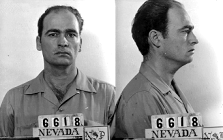 Leroy Linden
Murderer · USA · 1953
Leroy Linden was executed by asphyxiation-gas in Nevada on July 15, 1954, toget…
1 victim
Leroy Linden
Murderer · USA · 1953
Leroy Linden was executed by asphyxiation-gas in Nevada on July 15, 1954, toget…
1 victim
 Vincenzo Campanella
Homicide · Italy · 1990
Vincenzo Campanella was a 17-year-old cousin of Santina Renda. He had mental pr…
2 victims
Vincenzo Campanella
Homicide · Italy · 1990
Vincenzo Campanella was a 17-year-old cousin of Santina Renda. He had mental pr…
2 victims
 Michael Van McDougall
Murderer · USA · 1979
Michael Van McDougall was convicted of fatally stabbing a neighbor and was late…
1 victim
Michael Van McDougall
Murderer · USA · 1979
Michael Van McDougall was convicted of fatally stabbing a neighbor and was late…
1 victim
- Gender
- male
- Country
- USA
- Location
- Tulsa, Oklahoma, USA
- Date of birth
- December 10, 1959
- Age at first offence
- 23
- Characteristics
- parricide
- Victim profile
- His wife, Donna, 21; his 3-year-old niece, Amanda; and his 6-year-old nephew, Joseph
- Method of murder
- St abbing with knife
- Date(s) of murder
- May 23, 1982
- Years active
- 1982
- Date of arrest
- June 30, 1986
- Status
-
Executed
Executed by lethal injection in Oklahoma on December 10, 1998
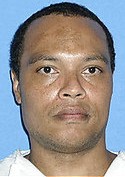
Case record: Tuan Anh Nguyen
Overview
Tuan Anh Nguyen was convicted in Tulsa County, Oklahoma, of three counts of first degree murder and was sentenced to death on two counts and to life imprisonment on the remaining count. He was executed by lethal injection in Oklahoma on December 10, 1998.
Nguyen was also known by his chosen Americanized name, “Tommy Wing.” A Tulsa man who fatally stabbed and slashed his wife and 2 children in her care was the next man in line to be executed in Oklahoma.
Timeline
- May 24, 1982 — Nguyen was sentenced to death for the murders of 6-year-old Joseph White and 3-year-old Amanda Jo White.
- May 23, 1982 (approximately 10:50 p.m.) — Myra White left her house for work at a nearby gas station.
- May 23, 1982 (shortly before midnight) — Joseph White left the house and joined his wife at work.
- May 24, 1982 (approximately 1:00 a.m.) — Nguyen was seen at a convenience store two miles from the murder scene.
- May 24, 1982 (between 1:30 and 2:00 a.m.) — Nguyen visited Rick Brown’s apartment.
- May 24, 1982 (between 5:00 and 5:30 a.m.) — Tony Nguyen and Tien Bach drove Nguyen to a Howard Johnson’s restaurant on Highway 44.
- June 1982 — Nguyen was charged with three counts of first degree murder.
- June 30, 1986 — Nguyen was transported to Tulsa to stand trial on the pending murder charges.
- 1986 — Nguyen was arrested in Tucson, Arizona, following a domestic disturbance involving Mychau Truong; he was convicted and sentenced to death.
- 1984 (summer) — Nguyen met Truong at a wedding in Milwaukee, Wisconsin.
- 1988 — The Oklahoma Court of Criminal Appeals decided Nguyen v. State, 769 P.2d 167 (Okla. Crim. App. 1988), cert. denied 492 U.S. 925 (1989).
- 1990 — Nguyen’s first state post-conviction evidentiary hearing occurred (transcript dated 4/19/90).
- May 4, 1994 — The Oklahoma Court of Criminal Appeals ordered a July 19, 1994 execution date.
- July 15, 1994 — Nguyen filed this § 2254 action and an accompanying application for stay of execution; the district court stayed execution that same day.
- July 19, 1994 — An execution date was ordered by the Oklahoma Court of Criminal Appeals.
- October 28, 1996 — The district court entered judgment denying relief.
- November 20, 1996 — Nguyen filed a notice of appeal.
- November 26, 1996 — The district court granted an application for a certificate of appealability.
- December 1, 1998 — Amnesty International received further information about Nguyen while he was scheduled to be executed in Oklahoma on 10 December 1998.
- August 20, 1998 — Nguyen’s attorney spoke to Nguyen through the “bean hole” during a visit.
- September 30, 1998 — A psychiatrist hired by the defense team visited Nguyen in H-Unit; Nguyen refused to leave his cell.
- October 8 (year not stated in the case excerpt) — Nguyen’s execution date was set on 8 October.
- October 23 (year not stated in the case excerpt) — Nguyen’s lawyer wrote to the prison warden indicating that there was “good reason to believe” Nguyen was insane as defined by Oklahoma law.
- December 10, 1998 — Nguyen was executed by injection in Oklahoma on his 39th birthday.
The offence
Nguyen was convicted for the May 24, 1982 murders of 6-year-old Joseph White and 3-year-old Amanda Jo White, and for the murder of Donna Nguyen.
Victims and their deaths
Donna Nguyen was 26 at the time described in the case narrative and was found dead when the children’s parents returned to their home. Donna had been caring for the children, who were her relatives, while their parents were away. The children found dead were Joseph White (age 6) and Amanda Jo White (age 3).
The case narrative stated that Nguyen stabbed and slashed his wife and the two children. The prosecutors said Nguyen stabbed Donna 26 times, stabbed his 3-year-old niece Amanda 22 times, and stabbed his 6-year-old nephew Joseph 17 times.
Scene and discovery
At approximately 10:50 p.m. on May 23, 1982, Myra White left her house for work at a nearby gas station. After cleaning up around the house, Joseph White also left the house and joined his wife at work shortly before midnight.
Joseph White left his two children asleep in their upstairs bedroom, and Donna and Nathaniel were downstairs in the living room. The Whites worked through the night and returned home between 7:00 and 8:00 the following morning. Upon arrival, they discovered the front door was unlocked.
Inside, they found Donna stabbed to death in the living room. Nathaniel was crying but unharmed in a playpen near Donna’s body. Joseph White went upstairs and discovered the bodies of his two children on the floor of their bedroom. Both had been stabbed to death.
A bent and bloody kitchen knife was found downstairs near Donna’s body.
The Whites’ infant son (Nathaniel) was found unharmed in his crib at the Tulsa duplex where the others were killed.
Investigation
Nguyen had been arrested in Arizona in 1986 after the murders were discovered in Oklahoma.
The case narrative described that in recent years Nguyen had repeated psychotic-like episodes in his cell where he would scream for extended periods, and that his mental health deteriorated such that there was serious doubt over whether he understood his punishment. International standards were discussed in relation to the death penalty against persons who have become insane.
Arrest and custody
Nguyen was arrested in Tucson, Arizona, in 1986 following a domestic disturbance between Nguyen and Mychau Truong, a teenage girl with whom he was living. Nguyen had met Truong at a wedding in Milwaukee, Wisconsin, in the summer of 1984. The two moved to Louisiana, where Nguyen regularly beat Truong and kept her a virtual prisoner in their trailer home. They eventually moved to Arizona, where Nguyen continued to beat her. During one of the beatings, while Truong was pregnant with Nguyen’s child, Truong shot Nguyen. Nguyen was arrested after this incident and transported to Tulsa on June 30, 1986, to stand trial on the pending murder charges.
Trial
Nguyen was tried in Tulsa County, Oklahoma, and convicted of three counts of first degree murder. A jury convicted Nguyen of three counts of first degree murder.
Sentencing phase findings
At the conclusion of the sentencing phase, the jury found the existence of three aggravating factors:
- The murder of the White children was especially heinous, atrocious, or cruel.
- Nguyen’s actions presented a great risk of death to more than one person.
- There was a probability that Nguyen constituted a continuing threat to society.
Based upon these findings, the jury recommended sentences of death for the murders of the children and a sentence of life imprisonment for the murder of Donna Nguyen.
The district court adopted the jury’s recommendations and sentenced Nguyen to life imprisonment for the murder of his wife, and death by lethal injection for the murders of the children.
Jury instructions on presumption of innocence and flight
During the guilt phase of trial, the trial court instructed the jury that Nguyen was “presumed innocent of the crime[s] charged, and the presumption continues unless, after consideration of all the evidence, you are convinced of his guilt beyond a reasonable doubt.” (State Court Record, at 80 (Instr. 2).)
The court also instructed the jury regarding departure after the crime (flight), including the following instruction:
Evidence has been introduced of the defendant's departure shortly after the alleged crime was committed. You must first determine whether this action by the defendant constituted flight. The term flight, as it is used in this instruction, means more than departure or concealment. To be in flight, a defendant must have departed with a consciousness of guilt in order to avoid arrest. To find that the defendant was in flight you must find beyond a reasonable doubt that: First, the defendant departed; second, with a consciousness of guilt; third, in order to avoid arrest for the crime with which he is charged. If, after a consideration of all the evidence on this issue, you find beyond a reasonable doubt that the defendant was in flight, then this flight is a circumstance which you may consider with all the other evidence in the case in determining the question of the defendant's guilt or innocence. However, if you have a reasonable doubt that the defendant was in flight, then the fact of any departure is not a circumstance for you to consider. Id. at 91 (Instr. 13).
Flight instruction challenged on appeal and habeas
Nguyen contended this flight instruction violated due process right to a presumption of innocence and relieved the State of its burden to prove guilt. The district court and appellate analysis addressed whether the instruction had so infected the trial as to violate due process.
Prosecution and defense during trial
Mitigation evidence during sentencing
During the sentencing phase, the prosecution introduced photographs of the crime scene and presented the testimony of Mychau Truong. Truong testified that after she began living with Nguyen and moved with him to Louisiana, he began hitting her on a regular basis, and told her to stay inside their trailer and not to look out the windows. She further testified that Nguyen continued to hit her on an almost daily basis after they moved to Arizona, even after she became pregnant. Ultimately, Truong shot Nguyen during one of the beating episodes.
Although counsel cross-examined Truong, the defense team did not present mitigating evidence of its own. During closing arguments in the penalty phase, defense counsel asked the jury to exercise mercy and sentence Nguyen to life in prison rather than death by lethal injection.
The jury rejected this argument.
Opening statements and objections
Nguyen contended that trial counsel was ineffective for failing to make opening statements in either phase of the trial and for failing to object to inadmissible testimony and improper remarks during closing argument in the guilt phase. The appellate analysis concluded that Nguyen failed to show prejudice on these alleged errors.
Post-conviction proceedings
Nguyen filed applications for post-conviction relief in state district court and the Oklahoma Court of Criminal Appeals affirmed denials at multiple stages.
Relief was denied in Nguyen v. State, 844 P.2d 176 (Okla. Crim. App. 1992), cert. denied 509 U.S. 908 (1993).
Nguyen filed a second application for post-conviction relief in state district court after the May 4, 1994 ordering of a July 19, 1994 execution date; the denial was affirmed in Nguyen v. State, 879 P.2d 148 (Okla. Crim. App. 1994), and Nguyen’s request for stay of execution was denied.
Appeals and federal habeas
Direct appeal to the Oklahoma Court of Criminal Appeals
The court found the evidence insufficient to support the “heinous, atrocious, or cruel” aggravating factor, but reweighed the remaining aggravating and mitigating circumstances and affirmed death sentences. Nguyen v. State, 769 P.2d 167 (Okla. Crim. App. 1988), cert. denied 492 U.S. 925 (1989).
Federal appeal (Tenth Circuit)
The case included UNITED STATES COURT OF APPEALS TENTH CIRCUIT No. 96-5254: TUAN ANH NGUYEN, Petitioner-Appellant, v. DANIEL REYNOLDS, Warden, Oklahoma State Penitentiary; LARRY FIELDS, Director, Oklahoma Department of Corrections; SUSAN B. LOVING, sued as: Susan Brimer Loving, Attorney General of the State of Oklahoma, Respondents-Appellees.
The appeal was from an Appeal from United States District Court for the Northern District of Oklahoma (D.C. No. 94-CV-688-K). The panel included BALDOCK, KELLY, and BRISCOE, Circuit Judges. The circuit judge writing the opinion was BRISCOE, Circuit Judge.
The Tenth Circuit held that it affirmed the district court’s denial of relief and rejected Nguyen’s arguments.
Issues addressed in the federal opinion
The opinion addressed multiple claims, including:
- Competency to stand trial: Nguyen argued he was not mentally competent to stand trial. The court analyzed the competency standard from Dusky v. United States and rejected Nguyen’s competency argument, finding no merit and concluding the district court did not err in refusing to conduct a hearing.
- Ineffective assistance of counsel at trial: Nguyen argued counsel was ineffective in investigation and presentation of mitigation evidence, voir dire, opening statements, evidentiary objections, and improper prosecutorial comments during closing. The appellate court concluded Nguyen did not establish prejudice on the alleged failures.
- Ineffective assistance of appellate counsel: Nguyen argued his appellate counsel’s briefing and issue selection were deficient. The appellate court rejected these claims.
- Improper use of peremptory challenges: Nguyen raised claims under Batson v. Kentucky and later Powers v. Ohio. The court held the Powers-based challenge was barred by Teague because Nguyen’s convictions became final nearly two years prior to Powers.
- Refusal to permit mitigating evidence during sentencing phase: Nguyen argued the trial court erred by refusing witness Betsy Payne’s testimony regarding prison time under consecutive life sentences and by refusing to instruct the jury on parole. The opinion discussed Simmons v. South Carolina and O’Dell v. Netherland and concluded Nguyen’s sentences could not be reversed on that ground.
- “Continuing threat” aggravating circumstance: Nguyen argued the factor was unconstitutionally vague. The appellate court concluded the factor did not violate the Eighth Amendment, relying on Jurek and rejecting reliance on Williamson.
- Reweighing of aggravating and mitigating circumstances: The opinion addressed challenges to reweighing after invalidating the “heinous, atrocious, or cruel” aggravator and discussed Clemons v. Mississippi.
- Instruction on flight: The opinion reviewed Nguyen’s flight instruction challenge under procedural default and, additionally, due process considerations, concluding the instruction did not deprive him of fair trial and due process of law.
- Prosecutorial misconduct: Nguyen argued the prosecutor commented on his failure to testify, referred to him as inhuman, and denigrated Vietnamese people as a whole. The opinion included discussion of the closing argument and applied the Donnelly v. DeChristoforo standard.
A verbatim excerpt from the prosecutor’s closing argument during the guilt phase included the following:
Tell you another thing it tells you about it, for four years -- for four years he never sees him again, his own child. Something happened that was so important to the Defendant that he would flee that morning before the bodies were even discovered by the Whites and never ever see his own child again. * * * To abandon your family, that simply is not human nature. He may be a Vietnamese, and in spite of some of the evidence, he is still human, though. That is not human nature. You don't leave. You don't disappear. You don't drop out of sight before the crime is even discovered to never be found again for four years. Why? There is only one reason why. There is only one way he could have known. There is only one way that could have been so important to him to abandon everyone for all of that time, and that is that he knew what the Whites were going to find when they got home and it was time to get out and disappear. And he did it. If there is any other explanation for his conduct, you have not heard it. Trial Transcript, at 797-98.
Execution and related circumstances
Nguyen’s execution was scheduled for December 10, 1998 and he was executed by lethal injection in Oklahoma on that date, which was described as his 39th birthday early Thursday.
Amnesty International reported further information on Nguyen, stating that in the seven years he had been held in H-Unit of Oklahoma State Penitentiary, his mental health was reported to have deteriorated to the point that there was serious doubt over whether he understood his punishment.
The Amnesty International account described that Nguyen had refused to leave his cell for anything apart from showering, had refused to leave his cell to meet with a lawyer except once in early 1994 for a 10-minute meeting during which he said nothing for the majority of the time, and had communicated during an August 20, 1998 visit through a “bean hole” in a restricted manner.
The account also described that on September 30, 1998 a psychiatrist hired by the defense team observed Nguyen through the bean hole after Nguyen refused to leave his cell, that the psychiatrist believed Nguyen could be suffering from degenerative neurological disease with cognitive impairment, and that a conclusive finding was not possible without proper neurological testing in a hospital setting.
The account further described that Nguyen’s execution date was set on 8 October, and that prison officials took a mobile telephone to the cell door at the request of lawyers; because Nguyen was incapable of dialling the number, an official did so for him and placed the telephone in his hands. Nguyen gave no response to the news of his impending execution.
It described a written communication on October 23 in which Nguyen’s lawyer wrote to the prison warden indicating that there was “good reason to believe” that Nguyen was insane as defined by Oklahoma law.
It stated that two weeks later, the warden responded that Nguyen was not insane.
The Amnesty account described that Nguyen’s lawyers appealed for a proper hearing into Nguyen’s mental health.
Other details
Immigration and personal history
The opinion described that Nguyen was born and raised in Vietnam. In 1975, at the age of 15, he and other members of his family left Saigon and made their way by boat to a refugee camp in Indian Town Gap, Pennsylvania. A church in Columbus, Indiana, sponsored the family and assisted them in relocating to a house in Columbus.
Nguyen dated Donna Barthlow, a fellow high school student in Columbus. During the summer of 1978 they eloped to Washington state. A short time later they moved to Bartlesville, Oklahoma, where they lived with Nguyen’s uncle and attended school. The couple eventually dropped out of school, returned to Columbus for a brief period, and then moved to Tulsa, Oklahoma.
While in Tulsa, the couple had a son, Nathaniel.
During this time period, the couple argued and Nguyen began to exhibit jealous behavior.
Due to limited finances, beginning in March 1982, the family shared a house with Donna’s cousin Myra White, Myra’s husband Joseph, and the Whites’ two young children, Joseph (age 6) and Amanda (age 3).
In mid-May 1982, Donna asked Nguyen to move out because she wanted a divorce. Nguyen agreed and stayed with a friend, Tony Aguillar, who lived close to the Whites’ house.
Family involvement and named individuals in testimony and affidavits
During the state post-conviction evidentiary hearing, attorneys who represented Nguyen testified, including Pete Silva (primary defense attorney) and Johnnie O’Neal.
The lead prosecutor was Thomas Gillert.
The record described the testimony of Mychau Truong regarding Nguyen’s abuse of her.
Nguyen submitted affidavits from various family members controverting some testimony from Silva, O’Neill, and Gillert, including:
- Nguyen’s sister, who alleged Silva never asked her to provide background information about their family and that she would have been willing to testify.
- Nguyen’s uncle, who alleged he never told Gillert he was unwilling to testify and that he and other family members would have been willing to testify.
- Nguyen’s aunt, who alleged that although she and other family members would have testified, they were not contacted.
- Janet Sharp, who provided an affidavit outlining Nguyen’s background while living in Indiana.
A witness referred to as Betsy Payne was discussed in connection with testimony that the trial court refused to allow, and the court discussed her proposed testimony regarding parole time under consecutive life sentences.
Counts and aggravating factors at trial
Nguyen was convicted of three counts of first degree murder and was sentenced to death on two counts and life imprisonment on the remaining count. The aggravating factors found at the sentencing phase were:
- especially heinous, atrocious, or cruel (later found insufficient on direct appeal),
- great risk of death to more than one person,
- probability of continuing threat to society.
Counsel and prison execution conditions mentioned in the narrative
The case narrative included that Assistant federal public defender Scott W. Braden contended Nguyen’s mental health had deteriorated so much he could not understand the death penalty.
Corrections Department spokesman Jerry Massie said Nguyen did not request any witnesses to view his execution or any minister beside him in the death chamber. The narrative also stated that Nguyen becomes the 3rd condemned inmate to be put to death in Oklahoma that year, and the 12th overall since the state resumed executions in 1990.

Spotted an error, or have more information about this case?