
Richard L. Odom
Homicide/Murderer Brian Keith Lord
Homicide/Murderer · USA · 1974
Name: Brian Keith Lord Birth year: 1961 Nationality: American In 1974, at the a…
2 victims
Brian Keith Lord
Homicide/Murderer · USA · 1974
Name: Brian Keith Lord Birth year: 1961 Nationality: American In 1974, at the a…
2 victims
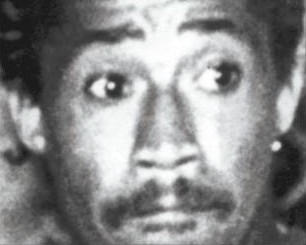 Earl Clanton
Homicide/Murderer · USA · 1972
Earl Clanton Jr. was executed in the electric chair. He was 33 years old when h…
2 victims
Earl Clanton
Homicide/Murderer · USA · 1972
Earl Clanton Jr. was executed in the electric chair. He was 33 years old when h…
2 victims
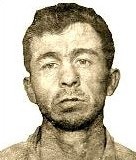 Donald Henry Gaskins
Serial killer · USA · 1969
Donald Henry Gaskins, also known as Donald “Pee Wee” Gaskins, was a serial kill…
200 victims
Donald Henry Gaskins
Serial killer · USA · 1969
Donald Henry Gaskins, also known as Donald “Pee Wee” Gaskins, was a serial kill…
200 victims
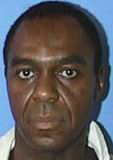 Carl Eugene Watts
Serial killer · USA · 1974
Carl Eugene Watts (born November 7, 1953; died September 21, 2007), also known…
100 victims
Carl Eugene Watts
Serial killer · USA · 1974
Carl Eugene Watts (born November 7, 1953; died September 21, 2007), also known…
100 victims
 Rodney Alcala
Serial killer · USA · 1977
Rodney James Alcala (born August 23, 1943) was also known as Rodrigo Jacques Al…
100 victims
Rodney Alcala
Serial killer · USA · 1977
Rodney James Alcala (born August 23, 1943) was also known as Rodrigo Jacques Al…
100 victims
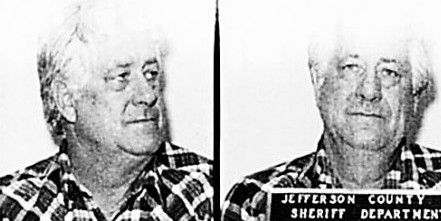 Thomas McCormick
Murderer? · USA · 1975
Thomas McCormick recruited homeless men from a Denver church mission to work on…
8 victims
Thomas McCormick
Murderer? · USA · 1975
Thomas McCormick recruited homeless men from a Denver church mission to work on…
8 victims
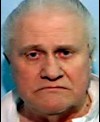 Ronald Howard Moen
Murderer · USA · 1986
Ronald Howard Moen was born on 2/23/37. He was the husband of Judith Moen. On M…
2 victims
Ronald Howard Moen
Murderer · USA · 1986
Ronald Howard Moen was born on 2/23/37. He was the husband of Judith Moen. On M…
2 victims
 Della Sutorius
Murderer · USA · 1996
Della Faye Hall Hoeffer Beyer Bassett Britteon Sutorius was an American woman w…
1 victim
Della Sutorius
Murderer · USA · 1996
Della Faye Hall Hoeffer Beyer Bassett Britteon Sutorius was an American woman w…
1 victim
 Mark Christeson
Murderer · USA · 1998
Mark A. Christeson was convicted and sentenced to death for the 1998 murders of…
3 victims
Mark Christeson
Murderer · USA · 1998
Mark A. Christeson was convicted and sentenced to death for the 1998 murders of…
3 victims
- Gender
- male
- Country
- USA
- Location
- Rankin County, Mississippi / Shelby County, Tennessee, USA
- Date of birth
- August 13, 1960
- Age at first offence
- 18
- Characteristics
- juvenile (17), rape, robbery
- Victim profile
- Mary Rebecca Roberts / Mina Ethyl Johnson, 77
- Method of murder
- Shooting / St abbing with knife
- Date(s) of murder
- May 4, 1978 / May 10, 1991
- Years active
- 1978–1991
- Date of arrest
- —
- Status
-
Sentenced to death
Sentenced to death on October 15, 1992; resentenced to death on January 16, 2008; Tennessee Supreme Court upheld the death sentence on 3 March 2011
Case record: Richard L. Odom
Timeline
- May 4, 1978 — Richard L. Odom killed Mary Rebecca Roberts in Pearl, Mississippi.
- August 13, 1960 — Richard L. Odom was born in Mississippi.
- 1978 — Richard L. Odom pleaded guilty to the murder of Mary Rebecca Roberts and received a life sentence.
- May 8, 1991 — Richard L. Odom demanded Lillian Hammond's purse outside Shelby State Community College in Memphis, Tennessee.
- May 10, 1991 — Mina Ethel Johnson’s body was found on the back seat floorboard of her car in a parking garage in Memphis, Tennessee.
- May 13, 1991 — Fingerprints found in Mina Ethel Johnson’s car led to Richard L. Odom’s arrest.
- May 1991 — Richard L. Odom was convicted and sentenced to death for raping and stabbing to death 77-year-old Mina Ethyl Johnson in a parking garage in Memphis, Tennessee.
- 1992 — Richard L. Odom was convicted and sentenced to death in Shelby County, Tennessee, and the robbery conviction and sentencing were part of proceedings addressing aggravating circumstances.
- 1996 — Justice Penny White was ousted in a retention vote after decisions related to the case became a rallying cry for victims' rights advocates.
- 2004 — The Supreme Court reversed the death sentence, ruling that prosecutors should not have been allowed to give the jury graphic, violent details of a prior murder by Odom.
- 2007 — A third jury sentenced Richard L. Odom to death.
- January 16, 2008 — Richard L. Odom was resentenced to death.
- 3 March 2011 — The Tennessee Supreme Court upheld the death sentence.
Background
Richard L. Odom was convicted of first degree murder and sentenced to death for raping and killing seventy-seven-year-old Mina Ethel Johnson in 1991 in Memphis, Tennessee. His death sentence had been overturned on appeal and was later affirmed after resentencing and additional appellate review.
The offence
Murder and rape of Mina Ethel Johnson (1991)
On May 10, 1991, Mina Ethel Johnson’s body was found on the back seat floorboard of her car in a parking garage in Memphis, Tennessee. Her lower body had been left exposed, and she was bleeding from her anus and vagina. There were multiple stab wounds in her back and two bloody hand prints on her hips.
Richard L. Odom admitted that he intended to steal the victim’s purse and forced her into the back seat of her vehicle. When the victim said, "What are you doing, son," Richard L. Odom replied, "I'll give you your damn son." Odom admitted that he raped the victim and that the victim told him that she "never had sex with a man before." He admitted that he used the knife officers found in his possession to stab the victim. He did not recall how many times he stabbed the victim. Odom said that he found no money in the victim's wallet or purse, and that he left the victim in her car and fled.
Prior violent felony: robbery conviction (1992)
The prosecution presented evidence regarding a 1992 robbery conviction in Shelby County, Tennessee, supported by the testimony of victim Lillian Hammond. Hammond testified that on May 8, 1991, she was approached by Richard Odom outside of her office at Shelby State Community College in Memphis, Tennessee. Hammond testified that the defendant demanded Hammond's purse and threatened to kill or harm Hammond if she made any noise. Hammond testified that the defendant made vulgar sexual comments and said, "I want you." Hammond testified that the defendant grabbed her arm and caused her to fall to the ground. He took Hammond's purse and ran away.
Prior violent felony: first degree murder conviction (events in 1978; conviction in 1998)
The prosecution presented evidence regarding a 1998 first degree murder conviction based on events that occurred in 1978 in Rankin County, Mississippi, when the defendant was seventeen years old. Richard Odom had pleaded guilty to this offense in 1978 and received a life sentence. After filing a successful petition for writ of habeas corpus in federal district court, the defendant was retried and again convicted in 1998.
The prosecution presented evidence that the defendant killed Mary Rebecca Roberts on May 4, 1978. Terri Roberts, the victim's daughter, testified that her parents owned a drive-in theater in Pearl, Mississippi, and lived in a trailer next to the theater.
Ernest Simmons, a police officer, testified that he was called to the Roberts' trailer and discovered the body of Mary Rebecca Roberts slumped in a recliner. The victim was covered in blood and had gunshot wounds to her face. The recliner apparently had been moved some nine feet from the wall and placed directly in front of the door. Two knives and bullet casings were found in the trailer. A bloody hand towel and a "stainless steel Army mess-kit knife" also were found in the trailer; the knife blade was bent at "a 90 degree angle." There were bloodstains in the trailer and at the drive-in where a safe was kept.
Simmons testified that the murder weapon was a .22 caliber bolt action rifle that required reloading between shots. Simmons testified that the police later questioned the defendant, then seventeen, who told officers that he went to the trailer because he was owed money. When Roberts tried to hit him with a flower pot, the defendant hit her and chased her to a bedroom. The defendant then stabbed the victim with a knife and forced her to leave her trailer and open a safe at the drive-in from which he took $ 255 and two guns.
The defendant told police officers that he and the victim returned to the trailer and that he "sat her down" in a recliner. When Roberts pleaded for her life, the defendant told her, "Shut up. I'm trying to think." The defendant claimed that the victim was shot when she grabbed the barrel of the gun he was holding. The defendant admitted, however, that he shot the victim a second time because he "was scared" and "wanted to make sure she was dead." The defendant also admitted that he threw one of the guns into a swamp and hid the other gun and some of the money. Simmons testified that the defendant "showed no remorse" and had been "extraordinarily calm" when he gave his statement to police.
Dr. George Sturgis, who performed the autopsy, testified that Roberts had a fatal gunshot wound to her left eye, a fatal gunshot wound to the right side of her forehead, and a critical stab wound in her chest that had penetrated her left lung. The gunshot to the victim's forehead had been fired from close range. Dr. Sturgis also testified that the victim suffered lacerations and puncture wounds to her neck and chest, as well as bruises to her neck that suggested strangulation.
An assistant attorney general testified that the defendant had shown no remorse during the trial in 1998, and that the defendant exhibited an attitude as if it "was somewhat of a game."
Investigation
Fingerprints found in Mina Ethel Johnson’s car led to Richard L. Odom's arrest on May 13, 1991. A search revealed that Odom was in possession of a "large knife," which he kept under his shirt. Odom initially told officers that his name was "Otis Smith" and that he had been imprisoned in Mississippi for a murder that occurred in 1978.
Sergeant Ronnie McWilliams of the Memphis Police Department testified that Odom was "open" and "kind of bragging a little bit about the situation."
Arrest
Richard L. Odom was arrested on May 13, 1991 after fingerprints found in Mina Ethel Johnson’s car led to his arrest. In addition to the knife found under his shirt, he told officers that his name was "Otis Smith" and that he had been imprisoned in Mississippi for a murder that occurred in 1978.
Trial
Conviction and death sentence for Mina Ethel Johnson
The defendant was convicted and sentenced to death for raping and stabbing to death seventy-seven-year-old Mina Ethyl Johnson in May 1991 as she was exiting her car in a parking garage at Madison and Pauline. In January 16, 2008, the defendant was resentenced to death.
Prosecution’s evidence at the resentencing proceeding
Prosecution evidence included forensic testimony and testimony about the victim and the defendant’s statements.
Sergeant Ronnie McWilliams of the Memphis Police Department testified about the arrest and knife possession.
Dr. Jerry Francisco, who performed an autopsy on the victim, testified that the victim bled to death from a stab wound to the right ventricle of her heart. The victim also had stab wounds to her liver and right lung and two defensive wounds to her right hand. The victim suffered tears to the posterior part of her vagina, which were caused by a traumatic event such as attempted penetration, and sperm was found in her vagina. Dr. Francisco testified that the injuries were inflicted while the victim was alive, that the wounds would not have caused instant death, and that the wounds would have caused immediate pain.
John Sullivan, a family friend, testified that Mina Ethel Johnson was a "shy, genteel" woman who had never married or had children and who was capable of managing her own affairs.
Louise Long, the victim's sister, testified that Mina Ethel Johnson was retired from her job as secretary at an insurance company and was active in her church. Long testified that the victim had broken her foot and was going to the doctor when she was killed. Long also stated that she missed the victim because she no longer had "any family at all to go to."
Evidence regarding two prior violent felony convictions was presented to support an aggravating circumstance relied upon to seek the death penalty, under Tenn. Code Ann. § 39-13-204(i)(2), relating to prior convictions for felony offenses whose statutory elements involved violence to a person.
At the resentencing proceeding, the prosecution presented evidence about:
- The 1992 robbery conviction in Shelby County, Tennessee, including testimony from Lillian Hammond.
- The 1998 first degree murder conviction based on events in 1978 in Rankin County, Mississippi, when the defendant was seventeen years old, including testimony from Terri Roberts and police officer Ernest Simmons, and autopsy testimony from Dr. George Sturgis.
Defense evidence in mitigation
Several witnesses testified in mitigation at the resentencing proceeding.
Gloria Shettles Johnson, a private investigator who assists attorneys with capital cases, testified that she obtained childhood records, conducted interviews, and prepared a social history.
Johnson testified that the defendant was born on August 13, 1960, in Mississippi. Johnson testified that his parents had married when the father was eighteen and the mother was fifteen. Johnson testified that the defendant had an older sister and a younger sister. Johnson testified that the defendant was often left in day care for days at a time. Johnson testified that the defendant’s father drank heavily, and his mother did not take care of the children.
Johnson testified that the defendant’s parents gave him up for adoption when he was two and a half, and that he never again saw his mother and had only a brief encounter with his father at the age of thirteen.
Johnson testified that the defendant was adopted by Jimmy and Shirley Odom in 1963. Johnson testified that Jimmy Odom was very "stern" and "loud," but not physically abusive. About one year after the adoption, Johnson testified that the Odoms divorced and Shirley Odom married Marvin Bruce. Johnson testified that Bruce was "cruel to the children." Johnson testified that Bruce sexually abused the defendant and his step-brother and threatened to kill them if they told anyone. Johnson testified that Bruce put hot sauce on the defendant's food and also put hot sauce directly in the defendant's mouth whenever the defendant asked for food. Johnson testified that Bruce berated the defendant into his teens for bed wetting on a regular basis.
Johnson testified that the defendant suffered from frequent episodes of sleep-walking. Johnson testified that on one occasion the defendant urinated in the refrigerator while sleep-walking, and that on several occasions he urinated in a car.
Johnson testified that at age twelve, the defendant began a pattern of delinquent behavior and running away from home. Johnson testified that at age thirteen, the defendant was charged with larceny in the juvenile system and was institutionalized at the Columbia Training School. Johnson testified that a psychologist at the institution diagnosed the defendant as schizoid and determined that he was "incorrigible," "brain damaged," and "not fit for society at age thirteen." Johnson testified that at age fifteen, a psychologist conducted another evaluation and found that the defendant was "destined" to spend his life in institutions. Johnson testified that at age sixteen, the defendant was released into the community on supervised juvenile parole. Johnson testified that at age seventeen, the defendant murdered Mary Rebecca Roberts.
Johnson testified that one of the defendant’s adoptive brothers, Larry Odom, had a criminal record and had served ten years in prison. Johnson testified that she was unable to verify whether a second adoptive brother, Jimmy Odom, had a record. Johnson acknowledged that others who had grown up under the dominion and control of Marvin Bruce had not committed murder.
Johnson testified that while imprisoned for the Mississippi murder of Mary Rebecca Roberts, the defendant’s behavior was good enough to be transferred to a county jail where he was a cook and elevated to "trustee" status. Johnson testified that the defendant had earned a correspondence paralegal degree while in prison and had scored between 90 and 100% in several areas of the law. Johnson conceded that the defendant had been able to accomplish these things despite the 1974 psychological report that he was "brain damaged."
Dr. Dennis Earl Schmidt, a neuropharmacologist, testified that he, Dr. Steven Paul Rossby, and Dr. Benjamin Johnson visited the defendant in prison in 1999 to perform a court-ordered spinal tap. Dr. Schmidt later analyzed samples of the defendant's spinal fluid using "high-performance liquid chromatography," and testified that the test revealed the defendant had only about half the normal level of serotonin. Dr. Schmidt testified that the level of serotonin found in the spinal column is directly indicative of serotonin function in the brain.
Dr. Rossby testified that Dr. Schmidt’s test results indicated that the defendant’s serotonin level was "severely, extremely abnormal" and the lowest level ever seen at his lab.
Dr. Rossby testified that studies conducted in Finland and Sweden linked low serotonin levels to "impulsive behaviors[,] including unrestrained aggression, violence, [and] rage." Dr. Rossby testified that while low serotonin levels could cause low self-control of impulses, "whatever impulses that are released by this low self-control depends upon the individual, depends on their birth, depends on their heredity, depends on their early childhood experiences." Dr. Rossby testified that the victim’s use of the word "son" may have "served as a trigger to release the rage that [the defendant] felt toward his mother or mother figures . . . ."
Dr. Rossby testified that low serotonin levels had also been associated with nonviolent behaviors such as eating disorders and gambling addiction. Dr. Rossby testified that there were no studies conclusively linking low serotonin levels to violent behavior and that he could not state that the defendant's low serotonin level caused him to commit the murder of Mina Ethel Johnson.
Dr. Rossby testified that the defendant had no problems controlling impulsive rage while in prison and that the ability to control impulses was not tested as often in the structured environment of prison.
Prosecution’s rebuttal evidence
In rebuttal, the prosecution presented Dr. John Hutson, a clinical psychologist. Dr. Hutson testified that he was quite impressed with Dr. Rossby’s testimony as a whole but opined that based upon the current scientific understanding of the role of serotonin, it cannot really be said "that serotonin causes anything." Dr. Hutson also testified that he was not aware of any literature stating that there is a causal relationship between serotonin, violent behavior, obesity, depression, suicide, or other abnormal behaviors.
Sentencing determination
At the conclusion of the sentencing proceeding, the jury determined that the evidence of the single aggravating circumstance outweighed the evidence of mitigating circumstances beyond a reasonable doubt and sentenced the defendant to death for the felony murder of Mina Ethel Johnson.
Appeals
After the Court of Criminal Appeals affirmed the sentence, the case was docketed automatically before the Tennessee Supreme Court.
The case’s death sentence had been up and down the appellate ladder. At one stage, opponents accused Justice Penny White of being soft on crime, and Justice Penny White was ousted in 1996 during a retention vote.
Odom’s first death sentence had been overturned after the state Supreme Court found that the murder did not meet the legal definition of heinous, atrocious and cruel. Three years later, a new jury sentenced Odom to death, but in 2004 the Supreme Court again reversed the sentence, ruling that state prosecutors should not have been allowed to give the jury graphic, violent details of a prior murder by Odom. In 2007, a third jury sentenced Odom to death, and the death sentence was affirmed on Thursday by the Tennessee Supreme Court.
Outcome
The Tennessee Supreme Court upheld the death sentence of a Mississippi man convicted of raping and murdering an elderly woman in 1991 in a Medical Center parking garage. The unanimous opinion by Justice Gary Wade stated:
"We conclude that because the sentencing hearing was performed in accordance with this state's statutory mandates and procedural rules regarding capital sentencing hearings, the defendant's death sentence was not arbitrarily imposed," Justice Gary Wade wrote in the unanimous opinion.
Other details
Richard L. Odom was described as 49 years old at the time of the Tennessee Supreme Court’s decision. The evidence in the resentencing proceeding included that Mina Ethel Johnson had been leaving her car in a parking garage at Madison and Pauline.
McWilliams testified that Odom initially told officers that his name was "Otis Smith" and that he had been imprisoned in Mississippi for a murder that occurred in 1978. Odom admitted intending to steal the victim’s purse and forcing her into the back seat, and he fled after leaving the victim in her car.
In Dr. Francisco’s autopsy testimony, the injuries included tears to the posterior part of the vagina caused by a traumatic event such as attempted penetration, and sperm found in the vagina.
For the 1978 murder, Simmons testified that the recliner had been moved approximately nine feet from the wall and placed directly in front of the door, and that a ".22 caliber bolt action rifle" required reloading between shots. Simmons testified that the defendant threw one of the guns into a swamp and hid the other gun and some of the money. An assistant attorney general testified that the defendant showed no remorse during the trial in 1998 and exhibited an attitude as if it "was somewhat of a game."
Defense mitigation included testimony about childhood and adoption, including alleged abuse and cruel treatment by Marvin Bruce, sleep-walking episodes, delinquent behavior, juvenile institutionalization at the Columbia Training School, and psychological diagnoses including being "incorrigible," "brain damaged," "not fit for society at age thirteen," and later being "destined" to spend his life in institutions.
Spotted an error, or have more information about this case?