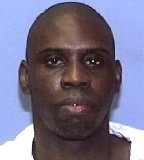
Ronnie Paul Threadgill
Murderer Russell Ellwood
Murderer · USA · 1991
Russell Ellwood was a former taxi driver. Authorities suspected him of killing…
20 victims
Russell Ellwood
Murderer · USA · 1991
Russell Ellwood was a former taxi driver. Authorities suspected him of killing…
20 victims
 Robert Martines Perez
Murderer · USA · 1994
Name: Robert Martines Perez · Other name used in proceedings: Robert Martinez P…
15 victims
Robert Martines Perez
Murderer · USA · 1994
Name: Robert Martines Perez · Other name used in proceedings: Robert Martinez P…
15 victims
 Billy Frank Vickers
Murderer · USA · 1993
Billy Frank Vickers Vickers was executed by lethal injection in Texas on Januar…
14 victims
Billy Frank Vickers
Murderer · USA · 1993
Billy Frank Vickers Vickers was executed by lethal injection in Texas on Januar…
14 victims
 Lucia de Berk
Miscarriage of Justice · Netherlands · 1997
Lucia de Berk, often called Lucia de B or Lucy de B, was a Dutch licenced paedi…
0 victims
Lucia de Berk
Miscarriage of Justice · Netherlands · 1997
Lucia de Berk, often called Lucia de B or Lucy de B, was a Dutch licenced paedi…
0 victims
 Friedrich Leibacher
Mass murderer · Switzerland · 2001
Friedrich Leibacher (July 21, 1944 – September 27, 2001) was a Swiss spree kill…
14 victims
Friedrich Leibacher
Mass murderer · Switzerland · 2001
Friedrich Leibacher (July 21, 1944 – September 27, 2001) was a Swiss spree kill…
14 victims
 Sherman Noble
Murderer · USA · 1985
Sherman Noble was a death row inmate in Kentucky. He died in prison on October…
4 victims
Sherman Noble
Murderer · USA · 1985
Sherman Noble was a death row inmate in Kentucky. He died in prison on October…
4 victims
 Frederick Patrick McWilliams
Murderer · USA · 1996
Frederick Patrick McWilliams McWilliams was executed by lethal injection in Tex…
1 victim
Frederick Patrick McWilliams
Murderer · USA · 1996
Frederick Patrick McWilliams McWilliams was executed by lethal injection in Tex…
1 victim
- Gender
- male
- Country
- USA
- Location
- Navarro County, Texas, USA
- Date of birth
- February 20, 1973
- Age at first offence
- 28
- Characteristics
- robbery, drug addict
- Victim profile
- Dexter McDonald, 17
- Method of murder
- Shooting
- Date(s) of murder
- April 14, 2001
- Years active
- 2001
- Date of arrest
- Same day
- Status
-
Executed
Sentenced to death on July 22, 2002; executed by lethal injection in Texas on April 16, 2013
Parties and personal details
Ronnie Paul Threadgill was a Black male. He was 29 years old at the time of trial. His hair color was black, his eye color was brown, and his height was 6' 00". His weight was 174. He had a prior prison record including TDCJ-ID #664574.
Background
Threadgill had a criminal record that included prior misdemeanor convictions for assault, resisting arrest, theft, criminal trespass, criminal mischief, and possession of marijuana. He also had prior felony convictions for possession of cocaine and burglary.
During the punishment phase of his capital murder trial, 10 witnesses—nine of whom were law enforcement officers or public officials—testified that they knew of Threadgill’s reputation in the community for being peaceful and law-abiding and that it was “bad” or “very bad.”
During his incarceration, law enforcement officers testified that Threadgill had: (1) gotten into a fight with another inmate; (2) been disciplined for threatening other inmates; and (3) been found wearing the wrong color jumpsuit, which could have made it easier for him to escape.
The prosecution also introduced two witnesses’ testimony indicating that Threadgill had committed a previous shooting in Limestone County.
In connection with the Limestone County shooting, Threadgill had been charged with aggravated assault, spent approximately a year in jail, and the charges were dropped by the county attorney due to “conflicting evidence.”
Threadgill was described as chemically dependent by a clinical psychologist testifying for the defense. His mother testified that she was on parole for drug possession at the time.
The offence
On April 14, 2001, in Navarro County, Texas, Threadgill murdered Dexter McDonald, a 17-year-old black male. McDonald received a single gunshot to the upper body. McDonald was taken to Navarro County Regional Hospital where he died.
During the incident, Threadgill also took a vehicle.
Shooting and carjacking sequence (as described)
On the evening of April 14, 2001, a birthday party was held at the Pleasure Garden Club in Navarro County for Christopher Lane and his sister, Mona Lane. The party ended sometime between 2:00 and 4:00 a.m. Dexter McDonald and Kevin Williams planned to ride home with Christopher. Williams got in the front passenger seat of Christopher’s car and McDonald got in the back. Christopher was driving. Before leaving Pleasure Garden, Christopher got out of the car to talk to someone and left the car running with the driver's side door open. Christopher testified he left Williams and McDonald in possession of his vehicle. Christopher then heard gunshots and saw his car being driven out of the parking lot.
The car stopped at the stop sign at the access road and then headed north on Interstate 45 toward Dallas. Williams had jumped out of the car before it left the Pleasure Garden parking lot, but the driver pulled McDonald out of the car and left him on the ground when the car stopped at the stop sign. Friends took McDonald to the hospital where he died of a gunshot wound to the chest.
Danyel Dwayne Nellums attended the birthday party and was in the parking lot afterwards. Nellums was walking toward Christopher’s car when he saw a man run from behind the car and jump into the driver’s seat. Nellums testified that the man fired a shot and Williams jumped out. Nellums testified that the man fired a second shot, which struck McDonald, and drove off. Nellums stated the man wore blue jeans and a white T-shirt, had a bandana over the lower part of his face, and carried a black pistol. Nellums testified that he was not able to identify the shooter in a lineup because of the bandana, but he recognized the shooter in court as a person he saw earlier in the night sitting in an old car parked next to Christopher’s car in the Pleasure Garden parking lot. Nellums identified Ronnie Paul Threadgill in the courtroom as the person he saw that night, stating that he was “positive” it was him.
Mona Lane testified that she did not see the shooter's face, but saw him from the back. She testified that the shooter wore blue jeans, a white T-shirt, and dark shoes. She testified that a car she had seen parked in the club's parking lot earlier in the night pulled up beside her brother's car, and the driver jumped out and ran around Christopher's car, yelling to the passengers to get out. She then heard gunshots. She testified that she had seen the shooter earlier in the night sitting in the driver's seat of a car outside of the club, and she identified Threadgill as the man she saw earlier in the night sitting in the driver's seat of a car in the parking lot.
Arrest and evidence
The incident was immediately reported to police, and a dispatch went out for the stolen vehicle. Officers with the Ennis Police Department heard the dispatch and saw a vehicle matching the given description traveling on I-45. The officers pursued the vehicle with their sirens on and lights flashing. The vehicle exited the freeway and attempted to turn the wrong way onto the one-way service road. The driver slammed on the brakes and skidded into a ditch, disabling the vehicle.
The driver got out of the vehicle and ran to a nearby Mobil Station where a number of semi-trucks were parked. The officers surrounded the station and found Threadgill hanging from the axle underneath a semi-truck trailer. A bandana was found stuffed under the frame of the trailer where he was hiding. Threadgill was wearing blue jeans and a white T-shirt.
Ennis police officer Randy Owen identified Threadgill as the person he saw get out of Christopher’s vehicle and as the person who was found hiding under the truck.
Threadgill’s fingerprints were matched to fingerprints lifted from the rear passenger door of Christopher’s vehicle. The blood of the victim matched blood on Threadgill’s clothes.
Testimony about identification
Kevin Williams testified for the defense. Williams stated that he did not get a good look at the shooter because of the scarf obscuring his face from the middle of his nose down. Williams testified that he believed the skin color of the shooter was a little lighter than Threadgill’s. When questioned further by Threadgill’s counsel, Williams stated that he was positive the shooter was lighter than Threadgill’s. When questioned by the prosecutor, Williams agreed that he was not saying that Threadgill was not the shooter and that he could have been. On re-direct, Williams reiterated that he was positive the person who got in the car was a lighter skin color than Threadgill. On re-cross, Williams agreed that he was not saying the shooter was not Threadgill and he agreed that it could have been.
Investigation
After the shooting of a passenger in a car stolen by Threadgill, Threadgill was arrested and charged with unauthorized use of a motor vehicle and a parole violation. Pursuant to standard Navarro County jail procedures, Threadgill was given a jail uniform, and his clothes and personal effects were inventoried and placed into paper bags to prevent contamination. The clothes were forwarded to a Department of Public Safety (DPS) laboratory for DNA analysis because officers believed there might be blood on them.
Analysis revealed that the blood on Threadgill’s clothes matched the blood of the victim.
Threadgill filed a motion to suppress the blood evidence taken from his clothing on the ground that the clothes should not have been tested without a warrant. The trial court denied the motion and ruled the search incident to a valid arrest. On direct appeal, the Texas Court of Criminal Appeals overruled his point of error one, holding the warrantless DNA testing was valid and reasonable under the standards applied to clothing lawfully seized from an arrestee in custody.
The Texas Court of Criminal Appeals included the following quotation in its discussion of prior case law about warrantless testing of clothing:
“once it is determined that police lawfully seized the personal effects of an arrestee, his expectation of privacy is diminished in those effects until he can and does exhibit subjective expectations through his conduct, presumably at the time of release from detainment or incarceration.”
Trial
Charges
Threadgill was indicted for the offense of capital murder.
Conviction and sentence
A Navarro County jury convicted Threadgill of capital murder in July 2002. After the jury recommended capital punishment on July 19, 2002, the trial court sentenced Threadgill to death by lethal injection on July 19, 2002.
The Texas Court of Criminal Appeals affirmed the conviction and sentence. The opinion stated that pursuant to the jury’s answers to the special issues set forth in Texas Code of Criminal Procedure Article 37.071, �� 2(b) and 2(e), the trial judge sentenced the appellant to death under Article 37.071, � 2(g). The opinion stated direct appeal to the Texas Court of Criminal Appeals was automatic under Article 37.071, � 2(h). The Court affirmed and overruled 22 points of error.
Evidence and legal issues decided on direct appeal
Motion to suppress blood evidence: The Court overruled the first point of error. It held that police may examine and test clothing validly within their control and custody.
Legal sufficiency of evidence: The Court overruled the second point of error. It held the evidence supported that Threadgill shot and killed Dexter McDonald, that the murder occurred in the course of committing or attempting to commit the offense of robbery, and that the evidence supported intent to kill. The Court addressed the victim-vehicle possession issue through the jury-charge definitions of robbery, theft, and “owner,” stating that the victim was the “owner” of the vehicle under the definitions because the title owner, Christopher Lane, left the victim and Kevin Williams in possession of the vehicle while stepping out and testified that Threadgill did not have permission to be in possession.
Factual sufficiency: The Court overruled the third point of error, concluding that the evidence was not too weak and was factually sufficient to support identity and intent to kill beyond a reasonable doubt.
Lesser included offenses instruction: The Court overruled the fourth point of error. It concluded there was no evidence that would permit the jury to rationally find that Threadgill did not intend to kill the victim when he fired at him at close range inside the car, and therefore no basis for instructing on felony murder or murder as lesser-included alternatives.
Prosecutor argument about fingerprint cases: The Court overruled the fifth point of error, addressing the prosecutor’s argument referencing having had “two cases with fingerprints” in 30 years. The Court found the argument improper but harmless given the strength of the evidence.
The prosecutor’s statement was:
“These cops weren't lazy. They dusted that car and they found his fingerprints, this guy's fingerprints, yeah, and then, they say, oh, well, the cops must have fabricated it because they didn't find anything else. Fingerprints are so hard to find this witness testified to you about how they're smudged, they're like this. I've been a prosecutor for 30 years I've had two cases with fingerprints, this is the third.”
Challenges for cause: The Court overruled points of error seven through ten concerning denials of challenges for cause to prospective jurors including John Beacom, Paula Murray, Deborah Hawkins, and Roy Page.
Other punishment-phase rulings and arguments:
- The Court overruled point of error eleven regarding testimony about dismissal of an extraneous offense.
- The Court overruled point of error twelve regarding the prosecutor’s punishment-phase argument about extraneous offense dismissal, concluding error was forfeited due to lack of objection.
- The Court overruled point of error thirteen regarding introduction of photographs of bombs and weapons made by inmates on a Rule 403 objection.
- The Court overruled point of error fourteen regarding challenges to Article 37.071 �� 2(e) and 2(f) as failing to require the jury to consider mitigation.
- The Court overruled point of error fifteen regarding the claim that Article 37.071 shifts the burden of proof to the accused to prove a mitigating circumstance.
- The Court overruled point of error sixteen regarding equal protection arguments about Texas’s death-penalty scheme.
- The Court overruled point of error seventeen regarding arbitrariness and cruel and unusual punishment claims.
- The Court overruled point of error eighteen regarding jury instructions at punishment on issues not contained in the indictment.
- The Court overruled point of error nineteen regarding Eighth Amendment claims that the death penalty violates evolving standards of decency.
- The Court overruled point of error twenty regarding the constitutionality of the grand jury selection system and rejected forfeited claims about the “Key Man System.”
- The Court overruled point of error twenty-one regarding denial of an instruction that a single hold-out juror on mitigation results in life imprisonment.
- The Court overruled point of error twenty-two regarding denial of the defense request to close arguments on mitigation.
Sentencing
Threadgill was sentenced to death by lethal injection following the jury’s recommendation on July 19, 2002. He was returned from mandatory supervision on July 22, 2002.
Appeals
State procedural history
A Navarro County grand jury indicted Threadgill for capital murder. A jury convicted him on July 18, 2002. After the jury recommended capital punishment on July 19, 2002, the trial court sentenced him to death.
On October 13, 2004, the Texas Court of Criminal Appeals affirmed the sentence.
On May 13, 2004, Threadgill filed an application for a state writ of habeas corpus with the Texas Court of Criminal Appeals. The court denied his application on October 5, 2005.
Federal procedural history (habeas corpus and certificate of appealability issues)
After exhausting state remedies, Threadgill filed a petition for a writ of habeas corpus under 28 U.S.C. § 2254. The United States District Court for the Northern District of Texas, Dallas Division, denied relief.
The district court granted certificate of appealability (COA) on an ineffective assistance of counsel claim regarding counsel’s failure to adequately investigate and challenge the State's use of an extraneous offense during the punishment phase. Threadgill sought a COA on two additional issues:
- ineffective assistance for failing to request a lesser-included offense instruction on felony murder; and
- due process for failure to charge the jury on felony murder.
The appellate court denied the request for a COA and affirmed the district court’s denial of relief, concluding that:
- Threadgill was not entitled to a COA on ineffective assistance of counsel regarding felony murder instruction;
- Threadgill was not entitled to a COA on the trial court’s failure to give a felony murder instruction as a due process claim; and
- the state court’s rejection of the ineffective assistance claim regarding investigation of the Limestone County shooting was not objectively unreasonable.
The appellate per curiam decision stated it denied the request for a COA and affirmed the district court’s judgment denying relief.
Outcome
Threadgill’s judgment was affirmed on direct appeal. His federal habeas petition was denied, and his certificate of appealability request was denied.
Threadgill’s execution was scheduled by a court order of the 13th District Court of Navarro County, Texas, to occur after 6 p.m. on April 16, 2013.
Threadgill was executed by lethal injection in Texas on April 16, 2013.
At his execution, Threadgill made the following statements:
“I'm going to a better place. I'm ready. Let's go.”
“To my loved ones and my dear friends, I love y'all and appreciate y'all for being there," Threadgill said.
“To all the guys back on the row, keep your heads up, keep fighting. I'm ready. Let's go.”
Aftermath
No friends or relatives of the murder victim attended Threadgill’s execution.
Threadgill was pronounced dead at 6:39 p.m. CDT (7:39 p.m. EDT), less than two hours after the U.S. Supreme Court rejected a last-day appeal.
Other details
Threadgill’s direct appeal included numerous procedural and evidentiary determinations, including discussions of Article 37.071 special issues and standards for jury instructions, and the application of harmless error analysis for prosecutorial argument concerning fingerprint rarity.


Spotted an error, or have more information about this case?