Richard Dennis Oxford
Murderer Brian Kevin Rosenfeld
Murderer · USA · 1985
Brian Kevin Rosenfeld Brian Kevin Rosenfeld was sentenced to three concurrent l…
23 victims
Brian Kevin Rosenfeld
Murderer · USA · 1985
Brian Kevin Rosenfeld Brian Kevin Rosenfeld was sentenced to three concurrent l…
23 victims
 Yahweh ben Yahweh
Murderer · USA · 1980
Yahweh ben Yahweh was born and legally named Hulon Mitchell Jr. (October 27, 19…
23 victims
Yahweh ben Yahweh
Murderer · USA · 1980
Yahweh ben Yahweh was born and legally named Hulon Mitchell Jr. (October 27, 19…
23 victims
 Russell Ellwood
Murderer · USA · 1991
Russell Ellwood was a former taxi driver. Authorities suspected him of killing…
20 victims
Russell Ellwood
Murderer · USA · 1991
Russell Ellwood was a former taxi driver. Authorities suspected him of killing…
20 victims
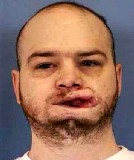 Edwin Hart Turner
Murderer · USA · 1995
Edwin Hart Turner was convicted of capital murder in the deaths of Eddie Brooks…
2 victims
Edwin Hart Turner
Murderer · USA · 1995
Edwin Hart Turner was convicted of capital murder in the deaths of Eddie Brooks…
2 victims
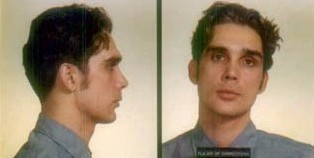 John Spenkelink
Murderer · USA · 1973
John Spenkelink was executed by electrocution in Florida on May 25, 1979. · Feb…
1 victim
John Spenkelink
Murderer · USA · 1973
John Spenkelink was executed by electrocution in Florida on May 25, 1979. · Feb…
1 victim
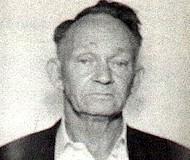 Robert Chambliss
Mass murderer · USA · 1963
Robert Edward Chambliss (also known as “Dynamite Bob”) (January 14, 1904–Octobe…
4 victims
Robert Chambliss
Mass murderer · USA · 1963
Robert Edward Chambliss (also known as “Dynamite Bob”) (January 14, 1904–Octobe…
4 victims
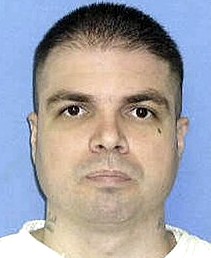 Yosvanis Valle
Murderer · USA · 1999
Yosvanis Valle was born on 09/07/1975. He was a Hispanic male and was from Hava…
4 victims
Yosvanis Valle
Murderer · USA · 1999
Yosvanis Valle was born on 09/07/1975. He was a Hispanic male and was from Hava…
4 victims
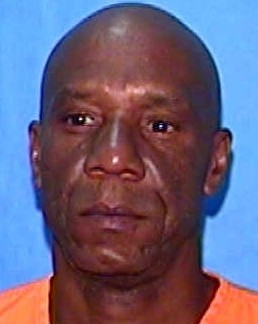 Etheria Jackson
Murderer · USA · 1985
Defendant: Etheria Jackson · Live-in girlfriend: Linda Riley · Trial judge: The…
1 victim
Etheria Jackson
Murderer · USA · 1985
Defendant: Etheria Jackson · Live-in girlfriend: Linda Riley · Trial judge: The…
1 victim
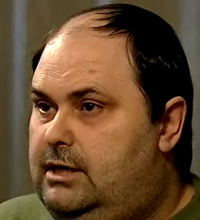 Nelson Hart
Murderer · Canada · 2002
Nelson Hart (born c 1968) was a Newfoundland, Canada resident. He lived with hi…
2 victims
Nelson Hart
Murderer · Canada · 2002
Nelson Hart (born c 1968) was a Newfoundland, Canada resident. He lived with hi…
2 victims
- Gender
- male
- Country
- USA
- Location
- Platte County, Missouri, USA
- Date of birth
- September 12, 1956
- Age at first offence
- 30
- Characteristics
- fugitive, rape, robbery
- Victim profile
- Harold and Melba Wampler
- Method of murder
- Shooting
- Date(s) of murder
- November 14, 1986
- Years active
- 1986
- Date of arrest
- December 22, 1986
- Status
-
Executed
Executed by lethal injection in Missouri on August 21, 1996
Case identification
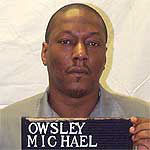
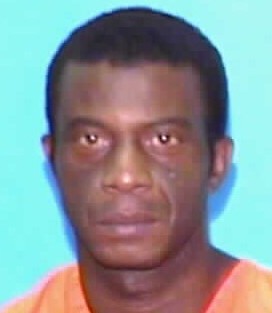
Richard Dennis Oxford
STATUS and procedural posture
Richard Oxford was executed by lethal injection in Missouri on August 21, 1996.
Timeline
- 01/23/1975 — Oxford was convicted of Burglary First Degree in Tulsa, Oklahoma.
- 10/04/1976 — Oxford pleaded guilty to Attempted Larceny of an Automobile in Tulsa, Oklahoma.
- 03/29/1983 — Oxford pleaded guilty to three counts of Rape First Degree, four counts of Forcible Sodomy, one count of Assault with Attempt to Rape, three counts of Burglary First Degree, Robbery by Force, Knowingly Concealing Stolen Property, Attempted Robbery with a Firearm, Possession of a Sawed-Off Shotgun, Robbery with a Firearm and Burglary Second Degree; he was sentenced to terms of 20 years and 65 years consecutively in the Oklahoma Department of Corrections for the above offenses.
- 11/11/1986 — Oxford and Richard Brown escaped from the Conner Correctional Center in Hominy, Oklahoma.
- 11/14/1986 — Oxford and Brown were identified as leaving the Paint Stallion tavern in Joplin, Missouri with Harold and Melba Wampler.
- 01/02/1987 — The Wamplers’ bodies were found in the trunk of a car parked at a hotel parking lot in Platte County, Missouri.
- 01/02/1987 (reference in account) — The Missouri Highway Patrol received a tip on January 2, 1987 that the Wamplers' car was seen at the airport in Kansas City, Missouri.
- 08/29/1988 — An amended information charging Oxford with first degree murder was filed in Platte County, Missouri; Oxford was originally charged with felony murder.
- 08/29/1988 to 09/03/1988 — Oxford was tried in the Circuit Court of Platte County and was found guilty of first degree murder.
- 09/03/1988 (reference in account) — The jury recommended a sentence of death.
- 10/26/1988 — A motion for new trial was denied; Oxford was sentenced to death for killing the Wamplers.
- 11/02/1988 — Notice of appeal was filed.
- 01/30/1989 — Oxford filed a pro se post-conviction motion in the Circuit Court of Platte County, Missouri.
- 04/05/1989 — Oxford filed an unverified post-conviction motion in the Circuit Court of Platte County.
- 10/06/1989 — The Circuit Court of Platte County denied Oxford's postconviction motions.
- 06/19/1990 — The Missouri Supreme Court affirmed Oxford's conviction and sentence and the Circuit Court's denial of the post-conviction motions.
- 01/14/1991 — The United States Supreme Court denied certiorari.
- 01/28/1991 — Oxford filed a petition for writ of habeas corpus in the United States District Court for the Western District of Missouri.
- 09/29/1993 — The petition for writ of habeas corpus was denied.
- 04/01/1996 — The United States Supreme Court denied certiorari.
- 04/18/1996 — Oxford filed a second petition for writ of habeas corpus in the United States District Court for the Western District of Missouri challenging his competency to be executed; the second petition was still pending with a hearing scheduled for June 7, 1996.
- 05/03/1996 — The Missouri Supreme Court set June 12, 1996, as Oxford's execution date.
- 06/11/1996 — The United States Supreme Court granted a temporary stay of execution for Oxford.
- 07/10/1996 — The Missouri Supreme Court set August 21, 1996, as Oxford's execution date.
- 07/01/1996 (reference in account) — Attorney General Jay Nixon announced that the United States Supreme Court declined to review the habeas corpus petition of Missouri death row inmate Richard Oxford.
Background
Oxford was convicted of Burglary First Degree in Tulsa, Oklahoma on 01/23/1975.
On 10/04/1976, Oxford pleaded guilty in Tulsa, Oklahoma to Attempted Larceny of an Automobile.
In 1983, Oxford pleaded guilty to multiple counts of Rape First Degree, Forcible Sodomy, Assault with Attempt to Rape, Burglary First Degree, Robbery by Force, Knowingly Concealing Stolen Property, Attempted Robbery with a Firearm, Possession of a Sawed-Off Shotgun, Robbery with a Firearm, and Burglary Second Degree, and he was sentenced to terms of 20 years and 65 years consecutively in the Oklahoma Department of Corrections for the above offenses.
On 11/11/1986, Oxford and Richard Brown escaped from the Conner Correctional Center in Hominy, Oklahoma. At the time, Oxford and Brown were fugitives from the Conner Correctional Center in Hominy, Oklahoma.
The offence
Melba Wampler and her husband Harold disappeared after leaving a bar in Joplin, Missouri in the company of Oxford and his companion Richard Brown on the evening of November 14, 1986.
Oxford and Brown were identified as leaving the Paint Stallion tavern in Joplin, Missouri with a local married couple Harold and Melba Wampler on 11/14/1986.
The Wamplers were missing until the Missouri Highway Patrol received a tip on January 2, 1987 that the Wamplers' car was seen at the airport in Kansas City, Missouri.
Further investigation revealed that the Wamplers' bodies were wrapped in a blanket in the trunk of their car. An autopsy determined that the Wamplers had both died as a result of gunshot wounds to their left temples. Their hands and feet had been bound and duct tape covered their mouths. According to the physical evidence of their bodies, the Wamplers had been dead for approximately six weeks.
The partially decomposed bodies of the Wamplers were discovered in the trunk of a car at a Kansas City motel on January 2, 1987.
While incarcerated in Nevada awaiting return to Missouri, Oxford told a fellow cellmate that he killed the Wamplers. The cellmate later testified at Oxford's trial.
Oxford was charged by amended information with first degree murder in Platte County, Missouri on 8/29/1988; he was originally charged with felony murder.
Investigation
On 11/14/1986, Oxford and Brown were seen at the Paint Stallion in Joplin, Missouri with Harold and Melba Wampler.
On January 2, 1987, the Missouri Highway Patrol received a tip that the Wamplers' car was seen at the airport in Kansas City, Missouri.
On 1/2/1987, the Wamplers' bodies were found in the trunk of a car parked at a hotel parking lot in Platte County, Missouri.
Oxford's fingerprints were later found on groceries in the Wamplers' automobile. His hair was found on the blanket in the trunk.
Oxford was arrested on December 22, 1986 as a fugitive in Las Vegas, Nevada.
Found in his possession at the time of arrest was a wristwatch that belonged to Harold Wampler.
The partially decomposed bodies had been discovered in the trunk of a car, and the autopsy determined gunshot wounds to their left temples, with their hands and feet bound and duct tape covering their mouths.
Arrest
Trial
Oxford was tried in the Circuit Court of Platte County for first degree murder.
On 09/03/1988, Oxford was found guilty of first degree murder.
The jury recommended a sentence of death. On 10/26/1988, Oxford was sentenced to death for killing the Wamplers after a motion for new trial was denied.
Following the jury trial in September 1988, Oxford was convicted of the murder of Melba Wampler and sentenced to death.
Sentencing
On 10/26/1988, Oxford was sentenced to death for killing the Wamplers.
Appeals
On 11/02/1988, notice of appeal was filed.
On 01/30/1989, Oxford filed a pro se post-conviction motion in the Circuit Court of Platte County, Missouri. On 04/05/1989, Oxford filed an unverified post-conviction motion in the Circuit Court of Platte County.
The Circuit Court of Platte County denied Oxford's postconviction motions on 10/06/1989.
On 06/19/1990, the Missouri Supreme Court affirmed Oxford's conviction and sentence and the Circuit Court's denial of the post-conviction motions.
The Missouri Supreme Court held that the claims raised in Oxford's amended Rule 29.15 motion were procedurally barred because Oxford failed to verify the amended motion in accordance with Rule 29.15. In addition, Oxford's amended Rule 29.15 motion was filed without verification after counsel appointed to represent Oxford prepared an amended motion asserting claims not asserted in Oxford's pro se motion, and Oxford refused to communicate with his counsel.
On 01/14/1991, the United States Supreme Court denied certiorari.
On 01/28/1991, Oxford filed a petition for writ of habeas corpus in the United States District Court for the Western District of Missouri.
On 09/29/1993, the petition for writ of habeas corpus was denied.
On 07/06/1995, the United States Court of Appeals for the Eighth Circuit affirmed the district court's order and denied the petition for writ of habeas corpus.
On 04/01/1996, the United States Supreme Court denied certiorari.
On 04/18/1996, Oxford filed a second petition for writ of habeas corpus in the United States District Court for the Western District of Missouri challenging his competency to be executed. The second petition was still pending in the District Court with a hearing scheduled for June 7, 1996.
Outcome
Oxford was executed by lethal injection in Missouri on August 21, 1996.
Aftermath
Attorney General Jay Nixon issued a news release on July 1, 1996 indicating that the United States Supreme Court declined to review the habeas corpus petition of Missouri death row inmate Richard Oxford. Nixon stated that Oxford had attempted to use a federal law enacted in April to further delay his execution, and that his office would ask the Missouri Supreme Court to set a new execution date for Oxford.
“After being convicted and sentenced by a Missouri court, Richard Oxford has succeeded in delaying justice for far too long,” Nixon said. “Today's ruling will help bring about his long-delayed sentence.”
Other details
Prior convictions and history of charges described
Oxford's prior convictions included three counts of rape, four counts of forcible sodomy, assault with intent to rape, four counts of burglary and nine other convictions.
Federal habeas proceedings (procedural claims listed)
Oxford's habeas claims included:
- No. 1—Ineffective assistance of appellate counsel (failure to brief on appeal various points involving denial of constitutional rights)
- No. 2—Ineffective assistance of trial counsel (IATC) (failure to produce mitigating evidence regarding mental condition at sentencing)
- No. 3—IATC (failure to produce mitigating evidence regarding mental illness at sentencing)
- No. 4—IATC (failure to object to jury instructions Nos. 4 and 15)
- No. 5—IATC (failure to present evidence of childhood mental and physical health problems to jury)
- No. 6—Trial court error in submitting jury instruction No. 18 (regarding aggravating circumstances)
- No. 7—Trial court error in submitting jury instruction No. 21 (requiring unanimity for a finding of mitigating circumstances)
- No. 8—IATC (failure to secure additional psychiatrist to investigate mental illness and testify at sentencing)
- No. 9—IATC (failure to object to jury instructions Nos. 18 and 21)
- No. 10—Trial court error in excluding juror
- No. 11—IATC (failure to question jurors regarding death penalty)
- No. 12—Improper prosecutorial remarks about deterrence
- No. 13—Improper prosecutorial remarks about victims' family
- No. 14—IATC (failure to object to comment about polygraph exam)
- No. 15—Failure of state to give notice of intent to rely upon statutory aggravating circumstances
- No. 16—Disproportionate imposition of the death penalty
- No. 17—IATC (failure to raise evidence of duress and domination)
- No. 18—Trial court error in allowing separate enumeration of prior convictions
- No. 19—IATC (failure to raise insanity defense)
- No. 20—IATC (failure to prepare opening statement and failure to argue in support of motions for directed verdict)
- No. 21—IATC (failure to inquire of jurors whether they believed arrest indicated guilt)
- No. 22—IATC (failure to adequately interrogate potential jurors)
- No. 23—IATC (failure to adequately examine witness)
- No. 24—IATC (failure to adequately cross-examine witness)
- No. 25—IATC (failure to adequately cross-examine witness)
- No. 26—IATC (failure to object to various exhibits)
- No. 27—IATC (failure to introduce testimony of examining psychiatrist at sentencing)
- No. 28—IATC (failure to introduce testimony of childhood examining psychiatrist at sentencing)
- No. 29—IATC (failure to introduce testimony of prison superintendent at sentencing)
- No. 30—IATC (failure to object to admission of edited testimony of childhood examining psychiatrist)
Judicial officers and court reference within appellate account
The federal appeal was United States Court of Appeals, Eighth Circuit, Richard Dennis Oxford, Appellant, v. Paul Delo, Appellee, No. 94-1879. The panel included Circuit Judge FAGG, Senior Circuit Judge HEANEY, and Circuit Judge BOWMAN.
The account included reference to:
- Honorable Charles R. Wolle, United States District Judge for the Southern District of Iowa, sitting by designation in the Western District of Missouri.
Dissenting view on penalty phase evidence (described)
In a dissent, it was stated that the district court erred in denying Oxford the opportunity to assert his claims with respect to the ineffectiveness of his counsel at the penalty phase of his trial. The dissent stated that the claims were embodied in claim numbers 2, 3, 5, and 8 and would have required remand to permit Oxford’s current counsel to introduce mitigating evidence. It also described that, at the penalty phase, only one witness, Oxford's wife, testified briefly, and counsel did not call psychiatrists to testify.
The dissent described Oxford’s family background and mental and physical history, including statements attributed to Oxford’s mother about him being an unwanted child, attempted self-abortion during pregnancy, refusal to allow adoption, and a father described as distant and unaffectionate. It also described an uncle who committed suicide when Oxford was about seven years old, hospitalization at seventeen months with pneumonia and three blood transfusions to his head, disruptive behavior in kindergarten, medication prescribed by second grade and a change in medication causing an opposite reaction, two concussions before age ten, paternal grandmother treated with electric shock therapy and in and out of mental institutions, sniffing glue around age ten, use of speed and Valium in his teenage years, and therapy with a psychiatrist beginning around age thirteen, along with placement in a facility while still undergoing therapy and additional facilities during teenage years. The dissent also described an opinion by a psychiatrist who examined Oxford in 1987 and 1988 and testified at the guilt phase that Oxford was mentally ill, probably suffering from schizophrenia.
Spotted an error, or have more information about this case?