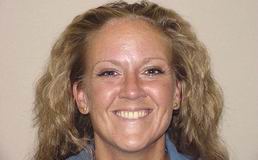
Sharee Miller
Murderer Megan Huntsman
Murderer · USA · 1996
Megan Huntsman was 40 at sentencing. She was a mother of three children who wer…
6 victims
Megan Huntsman
Murderer · USA · 1996
Megan Huntsman was 40 at sentencing. She was a mother of three children who wer…
6 victims
 Angela Johnson
Murderer · USA · 1993
Angela Jane Johnson was convicted in federal court of aiding and abetting the m…
5 victims
Angela Johnson
Murderer · USA · 1993
Angela Jane Johnson was convicted in federal court of aiding and abetting the m…
5 victims
 Michele Kalina
Murderer · USA · 1996
Michele Kalina pleaded guilty to murder for one of five infants she initially w…
5 victims
Michele Kalina
Murderer · USA · 1996
Michele Kalina pleaded guilty to murder for one of five infants she initially w…
5 victims
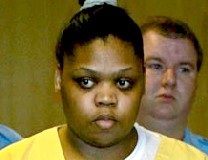 Tiffany Hall
Murderer · USA · 2006
Tiffany Hall was 24 when she was charged in September 2006. She later entered a…
5 victims
Tiffany Hall
Murderer · USA · 2006
Tiffany Hall was 24 when she was charged in September 2006. She later entered a…
5 victims
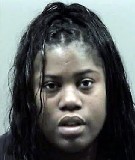 Banita Jacks
Murderer · USA · 2007
Banita Jacks was a Washington, DC resident convicted of murdering her four daug…
4 victims
Banita Jacks
Murderer · USA · 2007
Banita Jacks was a Washington, DC resident convicted of murdering her four daug…
4 victims
 Susan Eubanks
Murderer · USA · 1996
Susan Dianne Eubanks, also referred to as Susan Eubanks, was convicted by a jur…
4 victims
Susan Eubanks
Murderer · USA · 1996
Susan Dianne Eubanks, also referred to as Susan Eubanks, was convicted by a jur…
4 victims
 Yoselyn Ortega
Murderer · USA · 2012
Yoselyn Ortega was a nanny who was charged in New York City with killing two yo…
2 victims
Yoselyn Ortega
Murderer · USA · 2012
Yoselyn Ortega was a nanny who was charged in New York City with killing two yo…
2 victims
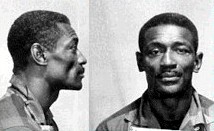 Lonnie Craft
Murderer · USA · 1957
Defendant: Lonnie Craft Victim: Virginia C. Craft (ex-wife) County Attorney: Ch…
1 victim
Lonnie Craft
Murderer · USA · 1957
Defendant: Lonnie Craft Victim: Virginia C. Craft (ex-wife) County Attorney: Ch…
1 victim
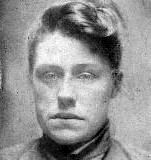 Frances Knorr
Murderer · Australia · 1891
Frances Lydia Alice Knorr (also known as Minnie Thwaites) was born in 1868 in L…
2 victims
Frances Knorr
Murderer · Australia · 1891
Frances Lydia Alice Knorr (also known as Minnie Thwaites) was born in 1868 in L…
2 victims
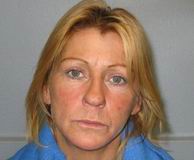 Tracey Van Dungey
Murderer · United Kingdom · 2004
Tracey Antoinette Van Dungey was 43 (16/10/67) and lived on Sugden Way, Barking…
2 victims
Tracey Van Dungey
Murderer · United Kingdom · 2004
Tracey Antoinette Van Dungey was 43 (16/10/67) and lived on Sugden Way, Barking…
2 victims
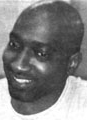 Feltus Taylor
Murderer · USA · 1991
Feltus Taylor, Jr. was an American murderer who was executed by the state of Lo…
1 victim
Feltus Taylor
Murderer · USA · 1991
Feltus Taylor, Jr. was an American murderer who was executed by the state of Lo…
1 victim
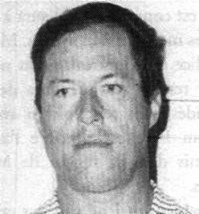 Léopold Dion
Serial killer · Canada · 1963
Léopold Dion (c. 1921 - 17 November 1972, Québec) was a Canadian sex offender a…
4 victims
Léopold Dion
Serial killer · Canada · 1963
Léopold Dion (c. 1921 - 17 November 1972, Québec) was a Canadian sex offender a…
4 victims
- Gender
- female
- Country
- USA
- Location
- Flint, Genesee County, Michigan, USA
- Date of birth
- October 13, 1971
- Age at first offence
- 28
- Characteristics
- kidnapping, rape, drug addict, alcohol, mentally ill
- Victim profile
- Her husband, Bruce L. Miller, 48
- Method of murder
- Shooting (.20 gauge shotgun)
- Date(s) of murder
- November 8, 1999
- Years active
- 1999
- Date of arrest
- April 2000
- Status
-
Life imprisonment
Sentenced to life in prison for the conspiracy to commit murder charge, and 54 to 81 years for second-degree murder on January 29, 2001
Case record: People of State of Michigan v. Sharee Paulette Miller
Background
Sharee Paulette Miller was an American woman who was accused of plotting the murder of her husband, Bruce Miller, over the Internet with her online lover Jerry Cassaday, who later committed suicide. Sharee Paulette Kitley Miller was also known to use aliases including Sharee Duvall, Sharee Tribbey, Sharee Paulette Duvall, Sharee Paulette Kitley, and Sharee Paulette Tribbey.
Bruce Miller was found dead at his junkyard in Flint, Michigan on November 8, 1999. He was killed by a shotgun blast.
The offence
Bruce Miller was shot dead at his junkyard in Flint, Michigan on November 8, 1999. The killing involved a shotgun. The prosecution contended that Sharee Miller wanted Bruce dead for his money and argued that a divorce would not have given her enough.
Investigation
After Sharee Miller was arrested in February 2000, she was held without bail until her trial.
Cassaday left suicide notes and other evidence after his death, including an instant message conversation with Sharee Miller and materials that prosecutors said implicated Sharee Miller in the murder plot. Investigators used the suicide note and other evidence, including instant message communications and emails, to link Sharee Miller to the killing.
Investigators also addressed allegations made in the communications, including claims about spousal abuse, pregnancies, and injuries. The prosecution disputed those allegations. It was argued that Sharee Miller could not have become pregnant because she had undergone a tubal ligation, and that the sonogram pictures were fraud, including that the pictures were dated 1994. The prosecution also said Flint area police agencies had never responded to any complaint of domestic violence at the Miller household. It was also stated that Bruce Miller had no criminal record and no known ties to organized crime.
Trial
On December 12, 2000, the State of Michigan v. Sharee Miller trial began and the case attracted national headlines.
After two days of deliberation, on December 22 the jury found Sharee Miller guilty on all charges.
Sharee Miller testified that she had an affair with Cassaday and that she fed him dozens of lies. She admitted to exchanging hundreds of e-mails with Cassaday, including telling him twice that she was pregnant with his child. She also sent sonogram material she claimed was their child, as well as a videotape of her masturbating, and a videotape showing the junkyard and her children. She was described as denying that she plotted to kill her husband and saying that her online affair was fantasy.
During the trial, the email and instant messaging contents were read to the jury by two deputies. The messages read included the following exchange from the chat session the day before the murder:
Deputy #2 [reading Sharee's messages]: (In court) (Reading) "Jerry, I am scared. Jerry, if this don't work, he will hurt me bad."
Deputy #1 [Reading Jerry's responses]: (In court) (Reading) "It'll work. What is the fastest way into the yard from 75?"
Deputy #2: (In court) (Reading e-mail) "75 to Mount Morris Road exit. Now you need to listen to me for a minute. I will call Bruce at 5 PM.
Deputy #1: (In court) (Reading) "OK."
Deputy #2: (In court) (Reading) "Is the gun loud?"
Deputy #1: (In court) (Reading) "Somewhat."
Deputy #2: (In court) (Reading) "Just do it and get the hell out of there."
Deputy #1: (In court) (Reading) "I want him to know who I am."
Deputy #2: (In court) (Reading) "Jerry, please."
Deputy #1: (In court) (Reading) "He will know."
Deputy #2: (In court) (Reading) "He will know."
Deputy #1: (In court) (Reading) But not for long."
Deputy #2:(In court) (Reading) "Are you going to be able to live with this the rest of your life? Because I can."
Deputy #1: (In court) (Reading) "I love you. Yes, I can."
Prosecutors argued that the murder took place almost as it was scripted in the instant message exchange. Prosecutors said that at the time of the murder, phone calls were made from the implicated cell phone and that phone records confirmed calls at the times claimed.
The defense, including Sharee Miller’s own testimony, denied that she had anything to do with her husband’s murder. The defense claimed that another man had committed the crime and that Cassaday had taken advantage of the murder to take revenge. The defense described Cassaday as a "vindictive, alcoholic drug abuser" who allegedly concocted a tale that he had killed Bruce Miller.
Sentencing
On January 29, 2001, Genesee County Circuit Court Judge Judith Fullerton sentenced Miller to life in prison for the conspiracy to commit murder charge and 54 to 81 years for second-degree murder.
Sharee Miller was serving her sentences at the Robert Scott Correctional Facility in Plymouth, Michigan and later at the Women’s Huron Valley Correctional Facility in Ypsilanti, Michigan.
Appeals
Sharee Miller maintained her innocence and filed an appeal to the Michigan Court of Appeals.
In 2007, while in prison, Miller was diagnosed with posttraumatic stress disorder and other mental illnesses.
In August 2008, a federal court judge overturned her conviction and ordered that she receive a new trial. The judge found that the suicide note from Cassaday should not have been admitted into court and seen by the jurors because Cassaday was dead and could not be cross examined.
On July 16, 2009, a federal court judge ordered Sharee Miller’s immediate release from prison on bond pending the new trial ordered in August 2008. On July 17, 2009, Genesee County Prosecutor David Leyton ordered that Miller be re-arrested, she was taken to the Genesee County Jail, and she was held without bond to await new charges. On July 22, 2009, Miller was arraigned again on charges of second-degree murder and conspiracy to commit premeditated first-degree murder. The new trial was scheduled to begin on October 20, 2009. Miller’s attorneys appealed this action, and the retrial was put on hold pending the federal appeal.
On July 29, 2009, Sharee Miller was released from the Genesee County Jail on a $100,000 recognizance bond until her new trial began.
On June 21, 2010, a three-judge panel of the U.S. Court of Appeals upheld the August 2008 federal ruling that the Cassaday suicide note was not admissible by a 2-1 margin.
On November 14, 2011, the US Supreme Court remanded the Sharee Miller case to the Sixth Circuit Court of Appeals for further consideration in light of Green v Fisher, 565 US, 132 S Ct at 573.
On February 16, 2012, the Sixth Circuit remanded the case to the District Court, Roberts, J., “for further consideration in light of Green and Ohio v Roberts, 448 US 56 (1980) and “any other relevant matter.” (Op. pp 10, 11) The parties agreed that Ohio v Roberts and not Crawford v Washington controlled the issue of the admissibility of the suicide note of Jerry Cassaday which implicated Sharee Miller in the murder of her husband Bruce Miller.
On August 2, 2012, the District Court entered its opinion and ordered reinstatement of Miller’s convictions and revoked her bond. Miller was returned to the Michigan Department of Corrections to continue serving her sentences.
On February 11, 2014, the United States Court of Appeals for the Sixth Circuit, in a 2-1 opinion, affirmed the federal district court’s reinstatement of Miller’s convictions and sentences (Miller v Stovall, 742 F3d 642 (2014)).
Outcome
Miller’s convictions and sentences were reinstated, and the federal district court’s reinstatement of her convictions and sentences was affirmed by the Sixth Circuit on February 11, 2014.
Aftermath
In February 2016, Miller admitted her role in her husband’s death in a letter sent to Genesee Circuit Judge Judith A. Fullerton.
In 2016, a four-page typed letter to Judge Judith A. Fullerton included Miller’s statements about arranging for her husband’s killing. The letter included the following quotations:
"Judge Fullerton, I did it. Almost the way the prosecutor said I did,"
"I knew [the murder] was going to happen and I allowed it. I allowed a man to kill another man based on my lies and manipulation."
The letter also included a quotation about watching her daughter while Miller was sent back to prison in 2012:
"Something happened inside me when I had to come back to prison after three years of freedom,"
'You see my daughter and grand daughter were living with me. Although I begged my daughter NOT to come with me when my roomate [sic] dropped me back off at this prison, [my daughter] would not listen.'
'When I was walking through those sliding doors, looking back at my daughter, she was crying so hard... I remember hearing her scream, "NO MOM, NO, DONT LEAVE [sic].'
Miller also wrote:
'After that moment, Judge Fullerton, the FULL impact of what I had done to Bruce, his friends and family, Jerry and his friends and family, hit me with full force. They will NEVER get to see them again. My daughter will be able to come see me.'
The letter included accusations about attorneys, including her current lawyer, David Nickola, refusing to listen to her admission of guilt. Nickola denied the accusation and said that if her confession had come sooner, she could have taken a plea deal offered before the trial.
A description of Jerry Cassaday’s suicide note included the following excerpts:
"I drove there and killed him. Sharee was involved and set it up, I have all the proof and I am sending it to the police, she will get whats coming."
"I have been so stupid, but now you know the real story of why I went into such a state of depression... because I just couldn’t tell anyone the truth..."
"[S]he just wanted all her money and no more husband, well she got her wish, but she is soon to learn that she cant do that to people..."
"[N]ow I know it was all just more lies and games from [S]haree, she didn’t care what it took or who she hurt to get what she wanted."
The records also described additional quotations from Miller’s letter:
"I was living two lives and I got caught up and did not want to get caught so I planned a murder and went through with it,"
"Instead of my family or Bruce's family finding out what I really was, I thought I could cover it up by having Bruce murdered. I cannot deny this anymore."
Genesee County Prosecutor David Leyton said he believed the letter and confession were authentic and stated: "I also received a letter of confession from Sharee Miller." and "I was very surprised."
The accounts further described Miller’s incarceration and conditions. In November 2007, she was diagnosed with posttraumatic stress disorder and other mental illnesses while in prison.
In August 2008, a federal court judge ordered a new trial, and Miller was released on bond and later re-arrested, with subsequent proceedings including a recognizance bond.
In December 2009, Miller was found using the social networking site Facebook. David Nickola said there was no reason for Miller to be barred from using a computer and that her Facebook page was temporarily deactivated when it attracted publicity. Nickola said:
"I don’t think there’s anything inappropriate about it,"
Nickola also said:
"She’s an innocent person out in society and she’s doing positive things,"
and:
"Having a Facebook page to communicate with her son who is serving in the military overseas is nothing inappropriate whatsoever."
Genesee County Prosecutor David Leyton said:
“People have to be careful when they’re communicating with others who they don’t know on the Internet,”
and:
“People have to be careful when they’re online."
Miller was later ordered back to serve out her original sentence in August 2012.
In popular culture, the trial made national headlines and Miller’s life was profiled on A&E American Justice, Investigation Discovery's Deadly Women, and on Oxygen Channel's true crime series Snapped. The case was subject of a book titled Fatal Error by Mark Morris and Paul Janczewski. A television movie produced by Lifetime Television called Fatal Desire starring Eric Roberts and Anne Heche was also based on the Sharee Miller case. There was also a Forensic Files episode about this case (Web of Seduction, season 8, episode 34).
Other details
Sharee Miller’s mother currently had custody of one of her three children.
The communications described included screen names “Jerry’s Fool” and “Sharee’s Fool,” and referenced taunting messages. The record also described phone calls made to ensure Bruce Miller was alone and then to let Cassaday know it was time to drive into the junkyard.
The record included references to a report that Cassaday was a former police officer and had resigned as a lieutenant and later worked as a casino pit boss in Reno, Nevada. It also included references to Cassaday’s death in Missouri after leaving a suicide note.
The record included statements about Miller’s later correspondence and activities while incarcerated and while on bond, including a four-page typed letter sent to Judge Judith A. Fullerton in 2016.
Spotted an error, or have more information about this case?