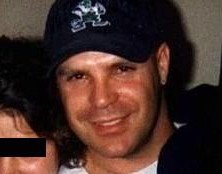
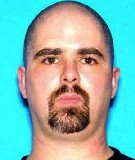
Joseph Palczynsky
Spree killer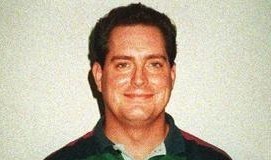 Mark Barton
Spree killer · USA · 1999
Mark Orrin Barton (1955 – July 29, 1999) committed a spree killing in Stockbrid…
12 victims
Mark Barton
Spree killer · USA · 1999
Mark Orrin Barton (1955 – July 29, 1999) committed a spree killing in Stockbrid…
12 victims
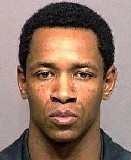 John Allen Muhammad
Spree killer · USA · 2002
John Allen Muhammad carried out the 2002 D.C. sniper attacks with his 17-year-o…
10 victims
John Allen Muhammad
Spree killer · USA · 2002
John Allen Muhammad carried out the 2002 D.C. sniper attacks with his 17-year-o…
10 victims
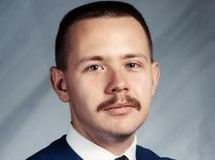 Michael McLendon
Spree killer · USA · 2009
Michael McLendon died of self-inflicted gunshot wound after shootout with autho…
10 victims
Michael McLendon
Spree killer · USA · 2009
Michael McLendon died of self-inflicted gunshot wound after shootout with autho…
10 victims
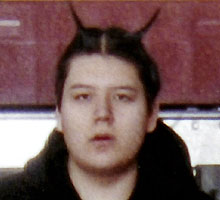 Jeffrey Weise
Spree killer · USA · 2005
Jeffrey Weise, a 16-year-old student at Red Lake High School in Red Lake, an un…
9 victims
Jeffrey Weise
Spree killer · USA · 2005
Jeffrey Weise, a 16-year-old student at Red Lake High School in Red Lake, an un…
9 victims
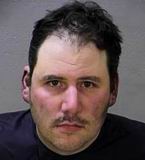 Christopher Speight
Spree killer · USA · 2010
Christopher Speight was the suspect in the Appomattox shootings, a spree shooti…
8 victims
Christopher Speight
Spree killer · USA · 2010
Christopher Speight was the suspect in the Appomattox shootings, a spree shooti…
8 victims
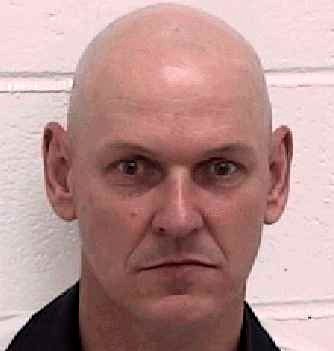 John Wayne Conner
Homicide · USA · 1982
John Wayne Conner John Wayne Conner was sentenced to death in July 1982. · Janu…
1 victim
John Wayne Conner
Homicide · USA · 1982
John Wayne Conner John Wayne Conner was sentenced to death in July 1982. · Janu…
1 victim
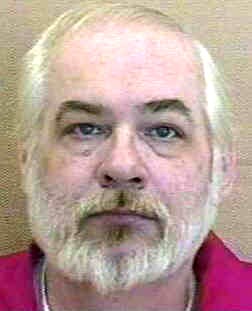 John Thomas Noland
Murderer · USA · 1982
John Thomas Noland was executed in North Carolina by lethal injection on Novemb…
2 victims
John Thomas Noland
Murderer · USA · 1982
John Thomas Noland was executed in North Carolina by lethal injection on Novemb…
2 victims
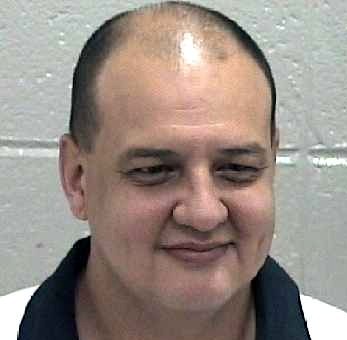 Michael Wayne Nance
Murderer · USA · 1993
Michael Wayne Nance was convicted in Gwinnett Superior Court of malice murder,…
1 victim
Michael Wayne Nance
Murderer · USA · 1993
Michael Wayne Nance was convicted in Gwinnett Superior Court of malice murder,…
1 victim
 Gary Leon Brown
Murderer · USA · 1996
Gary Leon Brown was indicted for the capital offense of the murder of Jack McGr…
1 victim
Gary Leon Brown
Murderer · USA · 1996
Gary Leon Brown was indicted for the capital offense of the murder of Jack McGr…
1 victim
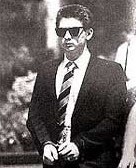 John Raymond Travers
Murderer · Australia · 1986
John Raymond Travers (born February 27, 1967) was an Australian murderer. He wa…
1 victim
John Raymond Travers
Murderer · Australia · 1986
John Raymond Travers (born February 27, 1967) was an Australian murderer. He wa…
1 victim
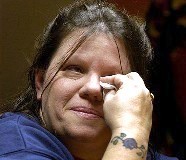 Laura Rogers
Murderer · USA · 2004
Laura Rogers was convicted of manslaughter after the shooting death of her husb…
1 victim
Laura Rogers
Murderer · USA · 2004
Laura Rogers was convicted of manslaughter after the shooting death of her husb…
1 victim
- Gender
- male
- Country
- USA
- Location
- Baltimore, Maryland, USA
- Date of birth
- 1968
- Age at first offence
- 32
- Characteristics
- revenge, kidnapping, robbery
- Victim profile
- George and Gloria Shenk, ages 49 and 50, and their neighbor David Meyers, 42 / Jenifer McDonel, 36
- Method of murder
- Shooting
- Date(s) of murder
- March 7-8, 2000
- Years active
- 2000
- Date of arrest
- —
- Status
-
Baltimore County police SWAT team members shot him to death on March 21, 2000
Case record: Joseph Palczynsky
Background
Joseph C. Palczynski was a spree killer in the suburbs of Baltimore, Maryland. In March 2000, he terrorized residents in the region by killing four people and taking a family of three as hostages in one of the longest one-man standoffs ever known. The saga ended with two of the hostages escaping and a third being rescued, Palczynski being shot to death by Baltimore County police, and a woman being sentenced to prison for purchasing his weapons.
Joseph C. Palczynski had a lengthy record of domestic violence and related crimes before his shooting rampage. He was an electrician and was unemployed at the time of the shootings. He had been with numerous girlfriends, all of whom reported severe abuse. He had been in and out of prison, mental institutions, and on parole or probation on many occasions. Palczynski was already wanted for violating his parole at the time of the shootings.
Some of his earlier crimes included assault and battery. One time, the assault caused one of his ex-girlfriends to miscarry a child the two had conceived. Palczynski also had a standoff in 1992 in Idaho that lasted 16 hours.
In 1997, he wrote to a Baltimore County circuit judge, saying he had a history of depression, was sexually abused as a child and had attempted suicide. Police said he escaped from a mental institution in 1993 and ran to Idaho where police needed to use tear gas to end a 13-hour stand-off.
During the rampage period, Baltimore police asked residents to lock their homes while searched for quatruple murderer Joseph C. Palczynski on 9 March 2000. Apparently the suspect was arrested the weekend before his murderous rampage for assaulting his girlfriend, Tracy Whitehead. He was then released on bail the next day when he bought a rifle and shotgun. The narrative described that Palczynski was believed to have gone on a two-day blood binge in which he abducted Tracy Whitehead from the home of her friends, George and Gloria Shenk.
The narrative included a personal threat attributed to Palczynski when he was abducting Tracy Whitehead: “Tracy, get up, you're going,” Palczynski allegedly told her before he shot and killed the Shenks in front of their 3-year-old granddaughter and 12-year-old son.
The offence
On March 7, 2000, a triple homicide occurred in the quiet community of Bowley's Quarters near Middle River, Maryland. George Shenk and Gloria Shenk, ages 49 and 50, and their neighbor David Meyers, 42, were shot to death as Palczynski kidnapped his estranged girlfriend, Tracy Whitehead, and made off in his mother’s car. The Shenks had been providing a haven for Whitehead, who had been abused by Palczynski and had recently left him and planned to move into her own apartment. Meyers attempted to intervene and prevent Whitehead from being kidnapped.
For ten days following the triple shooting, Palczynski was the subject of an intense manhunt involving every available law enforcement unit. On two separate occasions, Palczynski was able to penetrate barriers and evade capture.
During the evening of Wednesday, March 8, Palczynski killed a fourth victim. Jenifer McDonel, 36, the mother of a 2-year-old boy, was fatally wounded in front of her family during an unsuccessful carjacking attempt. While Palczynski was unable to steal a vehicle in this attempt (his target vehicle was not the McDonels' car), he later carjacked an 81-year-old woman, who was not injured.
After the fourth murder, Palczynski took Whitehead to a nearby motel, where during the night she escaped unharmed. The motel clerk did not notice the man checking in was Palczynski. After Palczynski saw the story on the news in the motel room, and realized his guns were in the vehicle he had just stolen (which police were looking for), he went outside with Whitehead to retrieve them. As they stepped outside, Whitehead saw a police car, which she ran to, and Palczynski ran into the nearby woods and fled.
After that, Palczynski held a family in the Essex area hostage for several hours. He tied them up, terrorized them, and then set them free. He was let into their home by their young son, who did not understand the danger. Local media and automated phone calls warned area residents. Palczynski’s mother pleaded in the media on multiple occasions for her son to surrender to police.
On Friday, March 10, Palczynski fled to Virginia. Investigators reported that he kidnapped William Louis Terrell and ordered him to transport him back to eastern Baltimore County. Investigators believed he had hitched a ride on a train, though he told Terrell he paid a woman to transport him there.
During the kidnapping, Palczynski ordered Terrell to drive to a local shopping center that included a Best Buy and a Target and to purchase food and various survival equipment, as well as a battery operated television with a wad of cash Palczynski provided. Palczynski threatened Terrell: “shoot whoever was around” if the Terrell did not comply. Police found Terrell in his pickup truck at 3:30 a.m. on Saturday morning after Palczynski released him. Terrell relied on his faith during his ordeal. He had been keeping his promise not to call police.
On Friday, March 17, Palczynski once again surprised investigators when he penetrated a barrier and fled to nearby Dundalk to the home of Tracy Whitehead's mother, Lynn, her boyfriend Andrew McCord, and their 12-year-old son, Bradley McCord. For the following 97 hours, Palczynski held the family hostage in their home, ignoring requests of law enforcement and negotiators and occasionally firing shots.
During the standoff, no one was permitted to enter the neighborhood of the hostage situation, an area that police called a “kill zone.” All area residents were asked to stay at a shelter set up at a local elementary school. Several people who violated the perimeter set up by police were arrested.
Palczynski presented one demand throughout the ordeal: to speak with Tracy. Police insisted upon denying him this request. Police justified the denial by stating it was his only request, and had they granted it, he might have killed Whitehead’s mother and other hostages while Tracy listened on the phone.
Tracy was kept at an undisclosed location. After the standoff, it was revealed to be a room at a Holiday Inn that was kept under 24-hour police guard.
On Tuesday, March 21, the adult hostages escaped. The narrative stated that the adult hostages laced a glass of iced tea with Xanax, put Palczynski to sleep, and enabled the adults to escape through a rear window. They left Bradley, who was sleeping on the kitchen floor, behind, with the expectation that police would rescue him.
Officers burst into the home because they feared for the boy’s life. According to officers, Palczynski, who had been lying on top of his weapons, had charged at them. This led officers to fire numerous rounds into Palczynski, killing him.
The narrative also described that during the standoff Palczynski fired out an apartment window at least nine times, once flattening tires on a police armored personnel carrier. It also stated that a shot fired inside the house about 3 p.m. Monday worried police after negotiations resumed after six hours of silence.
Police spokesman Bill Toohey addressed the situation and included a verbatim statement attributed to him:
“Let us try to remember something. We believe this man has killed four people and kidnapped two. He's unpredictable. He's violent. He has three captives in there now. Let's not lose track of what started this. This is a man we think has murdered four people then traveled out of state and come back. Let's remember what happened the night of March 7, when he went into an apartment, dragged one woman out of there and shot two people and then a third and a fourth. Let's not lose sight of that.”
The narrative described additional specific incidents during the run. Police alleged that Palczynski abducted Tracy Whitehead on March 7 and shot and killed the Shenks and David M. Meyers after dragging Whitehead from the Town & Country Bowleys Quarters Apartments. It stated that Whitehead escaped the next night.
It also stated police alleged Palczynski shot and killed Jennifer McDonel during an attempted carjacking the next night. Palczynski traveled, probably by train, to Virginia and stole two guns and cash from a house. It stated police also believed he forced a man at gunpoint to drive him back to eastern Baltimore County. After eluding a massive manhunt in woods and marshes, Palczynski reappeared Friday night, police said, when he shot at the Lange Street rowhouse and took the three hostages.
Investigation
For ten days following the triple shooting, law enforcement conducted an intense manhunt. Officers used barriers, roadblocks, and other borders to surround the area where they believed Palczynski had been. On two separate occasions, Palczynski penetrated the barriers and evaded capture.
The hostage standoff involved a perimeter that police called a “kill zone.” Police used local media and automated phone calls to warn area residents, and an elementary school shelter was set up for residents.
Police also tightened security and made two arrests in a restricted four-block zone circling the Lange Street rowhouse where the hostages were being held.
Police negotiators continued talking with the suspected killer in “on-again, off-again conversations.”
After Palczynski’s death, an investigation revealed that he was shot by officers 27 times. An autopsy found no traces of any drugs or alcohol other than the Xanax used to knock him out. While doubts lingered in the public, the shooting was determined by police to be fully justified.
Arrest and related events during the case
On 9 March 2000, Baltimore police asked residents to lock their homes while searched for quatruple murderer Joseph C. Palczynski. The narrative stated that the suspect had been arrested the weekend before for assaulting Tracy Whitehead, and he was released on bail the next day when he bought a rifle and shotgun.
During the hostage standoff, police arrested Charles Ryan of the 7300 block of Berkshire Road and charged him with disorderly conduct and trespassing at the Berkshire Elementary School shelter about 1:30 a.m. yesterday. The narrative stated that Ryan was released on his own recognizance. It described him as arguing and trying to cross into the restricted zone near Lange Street.
A second man, described as identifying himself as a free-lance photographer, was arrested about 1:30 a.m. at Dalton and Berkshire avenues when officers found him in the “kill zone.” Police said the man was told to leave, but a short time later officers found him in an alley behind the rowhouse with a camera and a picture of Palczynski in his wallet. Police stated the suspect was to be charged last night; he was not identified.
A third person was taken into custody about 4:30 a.m. yesterday. The narrative described him as a former producer for a local television station, dressed in shorts and camouflage on a 30-degree night, with his face smeared with syrup. Police said he was taken into custody for psychiatric evaluation and voiced “a plan to end this.”
During the standoff, a verbatim statement attributed to Police Chief Terrence B. Sheridan described the pressure to enter:
“prompted us to go in or that boy was dead,”
Trial and sentencing related to weapons purchase
Shortly after the shootings, Constance Ann Waugh, then 48, was charged with illegally purchasing firearms for a person she knew was a convicted felon. The narrative stated that Waugh did not have a prior criminal record.
The narrative said Waugh was paid by Palczynski a day before the triple shooting to purchase the weapons used in his rampage. It stated that she was later sentenced to 16 months in prison. The narrative also stated she was ordered in a civil lawsuit to pay $450,000 to the families of the victims. After she filed for bankruptcy protection, her homeowner’s insurance policy paid $100,000, which was split between the three families.
Timeline
- March 7, 2000 — George and Gloria Shenk and neighbor David Meyers were shot to death as Palczynski kidnapped Tracy Whitehead.
- March 8, 2000 — Palczynski killed a fourth victim, Jenifer McDonel, during an unsuccessful carjacking attempt; he later carjacked an 81-year-old woman; he took Whitehead to a nearby motel where she escaped unharmed.
- March 10, 2000 — Palczynski fled to Virginia and kidnapped William Louis Terrell, ordering him to transport him back to eastern Baltimore County.
- March 17, 2000 — Palczynski fled to the Dundalk home of Lynn and Andrew McCord and held them and their 12-year-old son Bradley McCord hostage.
- March 21, 2000 — The adult hostages used Xanax to put Palczynski to sleep and escaped through a rear window; officers burst into the home and shot Palczynski to death; the narrative stated this occurred late last night with Baltimore County police SWAT team members shooting him to death in the living room.
Outcome
Baltimore County police SWAT team members shot Palczynski to death on March 21, 2000. The narrative stated that two of the three hostages escaped out a window while Palczynski slept on a family room couch shortly before the SWAT team broke into the house. The third, a 12-year-old boy sleeping on the kitchen floor, was later led to safety by police.
Police Chief Terrence B. Sheridan made statements attributed to him at the command center in Dundalk. One statement described the operation:
“I am here to report that we had a successful operation,” Sheridan told a crowd of reporters at the command center in Dundalk as residents and police officers hugged each other. “Three hostages are safe because we had a successful operation.”
Sheridan also was quoted responding to criticism:
“Patience is what counted.”
The County Executive C.A. Dutch Ruppersberger was quoted as saying:
“In my opinion, [Palczynski] felt he was the star of the show. He loved this. This was his show, this was his game.”
“We're blessed. We're happy. And frankly, we're a little lucky.”
Neighbors and family members were quoted as well. The narrative included the neighbor reaction:
“They have Joe. They have Joe,”
It also included a statement by Jean Jones, 47:
“I had a feeling Lynn would do something,”
and a statement attributed to Debbie Hands, 48:
“I thought he would kill them.”
Lynn Whitehead’s son, Bobby, 14, was quoted:
“We drove here as fast as we could. We are just so relieved.”
The narrative also included a statement attributed to Lynn Whitehead’s boyfriend Andy McCord and the adults’ escape context, and it recorded that police said Palczynski said one of the hostages had been shot but that proved to be false. It stated neighbors said Palczynski had placed the younger McCord in front of an apartment window on more than one occasion, and it described a confirmation that people in the house had been used as shields.
Aftermath
Following Palczynski’s death, the narrative stated that police stated the shooting was fully justified. It also stated that Palczynski’s mother had pleaded for her son to surrender to police on multiple occasions during the crisis.
After the siege, McCord attempted to collect a $10,000 reward offered in the apprehension of Palczynski. The narrative stated McCord claimed he was the first to call 911, resulting in a capture of the suspect. It stated he was turned down because he did not call Metro Crime Stoppers, the tipline that offers the rewards, and that calling the hotline was required to collect any rewards being offered in the capture of a fugitive.
The former hostages filed a lawsuit against police, alleging that the department failed to protect them. Police stated they had offered various forms of protection to the family, which they all turned down. It listed having an officer stay in their house, having a police unit parked in front of their house, and increasing patrols to their neighborhood during the crisis.
The narrative also stated that the hostages had been criticized for leaving their son behind with Palczynski as they escaped and expecting police to rescue him.
The narrative stated that shortly after the shootings, Constance Ann Waugh was charged and later sentenced, and included civil and insurance payments to families.
Other details
Hostage and related locations and people during the standoff
Palczynski held hostages in their home at a Dundalk rowhouse, referenced in the narrative as being in the 7500 block of Lange St. It also referenced a Holiday Inn room kept under 24-hour police guard for Tracy.
The standoff involved Lynn Whitehead, her boyfriend Andrew McCord, their 12-year-old son Bradley McCord, and Tracy Whitehead being kept at an undisclosed location.
Carjacking, motel, and firearm seizure details
The narrative stated that Whitehead escaped from a nearby motel during the night.
It also stated police stormed the motel and confiscated an AR-15 assault rifle and a pistol-grip shotgun he left behind.
Verbatim demand-related and threat-related quotations during incidents
The narrative recorded threats during the case. It stated that Palczynski threatened Terrell that he would “shoot whoever was around” if Terrell did not comply.
It also included a quoted threat attributed to Palczynski in the later background narrative about abuse and threats, including:
“I can't live no more,”
and “I'm going to have to die.”
The narrative also included a statement attributed to Palczynski about a plan involving violence directed at a girlfriend’s or partner’s family, and it included an alleged threat to Tracy Whitehead’s family in the domestic-violence background narrative. The quoted material included:
“Tracy, get up, you're going,”
“shoot whoever was around”
Shots fired and dogs in restricted zone
Toohey verified that police shot and killed a dog in a home where police had set up surveillance early in the standoff. Toohey said the dog was shot because “it was in a threatening position.”
Legal system interactions in background narrative
The narrative provided extensive background about domestic violence cases, mental health evaluations, and court outcomes, including that Palczynski had been found not guilty on federal weapons charges, had received a three-year suspended sentence with five years of probation in January 1995, and had earlier charges against other individuals dismissed.
The narrative also stated that, in January 1989, Palczynski pleaded not guilty by reason of insanity. It stated a psychiatrist found him competent to stand trial, and he was later sentenced to four years in prison in Hagerstown. It stated he served two years, including some time for an attempted escape.
The narrative included that a federal psychologist diagnosed him with schizophrenia, paranoid type, and concluded he met criteria of legal insanity, leading to being found not guilty on federal weapons charges.
The narrative said a psychologist concluded he was “extremely stable” and described as having “no evidence of bizarre behavior or verbalizations which might be indicative of delusional thinking.” It also stated: “Extremely stable” and it quoted a later diagnosis as a “personality disorder, not otherwise specified, with antisocial and borderline features,” including that the psychologist “did not see any reason for further psychiatric treatment or follow-up.”
The narrative recorded additional dismissal of charges and sentencing of Palczynski for various incidents, including suspended sentences and probation orders, and described his escape from Spring Grove Hospital and subsequent evaluation at a Federal Correctional Institution in Petersburg, Virginia.
Alleged plans and intimidation in background narrative
The narrative included descriptions of intimidation campaigns and false charging documents, including quoted text from a charging document. The charging document excerpts were included verbatim in the narrative and included:
- Oct. 18, 1987: “Joseph C. Palczynski searched through Kim's bedroom without permission when she was in the shower. While searching he found birth control pills. The discovery of these pills made Joseph very angry because he did not want her taking them. As a result, he began to slap Kim several times in the face with both an open hand and a back hand, resulting in a black eye [right] and bruising of the right and left cheekbones. After a series of slaps in the face, Joseph then punched Kim in the stomach, knocking her to her knees. He continued to threaten Kim, stating that if she didn't do what he said he would do it again.”
- Feb. 21, 1988: “Joseph pulled Kimberly into the bathroom at his house [owned by his grandmother] stating that he wanted to have sex with her. When she refused, he became very angry and very forceful. ... Joseph punched her with a closed fist causing multiple bruises along Kim's breastbone, then exited the bathroom ... went into a closet and got a razorblade. He then proceeded to threaten Kim saying 'If you don't come here and talk to me, I'll beat you some more whether my grandmom is here or not!'”
- Nov. 8, 1991: “We were arguing in front of [her school]. I proceeded into [the school]; he came running after me. He pushed me up against the wall. I pleaded with him not to hit me but the next thing I knew I was on the ground screaming. He has also threatened my parents. (To kill them and leave me living to suffer.) He said if he goes to jail he will kill me or get someone to hurt me! He has gotten people to come to my house before. This is not the first time he has hurt me, but before he only pushed me and pulled me by my hair.”
The narrative also included verbatim statements from Stacy’s and Joby’s communications. It recorded Stacy quoting Joby:
“severe consequences”
It included quoted statements during calls and threats, including:
“Ho, ho, ho! I'll be lucky if that's what it is. Are you serious? Only that much?” “I have no idea! One count of illegal possession of firearms. One for fleeing and eluding. What else? Just all kind of sh--, hon, all kind of sh--. ... Now, as far as conviction: Three counts of assault and battery. ... We're going to move to a Phase Two. You got a tape recorder?” and the narrative stated a line attributed to Joby: “We're going to move to a Phase Two. You got a tape recorder?”
It also included a verbatim letter description written by Joby: and
The narrative included a verbatim account from Diane Culotta:
“How does he talk people into doing this crazy stuff? They follow her, leave notes, call our house, what else is next? I'm afraid to ask. ... He's a very strange, manipulative person ... I'm afraid if he's this obsessed about her now, what will it be like when he gets out of jail?”
And a statement attributed to the parole-board request:
“I do not want to look up one day as I'm driving, as I have done several times before, and be startled to see him in my rear-view mirror.”
These verbatim quotations were included within the background narrative and were not repeated elsewhere.

Spotted an error, or have more information about this case?