
James Kraig Kahler
Mass murderer Gameel Al-Batouti
Mass murderer · USA · 1999
Gameel Al-Batouti (also rendered “Gamil ElBatouty” or “El Batouty” in U.S. offi…
216 victims
Gameel Al-Batouti
Mass murderer · USA · 1999
Gameel Al-Batouti (also rendered “Gamil ElBatouty” or “El Batouty” in U.S. offi…
216 victims
 Omar Mateen
Mass murderer · USA · 2016
Omar Mir Seddique Mateen was an American mass murderer who killed 49 people and…
49 victims
Omar Mateen
Mass murderer · USA · 2016
Omar Mir Seddique Mateen was an American mass murderer who killed 49 people and…
49 victims
 Seung-Hui Cho
Mass murderer · USA · 2007
Seung-Hui Cho was a mass murderer who shot and killed 32 people and wounded man…
32 victims
Seung-Hui Cho
Mass murderer · USA · 2007
Seung-Hui Cho was a mass murderer who shot and killed 32 people and wounded man…
32 victims
 Adam Lanza
Mass murderer · USA · 2012
Adam Lanza, 20, fatally shot twenty children and six adult staff members in a m…
27 victims
Adam Lanza
Mass murderer · USA · 2012
Adam Lanza, 20, fatally shot twenty children and six adult staff members in a m…
27 victims
 Eric Harris
Mass murderer · USA · 1999
Eric Harris committed suicide by gunshot to the roof of the mouth on April 20,…
13 victims
Eric Harris
Mass murderer · USA · 1999
Eric Harris committed suicide by gunshot to the roof of the mouth on April 20,…
13 victims
 Jiverly Wong
Mass murderer · USA · 2009
December 8, 1967 — Jiverly Antares Wong was born. · late 1980s — Wong first cam…
13 victims
Jiverly Wong
Mass murderer · USA · 2009
December 8, 1967 — Jiverly Antares Wong was born. · late 1980s — Wong first cam…
13 victims
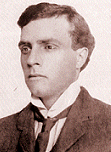 Pleasant Armstrong
Murderer · USA · 1902
Pleasant Armstrong was hanged on January 22, 1904. He was convicted of murder i…
1 victim
Pleasant Armstrong
Murderer · USA · 1902
Pleasant Armstrong was hanged on January 22, 1904. He was convicted of murder i…
1 victim
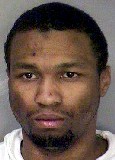 Shannon Johnson
Murderer · USA · 2006
Shannon Johnson (Black male) was executed by lethal injection in Delaware on Ap…
1 victim
Shannon Johnson
Murderer · USA · 2006
Shannon Johnson (Black male) was executed by lethal injection in Delaware on Ap…
1 victim
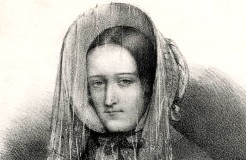 Marie Lafarge
Murderer · France · 1840
Marie-Fortunée Lafarge (née Capelle) was a Frenchwoman convicted of murdering h…
1 victim
Marie Lafarge
Murderer · France · 1840
Marie-Fortunée Lafarge (née Capelle) was a Frenchwoman convicted of murdering h…
1 victim
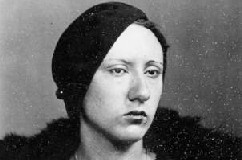 Violette Nozière
Murderer · France · 1933
Violette Nozière was convicted of parricide in 1934 for poisoning her parents i…
1 victim
Violette Nozière
Murderer · France · 1933
Violette Nozière was convicted of parricide in 1934 for poisoning her parents i…
1 victim
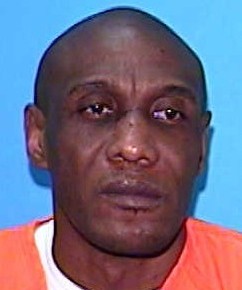 Harry Jones
Murderer · USA · 1991
Harry Jones was the defendant in a Florida capital case in Leon County. The cas…
1 victim
Harry Jones
Murderer · USA · 1991
Harry Jones was the defendant in a Florida capital case in Leon County. The cas…
1 victim
 Robert Lee Yates
Serial killer · USA · 1975
Robert Lee Yates Jr. (born May 27, 1952) was an American serial killer from Spo…
18 victims
Robert Lee Yates
Serial killer · USA · 1975
Robert Lee Yates Jr. (born May 27, 1952) was an American serial killer from Spo…
18 victims
- Gender
- male
- Country
- USA
- Location
- Burlingame , Osage County, Kansas, USA
- Date of birth
- January 15, 1963
- Age at first offence
- 46
- Characteristics
- abuse, domestic dispute, domestic violence, attempted rape
- Victim profile
- His estranged wife, Karen Kahler, 44 ; their two teenage daughters Emily Kahler, 18 , and Lauren Kahler, 16 ; and his wife’s grandmother, Dorothy Wight, 89
- Method of murder
- Shooting
- Date(s) of murder
- November 28, 2009
- Years active
- 2009
- Date of arrest
- Next day
- Status
-
Sentenced to death
Sentenced to death on October 11, 2011
Case record: James Kraig Kahler
Background
James Kraig Kahler resided in Columbia, Mo., after moving back to Kansas shortly before the shootings to live with his parents outside Topeka. He was also described as having headed the city utility company in Columbia, Mo., and as having directed city utility departments in Weatherford, Texas, and Columbia, Mo. He was raised in Meriden.
Kahler’s spouse Karen Kahler filed for divorce. Attorneys for Kahler described the case as arising after his spouse took a lesbian lover and filed for divorce, and that Kahler’s mental health deteriorated and he “finally snapped” because of the pending divorce and the wife’s sexual relationship with another woman met when they lived in Texas. A separate description in the proceedings characterized Kahler as resenting his two daughters and son being present when Sunny Reece and Karen Kahler were together.
A petition for an ex-parte order of protection included a statement attributed to Karen Kahler describing fears that “Kraig is controlling,” that she had learned that he was capable of using force, and that the issues varied. She described handling money by not telling him prices for “groceries, clothing, etc.” and described that when it was about sex she decided it was “easier” to give him what he wanted “every night” than to refuse. She wrote that when she refused, “he has been known to be forceful and mean.” In the same petition, she described an incident where he asked to sit beside her, she got up and he followed her, asked for a hug, and continued coming toward her with his arms reaching out to her; she continued to say “no” and tried to leave the room; he blocked her exit attempts until she could shove past him; he continued to block her exit; he eventually cornered her against the cabinet; he held her from behind in a “bear hug,” and the struggle resulted in “several scrapes and bruises.”
Reece, Sunny Reece, described the Kahler marriage as “very abusive” but stated she had not witnessed incidents herself and based her comments on what Karen Kahler had told her. Reece testified that she “wanted to protect her” and that she thought “I could.” During questioning by the defense, Reece testified that she encouraged Karen Kahler to divorce for her own safety and described that she did not break up the marriage so she could be with Karen.
The offence
Kahler was charged in connection with the shooting deaths of four family members during the Thanksgiving Day weekend in 2009 at Dorothy Wight’s Burlingame home. The victims were:
- Karen Kahler, 44
- Emily Kahler, 18
- Lauren Kahler, 16
- Dorothy Wight, 89
The four were killed during the weekend after Thanksgiving 2009 at Wight’s Burlingame home. Kahler walked into the home of Wight and shot his wife, daughters and Wight. He allowed his son, Sean Kahler, 10 at the time of the killings and later described as 12 at the trial, to escape unharmed.
Sean Kahler testified that while he and his mother were cleaning coins in a kitchen sink, his father entered the home and “My dad came through the door and shot my mom.” Sean testified he heard her collapse after the shot and said he then ran outside, attempted to return inside to get a phone, and heard “one or two more shots” before running to a neighbor’s house and then to another nearby house. He told people to call 911 because there had been a shooting across the street at Dorothy Wight’s house.
Evidence described in the proceedings included recordings of Lauren Kahler screaming for help and telling an Osage County deputy that her father shot her, including a statement attributed to Lauren Kahler: “Don’t let me die,” and “I don’t want to die.” A witness also described that law enforcement and emergency medical personnel said Wight and Lauren identified Kahler as the gunman before they died.
Coroner and forensic pathologist Erik Mitchell testified that of seven gunshot wounds suffered by the victims, six wounds were fatal shots and one would have been survivable by itself. Mitchell testified that the Kahler women were shot twice each and Wight was shot once, that none of the wounds were immediately fatal, and that Wight died three days after being shot.
Kahler was convicted of capital murder and multiple counts of first-degree murder and aggravated burglary. Prosecutors also described the entry into Wight’s home without permission as the basis for aggravated burglary. During closing arguments, Assistant Attorney General Amy Hanley described Kahler’s actions as based on anger and that he gunned down his family members because he believed he could fix his problems by getting rid of those he felt were responsible, stating:
- “The defendant had a plan.”
- “In his mind he had a problem to eliminate, and he knew how to do it.”
Defense attorney Tom Haney described Kahler as mentally “broken” and argued pressure due to the wife’s lesbian affair and her pursuit of a divorce, stating:
- “What happens when someone who’s rigid is put under too much pressure?”
- “They snap.”
Investigation
Law enforcement initiated a multi-agency manhunt after the shootings. Deputies were called about 6:15 p.m. to 905 S. Topeka Ave. just outside Burlingame. Officers responded to a suspicious vehicle report and a Life Alert call from Wight’s home.
Testimony included that Osage County Sheriff’s Deputy Nathan Purling was the first law enforcement officer to arrive at Wight’s home, responding to a call of a suspicious vehicle, and was later notified there was a shooting at the residence. Purling said he saw Wight sitting in a chair in the living room and saw blood and forced his way inside. He described empty .223 caliber shell casings on the floor and went upstairs after hearing a voice crying for help from the second floor. Purling testified that Lauren Kahler was suffering from gunshots and that she said her father had shot her, and that she said:
- “Don’t let me die,”
- “I don’t want to die.”
Shawnee County Sheriff’s Deputy Ed Nelson testified he was the first law enforcement officer to locate Kahler after an all-night search near the Osage–Shawnee county line. Nelson stated he encountered Kahler walking in the ditch along Auburn Road, and that Kahler said, “I’m the guy you’re looking for.” Nelson testified Kahler was carrying a hunting knife and a handgun and offered no resistance. Nelson also confirmed that Kahler was located less than a half mile from where his vehicle was found and that “Thirteen hours after the shooting” Kahler was located “four blocks away from his vehicle.”
Osage County Sheriff’s Deputy John Knapp testified that a magazine for a .223 caliber rifle was found in the ditch.
Investigator Bob Beckham, of the Kansas Bureau of Investigation, testified about a search of Kahler’s vehicle after it had been impounded. Beckham testified a long white box with a label indicating it was for a .223 caliber Mac 90 rifle was discovered, and that further investigation revealed the box had contained a rifle sold in Texas to Kahler. The weapon was not recovered, but the rifle’s clip was found and collected. Additional rifle clips were found in the vehicle.
Neighbors testified about a noisy vehicle and a Missouri license tag number on the red Ford Explorer. Michelle Davidson and Trevor Gibson described seeing a person exit the vehicle and walk down the road, becoming suspicious that the person was stealing, watching the vehicle, and eventually seeing the man come back to the vehicle carrying an object they could not identify. Davidson testified she yelled “Hey, you, stop right there” and shined a flashlight, and that the man placed the object in the back seat, got in the vehicle, and drove off as Gibson approached on foot. Davidson testified she thought she heard a gunshot and then heard sirens.
Testimony included that Kahler’s blood was found inside the house, and that a jacket found outside the house had Kahler’s business card in a pocket. Neighbors also saw Kahler’s sport utility vehicle parked near the shooting site and recorded the Missouri tag number registered to Kahler.
A .223-caliber rifle was described in testimony as the weapon. Sean Kahler testified that he described the gun used by his father as a .223 caliber rifle.
Kahler possessed a bottle of prescription tablets for anxiety disorders but did not take any of the medication. Officers recovered three magazines of .223-caliber ammunition. A bottle of prescription tablets for anxiety disorders was mentioned in the testimony.
Arrest
Kahler was arrested in connection with the shootings. He was apprehended by Shawnee County sheriff’s deputies in the area of 112th and Auburn Road at 7:27 a.m. Sunday. The manhunt had blocked about 2 miles of Auburn Road between Auburn and Burlingame, involving Kansas Highway Patrol helicopter unit, KHP ground units, Shawnee and Osage County sheriff’s offices, and police from Auburn and Topeka.
Deputies searched for 7½ hours but did not locate the driver. The vehicle was later found abandoned on the county line. The driver parked it in a driveway and fled the scene, and the vehicle was retrieved and processed for evidence. A perimeter of two miles was established around the vehicle.
When approached, Kahler told Deputy Ed Nelson: “I’m the guy you’re looking for.” Kahler stated to Nelson that his wife had filed for divorce and she was having an affair. Kahler also told Nelson he was armed with a holstered revolver. Long pocket knives were found on him along with hundreds of dollars in cash, pliers, gloves, a flashlight, and a mesh hunting bag.
Trial
Charges and procedural posture
Kahler was formally charged in the Osage County Courthouse. Count one was capital murder punishable by the death penalty. In the alternative of capital murder, Kahler was charged with three counts of first-degree murder, one count of attempted first-degree murder, and one count of aggravated burglary at the early charging stage.
Later descriptions stated a conviction of capital murder, four counts of first-degree murder, and one count of aggravated burglary.
A preliminary hearing was set for 1:30 p.m. Dec. 10. Arraignment was set for 9:30 a.m. Feb. 7.
District Judge Phillip Fromme denied an appeal of Jones’ denial of a defense request to waive the preliminary hearing, ruling the court did not have jurisdiction to hear an appeal of Jones’ decision.
Evidence presented
Witness testimony described physical evidence and identification by victims. Lauren Kahler and Wight identified Kahler as the gunman before they died. Prosecutors presented physical evidence including that Kahler’s blood was found inside the house; two victims and his son identified Kahler as the shooter of three victims; a jacket found outside the house had Kahler’s business card in a pocket; and neighbors saw Kahler’s SUV near the shooting site and recorded the Missouri tag number registered to Kahler.
Testimony also included the recordings of Lauren Kahler first screaming for help because a gunman was in the house and then telling a deputy that her father shot her. An emergency call recording played for jurors featured a young woman screaming, “Somebody’s going to kill us!” and an operator’s statement, “He’s in the home!” Reese identified the voice as Lauren Kahler’s.
Defense challenged sanity and responsibility at the time of the killings, presenting a theory that Kahler was not sane and had “mentally impaired” to the point he was not responsible. Defense argued that the wife’s affair and divorce drove him to a breaking point and that partners in a psychiatric office testified on opposite sides about his mental health, with one witness describing severe depression and inability to think rationally and control behavior, and another witness describing that depression wasn’t serious enough to prevent forming intent to kill or making conscious decisions.
Defense counsel Tom Haney argued to jurors there were 12 mitigating circumstances that outweighed aggravating circumstances, including that Kahler had no criminal history, was under extreme mental and emotional stress, and had a severe mental illness impairing his ability to think and control his actions.
Witness testimony on relationship and alleged abuse
Sunny Reese testified about consenting to a sexual relationship between Karen Kahler and herself and about Kahler being “very pleased,” and stated:
- “Kraig knew for the get-go and was very accepting,”
- “He agreed to everything. He was very pleased.”
Reece also testified about divorce-related communications including that Haney noted Reese sent Karen Kahler an email in January 2009 about “how to divorce a narcissist.” Haney asked Reese whether there was anything other than her testimony that Kahler suggested a threesome. Reese responded:
- “No sir. It’s my word.”
Reece testified she encouraged Karen Kahler to divorce for her own safety. Reese testified that she refused to remove herself from involvement with the Kahlers after friends asked her to do so following a New Year’s Eve 2008 party, which led to an argument that Karen Kahler said became physically abusive. Reece testified that she heard Karen Kahler tell her the next day that she was leaving him for Reese.
Reece’s testimony acknowledged she had not witnessed incidents herself and based her comments on what Karen Kahler told her.
The ColumbiaTribune.com description described Karen Kahler’s divorce attorney, Dan Pingelton, testifying about divorce events including that Karen Kahler was involved in a relationship with another woman and that Kahler stalked her through the Internet during divorce proceedings and was charged with assault in relation to a March 16 incident.
Sentencing
At sentencing in Osage County District Court, Chief Judge Phillip Fromme announced that the court would sentence the defendant to death under the law for the crime of capital murder.
Kahler was sentenced to death at 10:18 a.m. Tuesday after earlier remarks in court. The sentencing included comments from survivors and a statement read into the record from Patricia Hetrick, daughter of Dorothy Wight, read by Brenda Albright, office manager for the attorney general’s office. Kahler made several remarks while seated at the defense table during the sentencing hearing.
Chief Judge Phillip Fromme heard comments from Lynn Denton, a surviving sister of victim Karen Kahler. Denton spoke first and said:
- “I miss her (Karen) every day, some days more than other,”
- “I still want to pick up the phone and call her.”
- “There are no words of how deeply I hurt because of these tremendous losses,” she told the judge.
- “I loved Grandma Wight, Karen, Emily, and Lauren very much and will miss them until the end of my days.”
A statement written by Patricia Hetrick was read into the record by Brenda Albright. Hetrick wrote:
- “I lost three generations of loved ones in one fell swoop, and to this day, I still replay that frightening night over and over in my mind just like watching an old movie reel,”
- “I try so hard to rewrite (the end), but there is no such option.”
Hetrick wrote that Karen Kahler and her daughters died Nov. 28, 2009, the evening of the shooting, but Hetrick was able to drive to Kansas to be with her mortally wounded mother. Hetrick wrote:
- “I got to be with my mother until she died on Dec. 1,”
Hetrick talked about cleaning up and restoring Wight’s house after the killings and said that even with all of the painting and new furniture, she knew the house she had grown up in would be “hell and horror for me.”
Defense counsel Tom Haney previously had argued about mitigation and a jury’s consideration of aggravating and mitigating circumstances.
At one point after Denton spoke, a remark attributed to Kahler was recorded: “A beautiful sunny day outside,” and a few minutes later Kahler said: “And with Sunny, too,” referring to Sunny Reece.
Kahler spoke about his son Sean Kahler, 12. During the sentencing hearing, Kahler told his parents: “Take care of Sean so he's not raised by a bunch of freaks,” referring to relatives of his wife caring for the boy.
Kahler also made a remark during the hearing that was uttered about 20 minutes before he was sentenced to death for capital murder: “For the past year and a half, we've had a dark cloud around us that we associated with this trial. Now that it's over, the cloud is still there. The cloud wasn't about the trial. It is about our loss. The Kahlers, Wights, Dentons and Hetricks still have a lot of healing to do.” (This quotation appears in the proceedings as a statement read by Denton, Hetrick and Esch; it was presented during the sentencing-related outside-courthouse statement.)
The sentencing process included that Fromme turned Kahler over to the Osage County Sheriff’s Office for transport to the Kansas Department of Corrections.
Appeals
Haney filed a notice of Kahler’s appeal of the convictions and death penalty sentence. Haney later withdrew from the case, which would be handled by the state's capital appeals office.
Outcome
A jury convicted Kahler and recommended the death penalty after deliberating for 55 minutes, deciding at 3:25 p.m. to recommend the death penalty. The jury convicted him of capital murder, four counts of first-degree murder, and one count of aggravated burglary.
Chief Judge Phillip Fromme later sentenced Kahler to death at 10:18 a.m. on October 11, 2011.
At the end of court, Chief Judge Fromme announced the sentencing and Kahler was transported to the Kansas Department of Corrections by the Osage County Sheriff’s Office.
Aftermath
Following sentencing, Kahler spoke to his parents about caring for Sean Kahler so he was not raised by relatives described by Kahler as “a bunch of freaks.” Denton previously made a statement outside the courthouse that, after the verdict and sentence, “The cloud is still there” and that “The verdict and sentence doesn't bring our family back.
Chief Judge Phillip Fromme announced the death sentence at sentencing and directed transportation to the Kansas Department of Corrections.
Spotted an error, or have more information about this case?