
Ramadan Mansour
Serial killer Edson Isidoro Guimaraes
Serial killer · Brazil · 1999
Edson Isidoro Guimarães was a Brazilian nursing assistant and nurse’s aide at S…
131 victims
Edson Isidoro Guimaraes
Serial killer · Brazil · 1999
Edson Isidoro Guimarães was a Brazilian nursing assistant and nurse’s aide at S…
131 victims
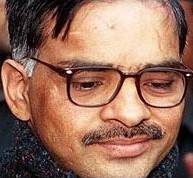 Javed Iqbal
Serial killer · Pakistan · 1998
Javed Iqbal (born 1956 in Lahore, Punjab, Pakistan; died October 8, 2001, in La…
100 victims
Javed Iqbal
Serial killer · Pakistan · 1998
Javed Iqbal (born 1956 in Lahore, Punjab, Pakistan; died October 8, 2001, in La…
100 victims
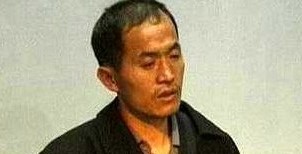 Yang Xinhai
Serial killer · China · 2000
Yang Xinhai (simplified Chinese: 杨新海; pinyin: Yáng Xīnhǎi; 17 July 1968–14 Febr…
67 victims
Yang Xinhai
Serial killer · China · 2000
Yang Xinhai (simplified Chinese: 杨新海; pinyin: Yáng Xīnhǎi; 17 July 1968–14 Febr…
67 victims
 Yang Xinhai
Serial killer · China · 2000
Yang Xinhai (simplified Chinese: 杨新海; pinyin: Yáng Xīnhǎi; 17 July 1968–14 Febr…
67 victims
Yang Xinhai
Serial killer · China · 2000
Yang Xinhai (simplified Chinese: 杨新海; pinyin: Yáng Xīnhǎi; 17 July 1968–14 Febr…
67 victims
 Robert Pickton
Serial killer · Canada · 1995
Robert William "Willie" Pickton (born October 26, 1949) of Port Coquitlam, Brit…
49 victims
Robert Pickton
Serial killer · Canada · 1995
Robert William "Willie" Pickton (born October 26, 1949) of Port Coquitlam, Brit…
49 victims
 William Gollehon
Murderer · USA · 1985
William Jay Gollehon was sentenced to death in 1992 after he and Douglas Turner…
7 victims
William Gollehon
Murderer · USA · 1985
William Jay Gollehon was sentenced to death in 1992 after he and Douglas Turner…
7 victims
 Benny Lee Hodge
Murderer · USA · 1985
Name: Benny Lee Hodge · Date of birth: 8-9-51 Benny Lee Hodge was sentenced to…
3 victims
Benny Lee Hodge
Murderer · USA · 1985
Name: Benny Lee Hodge · Date of birth: 8-9-51 Benny Lee Hodge was sentenced to…
3 victims
 Ivan Ray Murphy
Murderer · USA · 1989
January 9, 1989 — Ivan Ray Murphy and Douglas Stoff went to Lula Mae Denning’s…
1 victim
Ivan Ray Murphy
Murderer · USA · 1989
January 9, 1989 — Ivan Ray Murphy and Douglas Stoff went to Lula Mae Denning’s…
1 victim
 Wade Michael Page
Mass murderer · USA · 2012
Wade Michael Page was an American white supremacist and a United States Army ve…
6 victims
Wade Michael Page
Mass murderer · USA · 2012
Wade Michael Page was an American white supremacist and a United States Army ve…
6 victims
 Flint Gregory Hunt
Murderer · USA · 1985
Name: Flint Gregory Hunt Also listed as: Flint Gregory Hunt, Petitioner-appella…
1 victim
Flint Gregory Hunt
Murderer · USA · 1985
Name: Flint Gregory Hunt Also listed as: Flint Gregory Hunt, Petitioner-appella…
1 victim
- Gender
- male
- Country
- Egypt
- Location
- Several locations, Egypt
- Date of birth
- 1980
- Age at first offence
- 24
- Characteristics
- rape, torture
- Victim profile
- Children aged between 10 and 14 years ( most of them boys)
- Method of murder
- Shooting
- Date(s) of murder
- 2004 - 2006
- Years active
- 2004–2006
- Date of arrest
- November 29, 2006
- Status
-
Sentenced to death
Sentenced to death on May 23, 2007
Case record
Ramadan Abdel Rehim Mansour (born circa 1980, in Tanta, Gharbia, Egypt), also known as " al-Tourbini ", was a street gang leader and serial killer who raped and murdered at least 30 children in the course of seven years. His killings involved several locations in Egypt including Cairo, Alexandria, Qalyoubeya and Beni Sueif. All of his victims were 10 to 14 years old, most of them boys.
Background
Mansour left his home in Tanta and joined a street gang at an early age. Gang leaders taught him skills of survival, allegedly cutting him with razors when he made any mistakes.
According to his confession, Mansour learned how to get back at those who crossed him by raping them, and he murdered anyone who threatened to go to the police afterwards.
The offence
Mansour and his gang members lured street children onto the carriage roof of trains. They raped and tortured the children and tossed them onto the trackside, dead or barely alive. Some of the children were dumped into the Nile, or buried alive.
One victim was 12-year-old boy Ahmed Nagui, who had been a member of Mansour's gang. When Mansour tried to sexually assault Nagui, Nagui reported to the police and Mansour was arrested but was released for lack of evidence. Soon after, Mansour raped and murdered Nagui in retaliation, according to the prosecutors.
Mansour acquired the nickname "al-Tourbini" meaning "Express Train", from his favorite location for sadistic crimes.
Investigation
The Vice Department of Borg El-Arab police station in Alexandria started keeping a profile on Mansour during the period when he frequently traveled between Cairo and Alexandria by train.
Mansour's crimes came to light in 2006 when two of his gang members were arrested. After the arrest, Mansour reportedly told prosecutors that he was possessed by a female jinn who commanded him to commit the crimes.
Arrest
Mansour was arrested in 2006 along with six accomplices.
Mansour, along with his accomplice Farag Samir Mahmoud, also known as "Hanata", was convicted and sentenced to death by the criminal court in Tanta in 2007.
Trial
A court sentenced to death two gang leaders who had confessed to the murder and rape of 20 street children. The leaders were:
- Ramadan Abdel Rehim Mansour, known as Al-Tourbini (27)
- Farag Samir Mahmoud, known as Hanata (25)
They were convicted and sentenced by the criminal court in Tanta, 90km north of Cairo. Mansour and Hanata were also found guilty of illegal possession of weapons.
In accordance with Egyptian law, the judge referred the verdict to Egypt's grand Mufti for his opinion, which was advisory. It was described as a legal procedure before a sentence became final.
Sentencing
Mansour was sentenced to death on May 23, 2007.
Outcome
Mansour and his accomplice Farag Samir Mahmoud were sentenced to death by the criminal court in Tanta.
Aftermath
Soon after the arrest, al-Ahram, a widely-circulated Egyptian newspaper, reported that some products in Egypt were being named after Mansour's nickname, "al-Tourbini".
Several restaurants in Mansour's hometown, Tanta, started selling so-called "al-Tourbini sandwich", allegedly in demand by young locals.
Sheep merchants gave the name "al-Tourbini" to the big-size lamb priced at more than 2,000 Egyptian pound.
Some tuk-tuk drivers named their vehicles "al-Tourbini" to attract customers.
According to al-Ahram, owners of supermarkets and communications centers in Tanta were renaming their businesses "al-Tourbini: The Butcher of Gharbia".
Author and journalist John R. Bradley commented in his book Inside Egypt: The Land of the Pharaohs on the Brink of a Revolution that:
"this reaction borders on the incomprehensible, but what it clearly indicates is that something has gone terribly wrong with contemporary Egyptian society."
Other details
The case summary referenced an additional report that stated: "The Taipei Times May 25, 2007" and described a court sentencing on Wednesday.


Spotted an error, or have more information about this case?