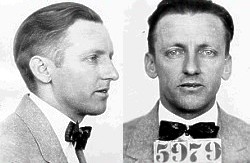
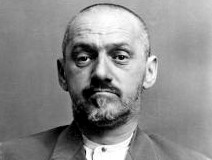
Paul Hadley
Murderer William Hale
Murderer · USA · 1921
Name: William Hale · Known as: the so-called "King of the Osage Hills" · Occupa…
24 victims
William Hale
Murderer · USA · 1921
Name: William Hale · Known as: the so-called "King of the Osage Hills" · Occupa…
24 victims
 Paul Jaworski
Murderer · USA · 1926
Paul Jaworski was born in Poland as Paul Poluszynski in 1900. He later immigrat…
20 victims
Paul Jaworski
Murderer · USA · 1926
Paul Jaworski was born in Poland as Paul Poluszynski in 1900. He later immigrat…
20 victims
 John S. Williams
Murderer · USA · 1910
John S. Williams was convicted of murder and sentenced to life imprisonment on…
18 victims
John S. Williams
Murderer · USA · 1910
John S. Williams was convicted of murder and sentenced to life imprisonment on…
18 victims
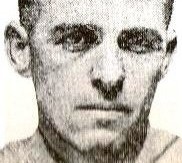 Edward Adams
Murderer · USA · 1920
Edward J. "Eddie" Adams was born in 1887 on a farm in Hutchinson, Kansas as W.J…
7 victims
Edward Adams
Murderer · USA · 1920
Edward J. "Eddie" Adams was born in 1887 on a farm in Hutchinson, Kansas as W.J…
7 victims
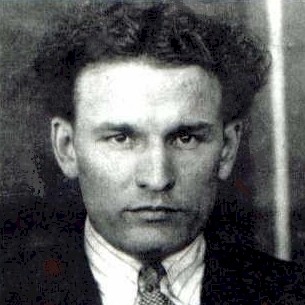 William Kenneth Wagner
Murderer · USA · 1924
William Kenneth (Kinnie) Wagner (born February 18, 1903 in Scott County, VA) wa…
6 victims
William Kenneth Wagner
Murderer · USA · 1924
William Kenneth (Kinnie) Wagner (born February 18, 1903 in Scott County, VA) wa…
6 victims
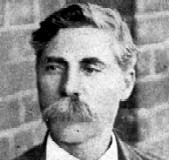 Floyd Allen
Murderer · USA · 1912
Floyd Allen (July 5, 1856 – March 28, 1913) was an American landowner and patri…
5 victims
Floyd Allen
Murderer · USA · 1912
Floyd Allen (July 5, 1856 – March 28, 1913) was an American landowner and patri…
5 victims
 Triston Jay Amero
Murderer · Bolivia · 2006
Triston Jay Amero was born in 1982. He was also known as Claudio Lestad, Lestat…
2 victims
Triston Jay Amero
Murderer · Bolivia · 2006
Triston Jay Amero was born in 1982. He was also known as Claudio Lestad, Lestat…
2 victims
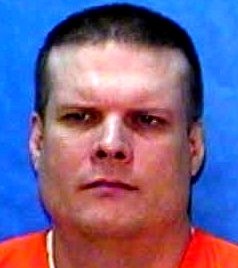 David Pittman
Murderer · USA · 1990
David Pittman (date of birth: 12/10/61) was sentenced to death in the Tenth Jud…
3 victims
David Pittman
Murderer · USA · 1990
David Pittman (date of birth: 12/10/61) was sentenced to death in the Tenth Jud…
3 victims
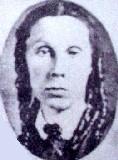 Phoebe Campbell
Murderer · Canada · 1871
Phoebe Campbell (c. 1847 – 20 June 1872) was a Canadian woman executed by hangi…
1 victim
Phoebe Campbell
Murderer · Canada · 1871
Phoebe Campbell (c. 1847 – 20 June 1872) was a Canadian woman executed by hangi…
1 victim
- Gender
- male
- Country
- USA
- Location
- Oklahoma/Arizona, USA
- Date of birth
- 1887
- Age at first offence
- 29
- Characteristics
- escape, rape
- Victim profile
- W. J. (Jacob) Giles (sheriff) / Anna C. Johnson
- Method of murder
- Shooting
- Date(s) of murder
- March 24, 1916 / November 15, 1921
- Years active
- 1916–1921
- Date of arrest
- —
- Status
-
Executed
Executed by hanging in Arizona on April 13, 1923
Case record: Paul Hadley
Status / outcome
Paul V. Hadley was executed by hanging in Arizona on April 13, 1923.
Background
On Friday, March 24, 1916, Sheriff Giles was transporting Paul V. Hadley, 30, by train back to Beaumont, Texas from Kansas City, Missouri, on a warrant for assault with intent to kill. Ida Hadley accompanied the men; she was Paul Hadley’s 22-year-old wife. The sheriff had known the couple for several years and trusted them and therefore had not handcuffed Paul or searched Ida.
While held in custody in Kansas City, Paul V. Hadley was incarcerated in what was known as the matron's department at the police station. Ida Hadley visited him several times and had several conversations with him before Sheriff Giles arrived in Kansas City.
The offence
Paul V. Hadley and Ida Hadley were jointly charged with the murder of W. J. (Jacob) Giles, alleged to have been committed in Muskogee county on or about the 24th day of March, 1916, by shooting him with a pistol.
Paul V. Hadley and Ida Hadley were alleged to have conspired together to have Paul V. Hadley make his escape from the officer having him in custody.
Investigation / evidence and firearm matters
A. J. Eddy was requested by the prosecuting attorney to determine if the fatal bullets could be identified as having been fired by the suspect’s firearm. Eddy was a practicing attorney who had previously conducted research and experimentation into the area of bullet identification and was certain that a bullet fired from a gun carried distinctive markings.
With the assistance of a local photographer, Eddy conducted numerous tests on the suspect murder weapon as well as several other 32-calibre firearms. The Mauser pistol was test fired using ammunition seized from Hadley, and the test and fatal bullets were photographed by reversing the lens of the camera. Over a period of three months, Eddy conducted a series of experiments. He was called to court to testify as to the results of his research, providing extensive testimony about the elaborate tests he had conducted and attempting to prove to the jury that each pistol left its own distinctive characteristics markings on bullets.
The defense attorneys argued that Eddy was not an expert. The judge overruled their request, taking the position that Eddy was merely showing the results of his exhaustive research and experimentation. The judge characterized Eddy’s testimony as being that of a “semi-expert” and allowed him to testify.
Hadley was convicted, in large part to Eddy’s testimony.
In the described background of the Arizona proceedings, Paul V. Hadley was tried for attempted murder and murder after he accepted a ride with an elderly couple, was alleged to have shot both, seriously wounding the man and killing the wife, and was subsequently arrested and found in possession of a 32 calibre Mauser pistol and several cartridges.
Arrest / custody and escape events
Paul V. Hadley was indicted for assault with intent to kill in Jefferson county, Texas. As a fugitive from justice, he was arrested March 20, 1916, in Kansas City, Missouri, where he was going under the name of J. O. Kendrick. Sheriff Giles was notified of his arrest. Hadley was held at the police station until Sheriff Giles arrived in Kansas City with a requisition from the Governor of Texas for Paul V. Hadley.
On the 23d day of March, Sheriff Giles arrived in Kansas City with the requisition from the Governor of Texas for Paul V. Hadley. Ida Hadley met Sheriff Giles at the police station and requested the sheriff to allow her to return to Texas with her husband. The sheriff replied that she could come if she wanted to, but she would have to pay her own railroad fare. She then gave the money to Mr. Sanderson, who was present, to purchase a ticket for her.
Sheriff Giles, with both defendants, left Kansas City on a train called the “Katy Limited” at 5:30 p. m. on the 23d day of March, 1916. The train arrived in Muskogee just after midnight the next morning. Before leaving Kansas City, Ida Hadley requested Sheriff Giles to remove the handcuffs from Paul V. Hadley after Paul V. Hadley agreed to return to Texas with Sheriff Giles by signing a written waiver of formal requisition. The sheriff did not grant her request.
When the train left Parsons, Ida Hadley sat in the rear seat on the right side of the chair car. Shortly after the sheriff, with Paul V. Hadley in custody, came out of the smoking car into the chair car, Paul V. Hadley sat down by his wife, while the sheriff sat down in the seat across the aisle. The defendants engaged in a whispered conversation. Ida Hadley went to the ladies' toilet in the front end of the car several times and each time returned to her seat by her husband. At that time the handcuffs had been removed from Hadley, and he was riding just as any other passenger in company with his wife. Sheriff Giles was facing the defendants and sitting across the aisle in the third seat from the rear, the back of which had been reversed.
When the train left Muskogee, Ida Hadley said to Sheriff Giles, “You might just as well go to sleep; Paul and I are going to sleep in a minute”; within ten minutes after leaving Muskogee, Ida Hadley got up from her seat and walked to the ladies' toilet in the forward end of the car. After staying there a few minutes she returned carrying a satchel or package. Reaching the sheriff, she drew a pistol from somewhere about her person and shot Sheriff Giles in the back of the head; the bullet passed through his head and fell on the floor. At that time the train was passing through the town of Oktaha, Muskogee county.
Paul V. Hadley jumped across the aisle and grabbed Sheriff Giles' pistol, saying to his wife, “Hold the gun on all of them; if they move blow their heads off”. Ida Hadley said to the other passengers in the car, “Don't a man or woman of you get up”. Paul V. Hadley proceeded to go through the pockets of the sheriff, taking papers out of his pockets and sticking them into his own pockets.
About this time the train auditor came into the car. Paul V. Hadley, holding his pistol on him, said, “Stop this train, God damn you, or I will blow your brains out”. The auditor pulled the bell cord, but the train did not stop. The Hadleys then went out on the front vestibule of the car and kept their guns on the auditor, demanding that he stop the train. The train stopped at Checotah and the two defendants stepped off.
The couple walked about five miles south from Checotah and stopped at the home of Mr. Ennis, asking permission to stop there until morning. They arranged to have Mr. Ennis' son drive them to Briartown in the morning. Young Ennis started to drive the defendants to Briartown or Porum. After going about ten miles, he left them at Mr. Stevens' place on Hi Early Mountain. Sheriff McCune, of McIntosh county, with a posse, arrested the defendants there that forenoon.
Ida Hadley asked Sheriff McCune if Giles was dead, and he told her he was. Ida Hadley asked, “What are you going to do with us?” and Sheriff McCune said, “We are going to take you to Eufaula, the county seat of the county where you killed this man”. Paul V. Hadley said, “I am in it just as much as she is; just as much to blame as she.”
It appeared that Sheriff Giles never spoke after he was shot and died two or three minutes after he was taken from the train at Checotah.
Trial
Paul V. Hadley did not testify as a witness. Ida Hadley testified as a witness in her own behalf and in behalf of her codefendant.
During trial, the jury rendered verdicts finding “the defendant Ida Hadley not guilty on account of insanity,” and finding “the defendant Paul V. Hadley guilty of the crime of murder as charged in the information, and fix his punishment at imprisonment in the state penitentiary at hard labor for life.”
In rebuttal, R. H. Gaines, for the state, testified in the hotel business at Checotah and was present with others there when Ida Hadley stated in the presence of her husband, Paul V. Hadley:
“That her husband had shot a man down in Texas; that she expected that some time he would be arrested, and it was her intention to take him away from the officers when they started back to Texas with him; that she had put her gun in her grip, and had kept it there all the time since the trouble in Texas; that when her husband was arrested in Kansas City she asked Sheriff Giles' permission to accompany him back to Texas; that her husband knew the gun was in the grip, and they had talked this matter over several times--that is, the possibility of her taking him away from the officer--and when they got to a little city above here that had electric lights, a city of 15,000, 20,000, or possibly 30,000 people, she whispered to Mr. Hadley, 'When we leave this town I am going to take Jake's gun off of him, and you get ready to make your getaway.'”
Gaines further testified that Ida Hadley stated:
“I asked Giles to lend me his drinking cup; he let me have the cup, and I started back to the wash room; there I took the gun out and put it in my dress, and I came out and down the aisle toward Mr. Hadley and Jake, and when I got near Mr. Hadley I gave him a nod to get ready to get up; that she and Mr. Hadley had frequently talked over the subject that she would use the gun in taking him away from the officer-- that they had talked it over after they left Kansas City while sitting in the car.”
Other witnesses testified that they were present when Ida Hadley made these statements in the hotel at Checotah, and that at the time she and her husband were handcuffed together.
Sentencing
The jury fixed Paul V. Hadley’s punishment at imprisonment in the state penitentiary at hard labor for life.
Paul V. Hadley was granted a transcript of testimony and proceedings on the trial for the purpose of perfecting his appeal due to his poverty and inability to pay for the same. The petition with case-made was filed without cost.
Appeals
The case was appealed to the Arizona Supreme Court in connection with the ballistics evidence. The court upheld the lower court, recognizing ballistics evidence as valid and admissible, and the ruling appeared to be the first time that a State Supreme Court in the United States had done so. Hadley v State 1918 OK CR 83 175 P. 71 14 Okl.Cr. 644 was identified as:
- Case Number: A-2900
- Decided: 03/23/1918
- Oklahoma Court of Criminal Appeals
- Appeal from District Court, Muskogee County; Chas. G. Watts, Judge
- Paul V. Hadley was convicted of murder, and he appeals. Affirmed.
The opinion included procedural and evidentiary findings. The plaintiff in error, Paul V. J. The opinion stated that upon their trial the jury rendered verdicts finding Ida Hadley not guilty on account of insanity and finding Paul V. Hadley guilty of murder as charged in the information and fixing his punishment at imprisonment at hard labor for life. The opinion stated that Paul V. Hadley appealed the judgment.
The opinion stated that the evidence showed that Paul V. Hadley and Ida Hadley resided in Beaumont, Jefferson county, Texas; that Paul V. Hadley was indicted for assault with intent to kill in Jefferson county, Texas; that as a fugitive from justice he was arrested March 20, 1916, in Kansas City, Missouri under the name of J. O. Kendrick; that W. J. (Jacob) Giles was sheriff of Jefferson county, Texas; that Hadley was incarcerated at the police station; that Ida Hadley visited him and had conversations before Giles arrived; and that Giles arrived in Kansas City with a requisition from the Governor of Texas.
The opinion also stated that before leaving Kansas City Ida Hadley requested removal of handcuffs, but the request was not granted; and described the train ride, the whispered conversation, Ida Hadley’s trips to the ladies' toilet, the shooting, the grab for the pistol, the threats to the auditor, stopping at Checotah, the walk south to Mr. Ennis’ home, the arrangement for Ennis’ son to drive them, leaving them at Mr. Stevens’ place on Hi Early Mountain, and the arrest by Sheriff McCune.
The opinion recorded Paul V. Hadley’s statement at the arrest and the statement attributed to Ida Hadley about taking Jake’s gun off Giles and using a nod to get ready to get up.
The opinion discussed conspiracy principles and cited Grayson v. State, 12 Okla. Crim. 226, 154 P. 334 and Irvin v. State, 11 Okla. Crim. 301, 146 P. 453. It also quoted Mr. Bishop:
“Since a combined act and evil intent constitute crime, and since a thing which one does through the agency of another is the same in law as though performed by his personal volition, one who contributes his will to a crime, by whomsoever the physical act of wrong is done, is guilty of the crime. Hence, when two or more persons unite to accomplish a criminal object, whether through the physical volition of one, or of all, proceeding severally or collectively, each individual whose will contributes to the wrongdoing is in law responsible for the whole, the same as though performed by himself alone.” (1 Bishop, New Crim. Law, sec. 629.)
The opinion stated that the court was satisfied with fairness and that the verdict was neither against the weight of the evidence nor against the law, and it affirmed the judgment appealed from.
Outcome
Paul V. Hadley was convicted of murder and sentenced to imprisonment in the state penitentiary at hard labor for life. He escaped in 1921. Paul V.
Other details
The sex and motive fields in the case materials were recorded as: “M RACE: W TYPE: N MOTIVE: CE/Sex. MO: Killed a sheriff (Okla.) and married couple (Ariz.); several rapes.”
Disposition in the case materials was recorded as “99 years (Okla.), 1916; escaped 1921; hanged Apr. 13, 1923.”
Spotted an error, or have more information about this case?