
Pervis Tyrone Payne
Murderer Brian Kevin Rosenfeld
Murderer · USA · 1985
Brian Kevin Rosenfeld Brian Kevin Rosenfeld was sentenced to three concurrent l…
23 victims
Brian Kevin Rosenfeld
Murderer · USA · 1985
Brian Kevin Rosenfeld Brian Kevin Rosenfeld was sentenced to three concurrent l…
23 victims
 Yahweh ben Yahweh
Murderer · USA · 1980
Yahweh ben Yahweh was born and legally named Hulon Mitchell Jr. (October 27, 19…
23 victims
Yahweh ben Yahweh
Murderer · USA · 1980
Yahweh ben Yahweh was born and legally named Hulon Mitchell Jr. (October 27, 19…
23 victims
 Russell Ellwood
Murderer · USA · 1991
Russell Ellwood was a former taxi driver. Authorities suspected him of killing…
20 victims
Russell Ellwood
Murderer · USA · 1991
Russell Ellwood was a former taxi driver. Authorities suspected him of killing…
20 victims
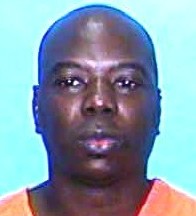 Ronald Lee Williams
Murderer · USA · 1988
Ronald Lee Williams was the leader of the “Miami Boys,” a drug-trafficking ring…
4 victims
Ronald Lee Williams
Murderer · USA · 1988
Ronald Lee Williams was the leader of the “Miami Boys,” a drug-trafficking ring…
4 victims
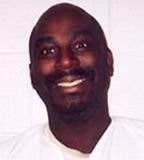 Gregory Thompson
Murderer · USA · 1985
Gregory Thompson was diagnosed with undifferentiated schizophrenia, delusions a…
1 victim
Gregory Thompson
Murderer · USA · 1985
Gregory Thompson was diagnosed with undifferentiated schizophrenia, delusions a…
1 victim
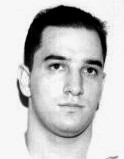 Anthony Shawn Medina
Murderer · USA · 1996
Anthony Shawn Medina was the leader of the La Raza-13 gang. The case involved a…
2 victims
Anthony Shawn Medina
Murderer · USA · 1996
Anthony Shawn Medina was the leader of the La Raza-13 gang. The case involved a…
2 victims
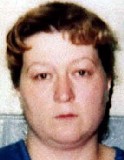 Gina Spann
Murderer · USA · 1997
Gina Spann pleaded guilty and was sentenced to life in prison without parole on…
1 victim
Gina Spann
Murderer · USA · 1997
Gina Spann pleaded guilty and was sentenced to life in prison without parole on…
1 victim
- Gender
- male
- Country
- USA
- Location
- Shelby County, Tennessee, USA
- Date of birth
- March 1, 1967
- Age at first offence
- 20
- Characteristics
- attempted rape, drugs
- Victim profile
- Charisse Christopher, 28, and her daughter, Lacie Jo, 2
- Method of murder
- Stabbing with knife
- Date(s) of murder
- June 27, 1987
- Years active
- 1987
- Date of arrest
- Same day
- Status
-
Sentenced to death
Sentenced to death on February 16, 1988 U.S.
Parties and case identifiers
Pervis T. Payne was convicted in Shelby County of killing Charisse Christopher and her daughter, Lacie Jo.
Background
Pervis T. Payne was the defendant in a Tennessee criminal case. Payne was prosecuted in Tennessee in connection with the killings of Charisse Christopher and her daughter, Lacie Jo.
Charisse Christopher lived with her two children, Nicholas, age three and one-half, and Lacie, age two and one half, in the Hiwassee Apartments in Millington. Payne’s girlfriend lived in the apartment across the hall from Charisse Christopher’s apartment, and the apartment complex's resident manager lived in the downstairs unit directly below the Christophers. The building consisted of four units: two upstairs and two downstairs. Each of the upstairs apartments had back doors in the kitchen that led to an open porch overlooking the back yard, with a metal stairway leading to the ground. There was also an inside stairway leading to the ground floor hallway and front entrance to the four-unit building.
On June 27, 1987, Payne visited his girlfriend’s apartment several times in anticipation of plans to spend the weekend together, but he found no one at home. On one visit, he left his overnight bag and three cans of Colt 45 malt liquor near the entrance of her apartment. While waiting for his girlfriend to return, Payne passed the morning and early afternoon injecting cocaine and drinking beer. Later, he and a friend cruised around the area looking at a magazine containing sexually explicit material. At approximately 3:00 p.m., Payne returned to the Hiwassee Apartment complex and entered Charisse Christopher's apartment.
The offence
At the same time, the manager heard Charisse screaming, “get out, get out.” The noise briefly subsided and then began, “horribly loud.”
The manager called the police after she heard a “blood curdling scream” from the Christophers’ apartment. A police unit was immediately dispatched to the Hiwassee Apartments.
While the shouting, screaming, and running upstairs had stopped, the manager heard footsteps go into the bathroom, the faucet turned on, and the sound of someone washing up.
Inside the apartment, the police later encountered a “horrifying scene.” Charisse and her two children were discovered lying on the kitchen floor. Nicholas was still breathing despite abdominal stab wounds that completely penetrated his body. Charisse and Lacie were dead.
Charisse Christopher sustained forty-two direct knife wounds and forty-two defensive wounds on her arms and hands. The wounds were caused by forty-one separate thrusts of a butcher knife. None of the eighty-four wounds inflicted was individually fatal; rather, the cause of death was most likely bleeding from all of the wounds. Charisse’s body was found lying on her back with her legs fully extended, with her shorts pushed up on her legs. A used tampon was found beside the victim’s lifeless body.
Lacie’s body was found on the kitchen floor near her mother. Lacie suffered nine stab wounds to the chest, abdomen, back, and head. One wound cut the aorta and would have been rapidly fatal. The murder weapon, a butcher knife, was found at her feet.
Investigation
Police encountered Payne as he was leaving the apartment building. The first police officer arrived within minutes of the radio dispatch. The officer observed a black man on the second floor landing pick up an object and come down the stairs, and then encountered Payne as Payne was leaving the apartment building.
The officer noted Payne had “blood all over him. It looked like he was sweating blood.” When the officer confronted Payne, Payne responded, “I’m the complainant.” When the officer asked “What’s going on up there?” Payne struck the officer with the overnight bag, dropped his tennis shoes and began running.
The officer pursued him, but Payne outdistanced him and disappeared into another apartment complex.
A woman visiting her sister in the same apartment complex described hearing a noise like a person moaning from the Christophers’ apartment and hearing the back door slam three or four times, “but it didn’t want to shut. And this hand, a dark-colored hand with a gold watch, kept trying to shut that back door.”
At the scene, blood was found covering the walls and floor throughout the unit.
Three cans of Colt 45 malt liquor bearing Payne’s fingerprints were found on a small table in the living room. A fourth empty beer can was on the landing outside the apartment door. Payne’s fingerprints were also found on the telephone and counter in the Christophers’ kitchen.
Payne’s baseball cap was recovered from Lacie’s forearm. Her hand and forearm were sticking through the opening between the adjustment strap and the cap material.
Payne was apprehended later that day hiding in the attic of the home of a former girlfriend. As he descended the stairs of the attic, he stated, “Man, I ain’t killed no woman.” One arresting officer remarked that Payne had “wild look about him. His pupils were contracted. He was foaming at the mouth, saliva. He appeared to be very nervous. He was breathing real rapid.” Payne had blood on his body and clothes and several scratches across his chest. He also was wearing a gold Helbrose wristwatch with bloodstains.
It was later determined that the blood types found on Payne’s clothing matched the victims’ blood types.
A search of Payne’s pockets revealed a packet containing cocaine residue, a hypodermic syringe wrapper, and a cap from a hypodermic syringe. Payne’s overnight bag, found in a nearby dumpster, contained a bloody white shirt.
Arrest
As he descended the stairs of the attic, he stated, “Man, I ain’t killed no woman.”
Trial
At trial, Payne took the stand on his own behalf and testified that he did not harm any of the Christophers.
Payne asserted that another man had raced by him as he was walking up the stairs. When he reached the landing, he heard a baby crying and a faint call for help and saw that the door was ajar. He testified that, motivated by curiosity, he announced he was coming in and entered the apartment. Payne described what he saw as follows:
I saw the worst thing I ever saw in my life and like my breath just had--had tooken--just took out of me. . . . she was looking at me. She had the knife in her throat with her hand on the knife like she had been trying to get it out and her mouth was just moving but words had faded away. And I didn’t know what to do.
He explained that he got blood on his clothes and his person when he pulled the knife out of Charisse’s neck and that:
“she reached up and grabbed me and hold me . . .”
He testified that he panicked and fled when he heard the police sirens.
During the State’s cross-examination, Payne made the following admission:
Q. Can you explain why there’s bloodstains on your left leg?
A. Left leg?
Q. Yes, sir.
A. Evidently it probably came--had to come from when she--when she hit the wall. When she reached up and grabbed me.
Q. When she hit the wall? A. When she--when she hit the wall when I got ready to run up--when I got ready to vomit.
Q. When she hit the wall she got blood on you? A. When she splashed. It was blood--a lot of blood on the floor.
Q. She got blood on you when she hit the wall. Is that what you said? A. She hit against the wall when she fell back.
Q. Is that what you said, sir, that she got blood on you when she hit the wall? A. I didn’t say she got blood on me when she hit the wall.
Q. Isn’t that what you said just a moment ago, sir? A. That ain’t--that’s not what I said.
The jury returned guilty verdicts against Payne on all counts.
At sentencing, Payne presented the testimony of four witnesses. Payne's girlfriend testified that she met Payne at church and stated that he was a very caring person, and that he devoted much time and attention to her three children. She said that her three children had come to love him very much. She asserted that Payne did not drink and did not use drugs, and that it was inconsistent with Payne’s character to have committed these crimes.
A clinical psychologist testified regarding Payne’s IQ scores, including verbal IQ 78 and performance IQ 82. The clinician explained that the “mental retardation” score is considered 75 historically, and based on Payne’s scores, the doctor found Payne “mentally handicapped,” but not “retarded.” The doctor also stated that Payne was “the most polite prisoner he had ever met.”
Payne’s parents testified that Payne was twenty years old at the time and had no prior criminal record and had never been arrested. They stated that Payne had no history of alcohol or drug abuse, worked with his father as a painter, was good with children, and was a good son.
The State presented the testimony of Charisse Christopher’s mother, who related the emotional trauma the double murders had on Nicholas and how he continued to cry for his mother and sister.
The jury found, as to both the murder of Charisse Christopher and Lacie Christopher, that Payne knowingly created a great risk of death to two or more persons other than the victim murdered during his act of murder and that the murder was especially heinous, atrocious, or cruel in that it involved torture or depravity of mind.
As to the murder of Lacie Christopher, the jury found that the murder was committed against a person less than twelve years of age and Payne was eighteen years of age or older.
Finding no mitigating circumstances sufficiently substantial to outweigh the statutory aggravating circumstances, the jury sentenced Payne to death on each of the murder counts.
Sentencing
The jury sentenced Payne to death on each of the murder counts.
Appeals and Supreme Court proceedings
The case proceeded to appeals including Payne v. Tennessee and the United States Court of Appeals for the Sixth Circuit.
Payne v. Tennessee, 501 U.S. 808 (1991) was a United States Supreme Court case. The decision held that testimony on the form of a victim impact statement was admissible, thus overruling two precedents in Booth v. Maryland. It held that stare decisis could be disregarded where fairness to Victim's rights had priority over demands of consistency in the common law.
The decision allowed victim impact statement testimony during the sentencing phase of a trial and concluded that admission of these statements in death penalty cases did not violate the Constitution.
The decision overruled Booth v. Maryland (1987) and South Carolina v. Gathers (1989). Three Justices dissented: John Paul Stevens, Thurgood Marshall, and Harry Blackmun.
The case was argued on April 24, 1991 and decided on June 27, 1991.
Outcome
Payne’s conviction resulted in sentences of death on the murder counts. The case held that victim impact statement testimony was admissible during sentencing in death penalty cases.
Other details
The record described the offence as a drug-induced frenzy. It described Payne as attempting to rape Charisse Christopher and finally murdering her and her two-year-old daughter, Lacie.
Nicholas Christopher held in his intestines while emergency medical technicians transported him to the emergency room.
A medical examiner testified that Charisse was menstruating and that a specimen from her vagina tested positive for acid phosphatase. The medical examiner stated the result was consistent with the presence of semen, but not conclusive absent sperm, and that no sperm was found.
Among the evidence described were Payne’s fingerprints on cans of malt liquor, victims’ blood on his clothes, and Payne’s property left at the scene.
The record described that Payne denied the charges and claimed he came upon the bloody victims. It also described that the DA stressed the sensenselessness of the killings, the violence displayed by Payne, and the innocence of the victims.
The record described that numerous witnesses testified at the trial, including police, friends, neighbors, and experts. The evidence that Payne perpetrated the attacks was described as “overwhelming,” according to Chief Justice Rehnquist.
The record described that Payne appealed to the Tennessee Supreme Court and then asked for a writ of certiorari from the United States Supreme Court. Cert was granted, with the court noting it would have to reconsider past precedent.
The record described that the main issue was whether damaging testimony in the form of a victim impact questioning could be admissible in the sentencing phase of an otherwise fair state trial, with subsidiary issues including whether admission of these statements in a death penalty case violated the Constitution, and whether the Supreme Court was bound by stare decisis to follow prior cases.
The record described the Court legally presumed Payne was guilty beyond a reasonable doubt for purposes of that hearing, and that the issue on appeal concerned admissibility of evidence and victims’ rights and stare decisis rather than guilt or innocence.
The record described that there was impact on victim impact evidence in capital sentencing and referred to a scholar’s commentary that the decision revived the use of victim impact evidence during capital sentencing. It also referred to another scholar’s discussion describing the verdict as an example of “symbolic violence” and quoting discussion of Rehnquist’s reliance on imagery of the perpetrator while describing how such imagery could obscure violence.
The record also described that Payne’s execution was stayed in April 2007, that after protracted litigation it was again scheduled in December 2007 and stayed again in that month, and that Payne was still alive as of January 2010 and was on death row for the double homicide.
The record included a list of navigation phrases at the end that did not contribute additional case facts.

Spotted an error, or have more information about this case?