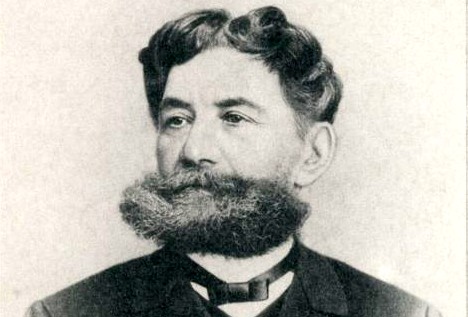
Alexander Sukhovo-Kobylin
Murderer? John Gordon
Murderer? · USA · 1843
John Gordon (died February 14, 1845) was executed by hanging on February 14, 18…
1 victim
John Gordon
Murderer? · USA · 1843
John Gordon (died February 14, 1845) was executed by hanging on February 14, 18…
1 victim
 Mark Brandon Read
Murderer? · Australia · 1979
Mark Brandon “Chopper” Read (born 17 November 1954) was an Australian ex-convic…
19 victims
Mark Brandon Read
Murderer? · Australia · 1979
Mark Brandon “Chopper” Read (born 17 November 1954) was an Australian ex-convic…
19 victims
 Richard Allen Williams
Murderer? · USA · 1992
Boone County Prosecutor Kevin Crane dismissed the charges in August 2003 after…
10 victims
Richard Allen Williams
Murderer? · USA · 1992
Boone County Prosecutor Kevin Crane dismissed the charges in August 2003 after…
10 victims
 Dr. Teet Härm
Murderer? · S weden · 1984
The District Court jury returned a guilty verdict, but the High Court overturne…
9 victims
Dr. Teet Härm
Murderer? · S weden · 1984
The District Court jury returned a guilty verdict, but the High Court overturne…
9 victims
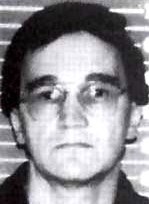 James DeBardeleben
Murderer? · USA · 1965
James DeBardeleben (James Mitchell “Mike” DeBardeleben), born March 20, 1940, w…
8 victims
James DeBardeleben
Murderer? · USA · 1965
James DeBardeleben (James Mitchell “Mike” DeBardeleben), born March 20, 1940, w…
8 victims
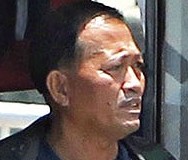 Rolando Mendoza
Murderer? · Philippines · 2010
Rolando Mendoza was a former police officer who hijacked a tourist bus carrying…
8 victims
Rolando Mendoza
Murderer? · Philippines · 2010
Rolando Mendoza was a former police officer who hijacked a tourist bus carrying…
8 victims
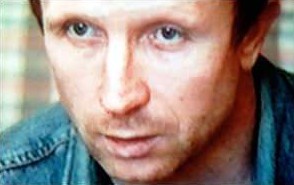 Anatoly Onoprienko
Serial killer · Ukraine · 1989
Anatoly Yuriyovych Onoprienko was born July 25, 1959, and was also known by the…
52 victims
Anatoly Onoprienko
Serial killer · Ukraine · 1989
Anatoly Yuriyovych Onoprienko was born July 25, 1959, and was also known by the…
52 victims
 Wesley Eugene Baker
Murderer · USA · 1991
Wesley Eugene Baker was convicted of murdering Jane Tyson in the course of a ro…
1 victim
Wesley Eugene Baker
Murderer · USA · 1991
Wesley Eugene Baker was convicted of murdering Jane Tyson in the course of a ro…
1 victim
 George Molina Lopez
Murderer · USA · 1989
George Molina Lopez lived in a Tucson apartment with his girlfriend and their 1…
1 victim
George Molina Lopez
Murderer · USA · 1989
George Molina Lopez lived in a Tucson apartment with his girlfriend and their 1…
1 victim
 Alexander Greb
Spree killer · Russia · 2004
Alexander Greb was arrested by law enforcement officers of the Rakitinsky depar…
4 victims
Alexander Greb
Spree killer · Russia · 2004
Alexander Greb was arrested by law enforcement officers of the Rakitinsky depar…
4 victims
 Tina Brown
Murderer · USA · 2010
Tina Lasonya Brown was convicted of first-degree murder in the beating and burn…
1 victim
Tina Brown
Murderer · USA · 2010
Tina Lasonya Brown was convicted of first-degree murder in the beating and burn…
1 victim
- Gender
- male
- Country
- Russia
- Location
- Moscow, Russia
- Date of birth
- September 29, 1817
- Age at first offence
- 33
- Characteristics
- rape?, rapist
- Victim profile
- Louise-Simone Dimanche ( his French mistress )
- Method of murder
- Struck Louise with a candlestick and cut her throat
- Date(s) of murder
- November 9, 1850
- Years active
- 1850
- Date of arrest
- —
- Status
-
Died in custody
Found not guilty on September 13, 1852; Died in France on September 24, 1903
Background
Alexander Vasilyevich Sukhovo-Kobylin (Russian: Александр Васильевич Сухово-Кобылин) was a Russian nobleman, chiefly known for his activity as an amateur playwright.
Sukhovo-Kobylin was born on September 29 [O.S. September 17] 1817, in Moscow, and died on September 24 [O.S. September 11] 1903, in Beaulieu, France.
He often travelled. He was arrested, prosecuted and tried for seven years in Russia for the murder of his French mistress Louise-Simone Dimanche, a crime of which he was generally believed to have been innocent. He achieved acquittal and was later described as “The Eternal Suspect.”
Sukhovo-Kobylin wrote a trilogy of satirical plays based on his experiences. The trilogy included:
- “Krechinsky’s Wedding” (Russian: Сватьба Кречинского) (1850-1854, begun in prison)
- “The Trial” (Russian: Дело) (1869)
- “Tarelkin’s Death”, alternatively titled “Rasplyuyev’s merry days” (Russian: Смерть Тарелкина , Расплюевские веселые дни) (1869)
The trilogy in its entirety was published in 1869 under the title “Scenes from the Past” (Russian Картины прошлого). Attempts to stage the last two plays ran into difficulties with censorship, and “Tarelkin’s Death” was only staged in 1899. The first play had immediate success and became one of Russia’s most frequently performed plays, and it was considered Sukhovo-Kobylin’s best.
The offence
Louise-Simone Dimanche (also referred to as Louise Simon-Dimanche and as Madame Simon) was found dead.
On November 8, 1850, a “traffic mishap involving a woman in a blue cloak” became part of Sukhovo-Kobylin’s discussions with Moscow police chief Luzhin. On November 9, Sukhovo-Kobylin made an official request that the police search for Louise Simon-Dimanche, who had disappeared two nights before.
By the evening of November 9, police efforts remained fruitless, but a female corpse was discovered in a snow-covered ravine near the wall surrounding the Vagankovsky cemetery, beyond the Presnenski gate in the western perimeter of Moscow.
The body was described as:
- still young
- elegantly attired in a green checked dress, blouse of Dutch linen, sky-blue jacket and veiled silk cap
- wearing gold earrings set with brilliants and rings adorned fingers of both hands
- wearing velvet half-boots
- having three petticoats beneath the dress, but the corset mandated by fashion was absent
- drawers rucked up to the knees
- having a yawning wound in her throat, with some blood but “surprisingly little” blood staining the snow
Tracks of a sleigh and horses’ hooves were found near the corpse. The setting and tracks suggested that the body had been carried out of Moscow and deposited near the cemetery, near the Choroshevo road.
After the body was brought to Moscow, Sukhovo-Kobylin’s house serfs identified the dead woman as the missing Louise Simon-Dimanche.
Doctor Tichomirov made an external examination of the body, followed on November 11 by an autopsy in which he participated. Findings included:
- a five-inch diagonal wound on the front of the neck, below the larynx, apparently inflicted with an even-edged instrument
- the windpipe, carotid arteries and both jugular veins were completely severed
- a groove “with the dimension of ‘a little finger’” around the upper portion of the neck
- a large dark purple swelling about the size of the palm of a hand around the left eye
- the entire left side of the body was bloody
- on the left arm, from the shoulder to the elbow, a large dark stain with bruising and an obliquely indented groove ending in a triangular excoriation
- three left ribs fractured and another smashed
- no pathological or abnormal findings in the mouth, alimentary canal or windpipe
- internal organs showing no sign of bleeding and otherwise in normal condition
In late January 1851, the police made a detailed examination of the victim’s clothing:
- the green dress had thick streams of blood from the top to the waist
- the first petticoat of white calico was heavily stained
- there were barely noticeable stains on the exterior of the second petticoat and none closer to the body
The autopsy doctors concluded that death was caused by extraordinary force resulting in injuries observed and especially by “the unquestionably mortal wound” at the front of the neck.
Investigation
The report of the murder spread rapidly through Moscow, and public opinion advanced a theory before police completed the investigation.
“Public version”
Literary critic Leonid Grossman was associated with the “public version” that said Sukhovo-Kobylin murdered his French mistress Louise Simon-Dimanche in a fury over her disruption of an amorous rendezvous with Natalya Naryshkina. The theory alleged:
- Simon-Dimanche tracked her rival in early hours of November 8 to the wing of Sukhovo-Kobylin’s house on Strastnoy Boulevard and surprised the lovers
- she was angry because of the intrusion and her abuse of Naryshkina
- Sukhovo-Kobylin struck Louise with a candlestick and cut her throat
- he ordered servants (hypothetically identified by Leonid Grossman as his valet Makar Lukyanov and cook Efim Egorov) to carry the body to the cemetery
Police questioning and witness array
Police questioned a large array of witnesses, including Sukhovo-Kobylin and valet Lukyanov, and the house serfs delegated to serve Simon-Dimanche.
The servants assigned included four centrally involved:
- maids Pelageya Alekseeva, 15, and Agrafena Ivanova Kashkina, 27
- cook Efim Egorov
- a boy from the wineshop, Galaktion Kozmin, serving as coachman at the time because of the illness of the regular driver
Incriminating evidence was found on Egorov’s person when he was questioned:
- under the lining of his vest pocket he concealed 100 rubles, described as corresponding to Simon-Dimanche’s household funds
Later police recovered Louise’s gold watch in the attic occupied by Egorov in Sukhovo-Kobylin’s house, wrapped in a letter addressed to valet Lukyanov.
Police placed Egorov, Lukyanov and Louise’s three other household servants under arrest.
Reconstructed last day schedule
From depositions of substitute coachman Kozmin and other witnesses, police reconstructed details of Louise’s last day.
Kozmin drove the Frenchwoman around Moscow on a twelve-hour excursion beginning at 9:00 a.m. The first stop was at Gazetny Lane to pick up Louise’s close friend, Mme. Ernestine Liandert, and they proceeded to Ochotny Row (renamed Marx Prospekt) to shop for provisions.
Louise spent an hour chatting at Ernestine’s apartment and then returned home alone for about an hour. She then went back in her sleigh and ordered Kozmin to drive her successively to:
- a bookstore
- a business office
- her dressmaker’s
She stopped at home to change for the evening. She then went for dinner at Ernestine’s with:
- Ernestine’s lover Lieutenant Sushkov
- another tall man with a mustache whom Kozmin did not know
The four then left in a pair of sleighs for an evening’s ride around the boulevards, ending with a drive across the Kuznetsky Bridge to eat ices at a popular confectioners’ shop.
When Kozmin brought her home at 9:00 p.m., Louise ordered the horse be unharnessed.
Much of Louise’s next hour was devoted to household matters, and she was described as having been seen alive for the last time during that period.
Efim Egorov told police he came to see her around 10:00 p.m. to ask what food to prepare for the following day; when he left, she gave him a note for his master, which he delivered to the valet because Sukhovo-Kobylin was away.
A clerk named Fyodor Fedotov arrived “with expense accounts for the table,” and Louise ordered him to tell her master to send an answer to the note dispatched through cook Efim. Fedotov did not give the message because he did not see him; after returning, the master was not at home.
The sealed note and what it inquired about was described in relation to the valet’s account: the valet Lukyanov stated that she had written to inquire whether Sukhovo-Kobylin planned to dine with her on the following evening (November 8).
According to Lukyanov, Sukhovo-Kobylin, upon returning home early in the morning of November 8, told him to inform Simon-Dimanche that he had an engagement for the evening so that only breakfast should be prepared for him.
The maid Pelageya Alekseeva stated that after she sent a letter to Sukhovo-Kobylin, Simon-Dimanche waited about a half hour for a response. Maid Agrafena Kashkina saw Louise leave the apartment wearing a warm cloak and the same apparel in which she had been dressed for the evening.
Louise did not tell servants where she was going. She said she would soon return and did not order them to extinguish candles.
Alekseeva added that about 8:00 a.m. the next morning, a tall gentleman with a small mustache called and introduced himself as a friend of Mme. Ernestine. He asked after Simon-Dimanche; when told she had not yet come home, he said: “That’s a bad business.”
Only after the stranger left did Sukhovo-Kobylin arrive to find Louise was missing.
Sukhovo-Kobylin’s arrest and early suspicions
On November 16, Moscow society was shocked by news that Sukhovo-Kobylin had also been placed under arrest. Police cited “inconsistencies” in his statements.
Sukhovo-Kobylin suggested that robbery must have been the motive and that the murderer was likely either:
- an unidentified hackney coachman engaged for Louise’s mysterious nocturnal errand, or
- Efim Egorov, who had been found in possession of her money and watch
A question remained about why the killer had overlooked jewelry worn by the corpse: gossips suggested Sukhovo-Kobylin’s accomplice neglected to support robbery by removing the jewelry.
Sukhovo-Kobylin asserted an alibi for the murder night, stating he had been a dinner guest of the Naryshkins and returned home very late. Some of the Naryshkins’ servants supported this story, but police did not question the Naryshkins or other guests.
Search findings in Sukhovo-Kobylin’s rooms
Police relied on discoveries made in the search of the wing Sukhovo-Kobylin had recently begun to occupy at the family house on Strastnoy Boulevard.
The finds police trumpeted included:
- a letter believed to establish premeditation
- a pair of daggers
- a number of apparent bloodstains
By contrast, searches of Simon-Dimanche’s apartment on Tverskaya Street revealed no signs of violence, and neither Prince Radziwill nor servants heard outcries or suspicious sounds on the night of the crime.
The seized letter and daggers
The “supposedly incriminating letter” was written in a playful tone and began: “Chère Maman.”
The letter stated: “It happens that I will stay for several days in Moscow. Knowing that you have remained in the countryside only to play out your farces and to listen to a passion that (alas!) doesn’t tell you my name but that of another, I prefer to call you back to my side so as to have an ungrateful and treacherous woman in my sight and within reach of my Castilian dagger. Return and trrrr * * * blez [perhaps, tremblez , i.e., ‘tremble!’]”
Police interpreted the “Castilian dagger” as an apparent phallic symbol and seized two ornamental daggers as possible instruments of the crime.
Bloodstains and laboratory conclusions
Police catalogued apparent bloodstains at Strastnoy Boulevard. Stains described included:
- on wall plaster of an antechamber toward the hallway: two small stains, one “in the shape of a spreading oblong drop about two inches long” and another a spatter “of the size of a five-kopek silver piece”
- in the hall near a storeroom: a seven-inch semicircular spot on the dirty floor near the baseboard, alongside blood-colored streams and splotches partly cleaned
- apparent bloodstains of various sizes on the back stairs
- yellow, recently washed floors
Sukhovo-Kobylin offered explanations for the stains. He said:
- many people had lived in the wing before him and he had not yet had occasion to clean or refurbish his rooms
- poultry and game from the country were often brought up the back stairs for slaughtering there and in the hallway, where a slop bucket was kept
- his uncertainty about the origin of the wall stains, and that one of his manservants was inclined to nosebleeds
Police cut away pieces of wall plaster and floor, and submitted the evidence for forensic analysis.
The Moscow Medical Office ruled:
- stains on the floor were dried blood
- determination whether stains were human or animal in origin was beyond available scientific means
- the appraisal of wall stains was less conclusive; due to small sample size and impossibility of separating the stain from plaster without substantial admixture, the composition of the stains could not be determined
Confession by cook Egorov and subsequent admissions
On November 20, the case took a dramatic turn when cook Egorov, after being sequestered for intensive questioning, confessed to the murder with the participation of Simon-Dimanche’s three other servants. The other servants confirmed the story in significant particulars.
The servants’ motive was described as revenge for their mistress’s cruel treatment, with theft of household funds and other valuable objects not kept under lock and key characterized as an afterthought.
The account also described Louise’s language barrier and treatment of serfs:
- Louise never acquired a sure command of Russian
- servants did not fully understand her oral instructions, and when they did not perform to her satisfaction, she beat them or denounced them to Sukhovo-Kobylin
- Sukhovo-Kobylin was described as having a much heavier hand
The narrative also identified Efim Egorov’s grievance against Louise: his sister Vasilisa had served her as chambermaid and left after only three months because of her tyranny.
In Egorov’s confession, supplemented by statements of his confederates:
- in days before her death Simon-Dimanche became even nastier and more capricious
- Egorov and other servants discussed getting rid of her
Egorov’s confession described timing and roles:
- about 8:00 p.m. on November 7, Egorov came to Tverskaya Street to obtain instructions about food; she was not home, so he sat with the maids and they renewed conversation
- they decided to kill her early the next morning, and he instructed them to pass the word to Kozmin when he returned
- when the sleigh returned, Egorov sought out Kozmin in the stable and announced the murder plan
- Egorov later presented himself to Simon-Dimanche to discuss his cooking duties
- after returning home on Strastnoy Boulevard, he gave Simon-Dimanche’s note to valet Lukyanov and went to sleep in servants’ quarters
- at 1:30 in the morning Lukyanov woke him with their master’s response: Egorov was to tell Simon-Dimanche to prepare only breakfast, for the master would be busy for dinner
- Egorov then planned a different errand: he returned to Tverskaya Street around 2:00 a.m. and aroused accomplices
- Kozmin took a flatiron from the kitchen
- by prearrangement the maids kept the bedroom door unlocked
- Simon-Dimanche was sleeping when Egorov pressed a pillow over her face
- when she cried out twice, Egorov gagged her with a handkerchief, seized her throat and began to strangle her using a towel as a noose
- Egorov struck her once with his fist in her left eye
- Kozmin beat her sides with the flatiron
- after she died, the maids dressed her
- Kozmin harnessed the horse; the men placed the body downward in the sleigh under a fur cover
- at the cemetery Egorov panicked because he thought he heard Simon-Dimanche utter a feeble sound
- Egorov then cut her throat with Kozmin’s folding-knife and threw the weapon nearby
- the two housemaids put the murdered woman’s apartment in order
- Egorov and Kozmin later returned; the maids burned Louise’s cloak in a Dutch oven
- Kozmin and Egorov drank wine found in the back room until 6:00 in the morning
- they then capped the revels with a visit to a local tavern
After Egorov’s confession, Sukhovo-Kobylin was released, but investigation into his complicity continued despite bloodstain analysis being disappointing.
Arrest
Police had also arrested:
- Egorov
- Lukyanov
- Louise’s three other household servants (including Pelageya Alekseeva, Agrafena Ivanova Kashkina, and Galaktion Kozmin)
Trial
First judgment and servant sentences
On September 13, 1850, the Moscow Aulic Court (Nadvorny Sud) rendered the first judgment in the case. It:
- convicted the four servants
- declared Sukhovo-Kobylin not guilty
The servants were sentenced to deprivation of all civil rights, public flogging (together with branding for the men), and hard labor in prison, mine or workhouse for terms ranging from 22 1/2 to 15 years.
The account stated:
- Egorov was identified as the ringleader and sent to a prison camp
- Kashkina drew the longest sentence
The judgment was affirmed by the Moscow Criminal Tribunal (Ugolovnaya Palata).
Recantations and Senate proceedings
The case against the servants began to unravel. In May and June 1851, the two maids recanted their confessions, claiming their depositions had been manufactured by interrogators.
Egorov and Kozmin also recanted their confessions in connection with their appeals to the Senate:
- Egorov claimed coercion by torture
- both men claimed the police held out enticements in the form of letters from Sukhovo-Kobylin offering rewards and freedom for their families
After a hearing before the Senate in December 1852, three members voted to affirm the decision of the Criminal Tribunal, but Senator I.N. Chotyaintsev dissented, concluding:
- Sukhovo-Kobylin’s guilt was probable
- the servants were innocent
Chotyaintsev considered it impossible that the dead woman’s maids had time after the murder to dress her in the elegant apparel and adornments found on her body in the cemetery, and he doubted that neck wounds could have been inflicted with a small knife.
Minister of Justice and renewed investigation
After the panel’s decision, the matter went before the general assembly of the Moscow departments of the Senate. Because views were divided, it was referred to the Minister of Justice, V.N. Panin.
Panin opined in his report that the serfs’ confessions, because of:
- “obvious incompleteness and evident shortcomings of the investigation” did not satisfy legal requirements. He also stated that:
- the statements, in light of their contradictions, were very doubtful and even incredible
Panin also rejected Sukhovo-Kobylin’s robbery motive theory.
Panin reasoned that since Prince Radziwill and other residents of the victim’s house had not heard any cries on the murder night, the crime had not been committed there.
Focusing on Sukhovo-Kobylin’s actions on November 8, Panin noted that Sukhovo-Kobylin had visited the dead mistress’s apartment six times beginning at 9:00 a.m., and that when he returned home that night he told his valet: “Dimanche must surely have been murdered.”
Panin decided a new thoroughgoing investigation was necessary. The State Council confirmed this on December 17, 1853, and Tsar approval followed the next month.
Extraordinary commission and subsequent judgments
A reinvestigation began work in February. It involved additional imprisonment of Sukhovo-Kobylin from May to November 1854.
The commission questioned again three servants (Pelageya having died during proceedings). The commission reexamined:
- Sukhovo-Kobylin’s alibi
- the condition of the dead woman’s clothing
- the bloodstains in the house on Strastnoy Boulevard
- the ability of Prince Radziwill to hear sounds from the floor below where Louise had lived and perhaps died
The commission’s inquiries proved inconclusive, and the case went through the court system again.
A new judgment issued by the Moscow Criminal Tribunal reconfirmed Sukhovo-Kobylin’s innocence and upheld prison sentences for the three surviving servants. On June 30, 1855, Moscow military governor general A. A. Zakrevsky approved the judgment and referred the case to the Senate.
The senators later derailed the case, finding:
- the servants’ confessions incredible
- the circumstances were such as to cast suspicion on Sukhovo-Kobylin of at least indirect involvement
The Senate then decided:
- to “leave Sukhovo-Kobylin under suspicion for participation in the murder”
- to free the servants from responsibility for the crime but to exile them to Siberia for perjury and obstruction of justice
Sukhovo-Kobylin’s mother petitioned the empress to intervene in behalf of her son.
In a personal interview with Sukhovo-Kobylin in St. Petersburg in May 1856, Minister Panin told him that the case would be terminated.
Termination decree
On October 25, 1857, the State Council approved a judgment freeing the serfs from responsibility for the murder and entrusting them to the protection of local authorities against reprisals from their master.
On October 25, 1857, the judgment also:
- relieved Sukhovo-Kobylin from the murder charge
- ordered him “for his illicit love affair to submit himself to ecclesiastical penitence for the cleansing of his conscience.”
The Tsar approved the decree on December 3, 1857, bringing the case to an end.
Sentencing
Egorov, Kozmin and the two maids were sentenced by the Moscow Aulic Court on September 13, 1850 to:
- deprivation of all civil rights
- public flogging (together with branding for the men)
- hard labor in prison, mine or workhouse for terms ranging from 22 1/2 to 15 years
The case narrative also described later exile to Siberia for perjury and obstruction of justice as part of the Senate’s decision to free the servants from responsibility for the murder while still punishing them.
Ultimately, on October 25, 1857, the serfs were freed from responsibility for the murder and placed under local protection against reprisals from their master.
Appeals
A Senate hearing occurred in December 1852. Three members affirmed the Criminal Tribunal decision while Senator I.N. Chotyaintsev dissented, concluding guilt was probable for Sukhovo-Kobylin and innocence for the servants.
The general assembly referred the matter to Minister of Justice V.N. Panin due to divided Senate views.
On October 25, 1857, the State Council approved a judgment that:
- freed the serfs from responsibility for the murder
- ordered ecclesiastical penitence for “his illicit love affair”
The Tsar approved on December 3, 1857.
Outcome
Sukhovo-Kobylin was declared not guilty by the Moscow Aulic Court on September 13, 1850, and was later described as being freed from the murder charge.
The narrative included a statement that he achieved acquittal.
The final decree was approved by the Tsar on December 3, 1857, and the case ended. Sukhovo-Kobylin died in Beaulieu, France on September 24 [O.S. September 11] 1903.
Aftermath
Natalya Naryshkina and family details
On December 8, 1850, Natalya Naryshkina (pregnant with Sukhovo-Kobylin’s child) obtained permission to leave for France. She later became the mistress and then wife of Alexandre Dumas fils.
After her departure from Russia, Naryshkina bore Sukhovo-Kobylin a daughter, whom he named Louise after his murdered mistress and cherished during his entire lifetime.
The narrative stated that over his bed he hung a portrait of Simon-Dimanche and pointed it out to visitors.
Tolstoy letter excerpt
Leo Tolstoy wrote a garbled account of the case on December 7 to his relative Tatyana Ergolskaya. The letter stated: “Since you are keen on tragic stories, I’ll tell you one which has created a stir in Moscow. A certain Mr. Kobylin was keeping a certain Madame Simon, and he supplied her the services of two men and a maidservant. Now, Mr. Kobylin, before [sic] keeping this Madame Simon, formed a liaison with Madame Naryshkina, nee Knorring, a lady from the best Moscow society and a lady very much in vogue, and he had not stopped corresponding with her, although he was keeping Madame Simon. On top of all this, one fine morning Simon is found murdered, and certain evidence indicates that she was killed by her own servants. This might not have amounted to anything much, were it not for the fact that the police, when arresting Kobylin, found among his papers some letters from Madame Naryshkina, in which she reproaches him for abandoning her and threatens Madame Simon, which only adds to the many other reasons for concluding that the murderers were but the instruments of Madame Naryshkina (emphasis added).”
Later controversy and forensic discussion
The publication of Leonid Grossman’s The Crime of Sukhovo-Kobylin in 1928 revived controversies by affirming the guilt of the dramatist. It was described as valuable for presenting legal proceedings but as failing to examine in detail the servants’ original confessions or medical evidence. It relied heavily on nineteenth-century Russian public opinion, strongly unfavorable to Sukhovo-Kobylin, and other instances of violent behavior on the part of Sukhovo-Kobylin and his ancestors.
A “powerful rebuttal” was made by Viktor Grossman in 1936 in The Case of Sukhovo-Kobylin [ Delo Sukhovo-Kobylina ]. Viktor Grossman believed:
- Louise Simon-Dimanche was murdered by the servants substantially in the manner detailed in their confessions
- Sukhovo-Kobylin was innocent of the crime He argued that the sole purpose of Sukhovo-Kobylin’s prosecution was to extort bribes and described this as part of the Tsarist court system.
Viktor Grossman submitted evidence to forensic scientist Professor N.V. Popov, who concluded:
- Louise died of strangulation (probably by a towel, evidenced by the wide furrow in her upper neck)
- injuries were consistent with having been inflicted by an angular blunt instrument such as a flatiron
- lack of bleeding in the windpipe and esophagus was strong proof Louise’s throat was slit after death
- blood found on snow at the cemetery was consistent with postmortem throat-cutting confessed by Egorov
- bloodstain evidence on Sukhovo-Kobylin’s apartment was unreliable
- if the victim’s throat had been cut there while alive, blood would have spurted over a much greater area
Viktor Grossman also argued against Leonid Grossman’s theory that Louise voluntarily left her apartment late at night without changing dinner apparel. He said:
- she would not have gone to dinner with two gentlemen without wearing a corset
- her velvet half-boots were not appropriate for a winter sleigh ride He concluded the maids dressed the dead body, but did not struggle to put on her corset and left her drawers unfastened.
He also said there was no evidence that Sukhovo-Kobylin, despite infatuation with Naryshkina, had lost regard for Simon-Dimanche, and that Simon-Dimanche had told friends she would soon be leaving for France with a pension promised by her lover.
Additional theatrical and censorship notes
The narrative included that the trilogy inspired by the murder case was filmed between 1953 and 1966 under the Soviet regime, and that under the Soviet regime the trilogy received important theatrical productions.
It also stated that “The Case” was first performed in a bowderlized version in 1882 under a title that purported to put its events at a safe distance (“Bygone Days”), and that “The Death of Tarelkin” was not presented in its original form until 1917.
Sukhovo-Kobylin’s struggles with censorship caused him to give up drama for philosophical writings, and prior to his death in 1903 in Beaulieu, France he had the satisfaction of election to the Russian Academy of Sciences.
Other details
Sukhovo-Kobylin’s family background included:
- he was the son of Vasily Alexandrovich, a veteran of the Napoleonic Wars who had lost an eye at Austerlitz and retired as a colonel in the artillery
- the family claimed common ancestry with the Romanovs
His education and service included:
- he had been a brilliant student at Moscow University and won a gold medal for a paper on the application of certain principles of physics to the construction of suspension bridges
- after graduation, he studied philosophy in Heidelberg and Berlin and became a devotee of Hegel
- in 1842 he enrolled in the Moscow civil service, rising to the rank of titular councillor
- he held that position at the time of retirement from the administration in the summer of 1850
- his role in bureaucracy was described as more formal than active, and he suggested his tomb bear the inscription: “He never served.”
His business and sports included:
- he organized wide-ranging enterprises including forestry, livestock and horse breeding, textiles, sugar, vodka, and Russia’s first champagne cellars
- he carried off first prizes in horse races
His relationship with Louise and with other figures included:
- since 1842, he maintained an open liaison with Louise Simon-Dimanche, a red-haired milliner met in Paris
- Louise was appointed manager of his wine and provisions store and installed in separate apartments where his serfs attended to her housekeeping and he regularly shared her table
- his domineering mother Marya Ivanovna accepted Louise warmly and treated her like a trusted relative
- the relationship survived periodic storms over Sukhovo-Kobylin’s chronic infidelities
- the current intrigue included a married woman, Natalya Naryshkina
On locations and housing:
- In November 1850, Louise lived in the house of Count Gudovich on Tverskaya Street (renamed Gorky Street by the Soviets)
- Sukhovo-Kobylin vacated principal rooms of his family’s house at 9 Strastnoy Boulevard to make room for his sister and her husband, moving into a wing of the same building.
Regarding a tavern visit and confession timing:
- in Egorov’s confession, Kozmin and Egorov drank wine until 6:00 in the morning, then visited a local tavern
Regarding censorship and performances:
- “The Case” and “The Death of Tarelkin” did not please censors, with “The Case” first performed in 1882 and “The Death of Tarelkin” not presented in original form until 1917
Regarding framing of the legal conclusion:
- the narrative included the position that it was right “for posterity to accept the Tsar’s final decree and to acquit Sukhovo-Kobylin of the murder charge.”
Regarding publication metadata:
- the article was previously published in Kent State University Libraries and Media Services, Department of Special Collections and Archives, Occasional Papers 2nd series no. 6 (Kent, Ohio, 1990) and in Jonathan Goodman, Masterpieces of Murder 123-142 (New York: Caroll and Graf, 1992).
Spotted an error, or have more information about this case?