
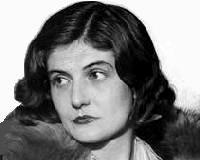
Lois Jurgens
Murderer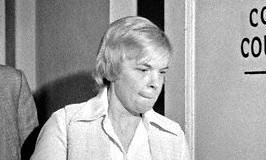 Marybeth Tinning
Murderer · USA · 1972
Marybeth Tinning (née Roe, born on September 11, 1942) was an American prisoner…
9 victims
Marybeth Tinning
Murderer · USA · 1972
Marybeth Tinning (née Roe, born on September 11, 1942) was an American prisoner…
9 victims
 Debbie Fornuto
Murderer · USA · 1972
Deborah Fornuto was the mother of six children whose deaths were initially rule…
7 victims
Debbie Fornuto
Murderer · USA · 1972
Deborah Fornuto was the mother of six children whose deaths were initially rule…
7 victims
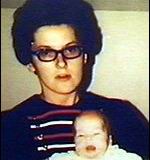 Waneta Ethel Hoyt
Murderer · USA · 1965
Waneta Ethel (Nixon) Hoyt was born in Richford, New York, and died in prison on…
5 victims
Waneta Ethel Hoyt
Murderer · USA · 1965
Waneta Ethel (Nixon) Hoyt was born in Richford, New York, and died in prison on…
5 victims
 Debra Sue Tuggle
Murderer · USA · 1974
Debra Sue Tuggle was an African American woman born in Arkansas. She had a hist…
4 victims
Debra Sue Tuggle
Murderer · USA · 1974
Debra Sue Tuggle was an African American woman born in Arkansas. She had a hist…
4 victims
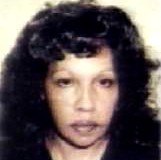 Josephine Gray
Murderer · USA · 1974
Josephine Virginia Gray, also known as Josephine Stribbling and Josephine Mills…
3 victims
Josephine Gray
Murderer · USA · 1974
Josephine Virginia Gray, also known as Josephine Stribbling and Josephine Mills…
3 victims
 Alicia Crimmins
Murderer · USA · 1965
Name: Alicia Crimmins On her first trial in 1968 was charged only with the deat…
2 victims
Alicia Crimmins
Murderer · USA · 1965
Name: Alicia Crimmins On her first trial in 1968 was charged only with the deat…
2 victims
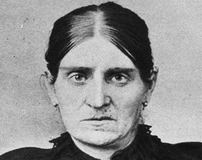 Elisabeth Wiese
Serial killer · Germany · 1902
Elisabeth Wiese (1 July 1853 – 2 February 1905) was a German serial killer from…
5 victims
Elisabeth Wiese
Serial killer · Germany · 1902
Elisabeth Wiese (1 July 1853 – 2 February 1905) was a German serial killer from…
5 victims
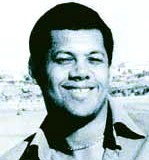 Victor Miller
Murderer · United Kingdom · 1988
Victor Miller was a computer operator in the United Kingdom. He was described a…
1 victim
Victor Miller
Murderer · United Kingdom · 1988
Victor Miller was a computer operator in the United Kingdom. He was described a…
1 victim
 Gabriel Garza Hoth
Serial killer · Mexico · 1991
1991 — Soledad Valdez, Gabriel Arturo Garza Hoth’s first wife, died; doctors be…
3 victims
Gabriel Garza Hoth
Serial killer · Mexico · 1991
1991 — Soledad Valdez, Gabriel Arturo Garza Hoth’s first wife, died; doctors be…
3 victims
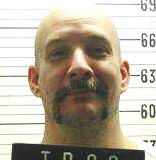 David Keen
Murderer · USA · 1990
David M. Keen was the appellant in State v. Keen in the Tennessee Supreme Court…
1 victim
David Keen
Murderer · USA · 1990
David M. Keen was the appellant in State v. Keen in the Tennessee Supreme Court…
1 victim
- Gender
- female
- Country
- USA
- Location
- White Bear Lake, Minnesota , USA
- Date of birth
- 1925
- Age at first offence
- 40
- Characteristics
- child abuse
- Victim profile
- Dennis Craig Jurgens, 3 (her adoptive son)
- Method of murder
- Beating
- Date(s) of murder
- April 16, 1965
- Years active
- 1965
- Date of arrest
- January 29, 1987 (21 years later)
- Status
-
Released
Sentenced to 25 years in prison on June 7, 1987; paroled in 1995
Overview
Lois Jurgens (born 1925) was an American convicted murderer in Minnesota. She was an adoptive mother of six children in the 1960s and 1970s, and she abused them, killing three-year-old Dennis Jurgens in 1965.
Background
Lois Jurgens was one of 16 children. She lived in White Bear Lake, Minnesota at the time her brother, Jerome Zerwas, was police lieutenant of the town of White Bear Lake, Minnesota.
Harold Jurgens was Lois Jurgens’ husband; he was described as a former bandleader turned electrician. Lois Jurgens had grown up in an impoverished family of sixteen siblings.
Dennis Jurgens was born Dennis Craig Puckett in Sauk Centre, Minnesota, the child of teenage Jerry Sherwood and her teenage boyfriend. Jerry Sherwood was described as a ward of the state. Dennis was adopted by the Jurgenses of White Bear Lake, Minnesota: Harold Jurgens and Lois Jurgens.
In the decade preceding the adoption of Dennis, Lois Jurgens had suffered bouts of depression and psychosis, including an extended stay at a psychiatric institution where electroconvulsive therapy was administered. She was described as having mixed psychoneurosis and being unable to conceive a child with Harold.
Officially forbidden to adopt children owing to Lois’ history of mental illness, the Jurgenses managed to adopt a baby named Robert privately. The Jurgenses’ adoption of Robert was described as fitting in well, and it led authorities to consider the possibility that the Jurgenses might adopt more children through official channels.
Other details
Jerry Sherwood was Dennis’ birth mother. Dennis had additional birth siblings described as four more children with Dennis’ birth father.
A biography of later suspicions included discussion that Lois Jurgens was initially suspected of poisoning her husband, Harold. His autopsy results did not indicate poisoning. There was also talk years earlier of Lois having started a fire at her in-laws’ home that killed her mother-in-law, with whom she never got along.
Lois Jurgens later lived as a widow in Stillwater, Minnesota.
The offence
Dennis Jurgens died at the hands of Lois Jurgens during the early morning hours of April 11, 1965.
The official cause of death was peritonitis due to perforation of the small bowel. The fatal blow was not known specifically at the time, but it was later inflicted by Lois Jurgens owing to evidence of her constant physical abuse.
Evidence described in connection with the death included starvation, scarring and bite-marks on Dennis’ genitalia, multiple lacerations, and multiple generations of bruises covering most of his body. A great flood had hit the Saint Paul area, with Mississippi River waters rising to record levels and flooding in the region and inside the Jurgens home; Lois was described as being pushed to new levels of rage as flood waters filled her basement.
One witness to Lois’ final abuse of Dennis was Robert, who was 5 years old at the time. Many years later, at his mother’s trial, Robert recounted events of the evening, including Lois’ extensive beating of Dennis and his being thrown down the stairs.
After Dennis’ death, Lois was not charged at the time.
Abuse and prior conduct described in the proceedings
Lois Jurgens was described as having a short and volatile temper and a reputation among extended family and neighbors as intensely angry. Her abuse was described as sadistic and corporal punishments targeting Dennis as he aged from one to three-and-a-half years of age.
The following abusive conduct was described:
- Horseradish was placed on food and then force-fed to Dennis; reports from family members described Dennis turning purple and having his oxygen supply cut off when Lois covered his mouth and nose, leading him to vomit; Lois then forced him to eat his vomit.
- Lois obsessed about Dennis’ weight, and medical records were described as showing his weight as appropriate for his age and build at the point of adoption; Dennis was frequently starved to rid him of “Sloppy Fat,” a nickname used by Lois. It was described that the coroner noted Dennis had almost zero subcutaneous fat, at the level of a person who had died of starvation.
- Evidence was described as including adult, human bite marks on Dennis’ penis and scarring on his scrotum; Dennis was also described as found to be wearing two diapers and a pair of rubber pants at age three and a half.
- Lois placed a spring-action clothespin upon the end of Dennis’ penis as a remedy for wetting diapers too frequently.
- Dennis was tied to the bedposts by his limbs and tied to the toilet to force a bowel movement.
- Dennis was described as showing up to public events wearing sunglasses at age two to hide frequent black eyes.
- Lois forced religious training, with Dennis forced to recite the Rosary kneeling on a broomstick for extended periods.
- Lois was described as making no apologies about the inappropriate way she was disciplining Dennis and believing she was doing “God’s work.”
Investigation and reopening
Though an investigation occurred after Dennis’ death, mid-1960s society and law enforcement did not accept the concept that a child in a middle-class home could be the target of abuse. The medical examiner marked the death “deferred” rather than classifying it as accident, suicide, or murder.
There was suspicion around Jerome Zerwas, Lois Jurgens’ brother, a police lieutenant in White Bear Lake, Minnesota. Witnesses and neighbors at the time and investigators who eventually re-opened the case believed he interfered with the investigation and destroyed incriminating evidence.
After Dennis’ death, authorities removed Robert from the home and placed him with his paternal grandmother for a period of just over five years. The Jurgenses spent considerable effort and money attempting to regain custody. While Robert was hospitalized with pneumonia, his grandmother burned to death in a house fire. There was suspicion Lois Jurgens herself set the fire, linked to his hospitalization and to Lois’ threats of arson regarding homes of neighbors and family members who had spoken to authorities. Robert was returned to the Jurgens home.
Years later, Jerry Sherwood sought out Dennis in the early 1980s and found out he died in 1965. After seeing newspaper reports about the death, she demanded the case be re-opened and continued her investigation. She took her case to the White Bear Lake police department and then to local media.
In the narrative of the reopening:
- Sherwood appeared on the doorstep of the White Bear Lake Police Department in September 1986 demanding the case be reopened.
- Sherwood had previously called the Ramsey County welfare department in 1980 trying to trace Dennis’ whereabouts; six weeks later she received a letter stating: “We are sorry to inform you, the letter read, that your son died on April 11, 1965.”
- Sherwood visited St. Mary’s Cemetery where Dennis was buried; unable at first to find his grave site, she leafed through the cemetery’s record book and found a pasted newspaper item dated April 12, 1965 that stated: “The small boy had died of peritonitis due to a ruptured bowel, the news clip said.” The item also included: “The body also bore multiple injuries and bruises. . . . The coroner and the police were investigating.”
- Sherwood called Lois Jurgens in Stillwater in early 1981; the Jurgenses’ number had been changed to an unlisted number after that call.
Key individuals in the 1986–1987 case
Lt. Clarence (Buzz) Harvey handed the old file to Detective Greg Kindle, described as a specialist in juvenile abuse crimes.
The prosecutors assigned included Melinda Elledge (38), an assistant Ramsey county attorney, and Clayton Robinson Jr. (34), another assistant county attorney. The county attorney Tom Foley was involved in the case assignment.
Detectives Ron Meehan and Kindle built the 1987 investigation. Police chief Philip Major issued a memo to all police personnel. The memo described the department’s role in 1965 and today; it was stated that police chief Major wrote: “We now have a 21-year-old active homicide investigation” and “In 1986, this case must be handled with the same enthusiasm it received in 1965.”
Witnesses and medical professionals were described as including:
- Dr. Michael McGee, an experienced, full-time forensic pathologist, who would exhume Dennis’ body and perform his own autopsy.
- Dr. Tom Votel, the coroner in 1965 who did not complete Dennis’ death certificate.
- Dr. Roy Peterson, a former family physician.
- Dr. E. Dale Cumming, a local physician who once treated Dennis.
- Robert Jurgens, who testified at trial.
Quotes recorded during the investigation and proceedings
Dr. Michael McGee’s statements and related dialogue included:
- “They were afraid back then, just afraid,”
- “I spend a lot of time looking at dead babies. When I see lots of bruises, a bowel full of pus, I think bad thoughts.”
- “I’m getting ready to change one of your old death certificates, McGee said. I’m sorry to cause you trouble--the news media will probably be after you--but I have to. . . . Do you remember this little boy?”
- “I am warning you that I am today sending you a letter by courier, the medical examiner told the prosecutor. Be prepared. I am changing this death certificate to homicide.”
Dr. Tom Votel’s response included:
- “Yes, I remember,” Votel told McGee.
- “And there may be three or four other cases like this one. You better start looking.”
Melinda Elledge’s dialogue included:
- “I sure hope I don’t get that case,” Elledge said, turning to her husband.
Police statements and memos included:
- “We now have a 21-year-old active homicide investigation,”
- “I want you to know how I see this department's role in 1965 and today.”
- “In 1986, this case must be handled with the same enthusiasm it received in 1965.”
Judge David Marsden’s statement included:
- “The court will take a 10-minute recess,”
Defense attorney Douglas W. Thomson asked the question:
- “You think your mother caused Dennis' death, don't you?”
Robert Jurgens answered:
- “Yes,”
County attorney Foley’s statement included:
- a verdict represented a “tremendous victory for the system.”
Prosecution statements included:
- Robinson said: “This case was not harmed by the passage of time,”
- Robinson: “Robert Jurgens sees heroes in the two prosecutors and the two police investigators.”
- Elledge said: “Things in this case are not humanly explainable,”
- Elledge: “If Jerry Sherwood hadn't gone out to the cemetery and if the record book didn't just happen to have a news clip in there. . . . A few months from now certain witnesses will be dead.”
Police Detective Kindle’s statement included:
- “I don't know what Lois Jurgens did to draw God's attention. All the pieces were there when they shouldn't have been. It's like God said, that's it. Here's where I draw the line. . . . I'm going to freeze this one until the time is ready.”
Arrest and charges
On Jan. 29, 1987, the Ramsey County grand jury indicted Lois Jurgens on one count of second-degree murder and two counts of third-degree murder.
She was arraigned the next day.
Trial
The trial began last May 12.
During the trial, the judge was David Marsden. Lois Jurgens appeared each day with a different hat. The courtroom windows were kept open due to lack of air conditioning.
The court reporter was Barbara Peterson.
The narrative included the trial environment: windows kept open allowing sound of cars and barges from the nearby Mississippi River.
During Robert Jurgens’ testimony, he stated:
- “Dennis used to cry, try to get away,”
- “Later on, Dennis didn't do as much crying and he didn't do any running away. I would recall that he more or less submitted and would just kind of whimper and not get into that heavy crying. . . . ”
- “I don't know exactly the reason why, but I cherished my mother. . . . I did everything she said. I ate my food, I picked up my toys, I kept neat and Dennis didn't and as a result Dennis received more traumatic reprimands.”
- “I was terrified. I was afraid--I--I didn't know what to do. I--it was a terrible sight.”
- “I was afraid to go to bed, but he did finally.”
- He described hearing “screams and hollers, coming from Dennis' room.”
- “He saw his mother holding Dennis, shaking him violently, yelling his name, slapping him on the back, hollering for Harold.”
- “I returned recently to our old house on Gardenette Drive, Robert said in answer to a question.”
- “It was eerie, walking into Dennis' room. . . . It was very tough.”
Defense attorney Douglas W. Thomson’s closing argument included the quote:
- “This whole trial was going on because of the whim and caprice of one man, he said. That man was the Ramsey County medical examiner, Michael McGee.”
- “On Oct. 7 of last year nothing, nothing changed. There was no piece of evidence whatsoever that Dr. McGee relied on in changing the designation to homicide. There have not been any medical or scientific advancements that could have been employed by Dr. McGee.”
- “It may be true that the battered-child syndrome has been studied over the last 22 years . . . but there is nothing about the advancement in the recognition of the battered-child syndrome that in any way came into play when Dr. McGee changed that death certificate.”
The jury deliberated for four hours.
Verdict
On May 30, after just four hours of deliberation, the panel found Lois Jurgens guilty of third-degree murder. The Minnesota state description for killing someone without premeditation or intent was provided in the narrative.
Sentencing
On June 5, after a sanity hearing, Judge Marsden sentenced Lois Jurgens to up to 25 years in prison.
The sentencing date in the status field was June 7, 1987, and it stated she was sentenced to 25 years in prison on June 7, 1987.
Appeals and outcome
The narrative included that she was “pending an appeal.”
Lois Jurgens served eight years of her sentence and was released early for good behavior. She was paroled in 1995.
The record also stated that she proclaims her innocence.
Aftermath
Robert Jurgens presented an appreciation plaque on Sept. 1 (year not stated) to Judge Marsden and to the prosecutors.
Harold Jurgens died in 2000.
The story included a 1992 television movie broadcast in 1992 on NBC entitled “A Child Lost Forever” and a theatre piece “The Jurgens File” by playwright Brian Vinero developed at New York City’s 78th Street Theatre Lab in 2005. The case was described in detail in Barry Siegel’s true-crime novel “A Death in White Bear Lake.”
Timeline
- April 11, 1965 — Dennis Jurgens died at the hands of Lois Jurgens.
- April 12, 1965 — A newspaper item about Dennis’ death was dated April 12, 1965 and stated: “The small boy had died of peritonitis due to a ruptured bowel…”
- Early 1980s — Jerry Sherwood looked for Dennis and found out he died in 1965.
- September 1986 — Jerry Sherwood demanded the case be reopened at the White Bear Lake Police Department.
- Oct. 5, 1986 — McGee’s first call went to Dr. Tom Votel.
- Oct. 7, 1986 — McGee phoned the county attorney, Tom Foley, and stated he was changing the death certificate to homicide.
- Oct. 17, 1986 — Kindle and Meehan flew to Crookston to speak with Robert Jurgens.
- Jan. 29, 1987 — Ramsey County grand jury indicted Lois Jurgens on one count of second-degree murder and two counts of third-degree murder.
- Jan. 30, 1987 — Lois Jurgens was arraigned.
- May 12, 1987 — The trial began.
- May 30, 1987 — The jury found Lois Jurgens guilty of third-degree murder after four hours of deliberation.
- June 5, 1987 — Judge Marsden sentenced Jurgens to up to 25 years in prison after a sanity hearing.
- June 7, 1987 — Sentenced to 25 years in prison on June 7, 1987 (as stated in the status field).
- 1995 — Lois Jurgens was paroled.
- 2000 — Harold Jurgens died.
- 1992 — NBC broadcast “A Child Lost Forever.”
- 2005 — “The Jurgens File” was developed at New York City’s 78th Street Theatre Lab.

Spotted an error, or have more information about this case?