Robin Lovitt
Murderer Russell Ellwood
Murderer · USA · 1991
Russell Ellwood was a former taxi driver. Authorities suspected him of killing…
20 victims
Russell Ellwood
Murderer · USA · 1991
Russell Ellwood was a former taxi driver. Authorities suspected him of killing…
20 victims
 Robert Martines Perez
Murderer · USA · 1994
Name: Robert Martines Perez · Other name used in proceedings: Robert Martinez P…
15 victims
Robert Martines Perez
Murderer · USA · 1994
Name: Robert Martines Perez · Other name used in proceedings: Robert Martinez P…
15 victims
 Billy Frank Vickers
Murderer · USA · 1993
Billy Frank Vickers Vickers was executed by lethal injection in Texas on Januar…
14 victims
Billy Frank Vickers
Murderer · USA · 1993
Billy Frank Vickers Vickers was executed by lethal injection in Texas on Januar…
14 victims
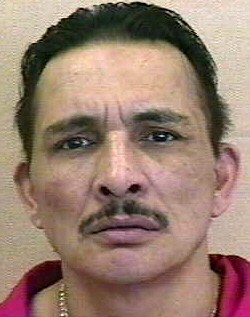 Henry Lee Hunt
Murderer · USA · 1984
Henry Lee Hunt was a Lumbee Indian. He was convicted for the 1984 slayings of J…
2 victims
Henry Lee Hunt
Murderer · USA · 1984
Henry Lee Hunt was a Lumbee Indian. He was convicted for the 1984 slayings of J…
2 victims
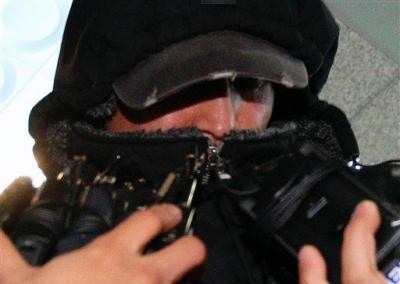 Kang Ho-sun
Serial killer · South Korea · 2006
Kang Ho-sun was a Korean serial killer who was sentenced to death on April 22,…
10 victims
Kang Ho-sun
Serial killer · South Korea · 2006
Kang Ho-sun was a Korean serial killer who was sentenced to death on April 22,…
10 victims
 Patricia Columbo
Murderer · USA · 1976
Patricia Columbo and Frank DeLuca were convicted after a jury trial of three co…
3 victims
Patricia Columbo
Murderer · USA · 1976
Patricia Columbo and Frank DeLuca were convicted after a jury trial of three co…
3 victims
 Paula Cooper
Homicide · USA · 1985
Paula Cooper was the appellant in Cooper v. State, 540 N.E.2d 1216 (1989), deci…
1 victim
Paula Cooper
Homicide · USA · 1985
Paula Cooper was the appellant in Cooper v. State, 540 N.E.2d 1216 (1989), deci…
1 victim
 Sheena Eastburn
Homicide · USA · 1992
Sheena Eastburn was sentenced to life in prison without parole in 1995. Sheena…
1 victim
Sheena Eastburn
Homicide · USA · 1992
Sheena Eastburn was sentenced to life in prison without parole in 1995. Sheena…
1 victim
 Martha Ann Johnson
Murderer · USA · 1977
Martha Ann Johnson (also known as Martha Ann Bowen) was an American serial kill…
4 victims
Martha Ann Johnson
Murderer · USA · 1977
Martha Ann Johnson (also known as Martha Ann Bowen) was an American serial kill…
4 victims
- Gender
- male
- Country
- USA
- Location
- Arlington County, Virginia, USA
- Date of birth
- November 6, 1963
- Age at first offence
- 35
- Characteristics
- robbery, convicted rapist, history of mental illness, drug addict
- Victim profile
- Clayton Dicks (manager at an Arlington pool hall)
- Method of murder
- St abbing with a pair of scissors
- Date(s) of murder
- November 18, 1998
- Years active
- 1998
- Date of arrest
- 6 days after
- Status
-
Life imprisonment
Sentenced to death on September 20, 1999; commuted to life in prison, 2005
Case record
Identifying information
Robin McKennel Lovitt (born November 6, 1963) was convicted in the U.S. state of Virginia.
Legal outcome
Lovitt was convicted by a jury of the capital murder of Clayton Dicks in the commission of robbery (violation of Code 18.2-31) and of robbery (violation of Code 18.2-58). The circuit court sentenced Lovitt in accordance with the jury verdict to death for the capital murder and to life imprisonment for the robbery. The Supreme Court of Virginia affirmed the circuit court’s judgment in Lovitt v. Commonwealth, 260 Va. 497, 520, 537 S.E.2d 866, 881 (2000), cert. denied, 534 U.S. 815 (2001).
Lovitt’s status later changed: he was granted clemency by Virginia Governor Mark R. Warner on November 29, 2005, the day before he was scheduled to be executed by lethal injection at the Greensville Correctional Center. His execution would have been the first execution by the Commonwealth of Virginia since James Edward Reid on 9 September 2004. His death sentence was commuted to life in prison in 2005.
The offence
In the early morning hours of November 18, 1998, Clayton Dicks was stabbed six times in the chest and back while working during the overnight shift at Champion Billiards Hall (the pool hall) in Arlington County.
Dicks arrived at the pool hall between 1:30 and 2:00 a.m., and the other employees present when Dicks arrived had left the pool hall by 3:00 a.m., leaving Dicks as the sole employee on the premises.
About 3:25 a.m., Josè N. Alvarado and Carlos Clavell entered the pool hall and saw two men arguing behind the bar. Alvarado testified that one man was shorter than the other and that the shorter man repeatedly shoved the taller man, who was wearing an apron. Alvarado testified that he and Clavell watched as the shorter man stabbed the taller man six or seven times with a silver-colored weapon. Alvarado saw blood on the taller man’s apron and watched as the taller man fell to the floor behind the bar. Clavell testified that he heard the taller man begging the shorter man to stop attacking him. Both Alvarado and Clavell saw the assailant repeatedly kick the man who had fallen to the floor. Alvarado and Clavell immediately ran from the pool hall to a service station, where Alvarado telephoned the “911” emergency response number and reported what they had seen.
When police and emergency medical personnel arrived in response to Alvarado’s telephone call, Dicks was lying on the floor behind the bar in a pool of blood. Dicks was alive but was unable to speak and was taken by helicopter to a nearby hospital. The multiple stab wounds prevented his heart from functioning, and he died while awaiting surgery. Dicks was stabbed six times, five times in the chest and once in the back. Four of these wounds were lethal. Dicks also suffered two areas of internal hemorrhage on both sides of his head, as well as external abrasions on both shoulders and on his left knee.
The police recovered from the pool hall a cash register lying on the floor near where Dicks was found. The register was broken into pieces, the cash drawer had been removed from the register and was missing, and a torn piece of a ten-dollar bill was found nearby. A pair of scissors with orange handles that was usually kept in a container on the bar was missing. A police canine unit found an orange-handled pair of scissors bearing blood lying open in the woods about 15 yards behind the pool hall.
The government’s theory at trial was that Lovitt used scissors to pry open the cash register but was caught in the act by Dicks. Thus surprised, Lovitt allegedly stabbed Dicks several times with the scissors before fleeing with the cash-register drawer to his cousin’s house, discarding the scissors along the way.
Investigation
Amy Hudon, the manager at the pool hall, testified that about two months before Dicks was killed, she had trouble opening a cash register drawer near a pool table and asked Lovitt to help her open the drawer. Lovitt opened it by “wedging” a pair of scissors into the drawer’s latch.
A forensic scientist, Julian J. Mason, Jr., qualified as an expert witness on tool mark identification. Mason testified that the cash register drawer Grant surrendered to the police had been removed from the broken cash register found on the floor of the pool hall. Mason also stated that the pry marks on the cash register drawer were made by the scissors found in the woods behind the pool hall.
Carol Palmer, a forensic scientist employed by the Virginia Department of Forensic Science, qualified as an expert witness on DNA testing. Palmer extracted human DNA from two places on the scissors, on a blade near the tip and on a blade near the finger loops, and extracted blood from three small circular areas on the left front side of Lovitt’s jacket, but the DNA tests were inconclusive and Palmer was unable to determine whether the blood on the jacket was human. The DNA extracted from the tip of the scissors displayed a DNA profile that matched the DNA profile of Dicks. Palmer stated that the profile derived from this sample did not match the DNA profiles of either Lovitt or Grant, thus eliminating both as contributors of this DNA. Palmer stated the chance of someone other than Dicks contributing the DNA sample on the tip of the scissors was 1 in more than 5.5 billion. Palmer testified that the DNA extracted from the mid-section of the scissors also matched the DNA profile of Dicks, but that this DNA evidence did not exclude either Lovitt or Grant and thus was inconclusive as to them.
After Lovitt’s arrest, he was incarcerated in the Arlington County Jail in the same unit as Casel Lucas.
Arrest and pretrial events
Lovitt was arrested on November 24, 1998 and charged with the present offenses.
In October 1998, Arlington County Police Officer Jerome A. Lee detained Lovitt in an apartment parking lot in Arlington. Lovitt had parked his car behind the apartments, appeared to be very nervous, and consented to a search of his vehicle. Lee found a long kitchen knife on the floor of the passenger area and a soda can used to smoke crack cocaine in the rear floor area of the vehicle.
When Officer Stephen Ferrone collected Lovitt’s clothing at the jail, Ferrone asked a detective whether he needed to seize Lovitt’s jacket. Ferrone testified that, upon hearing this question, Lovitt stated, “I wasn’t wearing it when it happened.”
Trial
Lovitt was convicted by a jury on September 20, 1999 of the capital murder of Clayton Dicks during the commission of a robbery, and he was convicted of robbery. In a separate sentencing proceeding, the government sought the death penalty for Lovitt on a theory of future dangerousness. The prosecutors introduced evidence of Lovitt’s criminal history.
The jury learned that Lovitt had been charged with assault and placed in protective supervision in October 1975, when Lovitt was 11 years old. As a juvenile, in August 1979, he was committed to the Beaumont Learning Center of the State Department of Corrections based on adjudication of charges of breaking and entering and larceny. While at Beaumont, Lovitt was disciplined for fighting, assault, and possessing contraband items.
After his release from Beaumont in 1980, Lovitt was convicted of grand larceny in 1981 and was sentenced to 12 months in jail. Between 1983 and 1985, Lovitt was convicted of petit larceny, grand larceny, breaking and entering, and distribution of marijuana. In 1986, Lovitt was convicted of attempted robbery and was sentenced to a term of imprisonment of from one to three years. After being released on parole in August 1987, Lovitt’s parole was revoked in August 1988 based, in part, on additional arrests and his failure to pass certain drug tests. Lovitt later was convicted of statutory burglary and grand larceny. While incarcerated on these convictions and the parole violation, Lovitt was disciplined for damaging property and for fighting.
In September 1990, Lovitt again was released on parole. In early 1991, Lovitt was convicted of possession of cocaine, grand larceny, and burglary. While incarcerated on these charges, Lovitt was the subject of ten disciplinary actions for offenses including possession of contraband, disobeying direct orders, assault, possession of intoxicants, and manufacturing “shank handles.”
After being released on parole in October 1996, Lovitt was convicted in 1997 of possession of marijuana, petit larceny, unlawful entry, assault and battery, and destruction of property. Lovitt was on parole at the time of the present offenses.
To mitigate this evidence, Lovitt presented testimony from deputies employed by the Arlington County Sheriff’s Office, who stated that Lovitt had not presented any disciplinary problems while being held in jail on the present charges. During the penalty phase, those officers stated that Lovitt had not caused any disciplinary problems while in jail on the present charges, and that Lovitt regularly attended Bible study and AA meetings.
Lovitt also offered testimony from his sister, Lemanda Jones, who testified that Lovitt was the oldest of 12 children and that he helped take care of his younger siblings, although not “gladly.”
Evidence and witness testimony
Casel Lucas, a prisoner, testified about statements he said Lovitt made while they lived together in the same jail unit. Lucas testified that Lovitt told him that after leaving the bathroom at the pool hall on the night of the murder, Lovitt saw a Hispanic man stabbing Dicks, and that Lovitt then saw the cash register drawer, grabbed it, and ran from the pool hall.
Lucas testified that Lovitt later stated that he knew Dicks and was aware that no one else would be in the pool hall late at night. Lucas testified that Lovitt further related that he waited in the bathroom until everyone left the pool hall before coming out to attempt to open the cash register drawer. Lucas testified that Dicks confronted Lovitt as he unsuccessfully attempted to open the cash drawer. Lucas testified that Lovitt told him he had to kill Dicks because Dicks had recognized him.
Lucas testified that, according to Lovitt, Dicks asked him, “[W]hy [are] you doing this?” and that Lovitt admitted to stabbing Dicks several times and taking the cash register drawer to his cousin’s house where Lovitt and his cousin split the money before leaving to buy some drugs. Lucas testified that Lovitt told him he discarded the murder weapon while en route to or from Grant’s house, and that he changed his clothes at Grant’s house because he had blood on his shirt and pants.
Warren A. Grant, Lovitt’s cousin, testified that Lovitt arrived at Grant’s home in the early morning hours of November 18, 1998 carrying what looked like a large, square, gray metal box. Grant testified that Lovitt knocked on his door sometime between 1:30 and 3:00 a.m. Grant testified that Lovitt entered the house carrying the box and that after Lovitt unsuccessfully tried to open the locked box, Grant eventually opened it by using a screwdriver to “pop” some of the screws securing the box. Grant testified that Lovitt removed money from the opened cash register drawer and divided the cash between himself and Grant. Grant testified that Lovitt left the cash register drawer with Grant and instructed him to “[g]et rid of [it].”
Grant testified that a few days later he began cutting the cash drawer into pieces with tin snips and put them in a bag. Arlington Detective Noel E. Hanrahan obtained pieces of the cash register drawer from Grant on November 20, 1998.
In addition, it was stated that Alvarado could not identify Lovitt as Dicks’s assailant at the preliminary hearing, but at trial Alvarado testified he was about “80% certain” that Lovitt was the assailant. It was also stated that Alvarado was only 80% certain that the man he saw fighting behind the counter was Lovitt.
Sentencing
The circuit court sentenced Lovitt in accordance with the jury verdict to death for capital murder and to life imprisonment for robbery.
In the sentencing proceeding, the prosecutors introduced evidence supporting a theory of future dangerousness, including Lovitt’s prior record and that Lovitt was on parole at the time he murdered Dicks. The jury ordered death as the punishment for Lovitt’s murder conviction.
Appeals
Lovitt appealed his conviction. In the habeas corpus context, he alleged violations including that the destruction of certain trial exhibits after his convictions were affirmed by this Court violated his right of due process by preventing adequate review of his habeas corpus petition, that the prosecution suppressed exculpatory evidence in violation of Brady v. Maryland, 373 U.S. 83 (1963), and that he was denied effective assistance of counsel at trial.
Lovitt’s state petition for a writ of habeas corpus was directed against the warden of the Sussex I State Prison. He alleged, among other things, due process violations from the destruction of certain trial exhibits, Brady violations, and ineffective assistance of counsel.
A circuit court held an evidentiary hearing pursuant to an order directing the court to conduct a hearing under Code 8.01-654(C) concerning all issues raised in Lovitt’s habeas corpus petition. The circuit court conducted the evidentiary hearing and submitted a written report stating findings of fact and recommended conclusions of law.
The Supreme Court of Virginia unanimously accepted the circuit court’s findings and recommendations on September 12, 2003 and dismissed Lovitt’s state habeas petition; it is referenced as Lovitt v. Warden, 266 Va. 216, 585 S.E.2d 801 (2003) (“Lovitt II”). It is also stated that his subsequent writ of certiorari to the United States Supreme Court was denied seven months later.
On December 23, 2003, the United States District Court for the Eastern District of Virginia stayed Lovitt’s execution to allow him to petition for federal habeas corpus relief under 28 U.S.C. § 2254. The federal district court later dismissed the petition in a lengthy opinion (Lovitt v. True, 330 F.Supp.2d 603 (E.D.Va.2004)).
It is stated that on October 12, 2004, the district court granted Lovitt’s application for a certificate of appealability on three of his four claims, and that on November 9, 2004 it expanded the order to include the fourth claim.
In the United States Court of Appeals for the Fourth Circuit proceedings, the judgment dismissing the petition was affirmed. The case is identified as Robin McKennel Lovitt, Petitioner-appellant, v. William Page True, Warden, Sussex I State Prison, Respondent-appellee, with argument on February 1, 2005 and decision on April 6, 2005, before WILKINSON, WILLIAMS, and TRAXLER, Circuit Judges.
Cleared exhibits / destruction of evidence
In May 2001, about six months after convictions were affirmed, the circuit court entered an order authorizing destruction of the exhibits entered into evidence at Lovitt’s trial. Pursuant to the destruction order, all exhibits received in evidence at trial, with the exception of one chart, were destroyed.
It was also stated that less than three weeks later, Robert C. McCarthy, Chief Deputy Clerk of the Circuit Court of Arlington County had the evidence in the Lovitt case destroyed. It was stated that other clerks told McCarthy not to order the destruction of the evidence because it was a capital case. It was stated that McCarthy told them he thought he was authorized to destroy the trial exhibits after Lovitt’s convictions were affirmed by the Supreme Court of Virginia.
On the federal and state collateral review, McCarthy’s conduct was addressed. In describing the habeas findings about the destruction, it was stated:
“This was an error in judgment by McCarthy, but I find that he prepared the order to destroy the exhibits because he had received a mandate from the Supreme Court indicating that Lovitt’s appeal was finished, and he wanted to remove the box of exhibits from the evidence room to make additional space. There is no evidence to conclude that there was an intent by anyone in the Clerk’s office to destroy exculpatory evidence. No one from the Commonwealth’s Attorney’s Office or the Attorney General’s office had any knowledge that the evidence was going to be destroyed or was destroyed until months after the destruction had taken place. There is no evidence that any official of the Commonwealth acted in bad faith.”
It was also stated that this error in judgment could not be attributed to the police or prosecution and that there was no evidence that prosecutors destroyed anything in an attempt to prevail or foreclose further judicial review.
Clemency
Governor Mark R. Warner granted clemency on November 29, 2005. Warner said the destruction of evidence was improper and that:
“[...] The actions of an agent of the Commonwealth, in a manner contrary to the express direction of the law, comes at the expense of a defendant facing society's most severe and final sanction. [...] The commonwealth must ensure that every time this ultimate sanction is carried out, it is done fairly.”
It was stated that it was the first time Warner had granted clemency during his governorship.
Other details
Prior work and involvement at the pool hall
It was stated that Dicks was the manager at an Arlington pool hall, working the night shift, and that he was the only employee there from 3 a.m. onwards. It was also stated that Lovitt previously worked as a cook at the pool hall. It was stated that Hudon said he had helped her pry open the cash register with the scissors a few months before the murder. It was stated that Lovitt ceased working at the pool hall about two months before the murder.
Legal representation
In October of 2000, Lovitt’s case was taken up on a pro bono basis by the law firm of Kirkland & Ellis, LLP. It was stated that Kirkland worked with the University of Notre Dame’s Washington Semester Program in pursuing Lovitt’s appeals, and that Lovitt was represented by the Virginia Captial Representation Resource Center.
When Kirkland began representing Lovitt, Kenneth Starr became involved in the case. It was stated that Starr is pro-capital punishment and that he stated:
“…the death penalty has to be administered with the utmost caution and reserved for the gravest offenses. This is not that kind of case. Robin Lovitt maintains his innocence, and evidence that might prove his innocence has been destroyed. I'm very distressed by that. [...] Society had better be absolutely certain before they put someone to death who is maintaining his innocence. I feel very passionately about that.”
Execution dates and stays
Lovitt’s execution was originally scheduled for July 11, 2005, but was stayed by the Supreme Court of the United States to give themselves more time to consider his appeal. It was stated that the Supreme Court decided not to hear the case again, resulting in a new execution date of November 30, 2005 being set.
Evidence disputes raised in appeals
Lovitt appealed his conviction on the basis that there is no physical evidence linking him to the crime and asserted that the case was based on circumstantial evidence and the testimony of witnesses, one of whom was a prisoner. It was stated that witness testimony was contradictory and that Lovitt and his lawyers argued that the evidence pointed as easily to Jose Alverado and Carlos Clavell being the murderers.
It was also stated that Casel Lucas was a drug addict and had been convicted of a dozen felonies including attempted rape, and that it was not revealed to the jury that Lucas had testified in cases involving people he befriended in prison, described as the fifth time.
Search and contraband
It was stated that Officer Jerome A. Lee found a long kitchen knife and a soda can used to smoke crack cocaine in the rear floor area of Lovitt’s vehicle.
Family size
It was stated that Lemanda Jones testified that Lovitt was the oldest of 12 children.
Dismissal of habeas petition
In the state habeas corpus proceedings, after the evidentiary hearing and review, the petition for a writ of habeas corpus was dismissed.

Spotted an error, or have more information about this case?